Riferimenti
Reference material for florists and plant lovers: a flower guide for quick answers, historic botanical plates, and in-depth libraries by plant group. Every page cites its sources.
Flower guide
157 cut flowers, foliage and branches: botanical name, vase life, season, meaning, care and pet safety.
Plant reference pages
Genus and species pages: accepted name and authorship, place of publication, synonyms, subspecies, native range, historic plates and database links, checked against WCVP. Currently in English and Chinese.
- Phalaenopsis Blumemoth orchids · genus · 93 accepted species
- Phalaenopsis amabilis (L.) Blumemoon orchid · species
- Rosa L.roses · genus · 422 accepted species
- Rosa chinensis Jacq.China rose · species
- Rosa rugosa Thunb.rugosa rose · species
- Chrysanthemum L.chrysanthemums · genus · 41 accepted species
- Chrysanthemum × morifolium (Ramat.) Hemsl.florist’s chrysanthemum · species
- Hydrangea Gronov. ex L.hydrangeas · genus · 103 accepted species
- Hydrangea macrophylla (Thunb.) Ser.bigleaf hydrangea · species
- Cymbidium Sw.boat orchids · genus · 118 accepted species
- Cymbidium faberi RolfeFaber’s cymbidium · species
- Lilium Tourn. ex L.lilies · genus · 138 accepted species
- Helianthus L.sunflowers · genus · 68 accepted species
- Dahlia Cav.dahlias · genus · 43 accepted species
- Zantedeschia Spreng.calla lilies and arum lilies · genus · 10 accepted species
- Ranunculus L.buttercups · genus · 1827 accepted species
- Narcissus L.daffodils · genus · 179 accepted species
- Alstroemeria L.alstroemerias (Peruvian lilies) · genus · 138 accepted species
- Dendrobium Sw.dendrobium orchids · genus · 1623 accepted species
- Oncidium Sw.oncidiums · genus · 373 accepted species
- Vanda R.Br.vandas · genus · 97 accepted species
- Prunus L.cherries, plums, peaches and almonds · genus · 417 accepted species
- Hippeastrum Herb.hippeastrums (amaryllis) · genus · 119 accepted species
- Gladiolus Tourn. ex L.gladioli · genus · 305 accepted species
- Freesia Eckl. ex Klattfreesias · genus · 17 accepted species
- Iris Tourn. ex L.irises · genus · 348 accepted species
- Hyacinthus Tourn. ex L.hyacinths · genus · 3 accepted species
- Anemone L.anemones · genus · 113 accepted species
- Delphinium Tourn. ex L.delphiniums and larkspurs · genus · 546 accepted species
- Solidago L.goldenrods · genus · 151 accepted species
- Protea L.proteas · genus · 107 accepted species
- Leucadendron R.Br.conebushes · genus · 85 accepted species
- Monstera Adans.monsteras · genus · 73 accepted species
- Spathiphyllum Schottpeace lilies · genus · 76 accepted species
- Epipremnum Schottpothos and other epipremnums · genus · 15 accepted species
- Philodendron Schottphilodendrons · genus · 631 accepted species
- Camellia L.camellias · genus · 245 accepted species
- Rhododendron L.rhododendrons and azaleas · genus · 1234 accepted species
- Chimonanthus Lindl.wintersweets · genus · 6 accepted species
- Salix L.willows · genus · 698 accepted species
- Acacia Mill.wattles · genus · 1092 accepted species
- Eucalyptus L'Hér.eucalypts · genus · 816 accepted species
- Strelitzia Banksbird-of-paradise flowers · genus · 6 accepted species
- Antirrhinum L.snapdragons · genus · 35 accepted species
- Matthiola W.T.Aitonstocks · genus · 54 accepted species
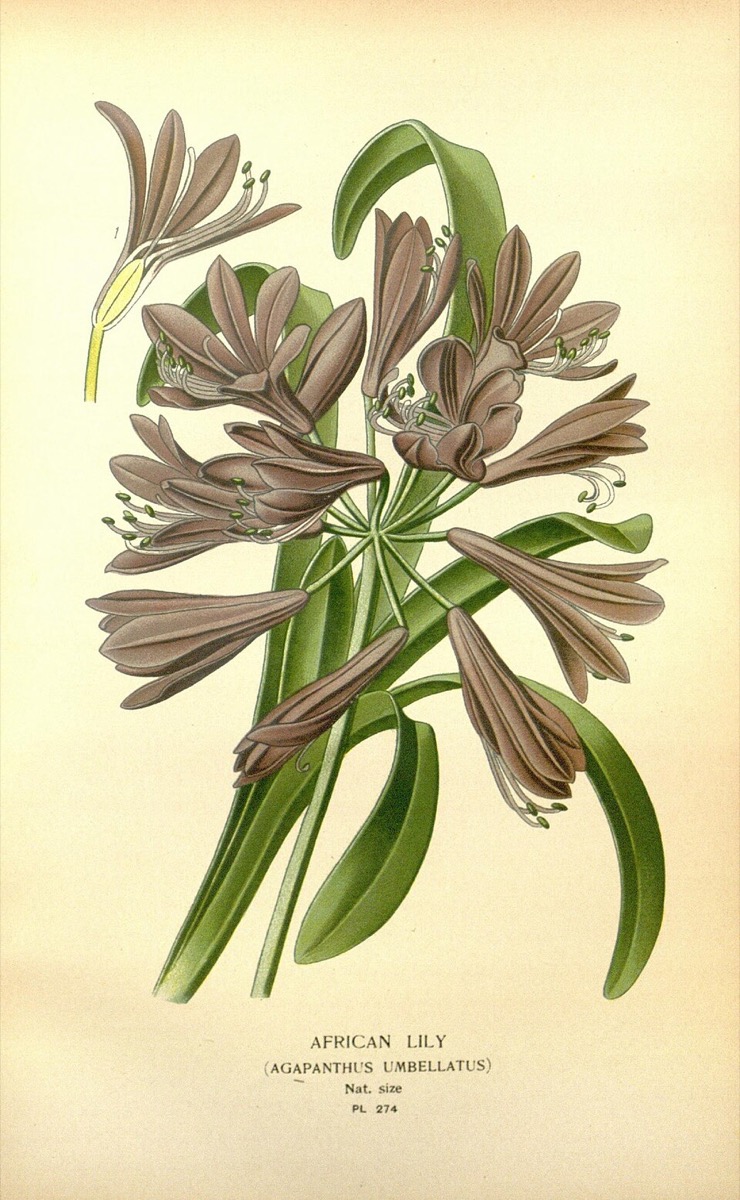
- Agapanthus L'Hér.African lilies · genus · 8 accepted species
- Limonium Mill.sea lavenders · genus · 626 accepted species
- Nelumbo Adans.lotuses · genus · 2 accepted species
- Asparagus Tourn. ex L.asparagus · genus · 211 accepted species
- Dracaena Vand. ex L.dragon trees · genus · 225 accepted species
- Nephrolepis Schottsword ferns · genus · 35 accepted species
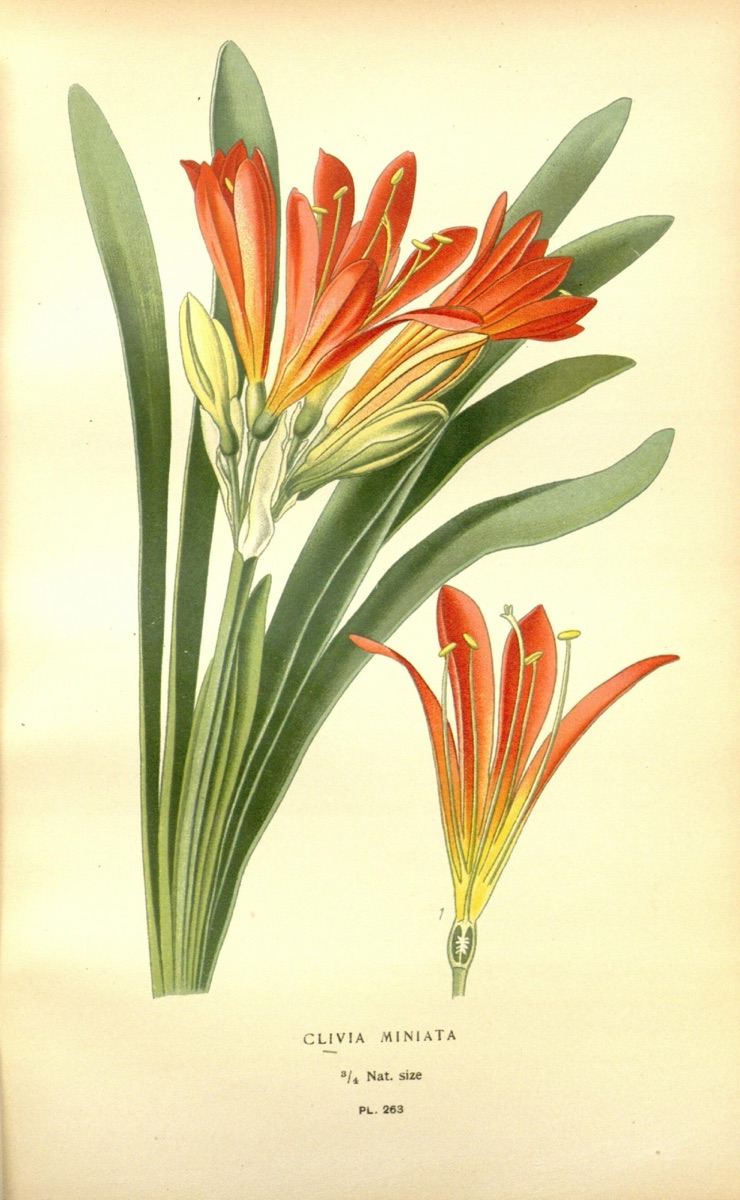
- Clivia Lindl.clivias · genus · 8 accepted species
- Pachira Aubl.pachiras · genus · 54 accepted species
- Guzmania Ruiz & Pav.guzmanias · genus · 217 accepted species
- Cyclamen L.cyclamens · genus · 31 accepted species
- Kalanchoe Adans.kalanchoes · genus · 203 accepted species
- Euphorbia L.spurges · genus · 2123 accepted species
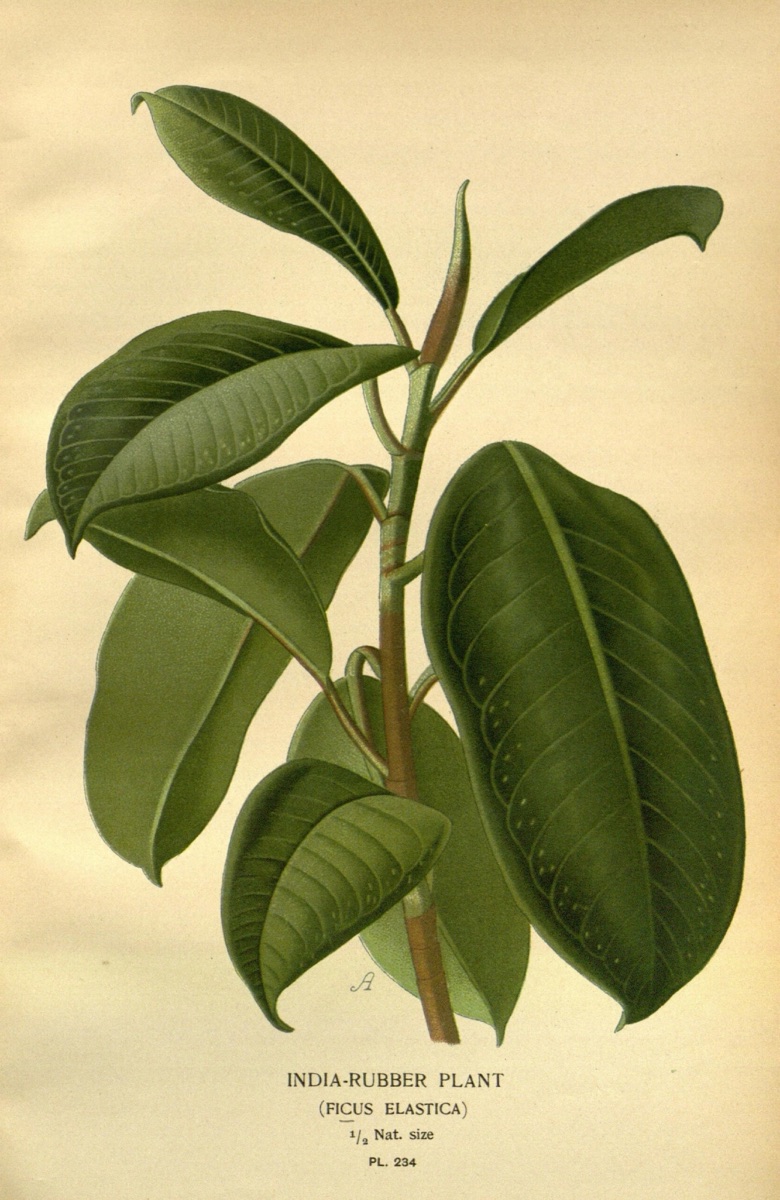
- Ficus Tourn. ex L.figs · genus · 893 accepted species
Plant taxonomy & lineage mindmap
Explore the botanical hierarchy from plant families and genera, down to foundational wild ancestors and modern commercial cut-flower cultivar groups. Click any genus or article to jump to its in-depth library.
Family
Orchids Orchidaceae
Order Asparagales
2 genera
Orchids Orchidaceae
Order AsparagalesLargest family of monocotyledons; characterized by columns (gynostemium), specialized labella, pollinia, and mycorrhizal symbiosis.
Genus
Moth orchids (Phalaenopsis) Phalaenopsis
Monopodial epiphyte
Moth orchids (Phalaenopsis) Phalaenopsis
Monopodial epiphyteLacks pseudobulbs; flat fleshy leaves, broad butterfly-like lateral petals, and racemose or paniculate inflorescences.
Wild Species & Ancestors
4-
Species P. amabilis · Moon orchid
Wild species · Core parent for standard white cultivars
Native to Java and the Philippines; pure white flowers with yellow-and-red spotted lip, founding modern large white hybrids.
-
Species P. schilleriana · Schiller's phalaenopsis
Wild species · Parent for pink flowers and mottled foliage
Features silver-mottled tiger leaves, large fragrant pink blooms with profuse branching; key parent of pink hybrids.
-
Species P. bellina · Bellina orchid
Wild species · Parent for intense fragrance and star petals
Native to Borneo; white, green, and magenta gradient blooms with intense citrus fragrance; core parent for scented hybrids.
-
Species P. equestris · Horse orchid (P. equestris)
Wild species · Parent for multiflora and miniature hybrids
Native to Orchid Island (Taiwan) and the Philippines; small dense flowers on prolific branches with long blooming period.
Cultivar & Commercial Groups
4-
Group Standard Large White
Bred from P. amabilis with blooms 10–14 cm wide; premier choice for ceremonies and festival gifting.
-
Group Standard Large Pink
Incorporates P. schilleriana genetics; rounded petals ranging from soft blush to deep magenta.
-
Group Striped & Harlequin Phalaenopsis
Features radial stripes or dense dark blotches, including the iconic Harlequin dark-patterned cultivars.
-
Group Miniature & Multiflora Phalaenopsis
Compact plants with prolific branching and abundant small flowers, ideal for tabletops and modern interior decor.
Genus
Boat orchids (Cymbidium) Cymbidium
Terrestrial or semi-epiphytic herb
Boat orchids (Cymbidium) Cymbidium
Terrestrial or semi-epiphytic herbPossesses ovoid pseudobulbs, strap-like leathery leaves, erect or arching racemes, and three-lobed labella with lamellae.
Wild Species & Ancestors
6-
Species C. sinense · Chinese New Year orchid
Traditional Chinese orchid · Year-end festival bloom
Blooms in winter through early spring with dark brownish-purple flowers; stately erect stems and delicate scent.
-
Species C. ensifolium · Sword-leaved cymbidium
Traditional Chinese orchid · Multi-blooming in summer and autumn
Hardy and easy to bloom, featuring yellowish-green tepals with purple specks and refreshing fragrance.
-
Species C. faberi · Faber's cymbidium
Traditional Chinese orchid · Multi-flowered noble classic
Stiff upright leaves, carrying 8–15 fragrant flowers per stem; a hallmark of classical scholar floristry.
-
Species C. eburneum · Ivory-colored cymbidium
Modern large cymbidium ancestor · Parent of white fragrant blooms
Himalayan native with large ivory-white blooms and bright yellow markings on the lip; pure clear fragrance.
-
Species C. iridioides · Iris-like cymbidium
Modern cymbidium ancestor · Source of giant blooms and earthy tones
Blooms over 10 cm wide, yellow-green patterned with red-brown stripes; large, cold-hardy, spreading racemes.
-
Species C. insigne · Splendid cymbidium
Modern cymbidium ancestor · Foundation for erect spikes and pink hues
Exceptionally tall and rigid erect flower spikes with pink to white blooms, establishing modern upright cymbidiums.
Cultivar & Commercial Groups
3-
Group Classical Chinese Terrestrial Orchids
Classical Chinese orchids valuing understated leaf variegation, formal flower aesthetics, and elusive fragrance.
-
Group Standard Cut Cymbidiums
Tall, robust spikes carrying numerous waxy blooms with outstanding vase life (3–5 weeks); centerpiece for banquets.
-
Group Cascading & Miniature Cymbidiums
Gracefully arching or pendulous inflorescences cascading like waterfalls, perfect for hanging and modern styling.
Family
Rose family Rosaceae
Order Rosales
1 genera
Rose family Rosaceae
Order RosalesPremier family in commercial floristry; features stipules, perigynous to epigynous flowers, numerous stamens, and a cup-shaped hypanthium.
Genus
Roses (Rosa) Rosa
Deciduous / evergreen shrub or climber
Roses (Rosa) Rosa
Deciduous / evergreen shrub or climberPrickly woody stems, odd-pinnate serrated leaves, solitary or corymbose blooms, and fleshy urn-shaped hips.
Wild Species & Ancestors
6-
Species R. chinensis · China rose
Primary ancestral rose · Origin of repeat-blooming trait
Ancient Chinese shrub introduced to Europe in the 18th century, introducing continuous repeat-blooming genetics.
-
Species R. multiflora · Multiflora rose (Baby rose)
Ancestral species · Source of dense clusters and winter hardiness
East Asian wild rose with massive panicles of small fragrant flowers; rootstock for grafting and parent of Polyanthas.
-
Species R. rugosa · Rugosa rose (Beach rose)
Ancestral species · Exceptional disease resistance and cold hardiness
Coastal East Asian rose with wrinkled dark green leaves, clove scent, huge orange hips, and total immunity to blackspot.
-
Species R. gallica · French rose (Gallic rose)
Old garden rose · Origin of deep crimson and damask scent
Medieval European red rose rich in anthocyanins; foundational source for crimson hues and rose attar.
-
Species R. × centifolia · Cabbage rose (Hundred-leaved rose)
Historical perfume rose · Source of dense globe form and Grasse scent
Bred by Dutch masters in the 17th century; 100+ overlapping petals with sweet honeylike fragrance; the iconic Rose de Mai.
-
Species R. × damascena · Damask rose
Queen of aromatic roses · Global gold standard for attar of roses
Ancient Middle Eastern hybrid revered for thousands of years; produces the world's most exquisite and valued rose essential oil.
Cultivar & Commercial Groups
4-
Group Hybrid Tea Roses (HT)
Sturdy long stems topped with a single high-centered pointed bloom; undisputed global pillar of cut roses.
-
Group Spray & Floribunda Roses
Branched stems bearing clusters of blooms, adding rhythmic depth and volume to bouquets and centerpieces.
-
Group Garden & English Roses
Deep cup or rosette blooms with 80–120 petals, releasing potent myrrh or fruity perfume; top choice for bridal luxury.
-
Group Climbing & Miniature Roses
Long flexible canes for arches and pergolas, and compact miniature varieties for delicate fine floral work.
Family
Lily family Liliaceae
Order Liliales
2 genera
Lily family Liliaceae
Order LilialesRepresentative monocot bulbous family; large showy flowers, 6 tepals in two whorls, 6 stamens, superior 3-locular ovary.
Genus
True lilies (Lilium) Lilium
Scaly-bulbous perennial
True lilies (Lilium) Lilium
Scaly-bulbous perennialUncoated scaly fleshy bulbs, alternate leaves, trumpet/funnel blooms, and versatile dangling anthers.
Wild Species & Ancestors
5-
Species L. candidum · Madonna lily
Old World white lily · Classical symbol of purity
Mediterranean native cultivated since antiquity; glistening white trumpets with bright yellow pollen and sweet perfume.
-
Species L. lancifolium · Tiger lily
Asiatic hybrid parent · Source of fiery orange, spots, and hardiness
East Asian hardy lily with recurved bright orange tepals densely spotted with purple-black; produces axillary bulbils.
-
Species L. speciosum · Japanese showy lily
Oriental hybrid parent · Source of recurved petals and spots
Strongly recurved turban-like petals with raised crimson papillae, adding grace and color to Oriental hybrids.
-
Species L. longiflorum · Easter lily
Trumpet benchmark · Pristine ceremonial classic
Long trumpet tubes opening horizontally; pristine waxy white, legendary for Easter and sacred ceremonies.
-
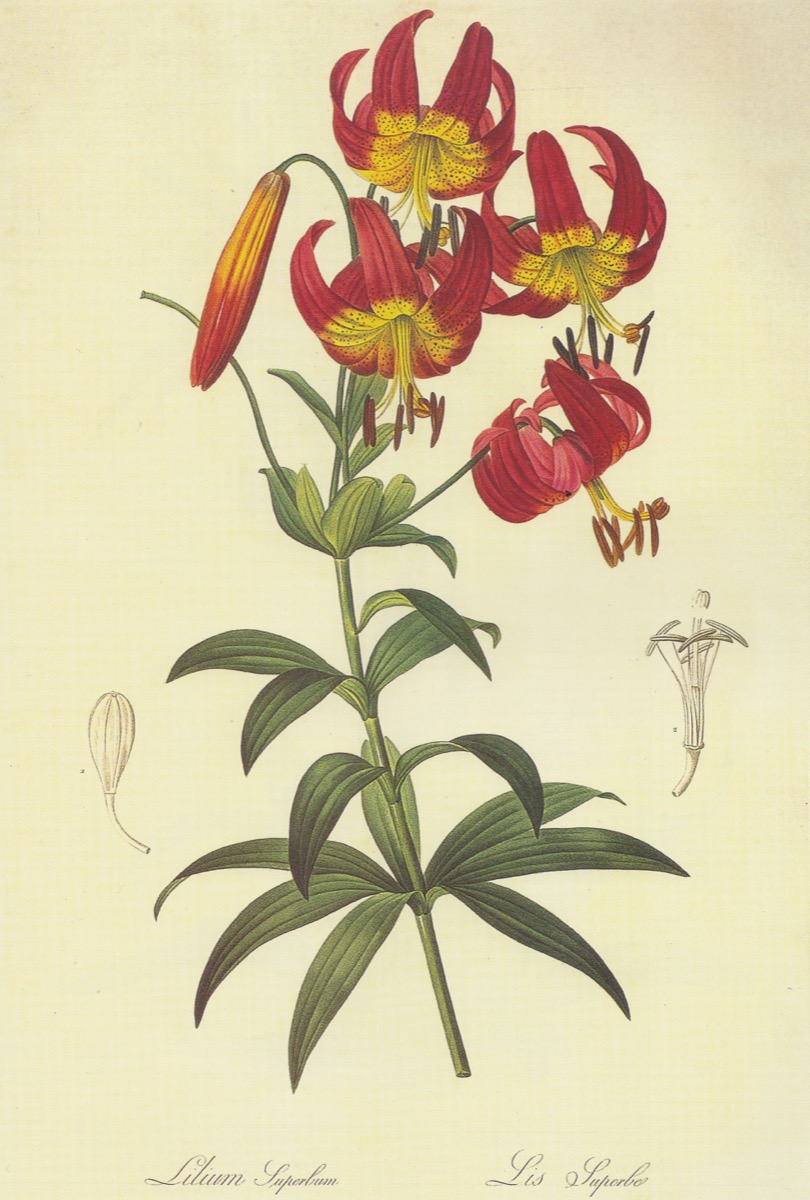
Species L. superbum · Turk's cap lily (L. superbum)
North American wild lily · Towering height and dramatic reflexed form
Tallest native American lily (up to 2.5 m), bearing pyramids of nodding yellow-orange-red recurved blooms with green star centers.
Cultivar & Commercial Groups
4-
Group Oriental Lilies (O-type)
Magnificent blooms (18–25 cm) with wavy recurved petals and heady fragrance; includes 'Siberia' and 'Sorbonne'.
-
Group Asiatic Lilies (A-type)
Upright blooms in vibrant bright colors (yellow, orange, fire-red); completely unscented, allergy-safe.
-
Group Longiflorum Lilies (L-type)
Slender trumpet-shaped horizontal flowers of pristine white; revered symbol of Easter and formal ceremonies.
-
Group Interdivisional Hybrids (OT, LA, LO)
Revolutionary interspecific crosses combining vigor, disease resistance, giant blooms, and versatile color palettes.
Genus
Tulips (Tulipa) Tulipa
Tunicated bulbous perennial
Tulips (Tulipa) Tulipa
Tunicated bulbous perennialBrown-tunicated bulbs, glaucous basal leaves, erect cup-shaped blooms with strong phototropism and postharvest elongation.
Wild Species & Ancestors
5-
Species T. gesneriana · Didier's tulip (Garden tulip)
Principal ancestor of modern commercial garden tulips
Central Asian wild tulip refined in Ottoman gardens; ignited 17th-century 'Tulip Mania'.
-
Species T. fosteriana · Foster's tulip
Darwin hybrid ancestor · Massive cup flowers and luminous red
Central Asian species with gigantic flame-red blooms opening wide in full sun; created Darwin Hybrids when crossed with Gesneriana.
-
Species T. greigii · Greig's tulip
Botanical tulip · Distinctive purple-mottled leaves and bicolored blooms
Kazakhstan native celebrated for striking maroon-striped foliage and large chalice-like blooms with pointed petals.
-
Species T. kaufmanniana · Waterlily tulip
Waterlily-form early tulip · Flat open sunburst flowers
Turkestan native that opens flat like a waterlily in sunny conditions; extremely early blooming with bi-colored rings.
-
Species T. sylvestris · Wild woodland tulip
European wild tulip · Graceful nodding fragrant yellow stars
Native across Europe; delicate nodding lemon-yellow blooms that open into fragrant stars; naturalizes effortlessly.
Cultivar & Commercial Groups
6-
Group Triumph Tulips (Div. 3)
Cross of Single Early × Darwin; sturdy weatherproof stems; global backbone of cut-flower tulip market.
-
Group Darwin Hybrid Tulips (Div. 4)
Huge pyramid-shaped blooms with vibrant luminous colors; unbeatable presence in spring designs.
-
Group Parrot Tulips (Div. 10)
Deeply feathered, ruffled, and twisted petals with exotic markings; full of dramatic baroque flair.
-
Group Lily-flowered Tulips (Div. 6)
Pointed petals reflexed outwards with a slender graceful waist, swaying elegantly in light arrangements.
-
Group Double Late / Peony Tulips (Div. 11)
Lush multi-layered petals resembling peonies (10–12 cm wide); top focal flowers in romantic bridal designs.
-
Group Fringed Tulips (Div. 7)
Petals edged with crystalline, frost-like delicate fringes; exquisite tactile interest in fine floristry.
Family
Daisy / Aster family Asteraceae
Order Asterales
1 genera
Daisy / Aster family Asteraceae
Order AsteralesLargest eudicot family; capitulum inflorescences composed of outer ray florets and inner disc florets; syngenesious anthers.
Genus
Chrysanthemums Chrysanthemum
Perennial herb or subshrub
Chrysanthemums Chrysanthemum
Perennial herb or subshrubPinnatifid aromatic leaves, multi-layered involucral bracts, exceptionally long vase life and transport endurance.
Wild Species & Ancestors
3-
Species C. indicum · Indian chrysanthemum
Ancestral species · Origin of yellow pigments and hardiness
Native to temperate Asia; small yellow heads rich in medicinal properties, conferring strong disease resistance.
-
Species C. vestitum · Woolly-coated chrysanthemum
Ancestral species · Source of white ray florets and cold tolerance
Native to Central China; covered with dense white woolly hair beneath, bearing pure white ray florets.
-
Species C. lavandulifolium · Lavender-leaved chrysanthemum
Ancestral species · Source of aromatic volatile oils and branching
Mountain wild species with deeply dissected aromatic leaves, conferring branching vigor and resilience.
Cultivar & Commercial Groups
3-
Group Spray Chrysanthemums
Multiple natural florets per stem, lasting 2–3 weeks in water; the most durable filler in commercial floristry.
-
Group Disbud Chrysanthemums (Pompon / Spider / Incurved)
Disbudded solitary giant blooms (10–18 cm) in spherical pompon, spidery quilled, or incurved formal shapes.
-
Group Traditional Chinese Chrysanthemum Petal Classification
Classical Chinese classification into Flat, Spoon, Tubular, Feather, and Dragon-claw petal forms.
Family
Hydrangea family Hydrangeaceae
Order Cornales
1 genera
Hydrangea family Hydrangeaceae
Order CornalesShrubs or climbers with opposite leaves, showy sterile decorative flowers with enlarged petaloid sepals sensitive to soil pH and aluminum.
Genus
Hydrangeas Hydrangea
Deciduous shrub
Hydrangeas Hydrangea
Deciduous shrubLarge serrated leaves, ball-shaped mophead or flat lacecap flower clusters providing supreme floral volume.
Wild Species & Ancestors
4-
Species H. macrophylla · Bigleaf hydrangea (French hydrangea)
Mainstay of cut flower and garden hydrangeas
Broad glossy foliage supporting large globe or lacecap clusters in blue, pink, lavender, and white.
-
Species H. serrata · Mountain hydrangea
Cold-hardy mountain lacecap classic
Native to mountain forests of Japan; refined delicate habit with exquisite lacecap florets, highly cold-hardy.
-
Species H. paniculata · Panicle hydrangea
Sun-tolerant cone-flower woody shrub
Large conical flower panicles turning from lime-white to pink and antique brick-red; thrives in full sun and down to -30°C.
-
Species H. arborescens · Smooth hydrangea
North American new-wood blooming champion
Eastern North American native; iconic 'Annabelle' cultivar produces enormous white globes on current season's stems.
Cultivar & Commercial Groups
3-
Group Mophead / Hortensia Hydrangeas
Dense spherical clusters comprised almost entirely of sterile florets; premier centerpiece for weddings.
-
Group Lacecap Hydrangeas
Center of tiny fertile flowers surrounded by a halo of prominent sterile florets; airy, graceful, natural.
-
Group Antique Autumn Hydrangeas
Naturally aged on the plant to shades of olive, burgundy, and dusty rose; long-lasting and dryable.
Family
Carnation / Pink family Caryophyllaceae
Order Caryophyllales
1 genera
Carnation / Pink family Caryophyllaceae
Order CaryophyllalesHerbaceous plants with swollen nodes, opposite leaves, tubular calyx, and clawed fringed petals; high postharvest durability.
Genus
Carnations & Pinks (Dianthus) Dianthus
Herbaceous perennial or annual
Carnations & Pinks (Dianthus) Dianthus
Herbaceous perennial or annualTubular calyx with imbricate bracts, clawed fringed petals with clove scent; highly durable in postharvest cold chain.
Wild Species & Ancestors
4-
Species D. caryophyllus · Clove pink (Carnation)
Global cut flower pillar · Ancestor of commercial carnations
Mediterranean aromatic plant with clove scent; developed over centuries into standard and spray carnations.
-
Species D. barbatus · Sweet William
Dense corymbose floral filler
Dense flat-topped terminal clusters with bearded bracts and concentric zoned colorful rings.
-
Species D. chinensis · China pink (Rainbow pink)
East Asian classical perennial · Wild elegance
Native to China and East Asia; solitary or clustered fringed petals with contrasting eye zones; hardy cottage garden favorite.
-
Species D. superbus · Large pink (Superb pink)
Airy fringed classic · Ethereal floating texture
Eurasian wildflower with petals shredded into fine feathery threads; delicate lilac-pink blooms with sweet fragrance.
Cultivar & Commercial Groups
4-
Group Standard Carnations (Sim-type)
Single large bloom (7–10 cm) per stem; compact, ruffled, and incredibly long-lasting in formal tributes.
-
Group Spray / Miniature Carnations
Natural branches bearing 4–8 blossoms per stem; versatile and durable filler for mixed bouquets.
-
Group Picotee & Flake Carnations (Chabaud-type)
Petals with contrasting margins or speckled flakes with intense clove perfume; vintage European allure.
-
Group Globe Foliage Dianthus (Green Trick / Barbatus)
Floral organs fully transformed into a dense, velvety green moss sphere; pet-friendly, zero pollen, and ultra-durable.
Historic botanical plates
208 plates from European florilegia, 1613–1912. Artists and printers transcribed from each plate's imprint; the name printed on the plate is kept and matched to the current accepted name.
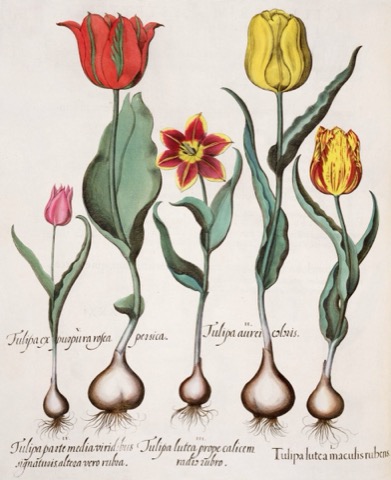
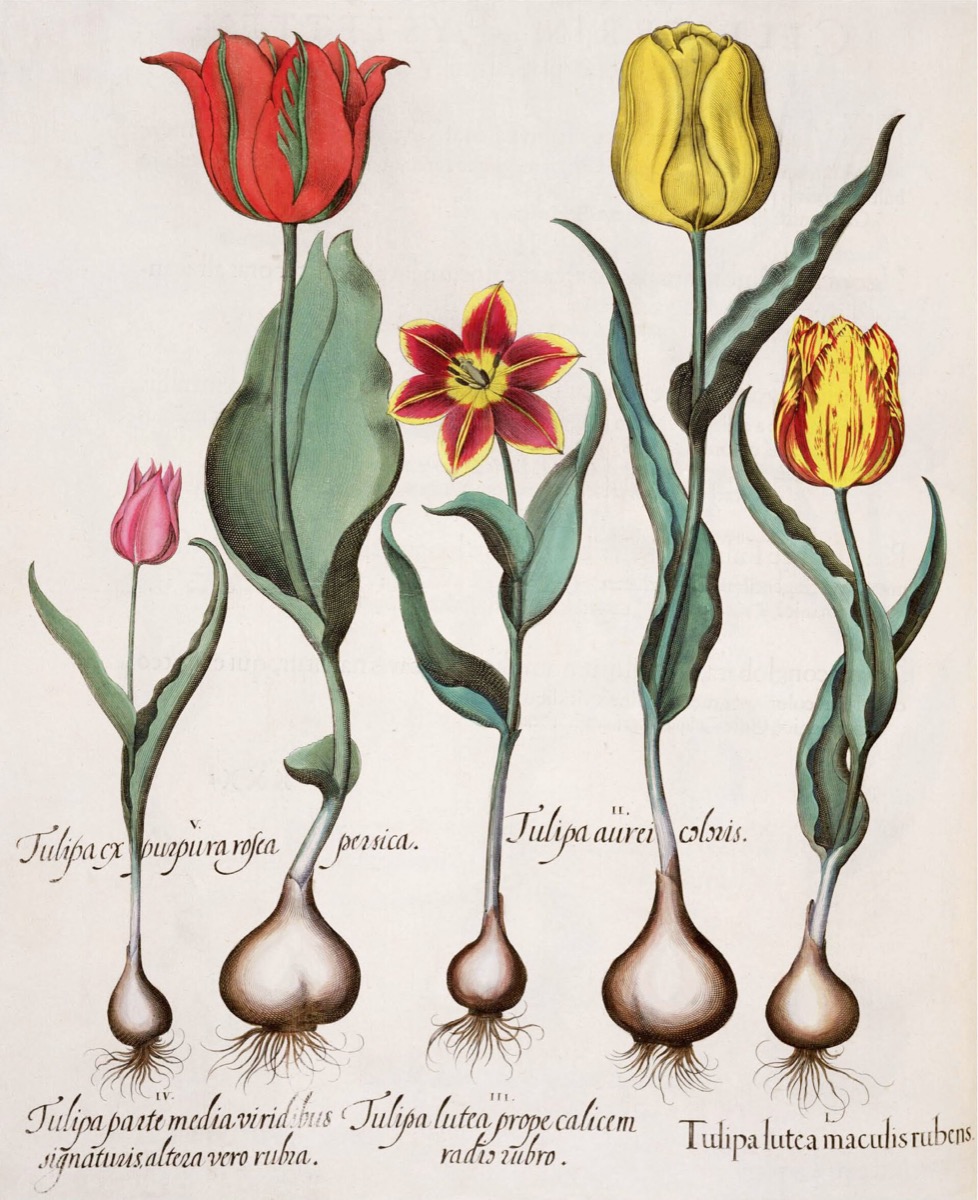
Tulipa praecox polyanthos
Hortus Eystettensis · Vern. Ord. 3, Fol. 1 · 1613
Basilius Besler · scan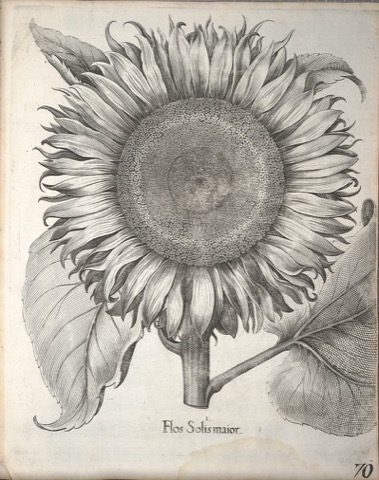
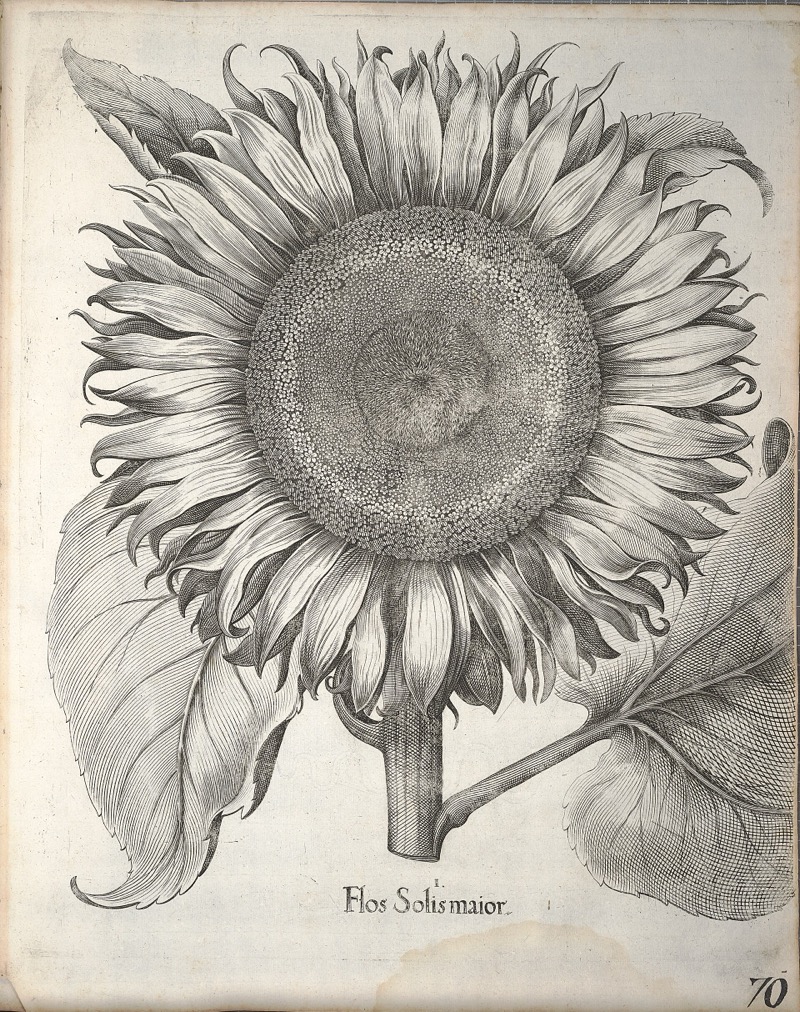
Flos Solis maior
Hortus Eystettensis · Classis Aestiva, Fol. 70 · 1640
· scan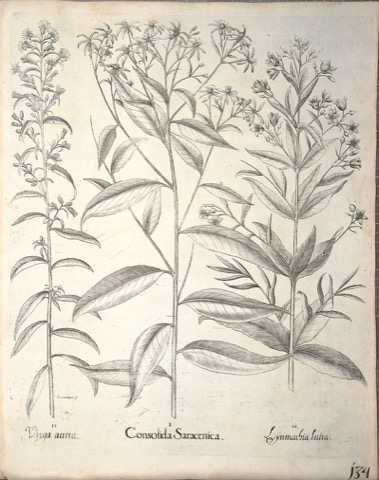
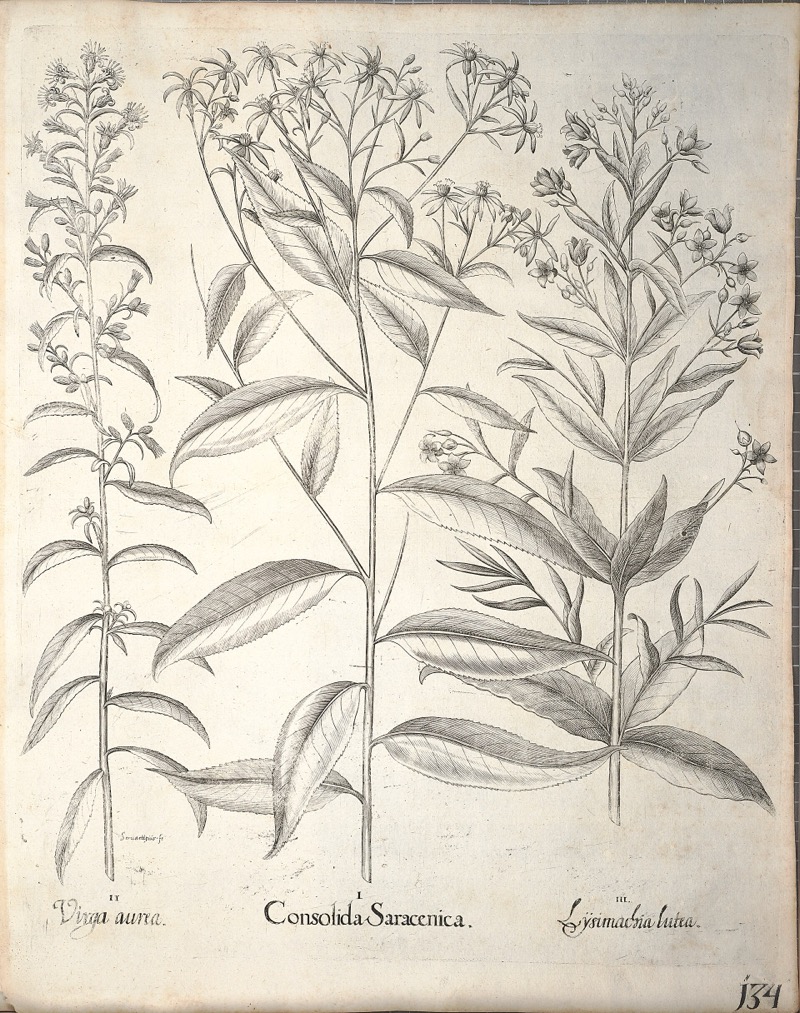
Virga aurea
Hortus Eystettensis · Classis Aestiva, Fol. 134 · 1640
· scan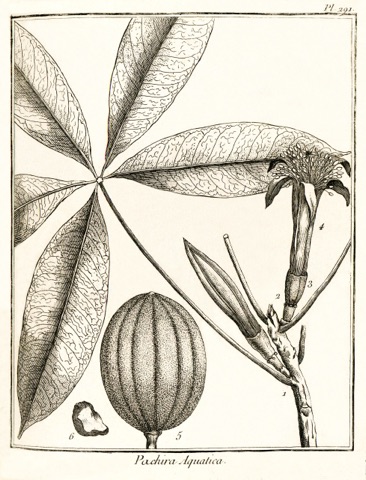
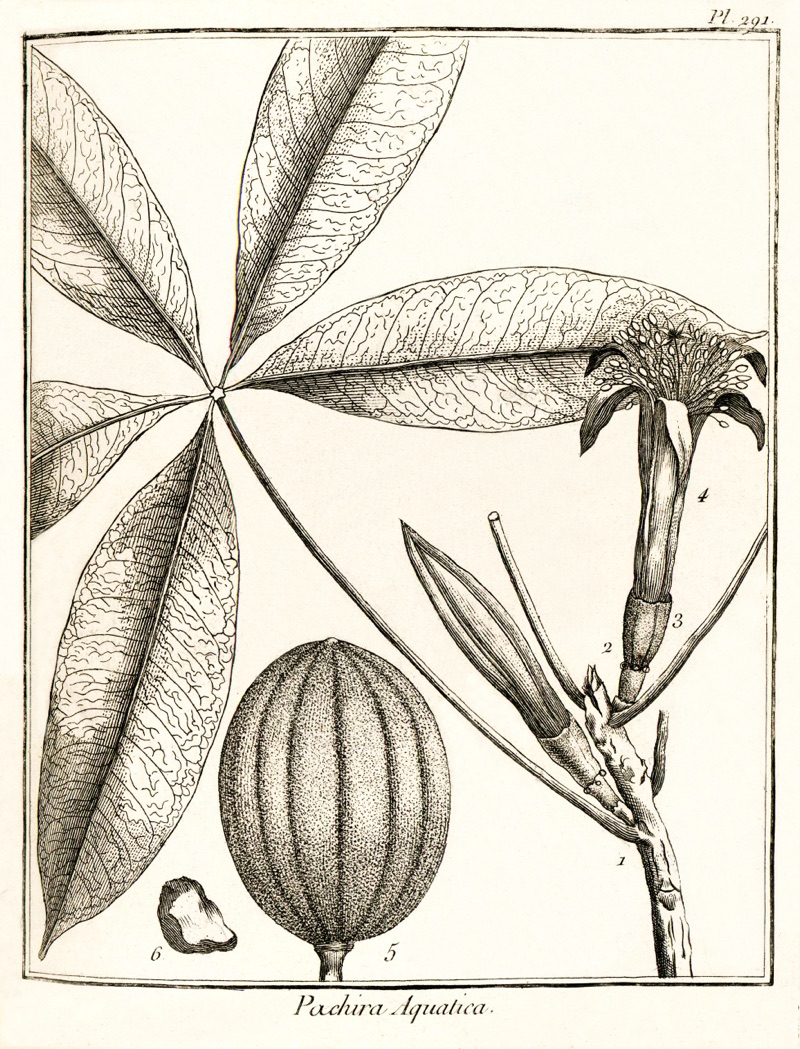
Pachira Aquatica
Histoire des plantes de la Guiane Françoise · Pl. 291 · 1775
· scan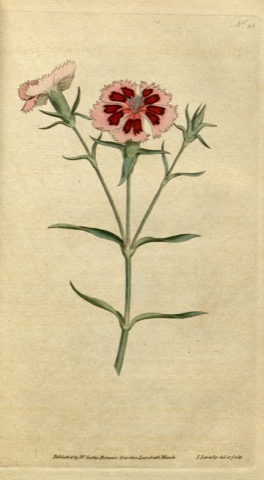
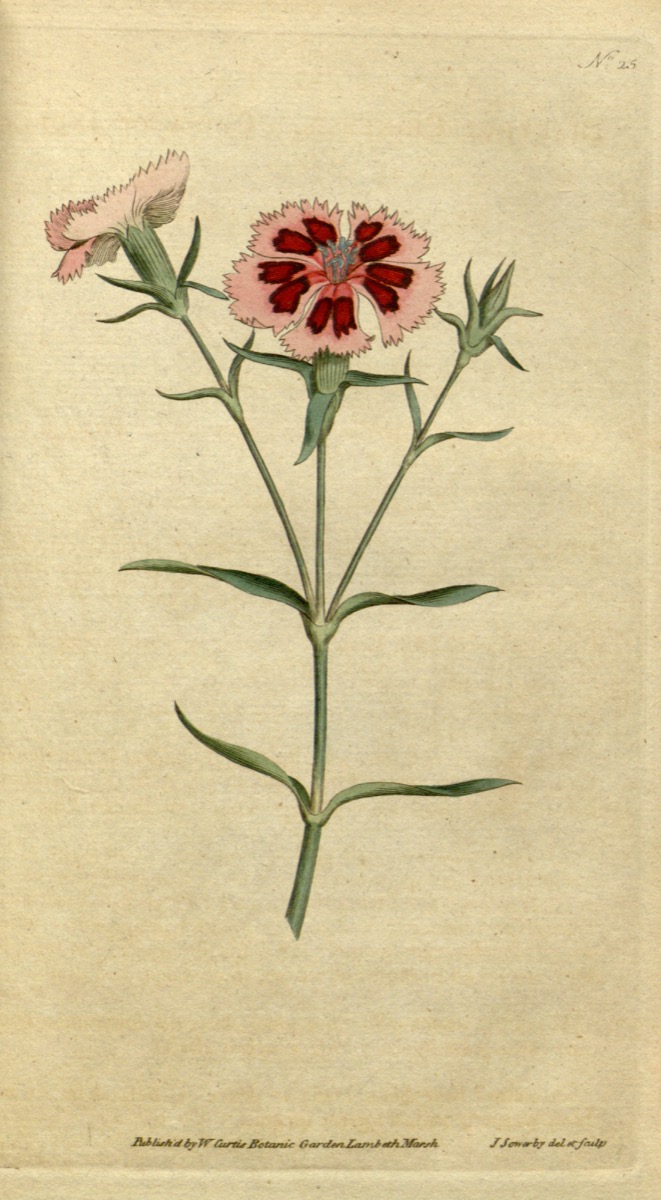
Dianthus chinensis
Curtis's Botanical Magazine · 25 · 1787
James Sowerby · scan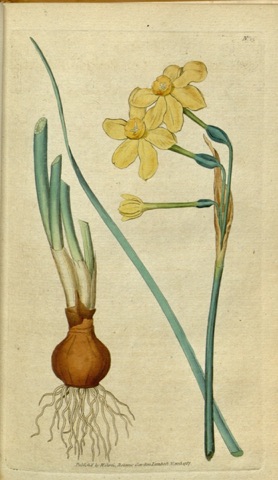
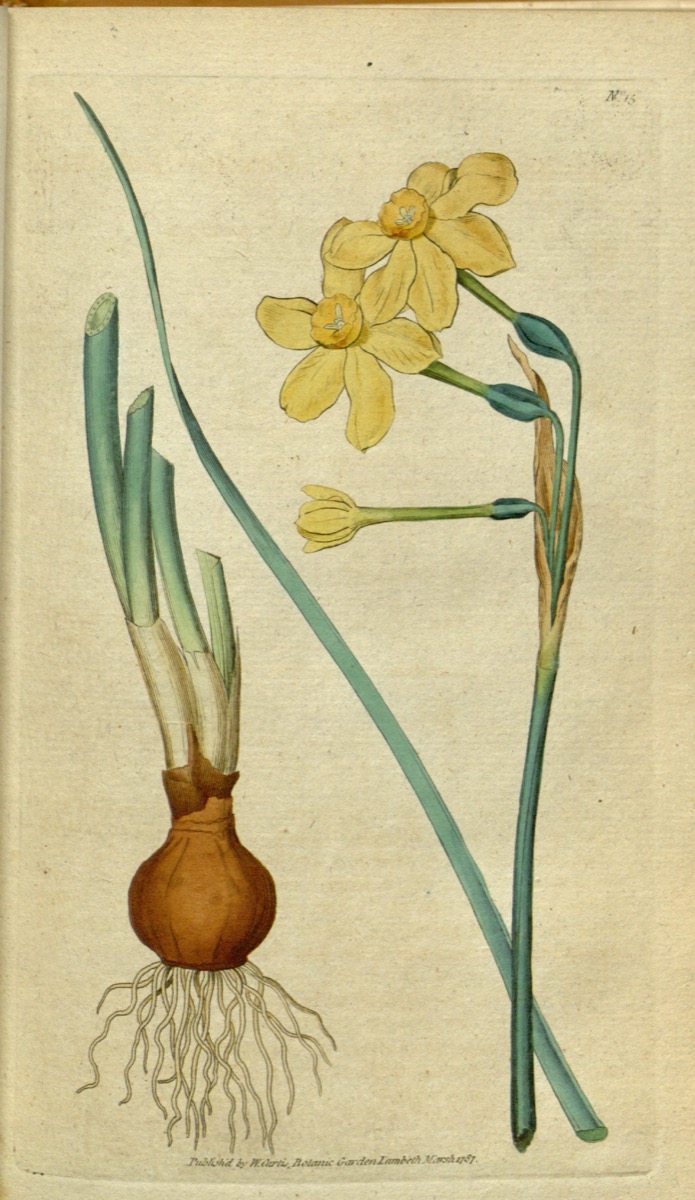
Narcissus jonquilla
Curtis's Botanical Magazine · 15 · 1787
· scan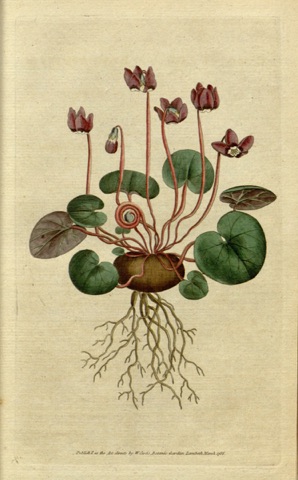
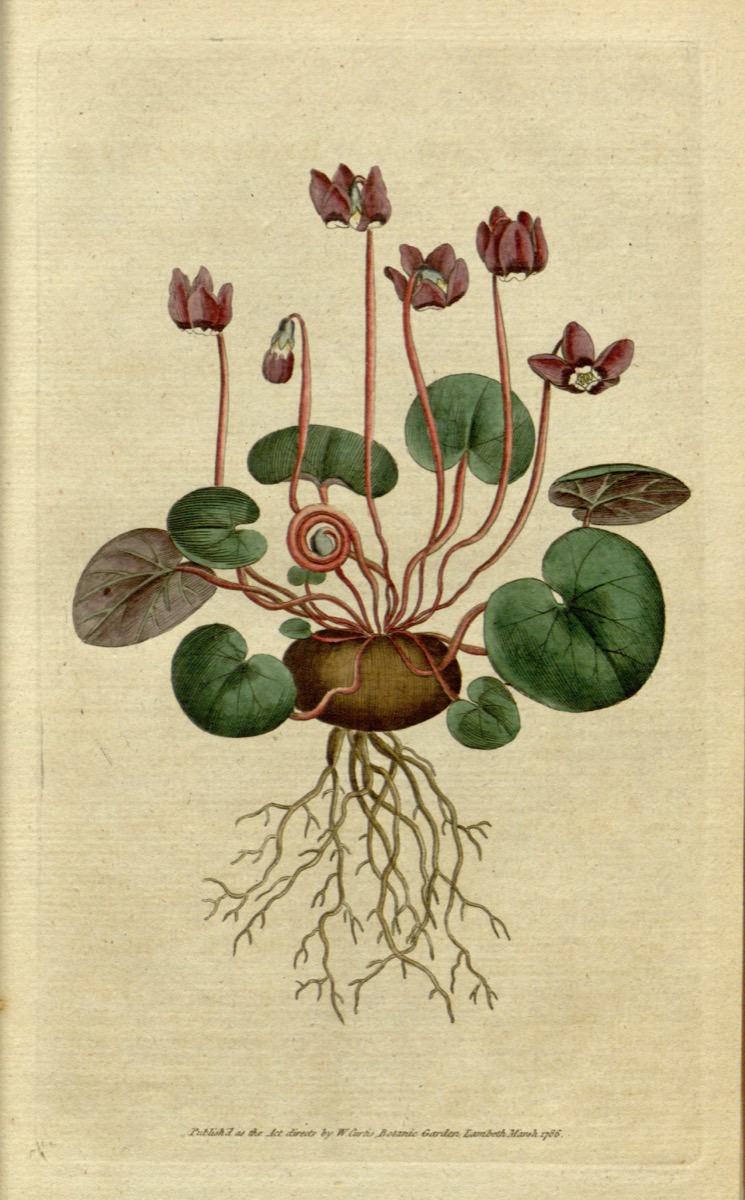
Cyclamen coum
Curtis's Botanical Magazine · 4 · 1787
· scan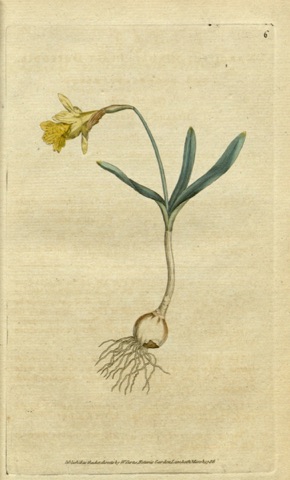
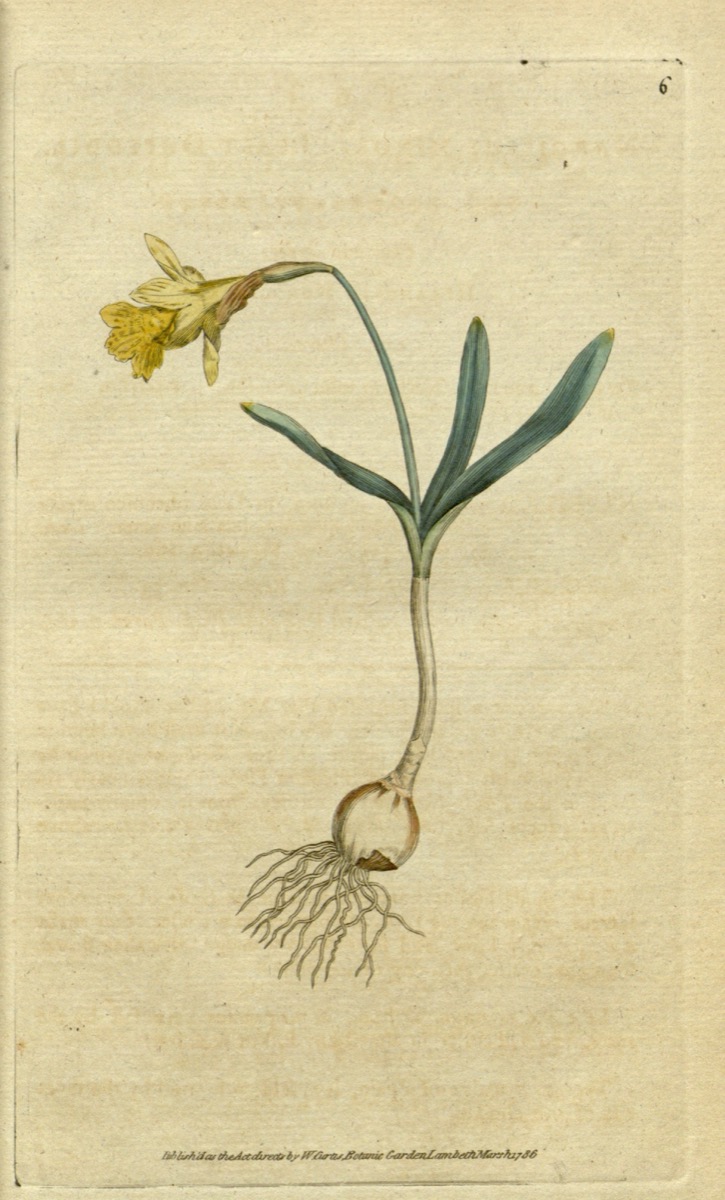
Narcissus minor
Curtis's Botanical Magazine · 6 · 1787
· scan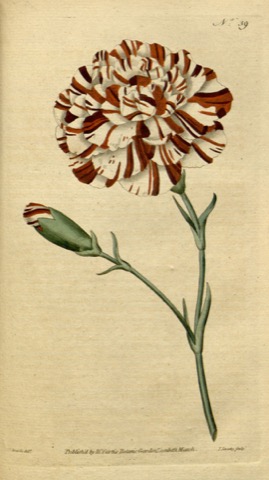
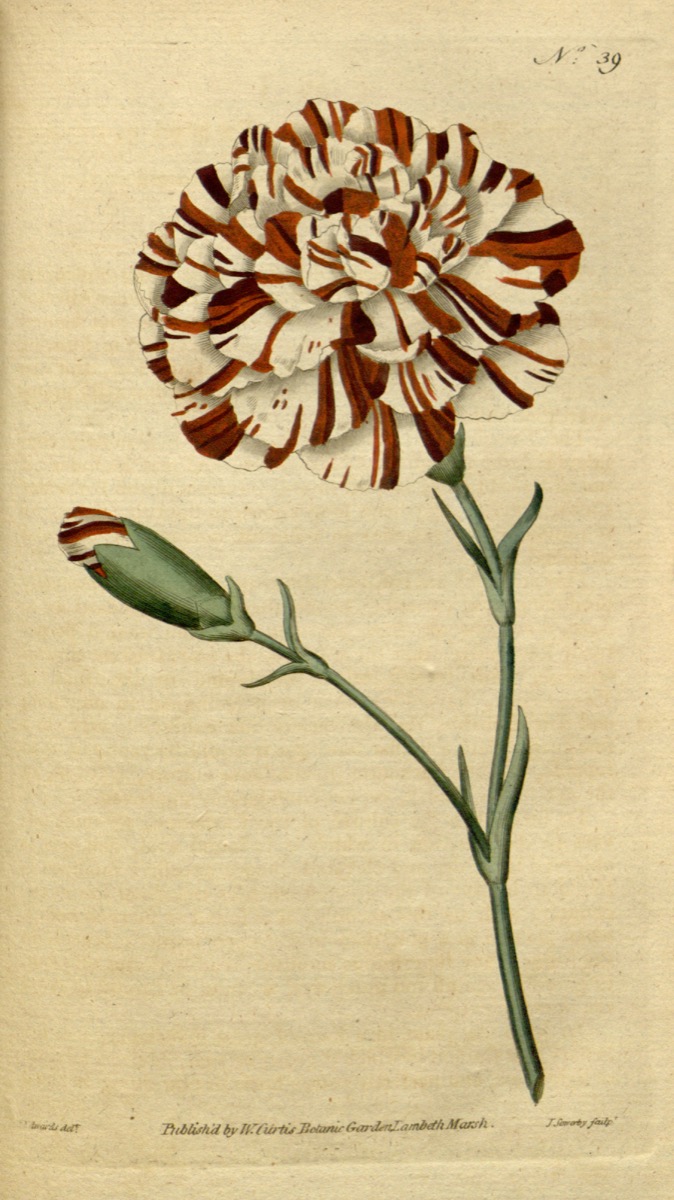
Dianthus caryophyllus
Curtis's Botanical Magazine · 39 · 1788
James Sowerby · scan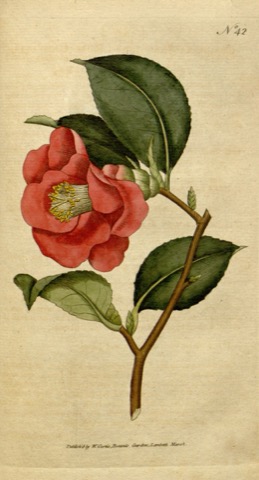
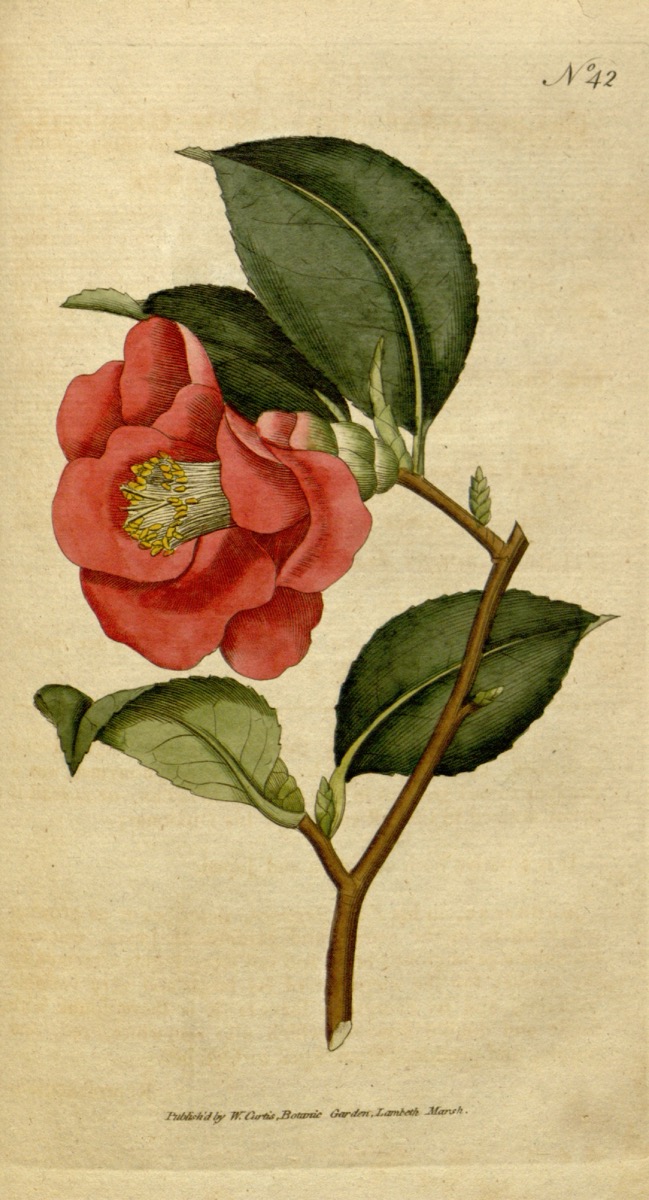
Camellia japonica
Curtis's Botanical Magazine · 42 · 1788
· scan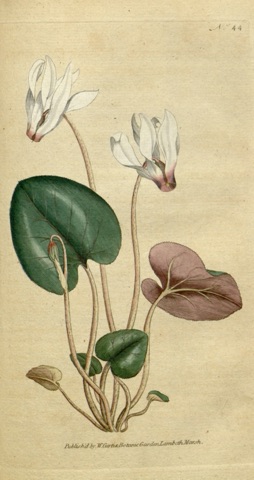
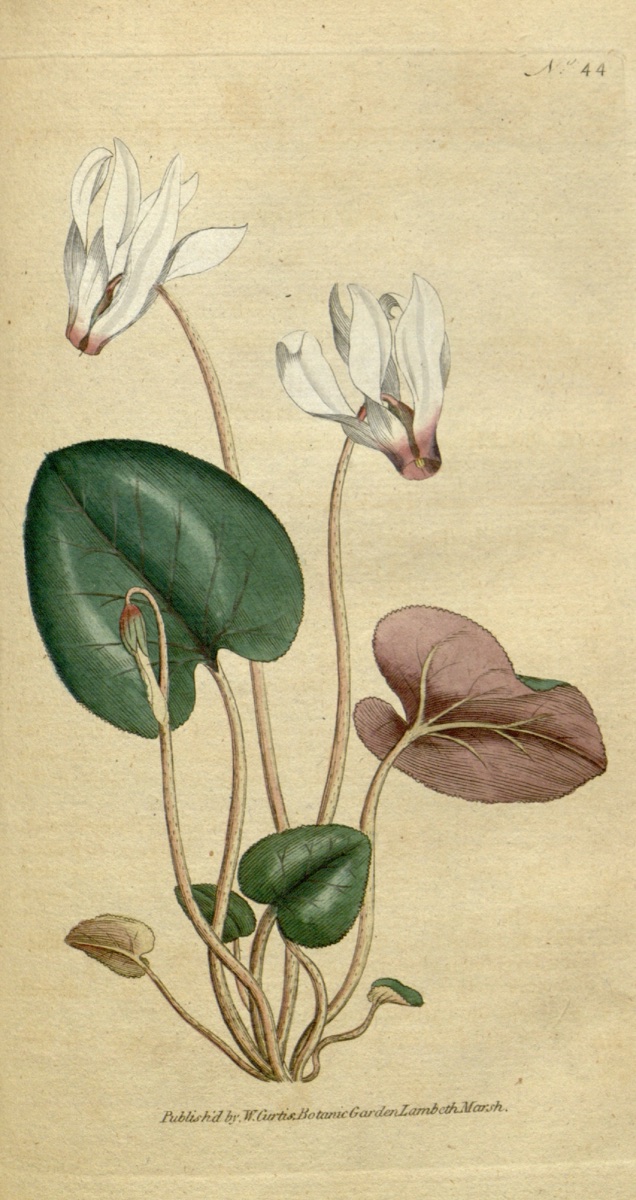
Cyclamen persicum
Curtis's Botanical Magazine · 44 · 1788
· scan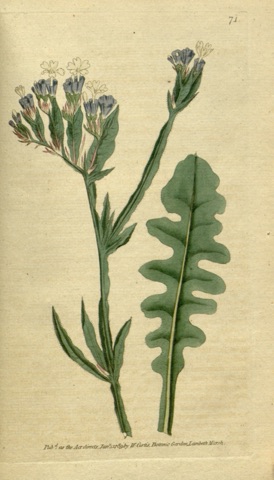
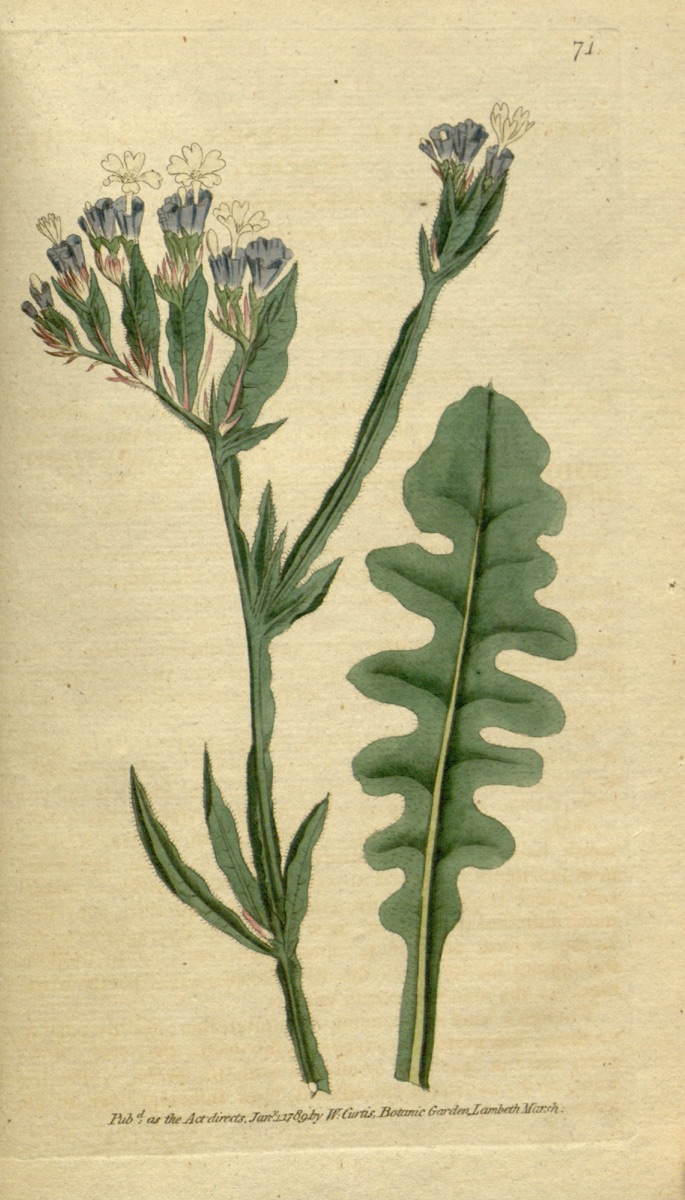
Statice sinuata = Limonium sinuatum (L.) Mill.
Curtis's Botanical Magazine · 71 · 1789
· scan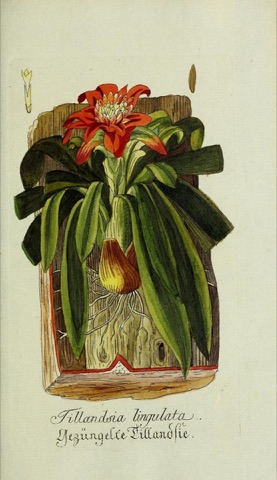
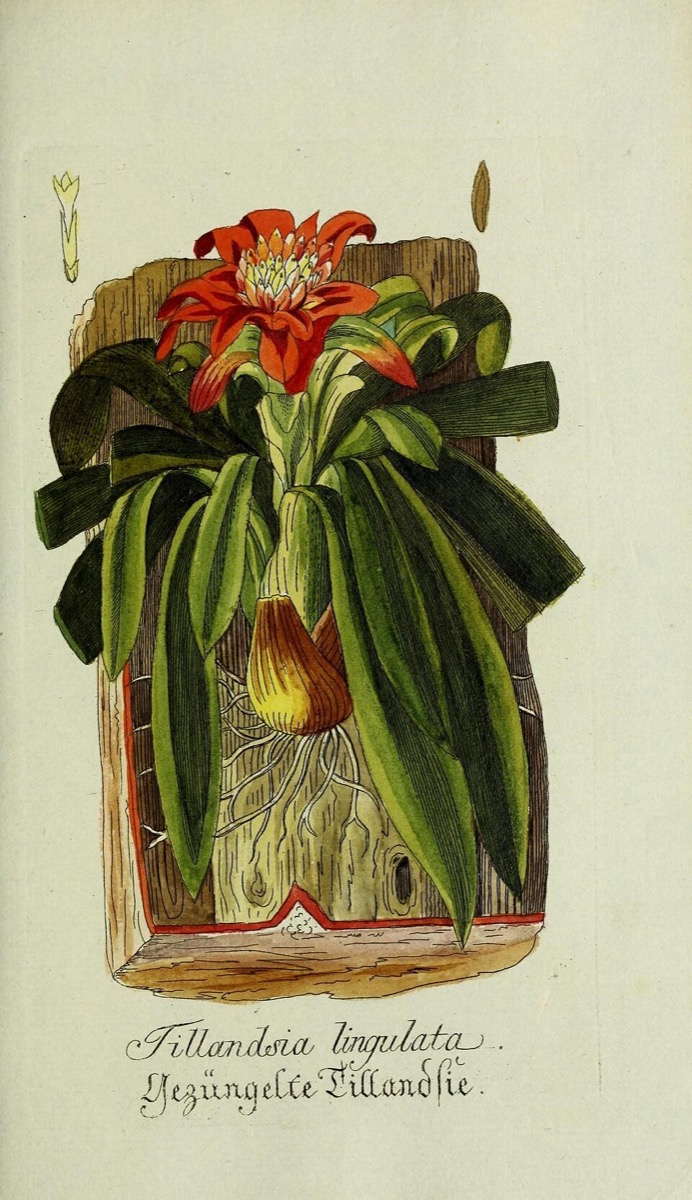
Tillandsia lingulata = Guzmania lingulata (L.) Mez
Plantarum indigenarum et exoticarum icones ad vivum coloratae · · 1789
· scan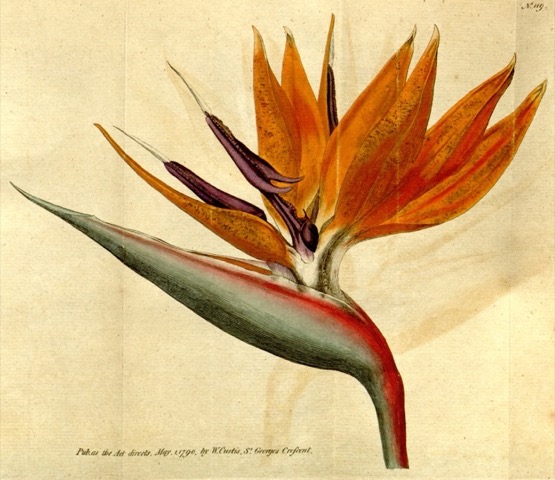
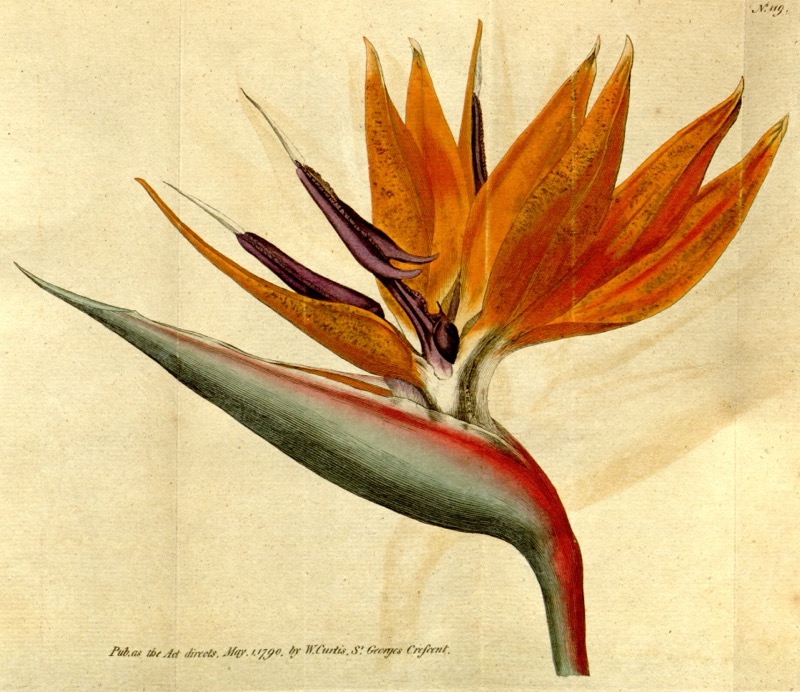
Strelitzia Reginæ
Curtis's Botanical Magazine · 119 · 1790
· scan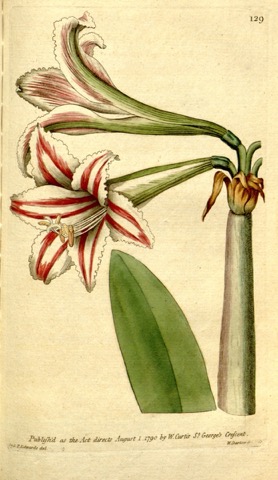
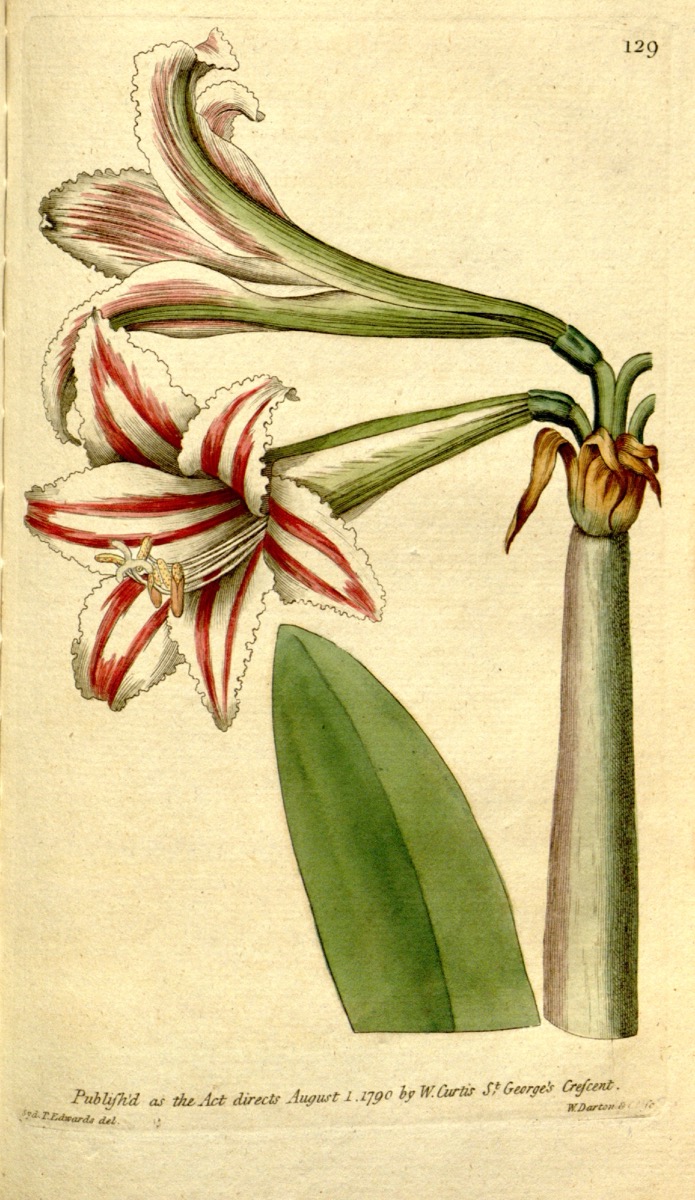
Amaryllis vittata = Hippeastrum vittatum (L'Hér.) Herb.
Curtis's Botanical Magazine · 129 · 1790
Sydenham Edwards, W. Darton · scan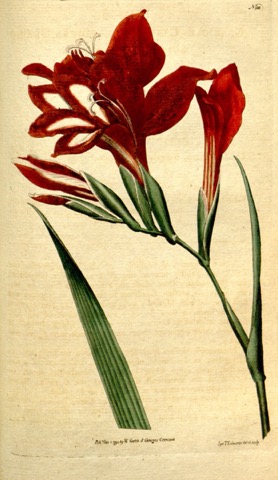
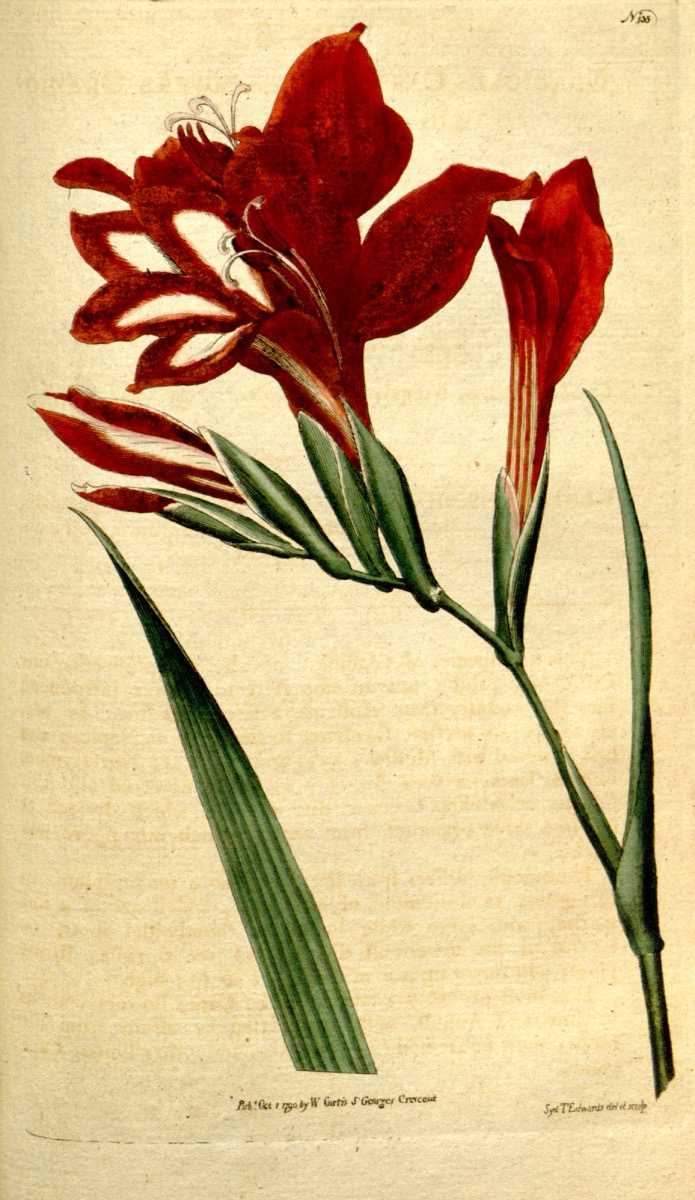
Gladiolus cardinalis
Curtis's Botanical Magazine · 135 · 1790
Sydenham Edwards · scan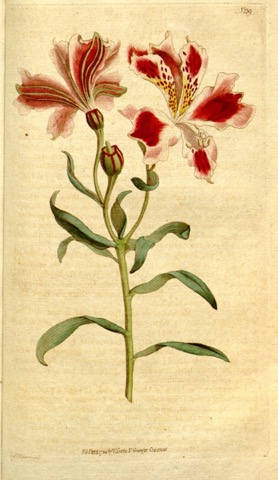
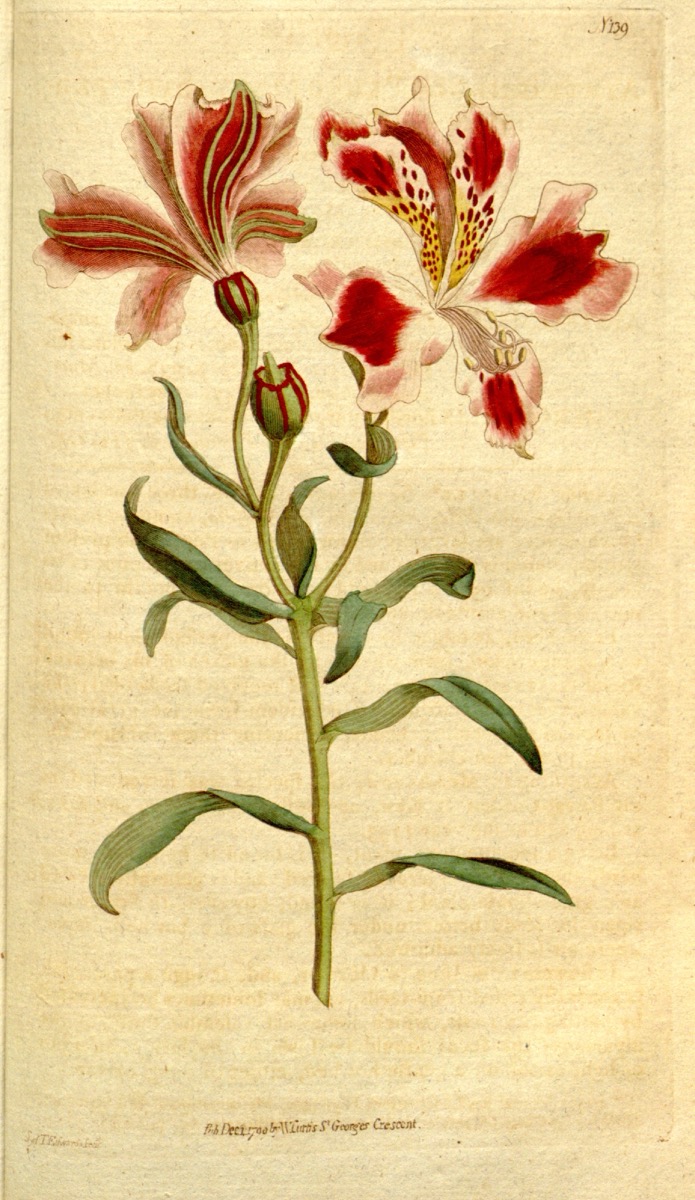
Alstroemeria Pelegrina
Curtis's Botanical Magazine · 139 · 1790
· scan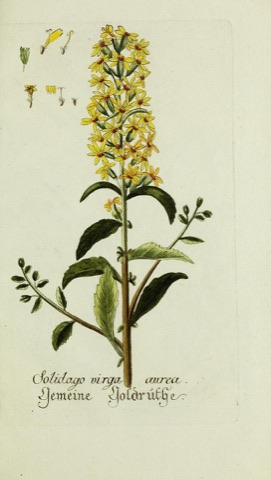
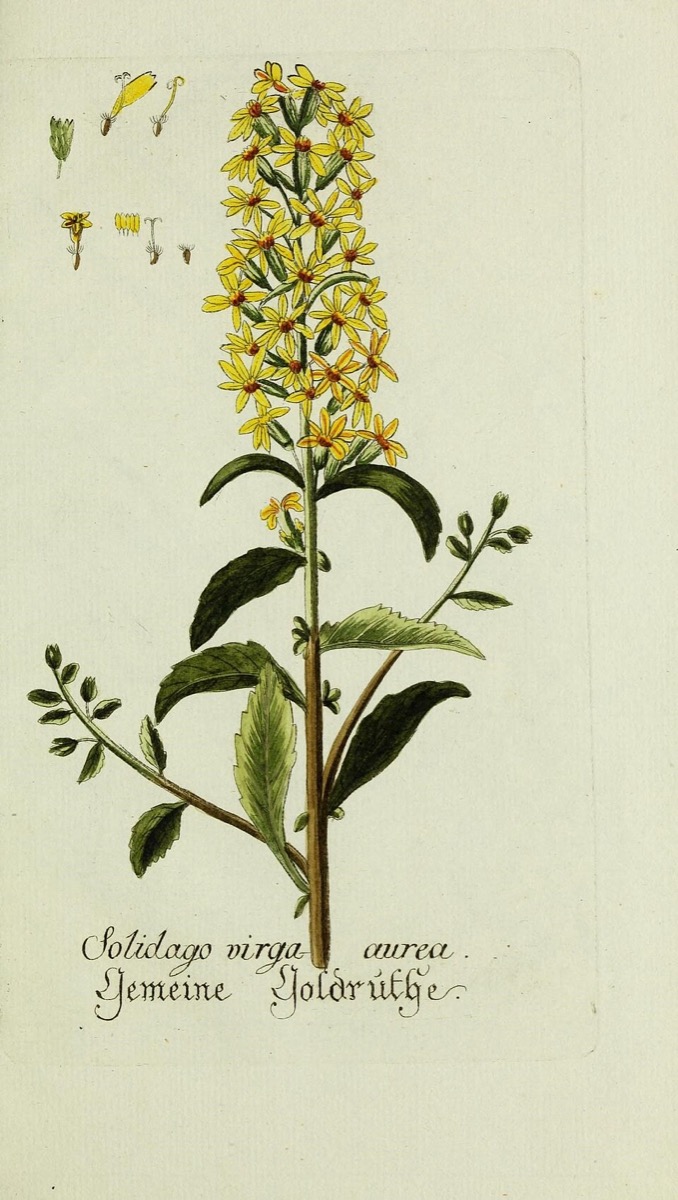
Solidago virga-aurea = Solidago virgaurea L.
Plantarum indigenarum et exoticarum icones ad vivum coloratae · · 1790
· scan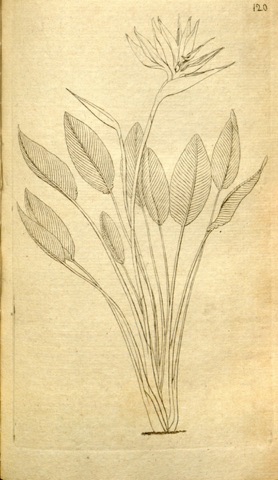
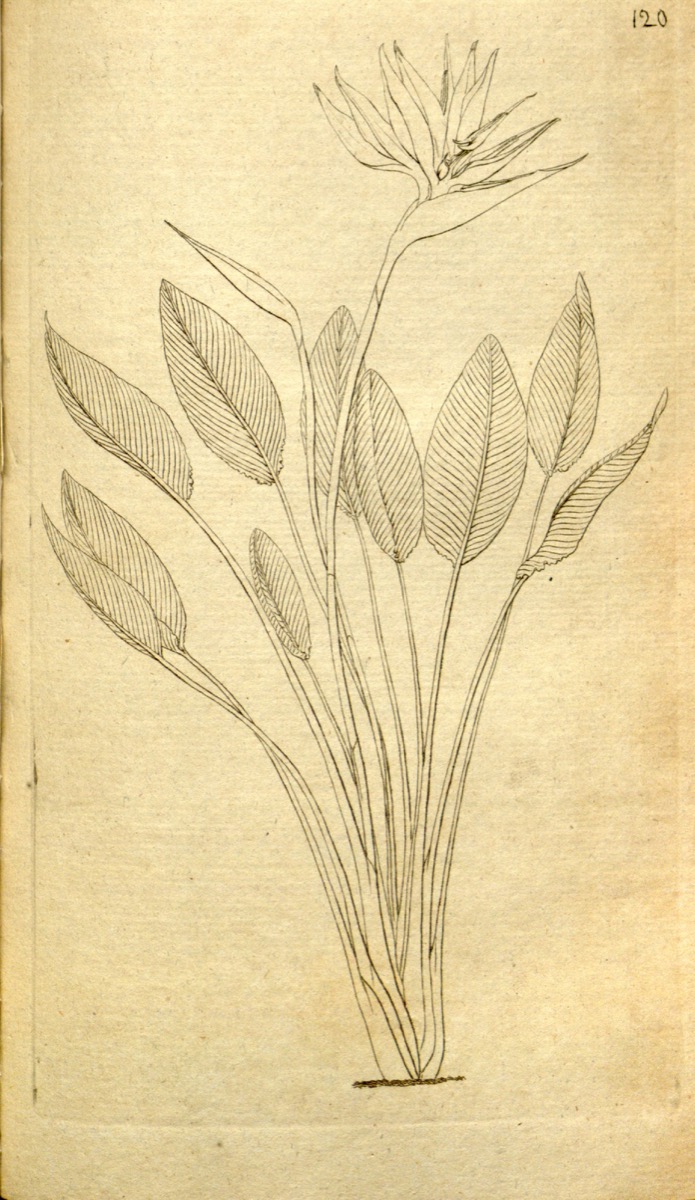
Strelitzia reginae
Curtis's Botanical Magazine · 120 · 1791
· scan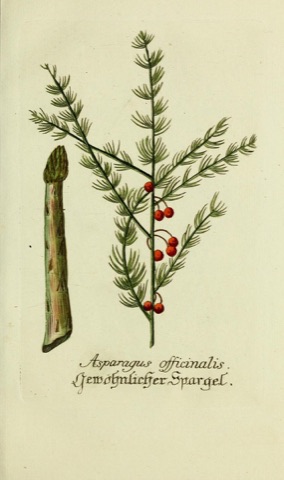
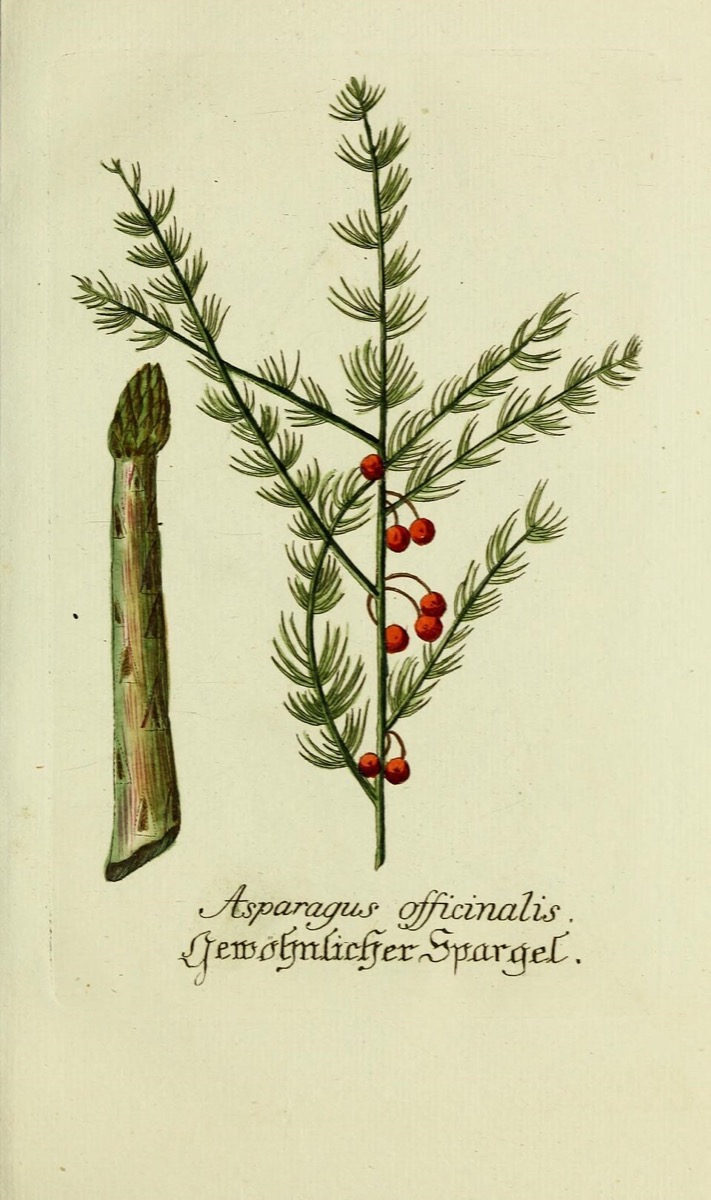
Asparagus officinalis
Plantarum indigenarum et exoticarum icones ad vivum coloratae · · 1791
· scan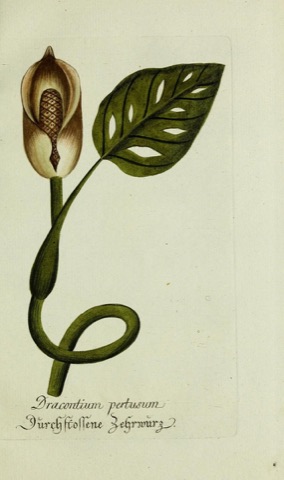
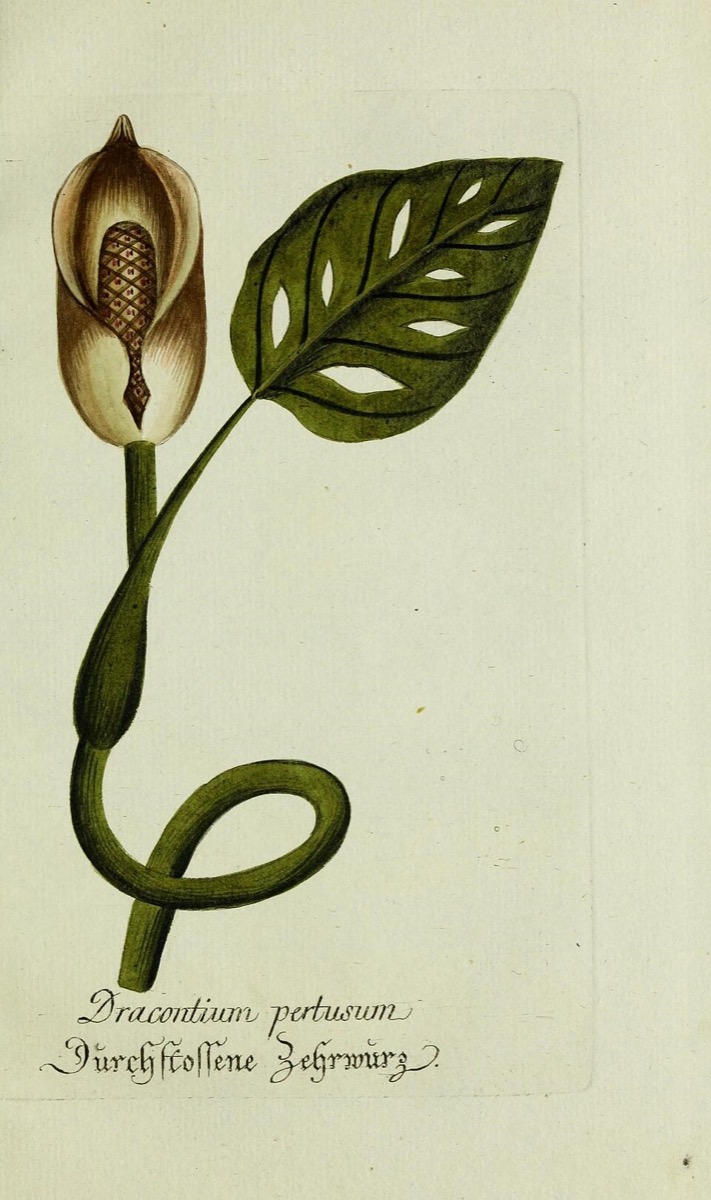
Dracontium pertusum = Monstera adansonii Schott
Plantarum indigenarum et exoticarum icones ad vivum coloratae · · 1791
· scan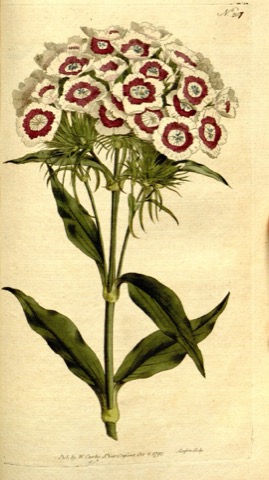
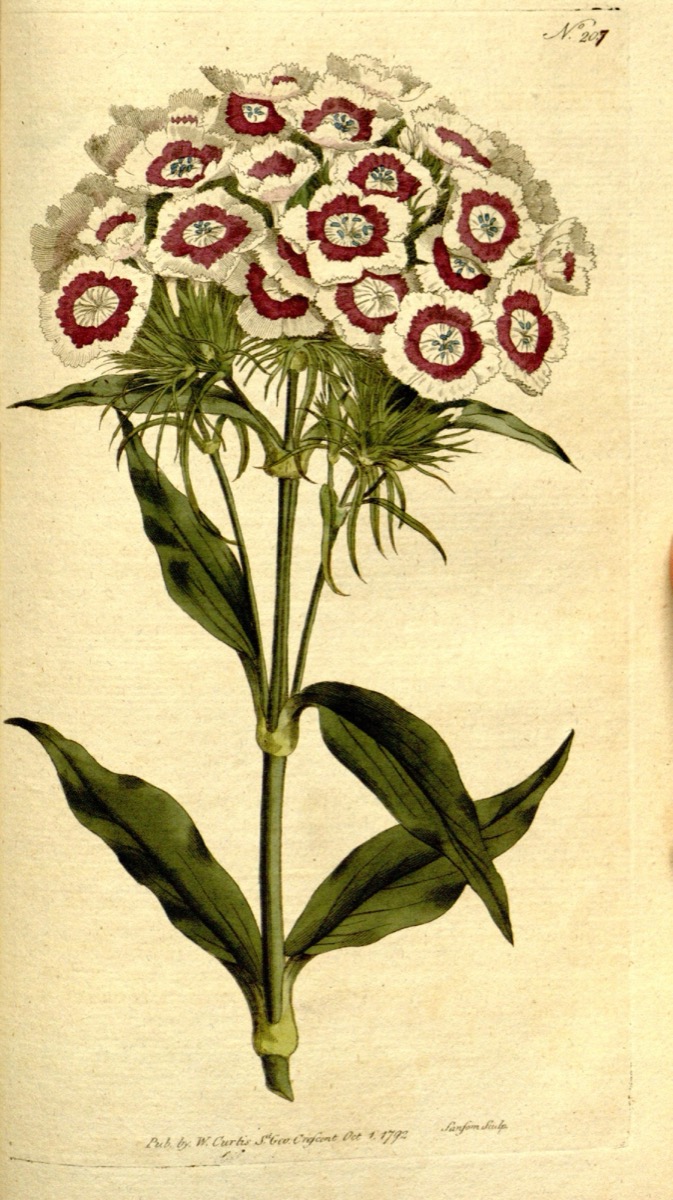
Dianthus barbatus
Curtis's Botanical Magazine · 207 · 1793
Sydenham Edwards · scan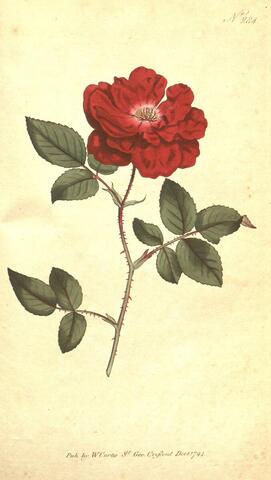
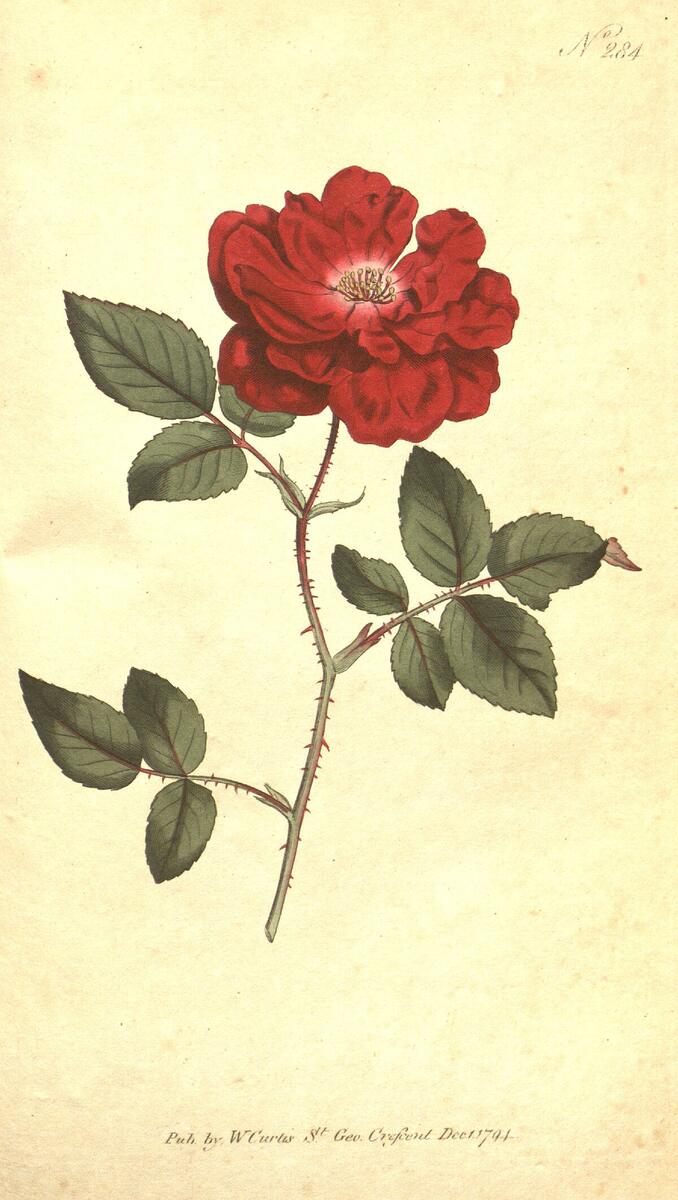
Rosa semperflorens (in text) = Rosa chinensis Jacq.
Curtis's Botanical Magazine · 284 · 1794
· scan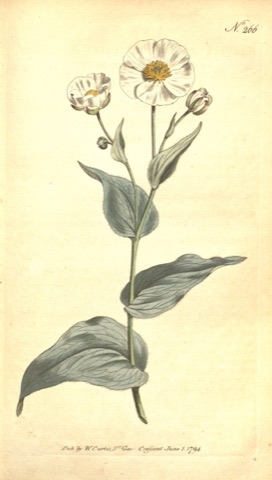
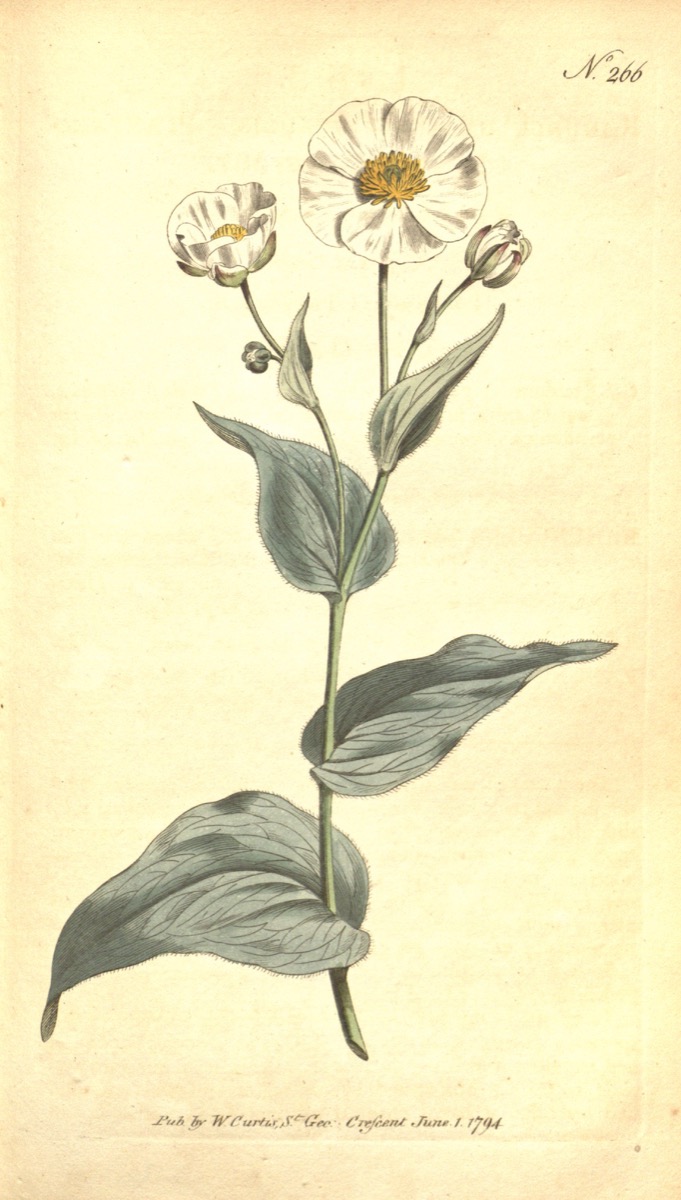
Ranunculus amplexicaulis
Curtis's Botanical Magazine · 266 · 1794
· scan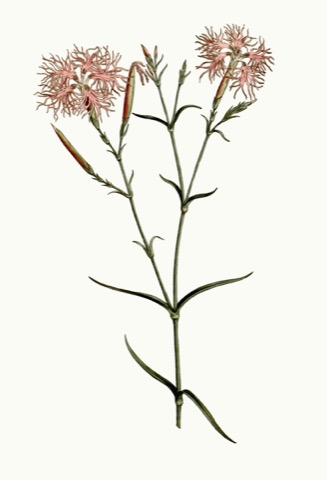
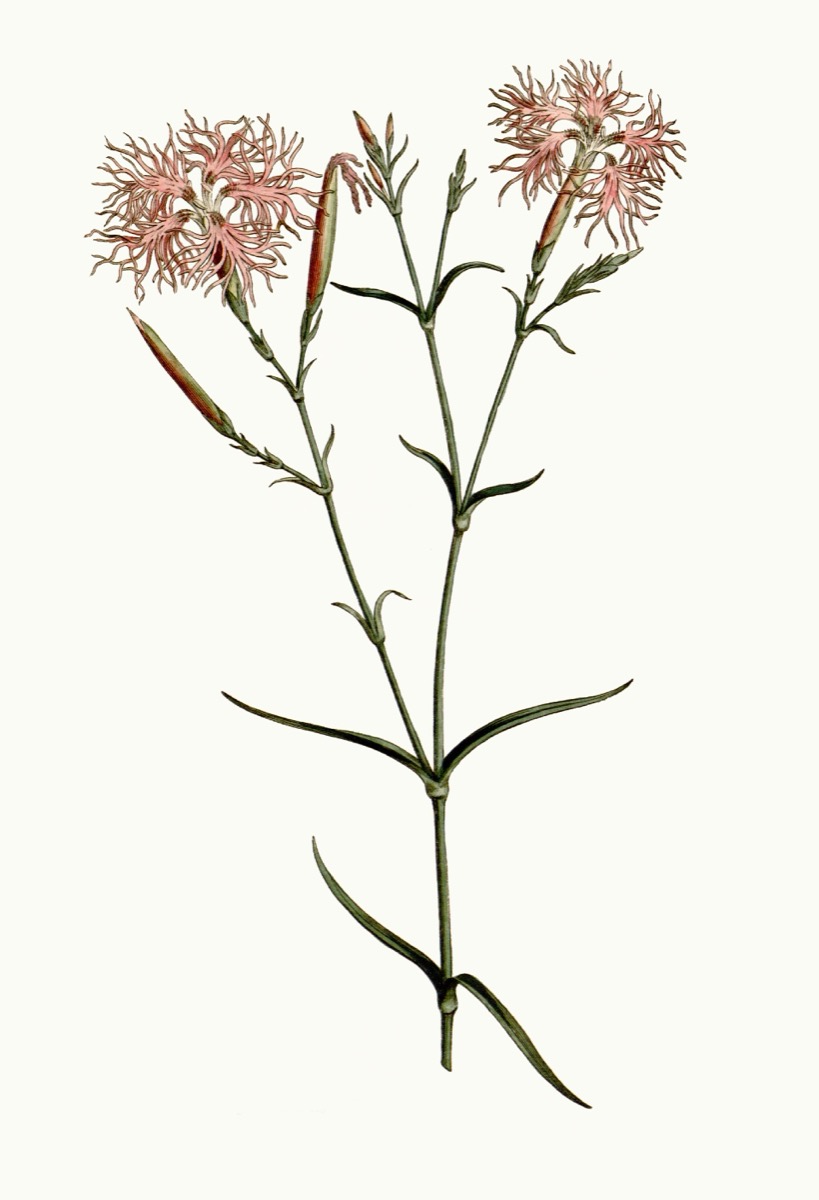
Dianthus superbus
Curtis's Botanical Magazine · 297 · 1795
Sydenham Edwards · scan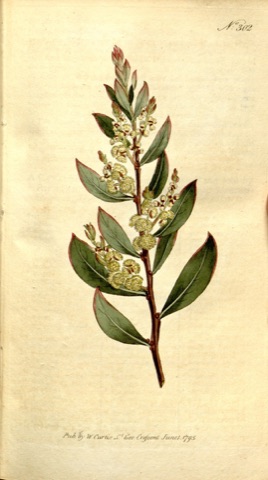
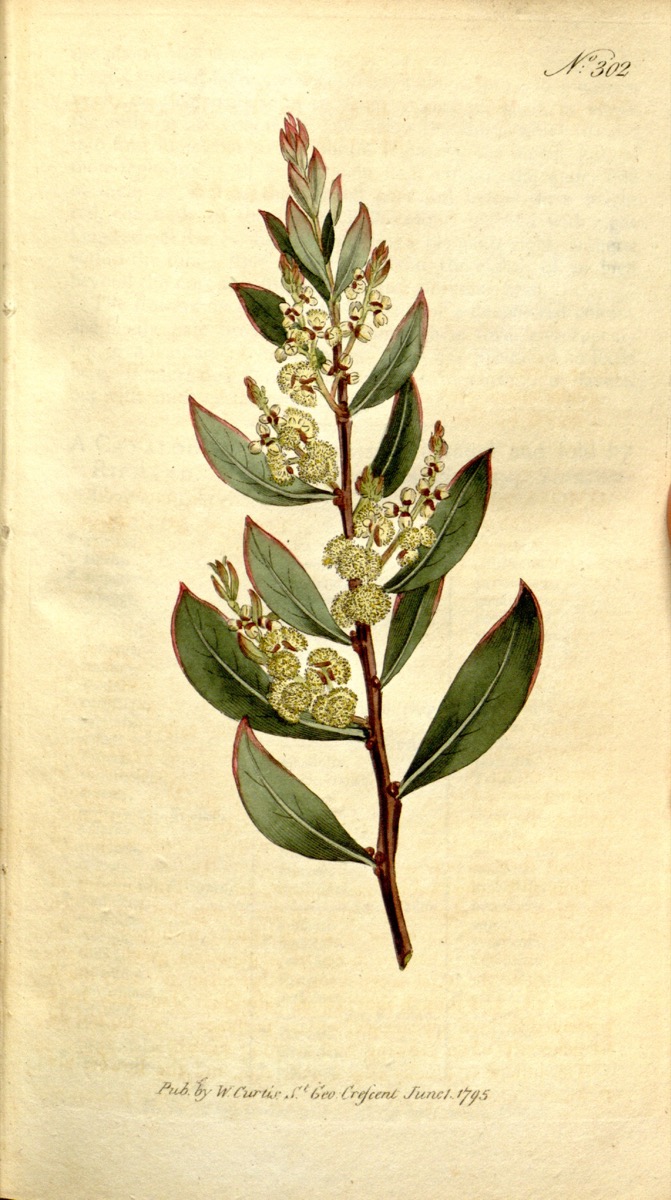
Mimosa myrtifolia = Acacia myrtifolia (Sm.) Willd.
Curtis's Botanical Magazine · 302 · 1795
· scan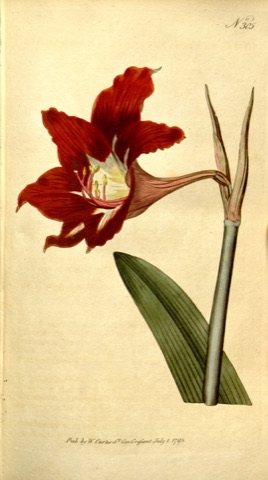
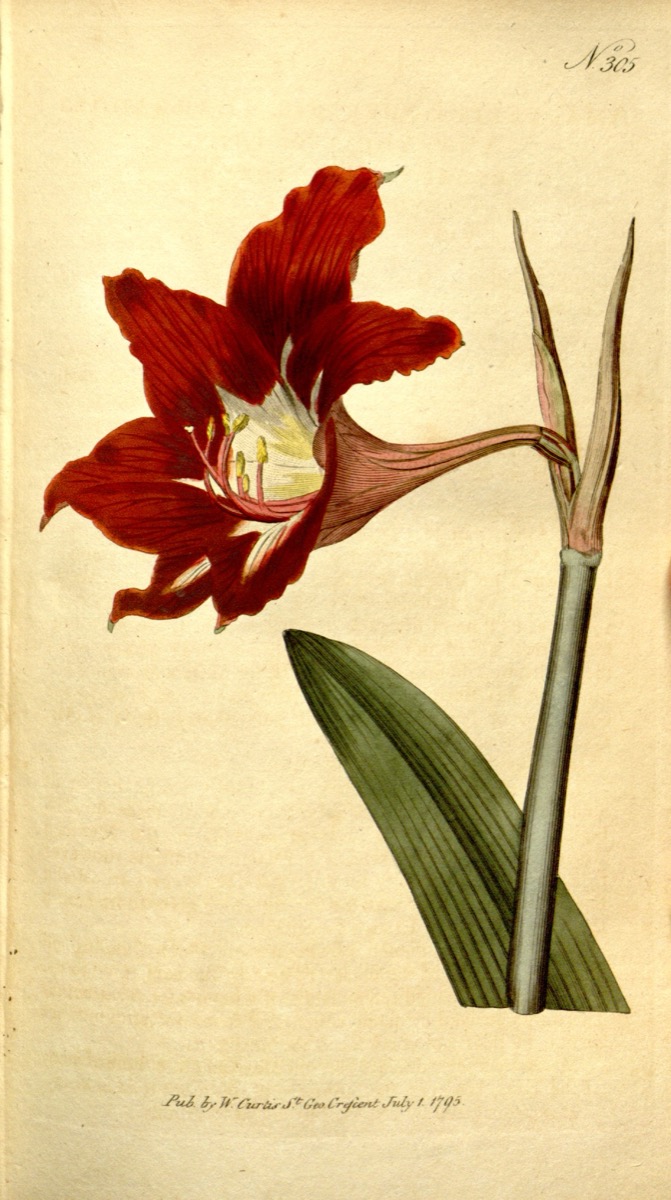
Amaryllis equestris = Hippeastrum puniceum (Lam.) Voss
Curtis's Botanical Magazine · 305 · 1795
· scan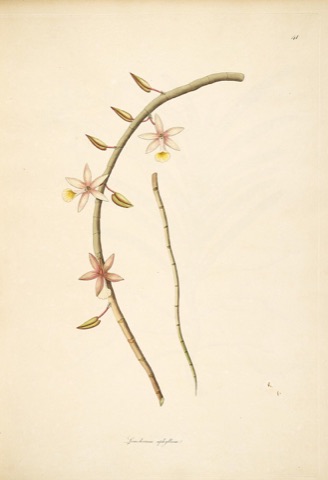
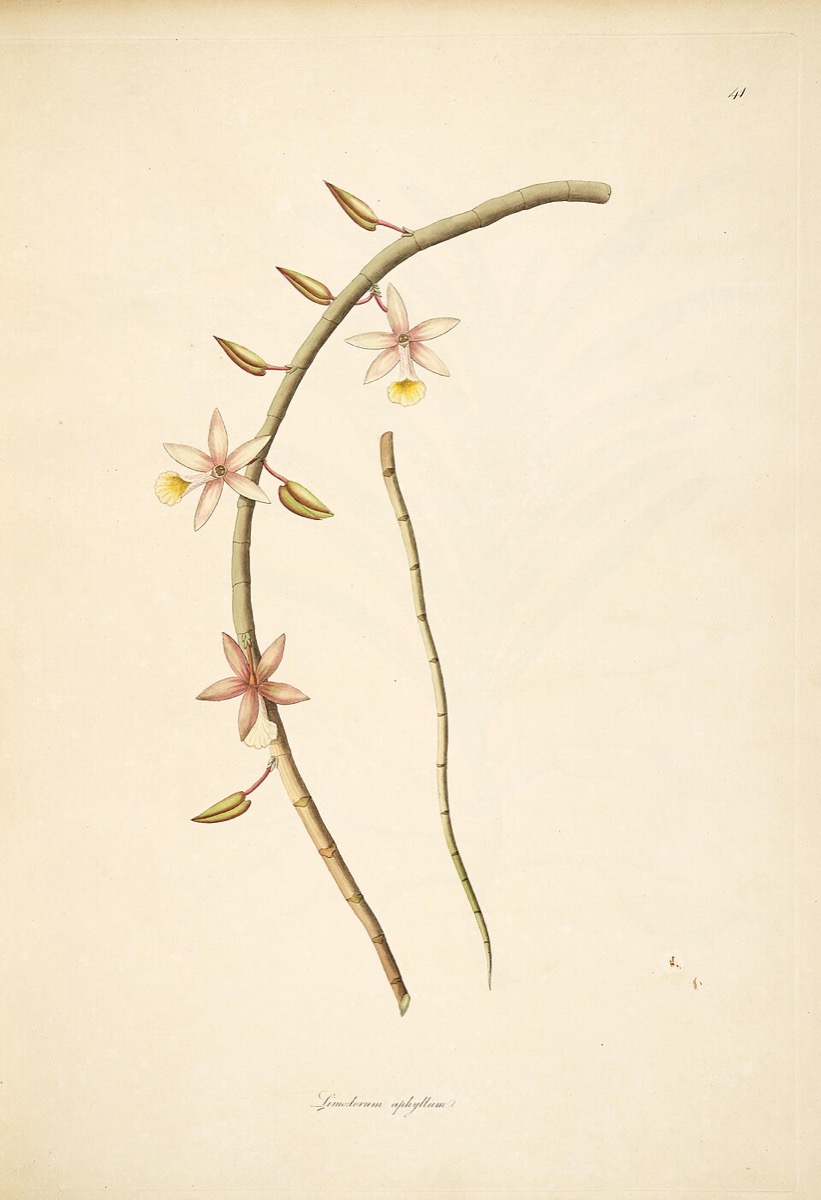
Limodorum aphyllum = Dendrobium aphyllum (Roxb.) C.E.C.Fisch.
Plants of the Coast of Coromandel · 41 · 1795
· scan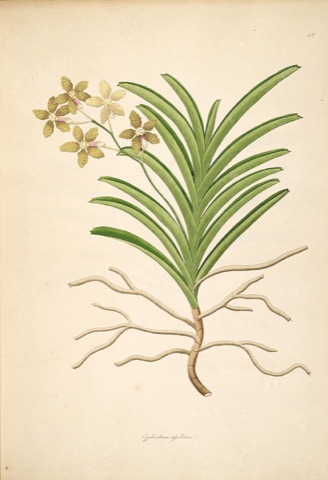
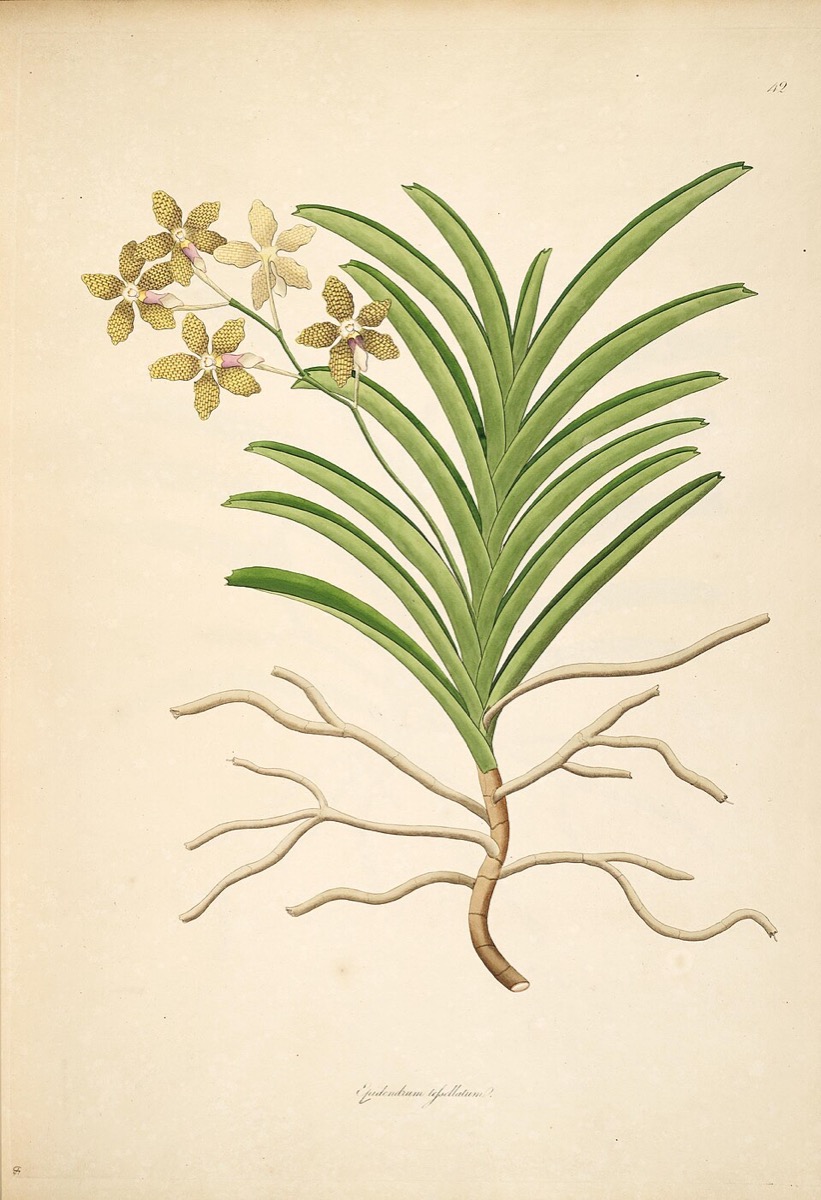
Epidendrum tessellatum = Vanda tessellata (Roxb.) Hook. ex G.Don
Plants of the Coast of Coromandel · 42 · 1795
· scan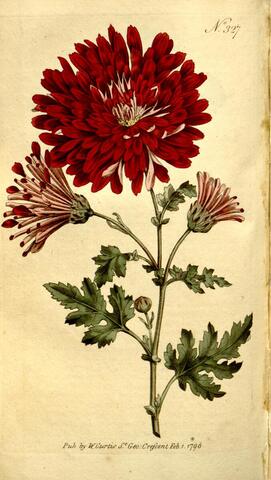
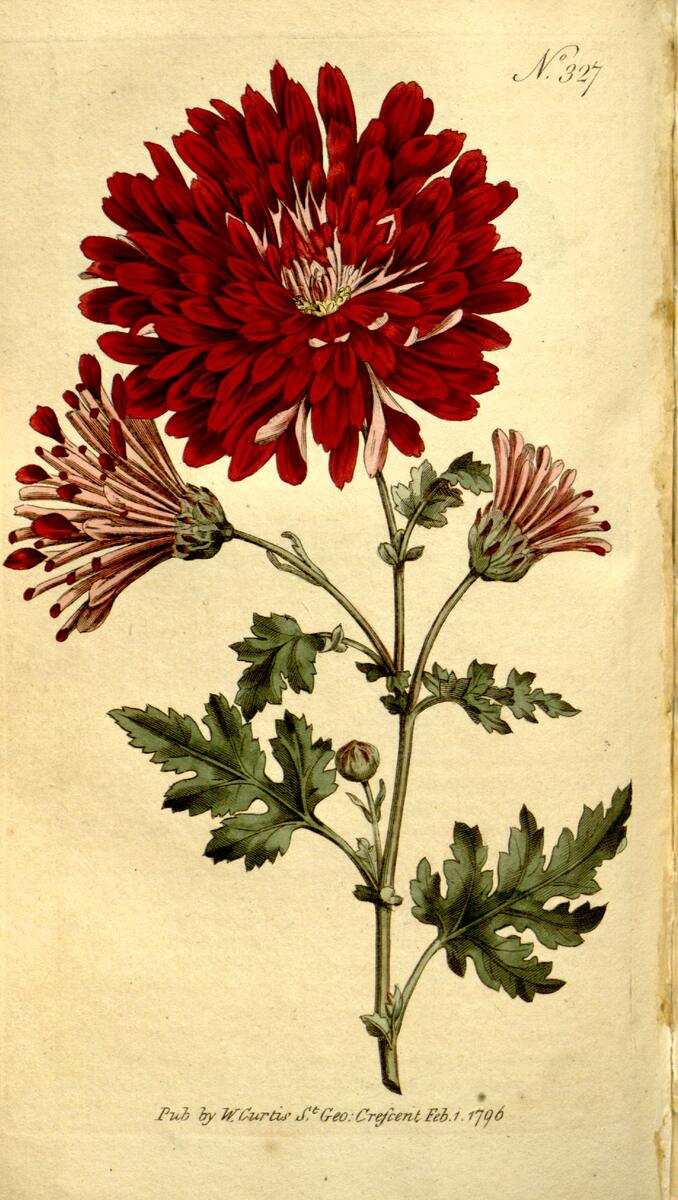
Chrysanthemum indicum (in text) = Chrysanthemum × morifolium (Ramat.) Hemsl.
Curtis's Botanical Magazine · 327 · 1796
· scan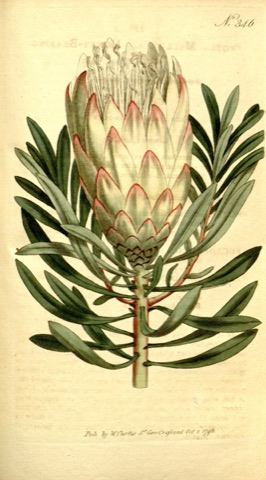
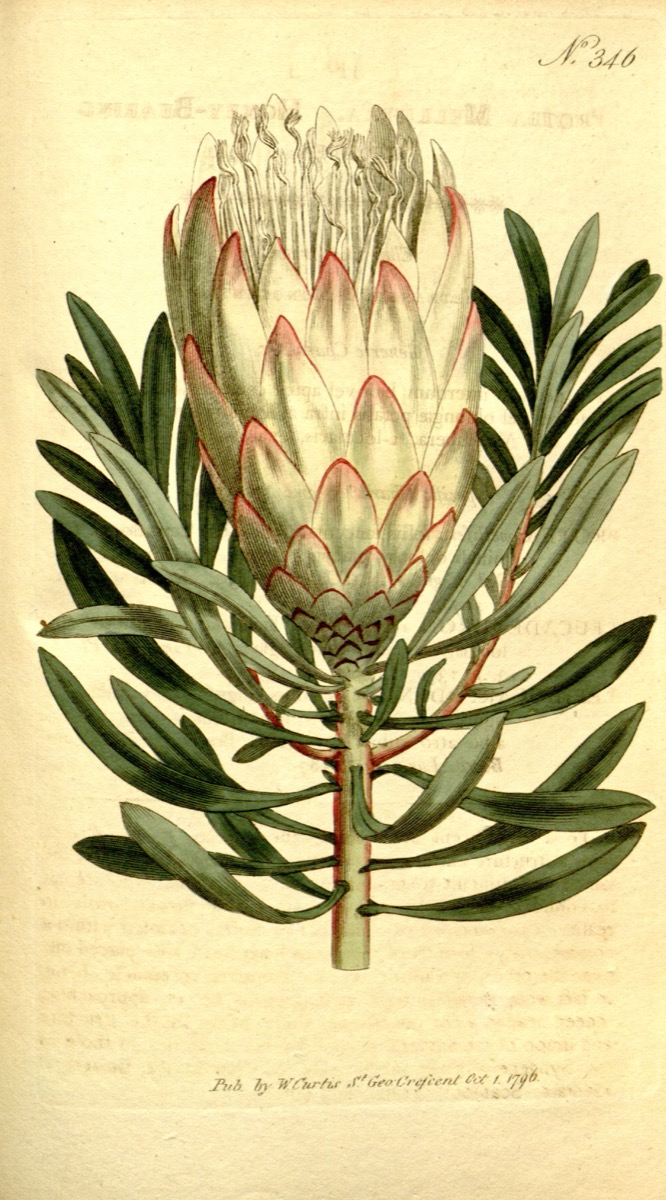
Protea mellifera = Protea repens (L.) L.
Curtis's Botanical Magazine · 346 · 1796
· scan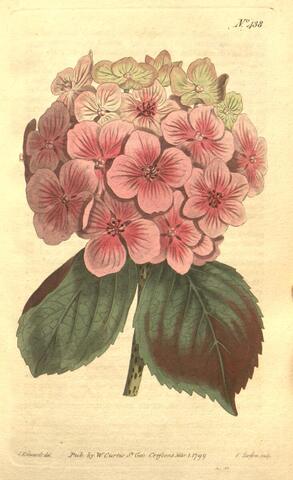
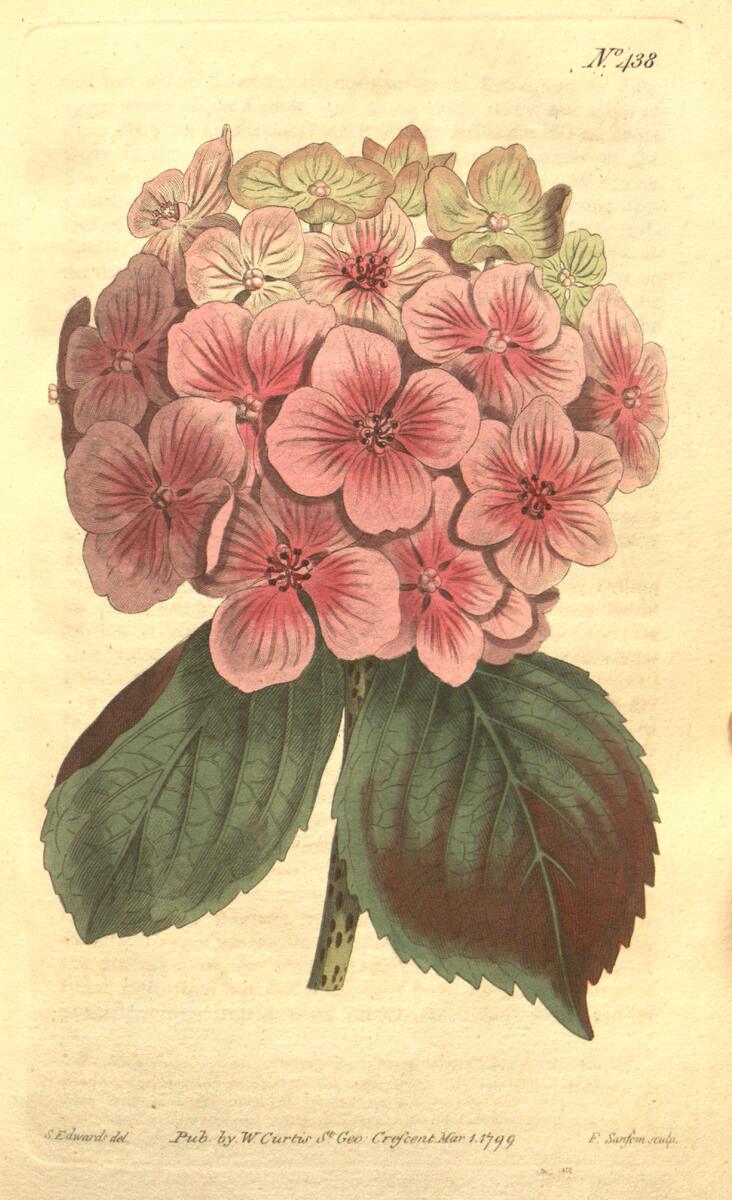
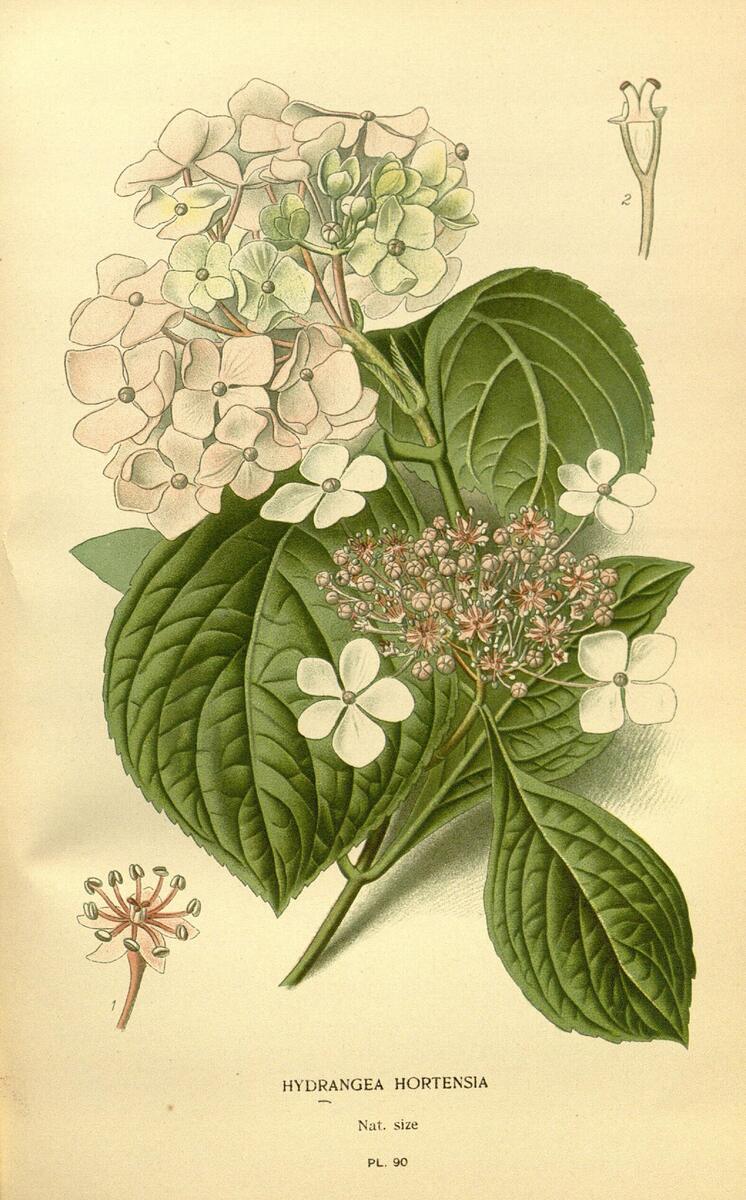
Hydrangea Hortensis (in text) = Hydrangea macrophylla (Thunb.) Ser.
Curtis's Botanical Magazine · 438 · 1799
Sydenham Edwards · scan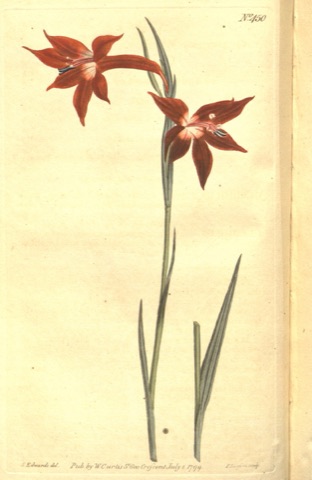
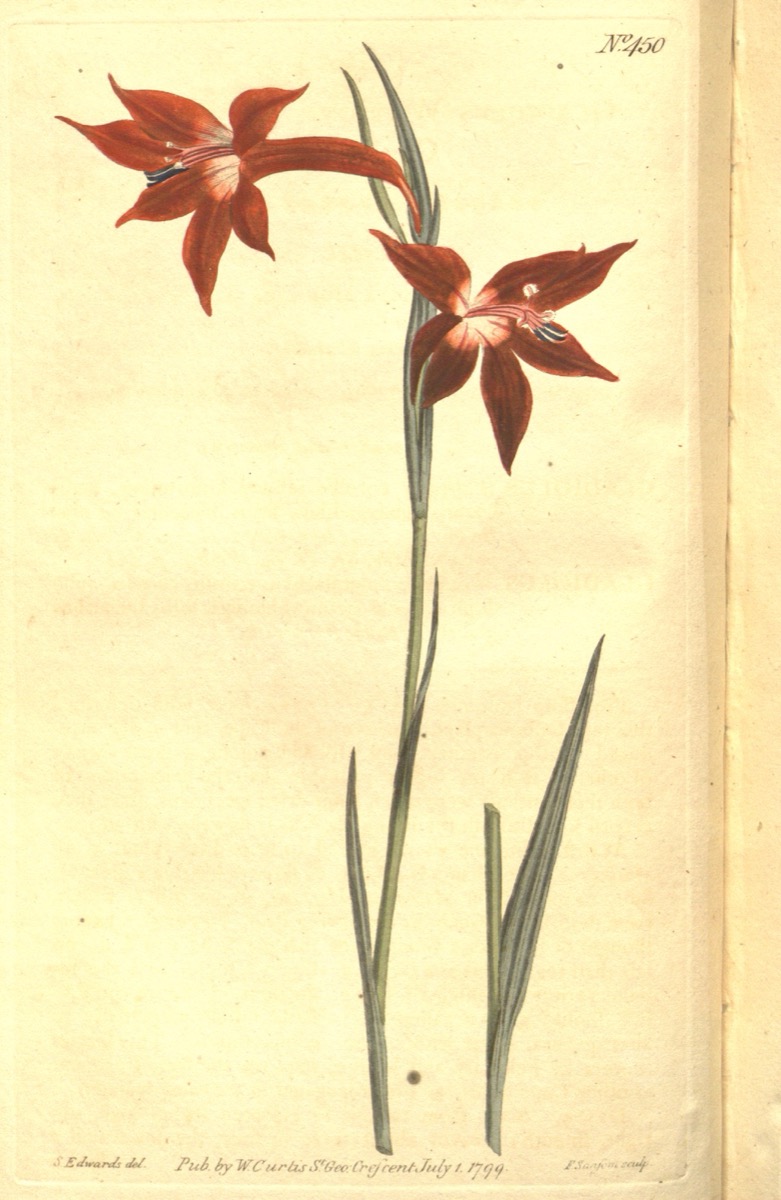
Gladiolus watsonius
Curtis's Botanical Magazine · 450 · 1799
Sydenham Edwards · scan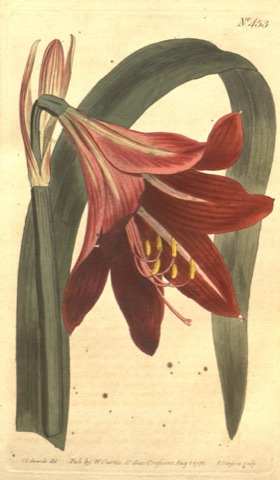
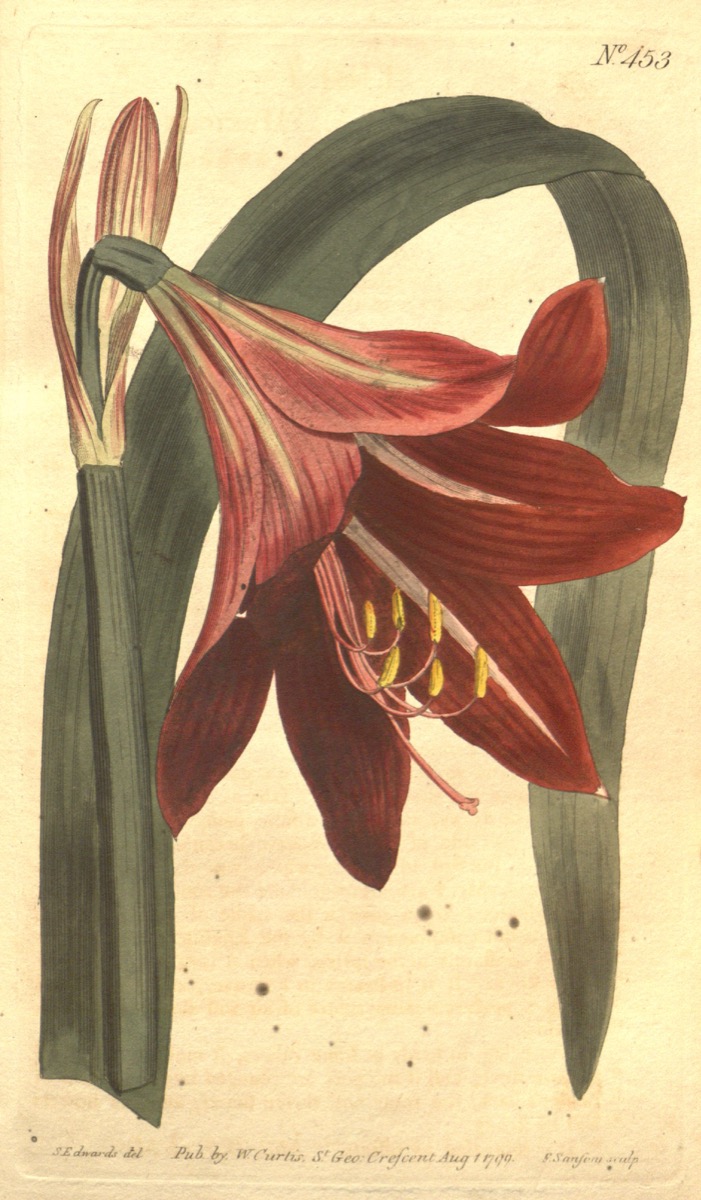
Amaryllis reginae = Hippeastrum reginae (L.) Herb.
Curtis's Botanical Magazine · 453 · 1799
Sydenham Edwards · scan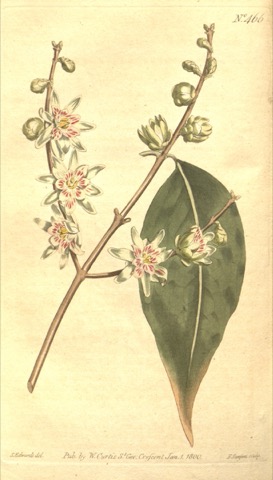
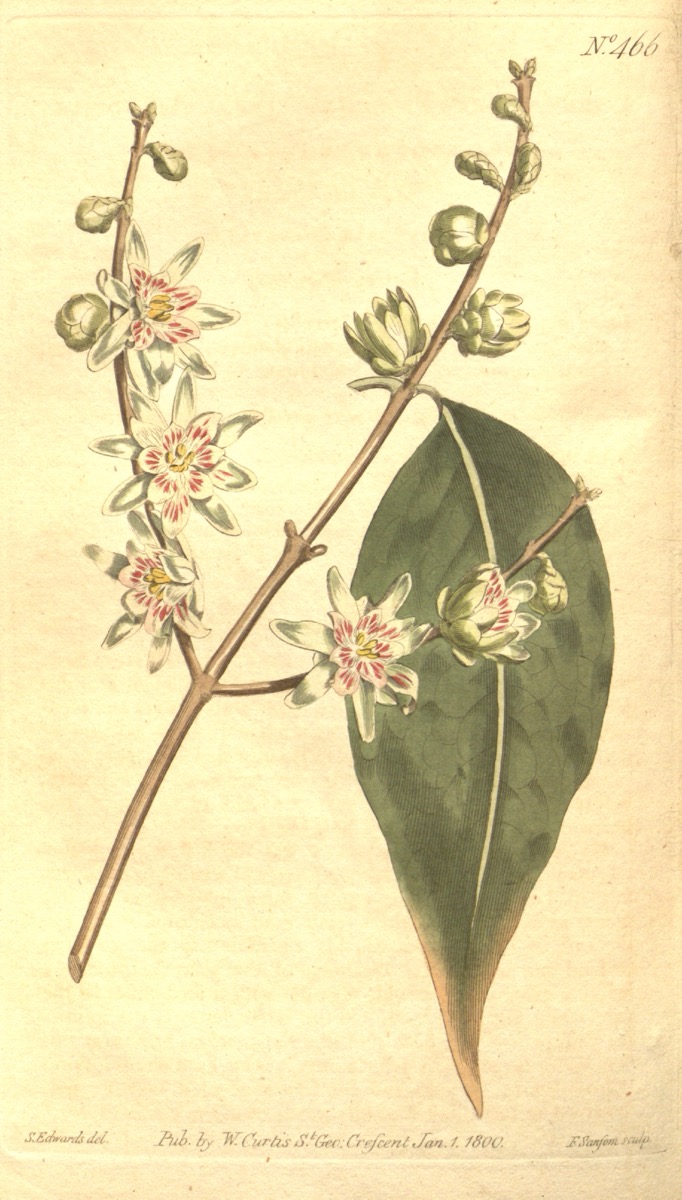
Calycanthus praecox = Chimonanthus praecox (L.) Link
Curtis's Botanical Magazine · 466 · 1800
Sydenham Edwards · scan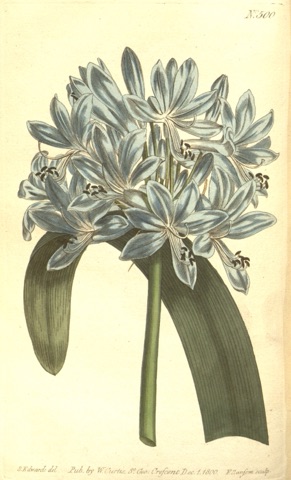
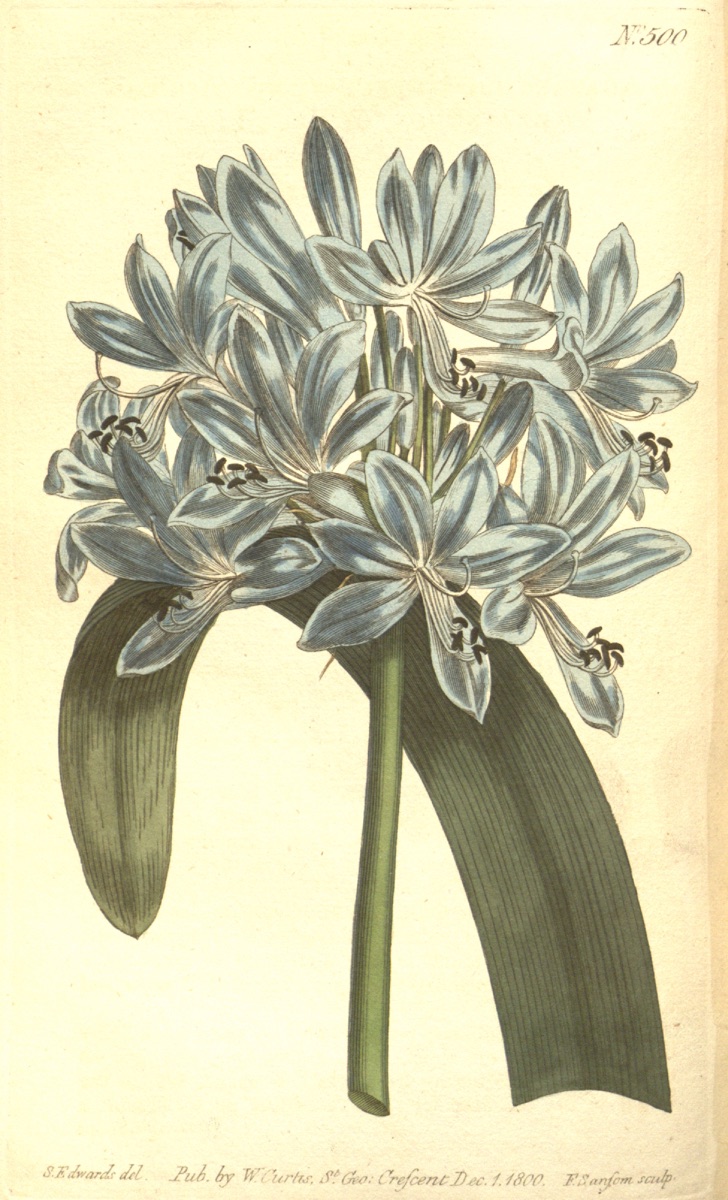
Agapanthus umbellatus = Agapanthus africanus (L.) Hoffmanns.
Curtis's Botanical Magazine · 500 · 1800
Sydenham Edwards · scan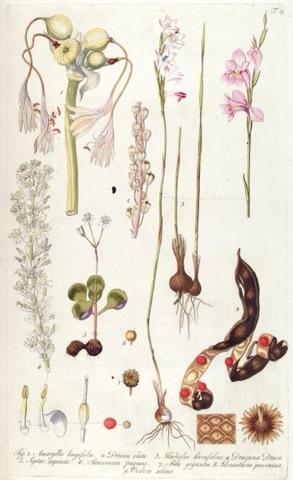
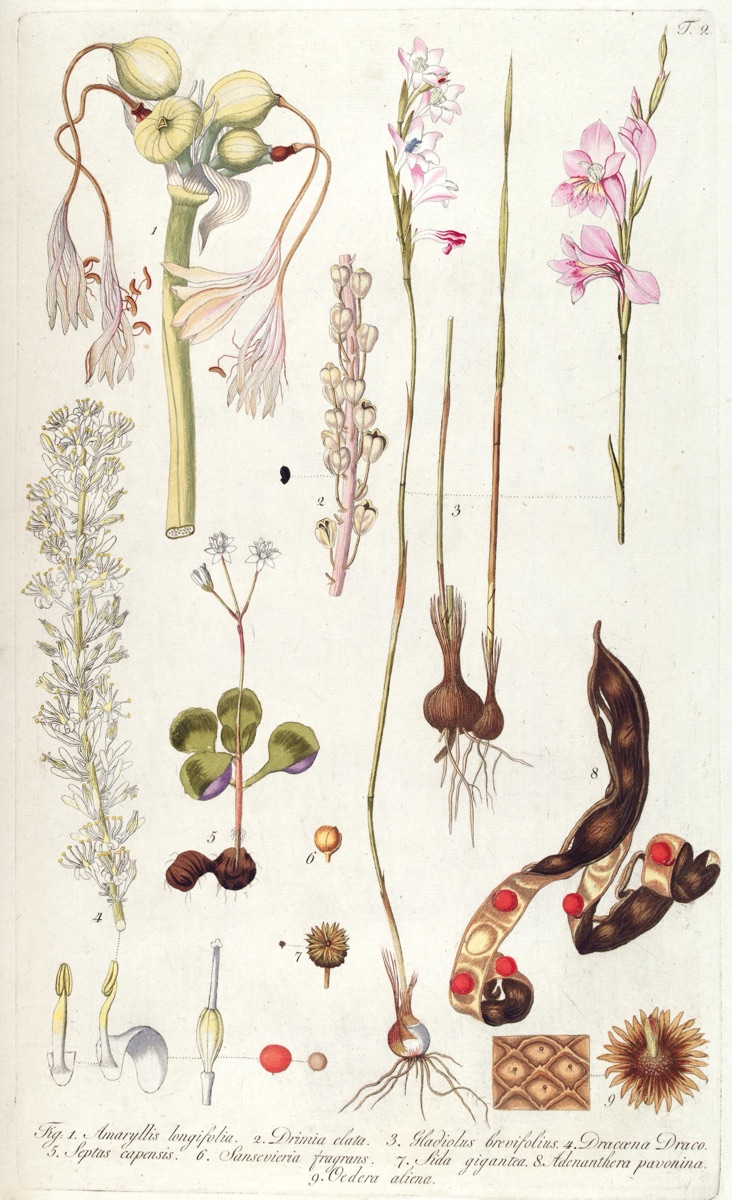
Dracæna Draco
Fragmenta Botanica, figuris coloratis illustrata · T. 2 · 1800–1809
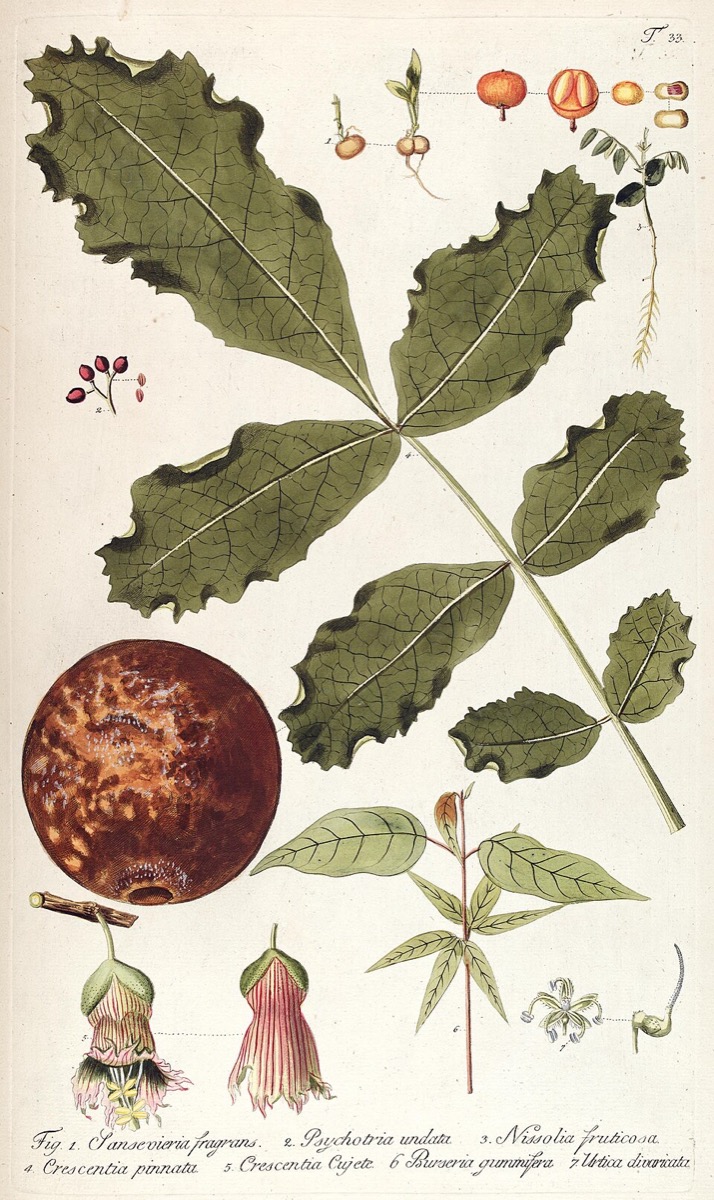
Sansevieria fragrans = Dracaena fragrans (L.) Ker Gawl.
· scan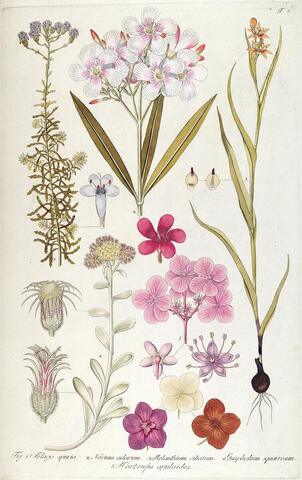
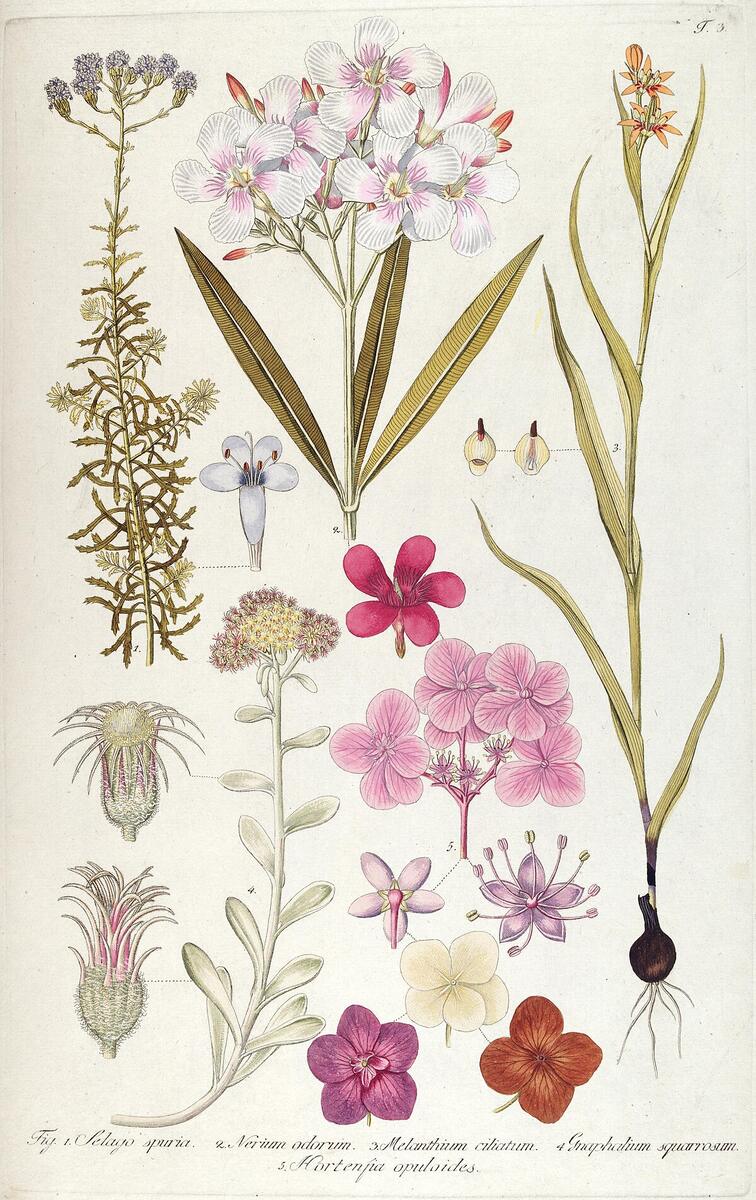
Hortensia opuloides = Hydrangea macrophylla (Thunb.) Ser.
Fragmenta Botanica, figuris coloratis illustrata · T. 3 · 1800–1809
· scan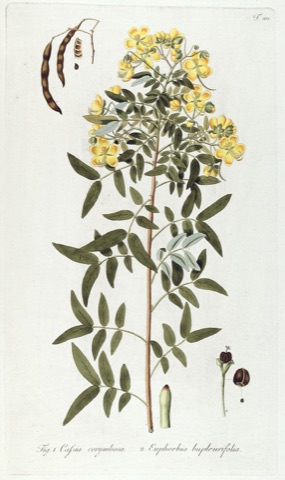
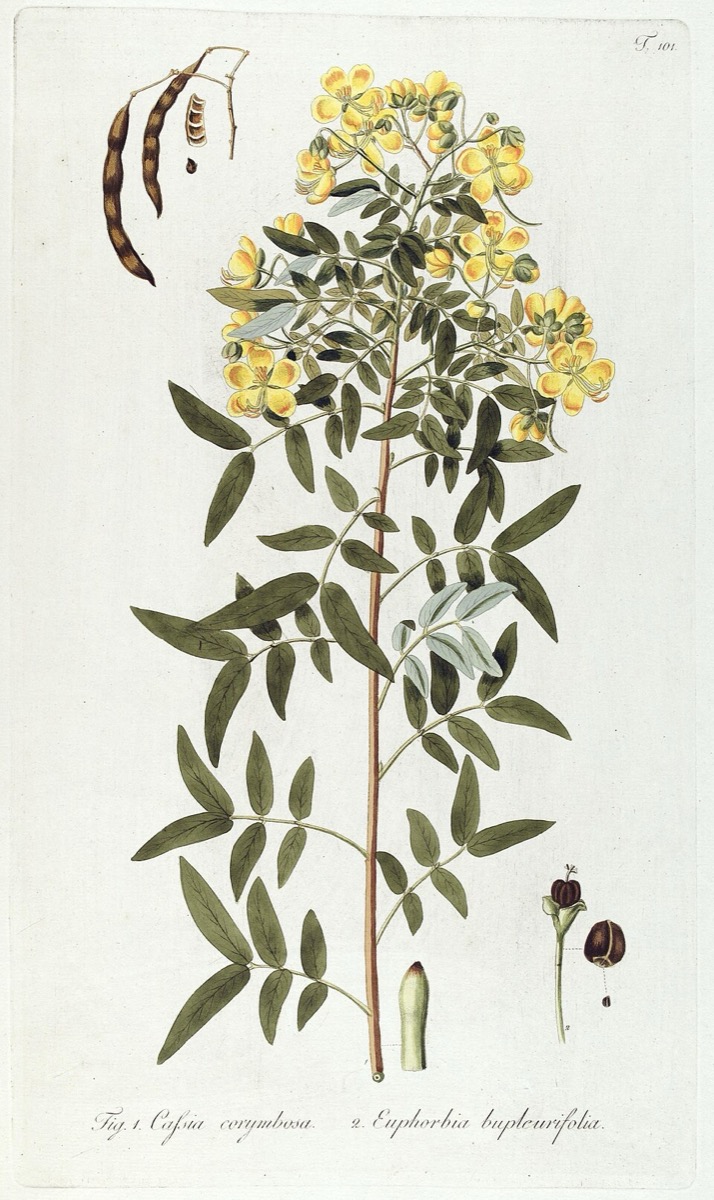
Euphorbia bupleurifolia
Fragmenta Botanica, figuris coloratis illustrata · 101 · 1800
· scan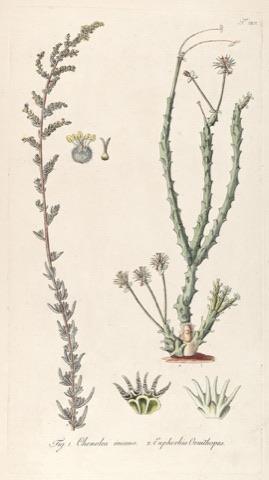
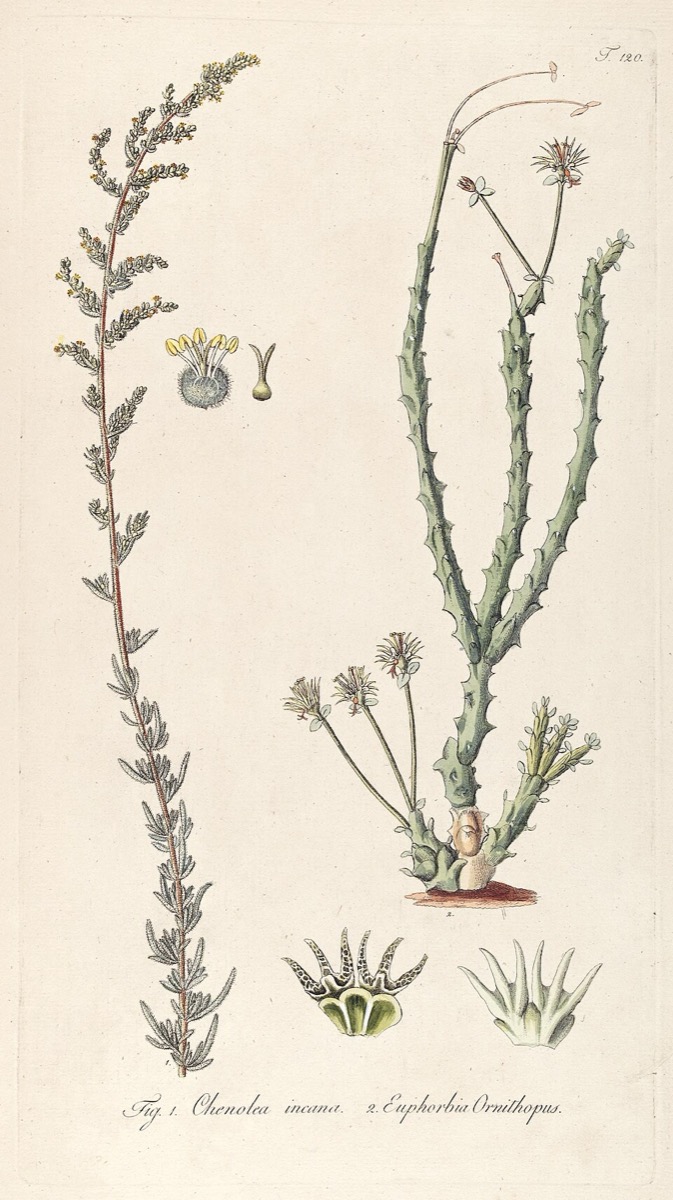
Euphorbia Ornithopus = Euphorbia patula Mill.
Fragmenta Botanica, figuris coloratis illustrata · 120 · 1800
· scan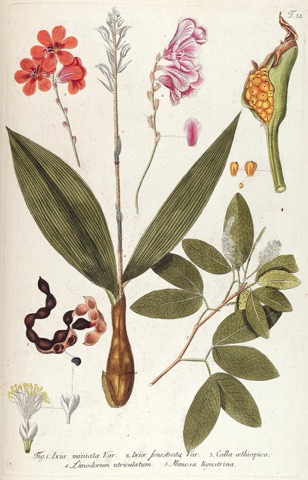
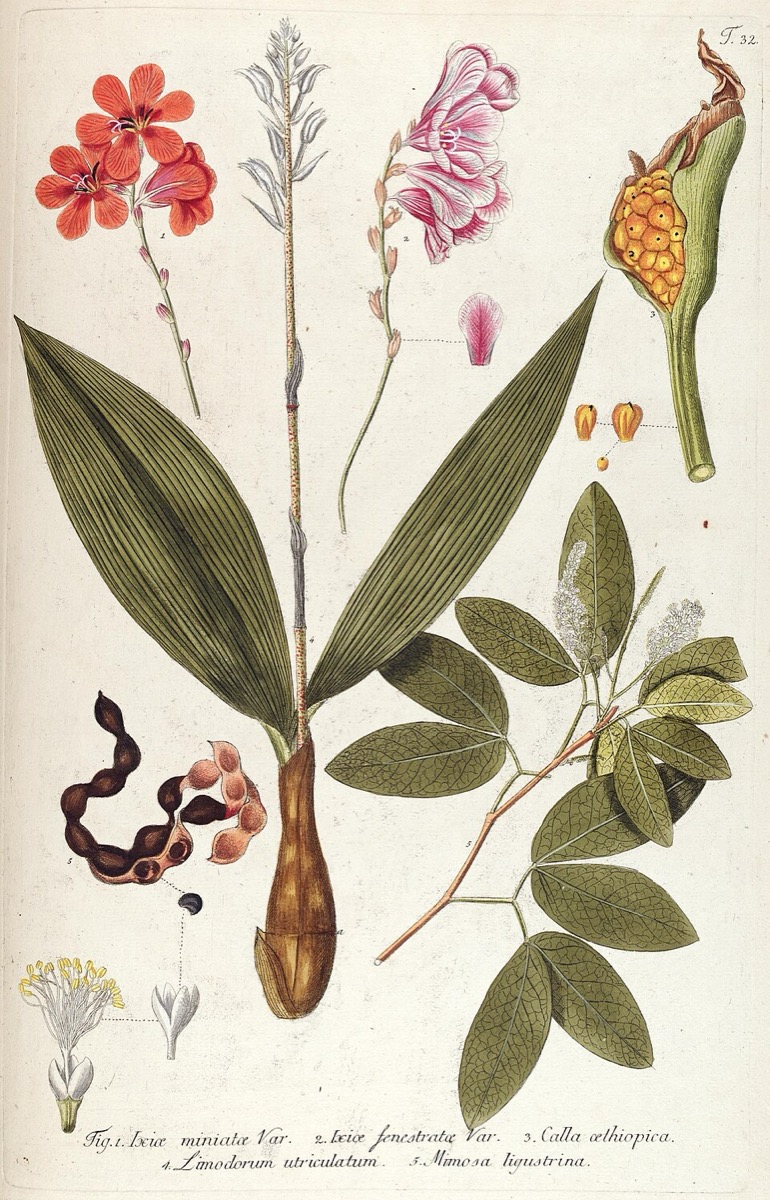
Calla æthiopica = Zantedeschia aethiopica (L.) Spreng.
Fragmenta Botanica, figuris coloratis illustrata · 32 · 1800
· scan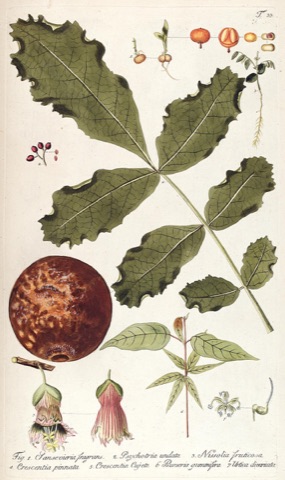
Sansevieria fragrans = Dracaena fragrans (L.) Ker Gawl.
Fragmenta Botanica, figuris coloratis illustrata · 33 · 1800
· scan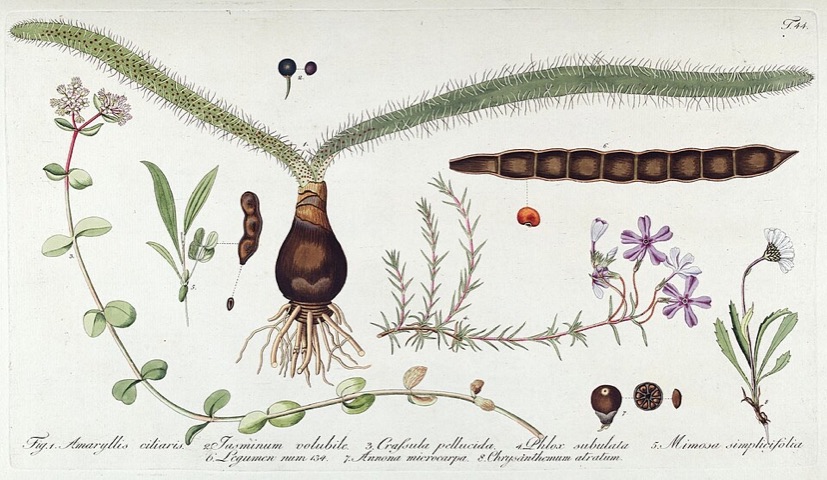
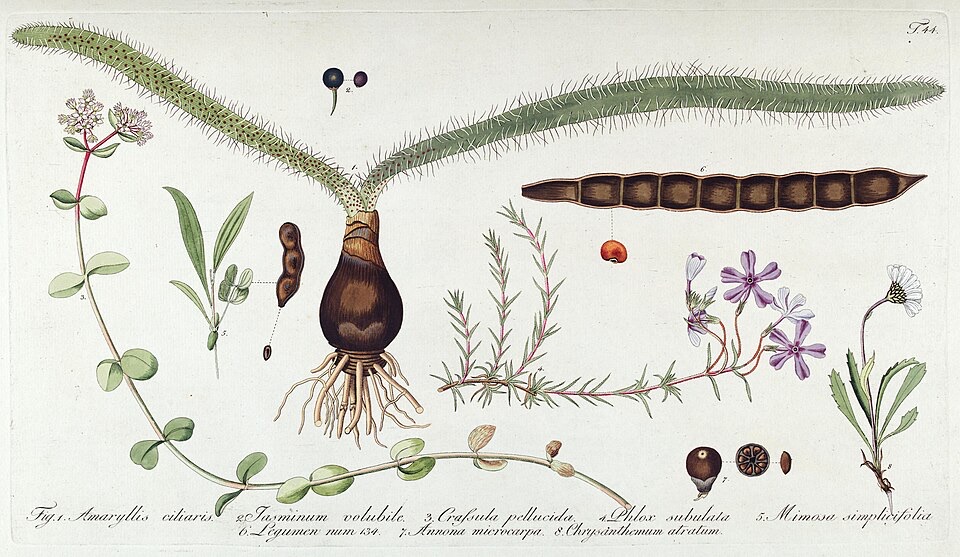
Mimosa simplicifolia = Acacia simplex (Sparrm.) Pedley
Fragmenta Botanica, figuris coloratis illustrata · 44 · 1800
· scan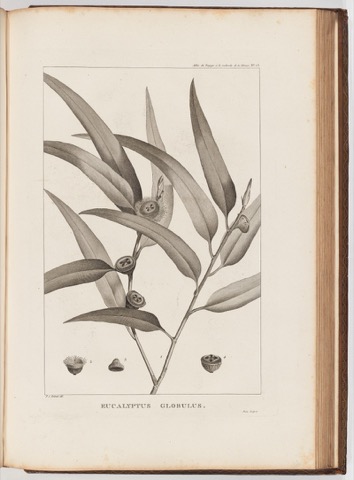
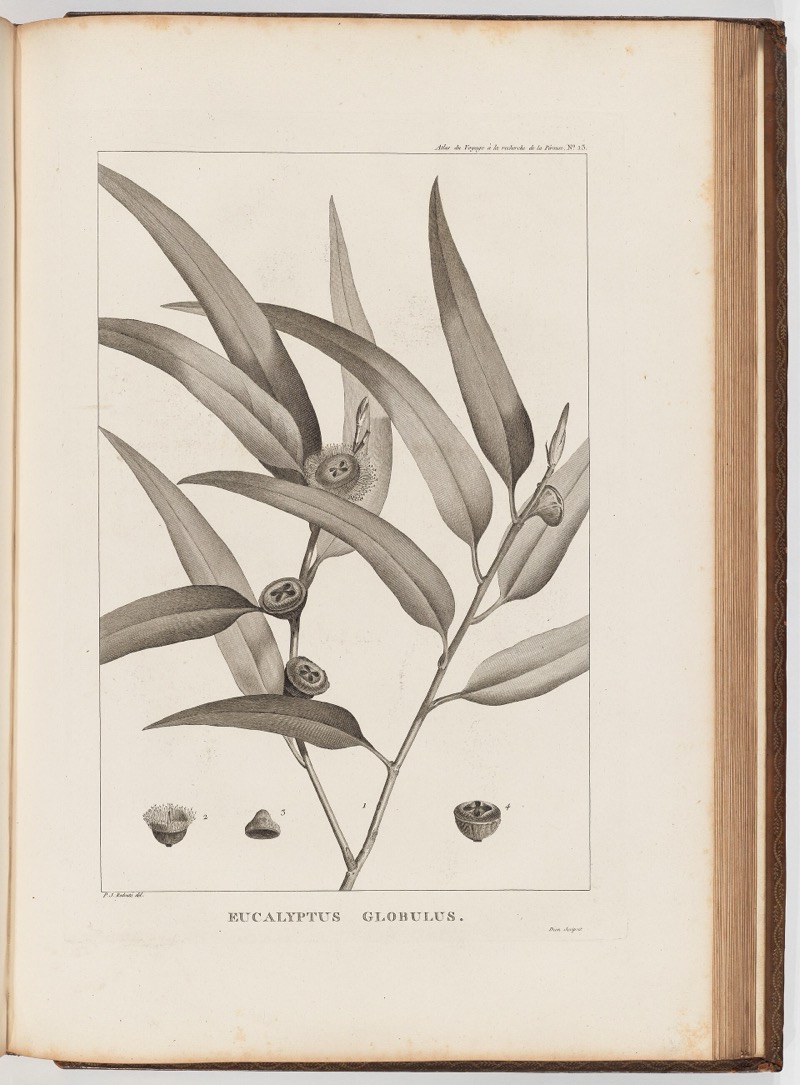
Eucalyptus globulus
Relation du voyage à la recherche de La Pérouse (Atlas) · No 13 · 1800
Pierre-Joseph Redouté · scan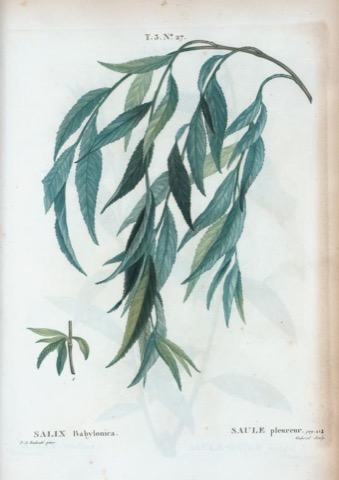
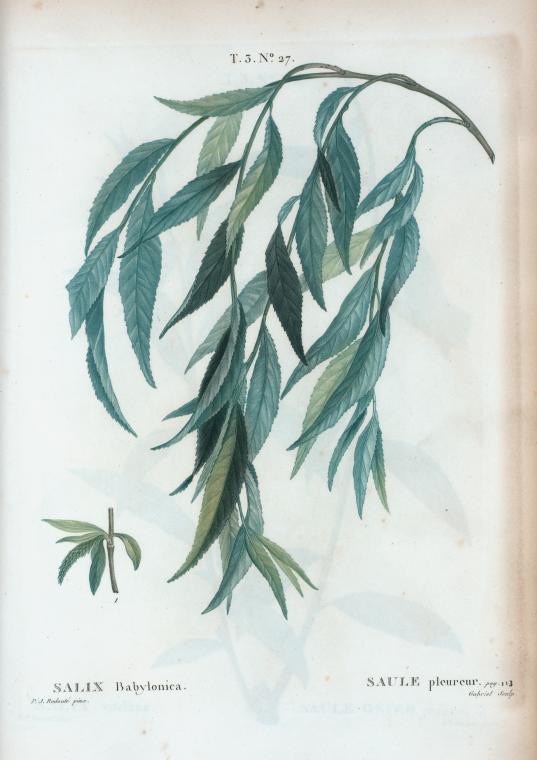
Salix Babylonica
Traité des arbres et arbustes que l'on cultive en France en pleine terre (nouvelle édition) · No 27 · 1800–1819
Pierre-Joseph Redouté · scan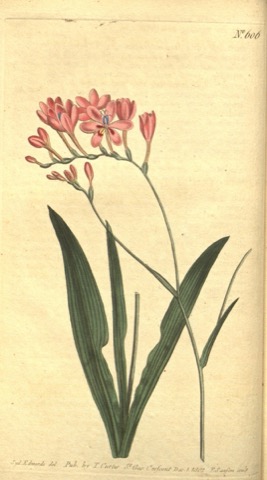
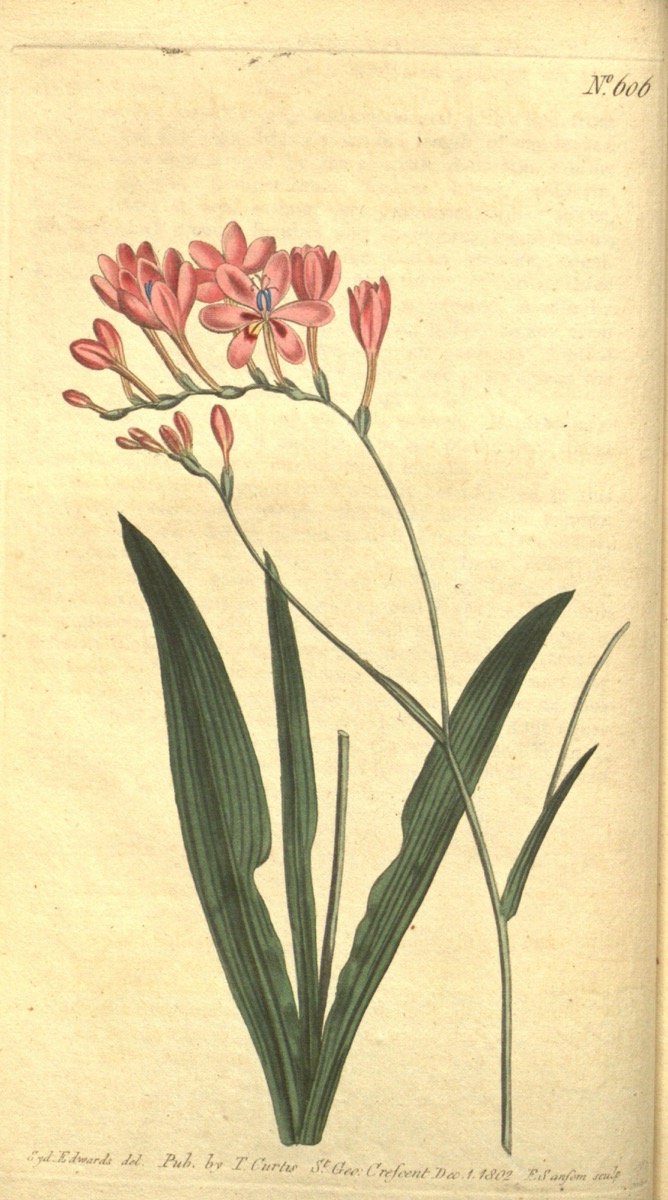
Lapeyrousia juncea = Freesia verrucosa (B.Vogel) Goldblatt & J.C.Manning
Curtis's Botanical Magazine · 606 · 1802
Sydenham Edwards · scan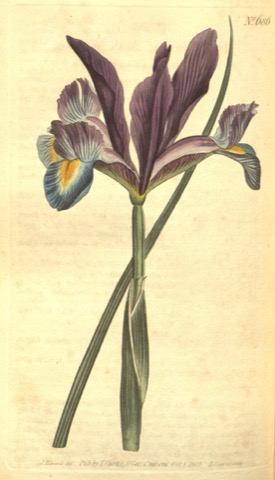
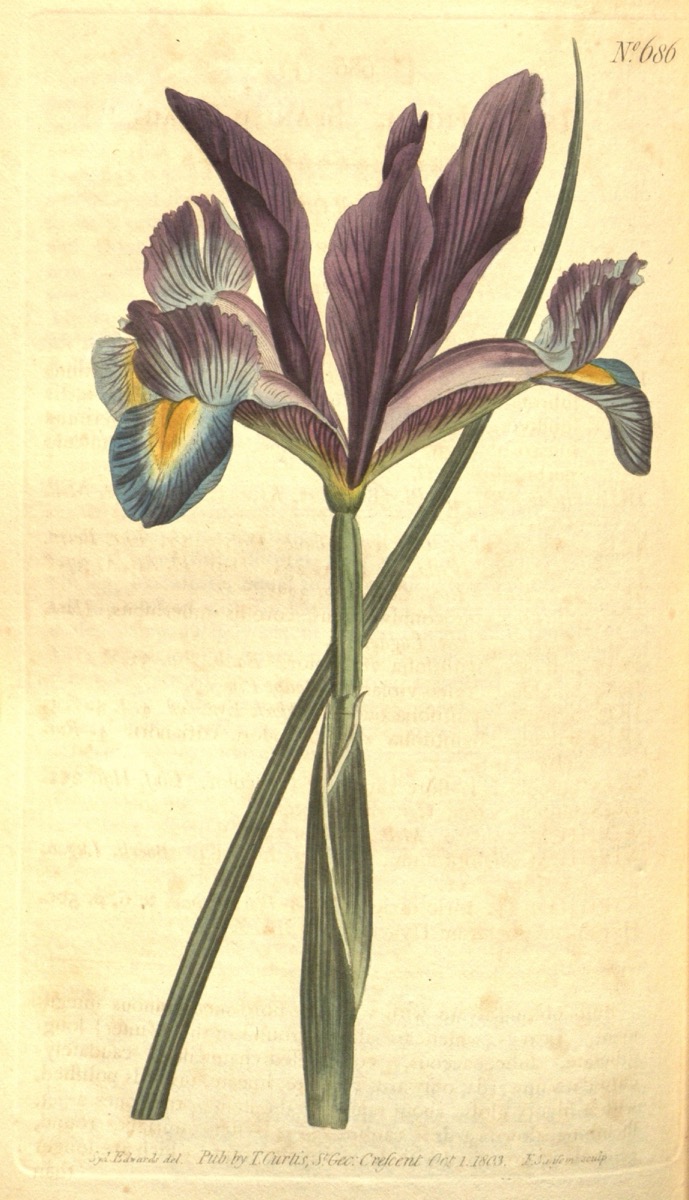
Iris Xiphium
Curtis's Botanical Magazine · 686 · 1803
Sydenham Edwards · scan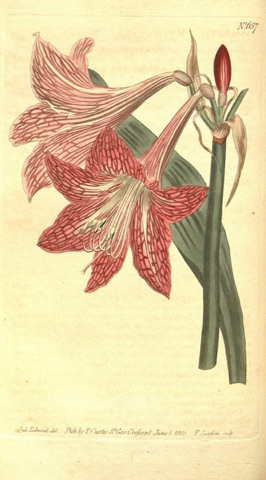
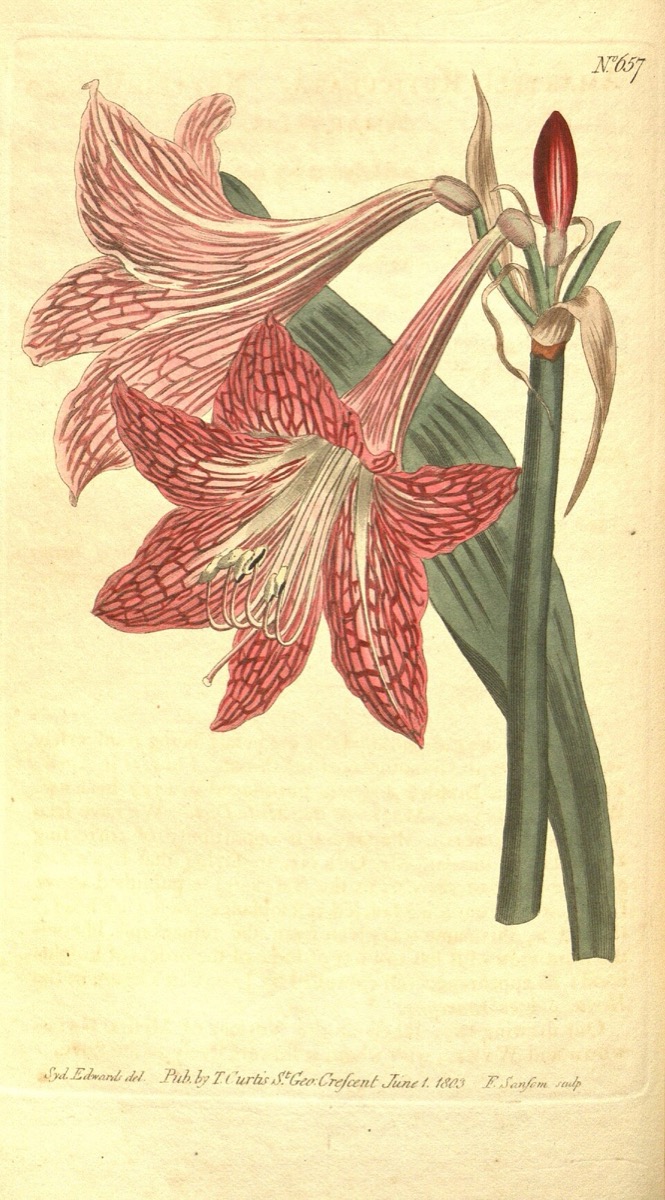
Amaryllis reticulata = Hippeastrum reticulatum (L'Hér.) Herb.
Curtis's Botanical Magazine · 657 · 1803
Sydenham Edwards · scan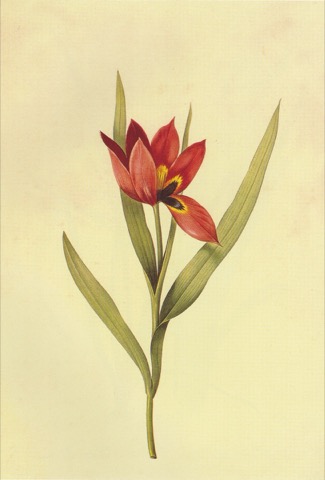
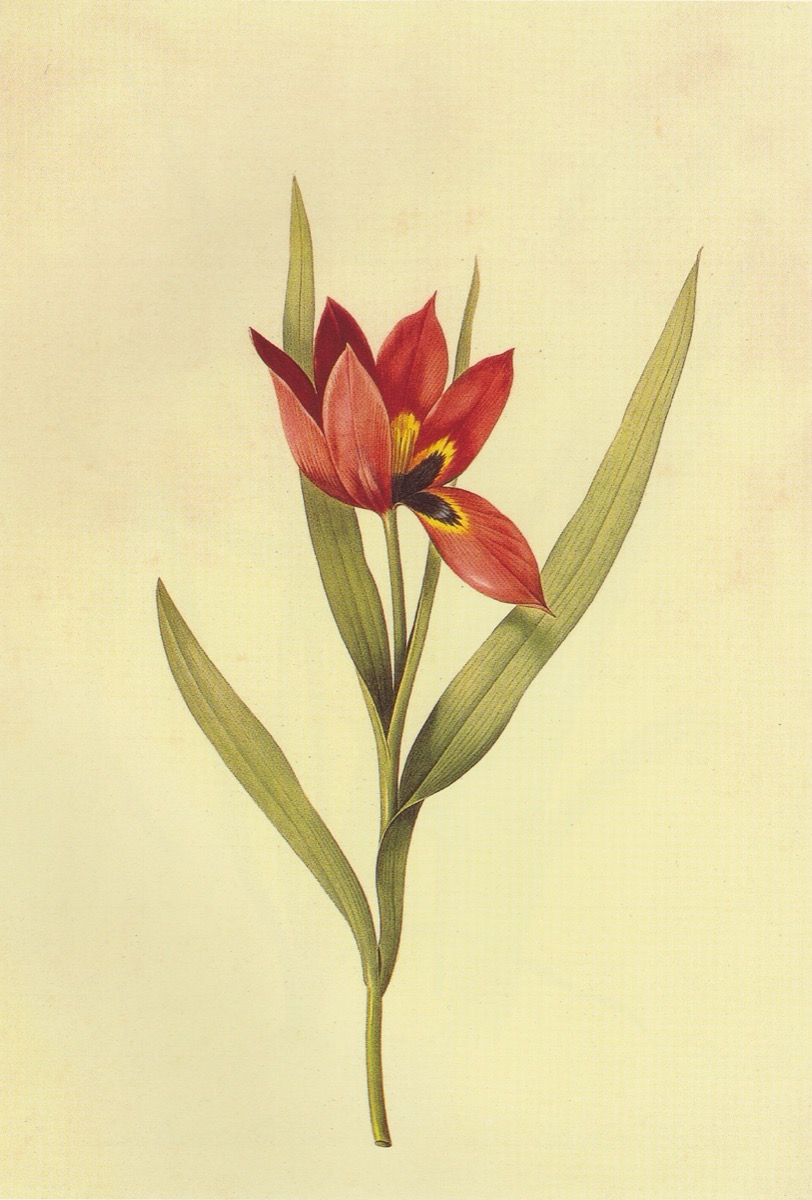
Tulipa oculus-solis = Tulipa agenensis DC.
Les Liliacées · 60 · 1803
Pierre-Joseph Redouté · scan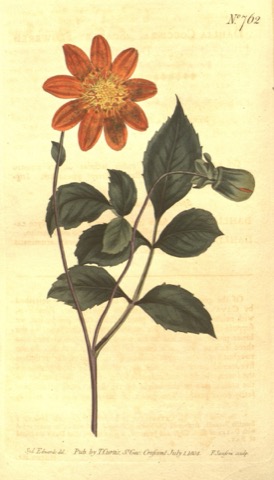
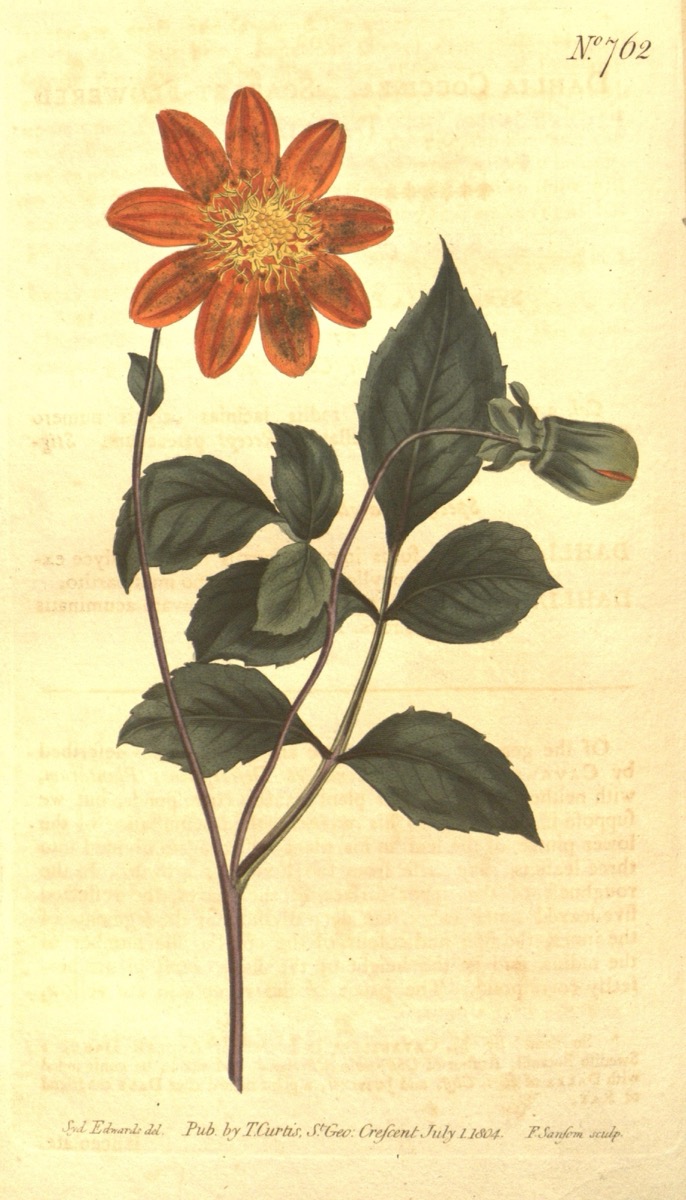
Dahlia coccinea
Curtis's Botanical Magazine · 762 · 1804
Sydenham Edwards · scan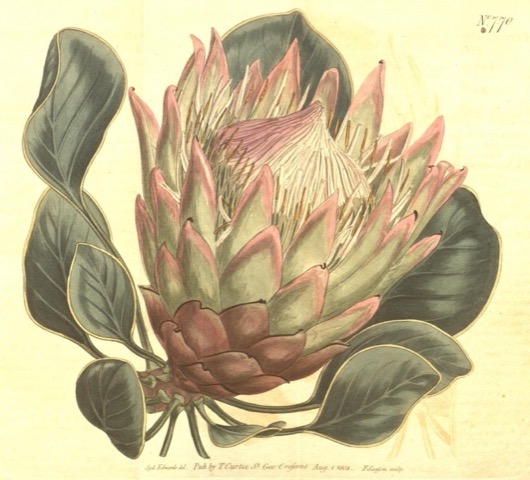
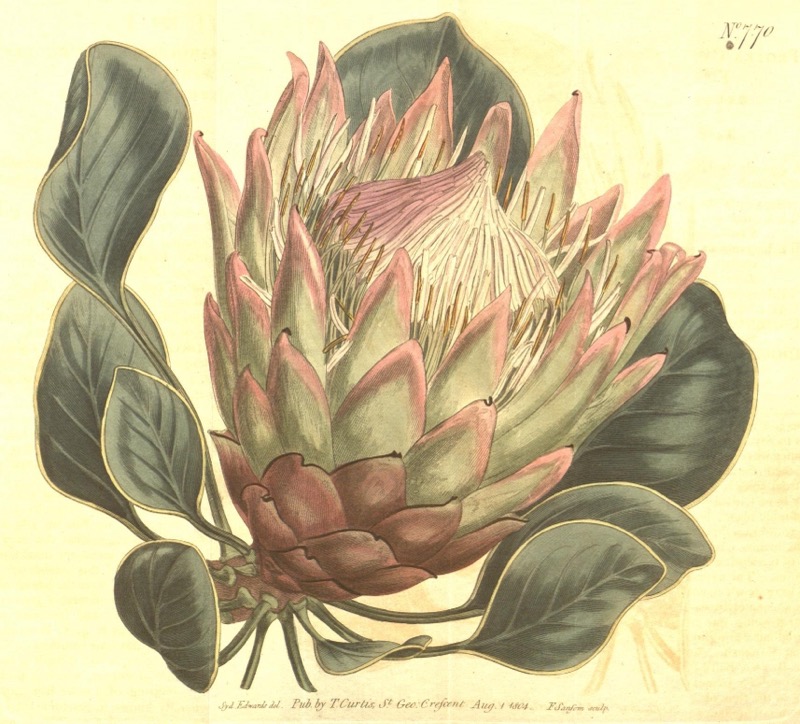
Protea cynaroides
Curtis's Botanical Magazine · 770 · 1804
Sydenham Edwards · scan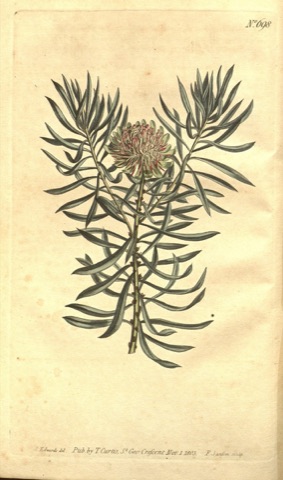
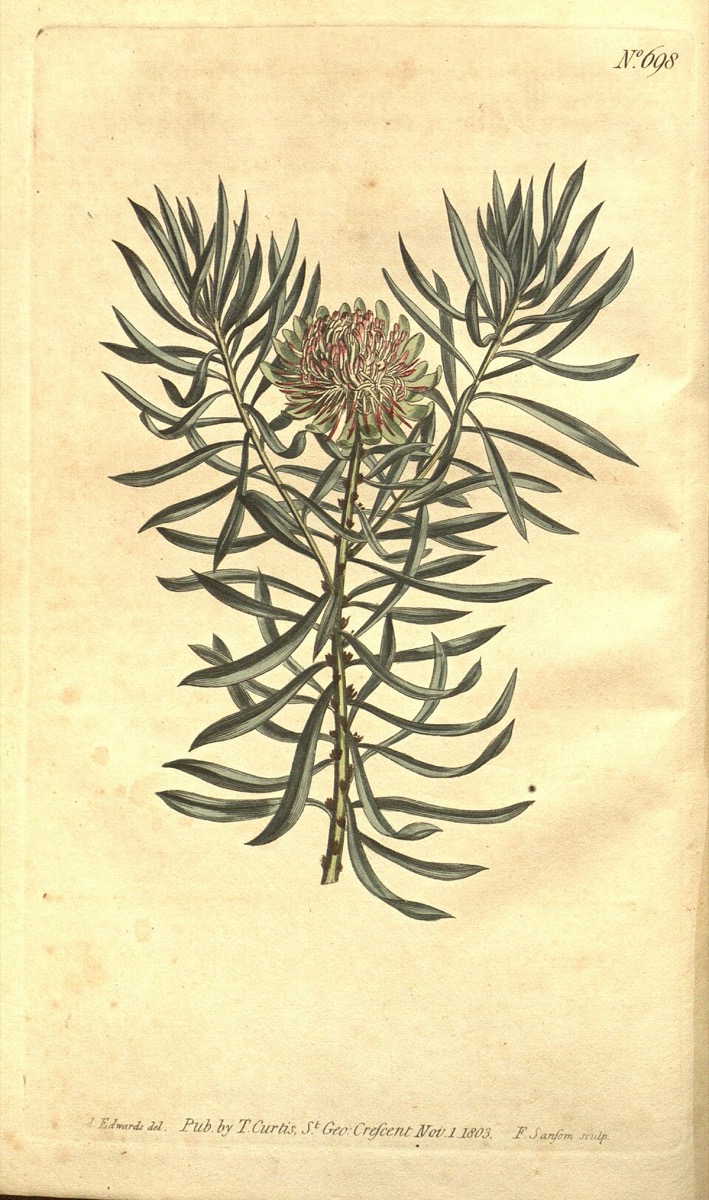
Protea scolymus = Protea scolymocephala (L.) Reichard
Curtis's Botanical Magazine · 698 · 1804
Sydenham Edwards · scan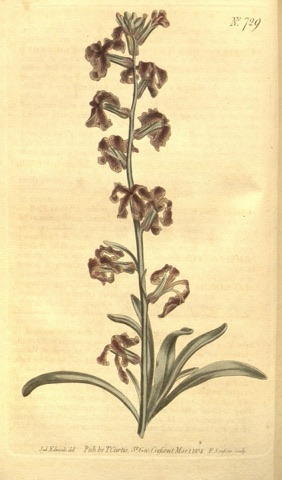
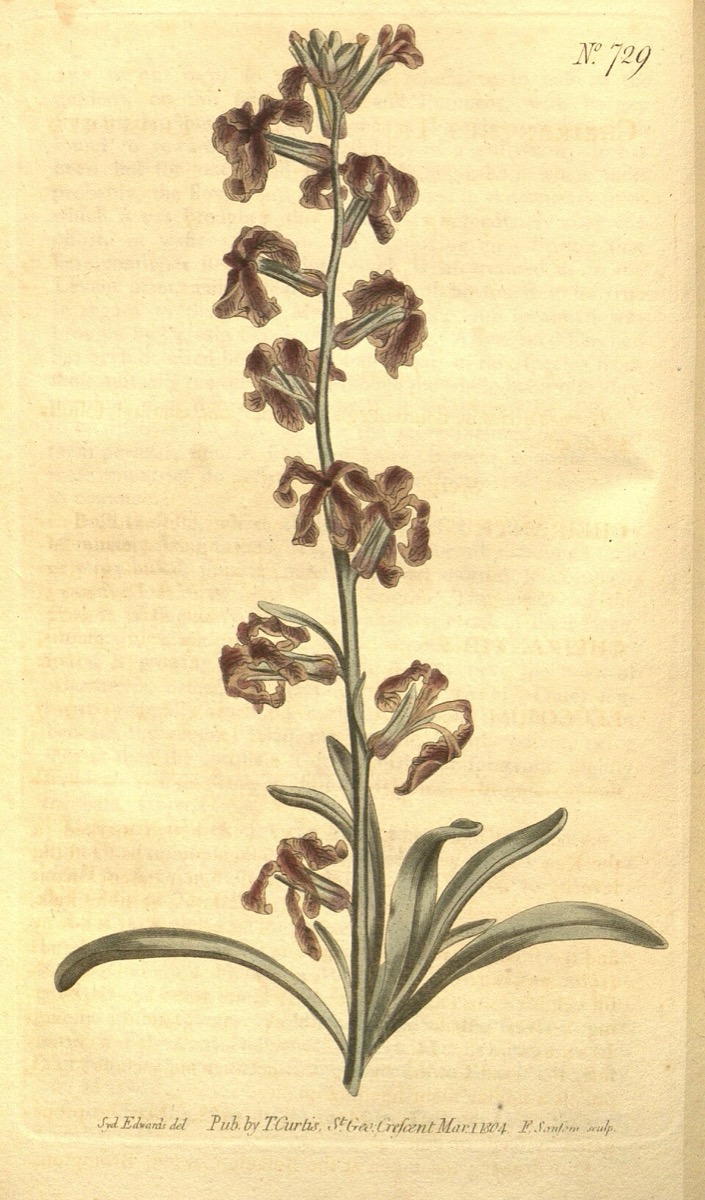
Cheiranthus tristis = Matthiola fruticulosa (L.) Maire
Curtis's Botanical Magazine · 729 · 1804
Sydenham Edwards · scan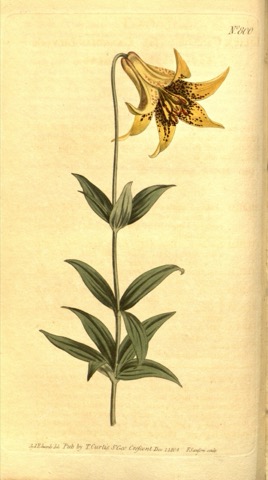
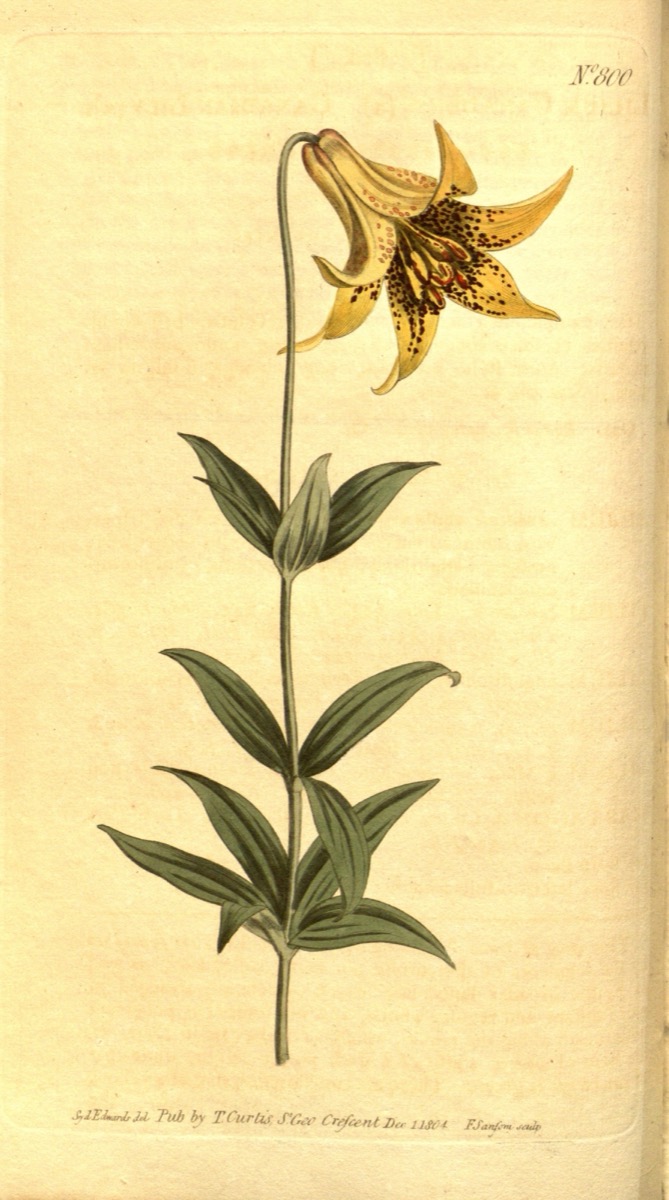
Lilium tigrinum = Lilium lancifolium Thunb.
Curtis's Botanical Magazine · 800 · 1805
Sydenham Edwards · scan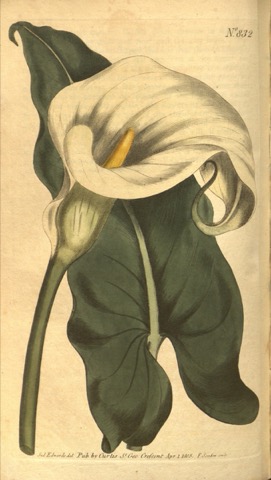
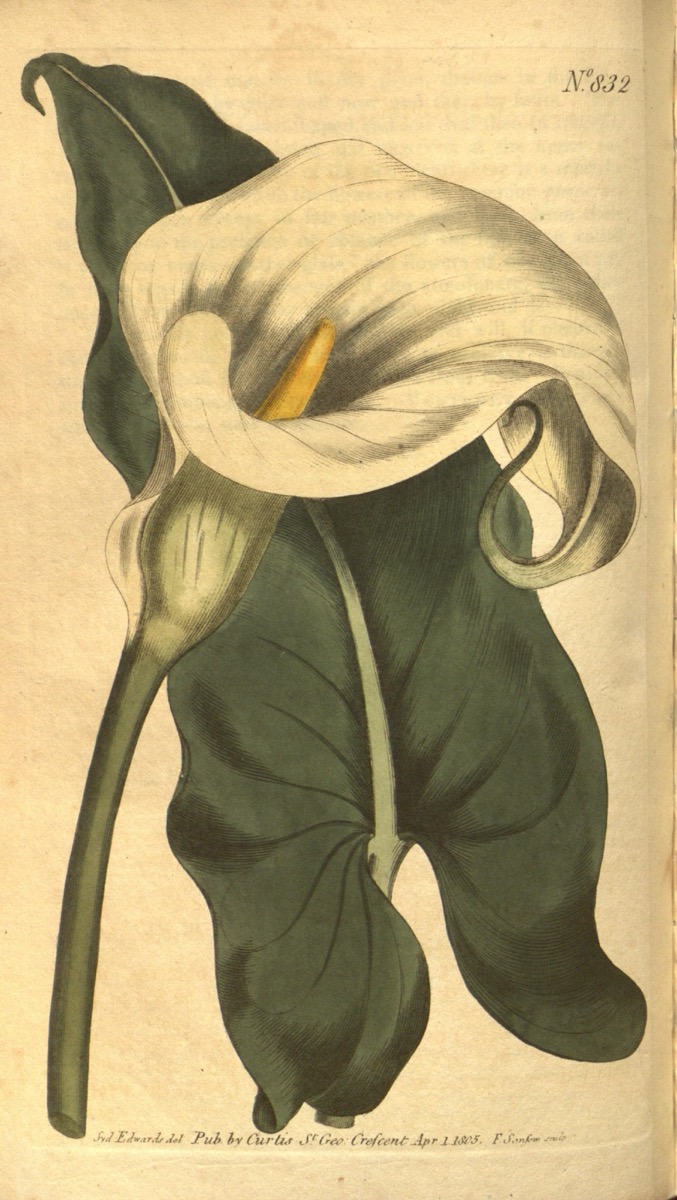
Calla aethiopica = Zantedeschia aethiopica (L.) Spreng.
Curtis's Botanical Magazine · 832 · 1805
Sydenham Edwards · scan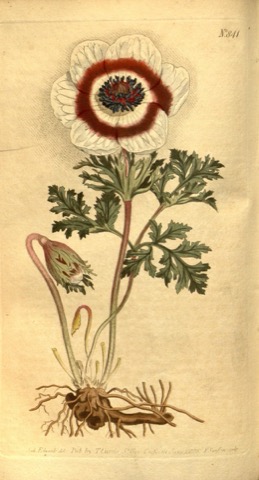
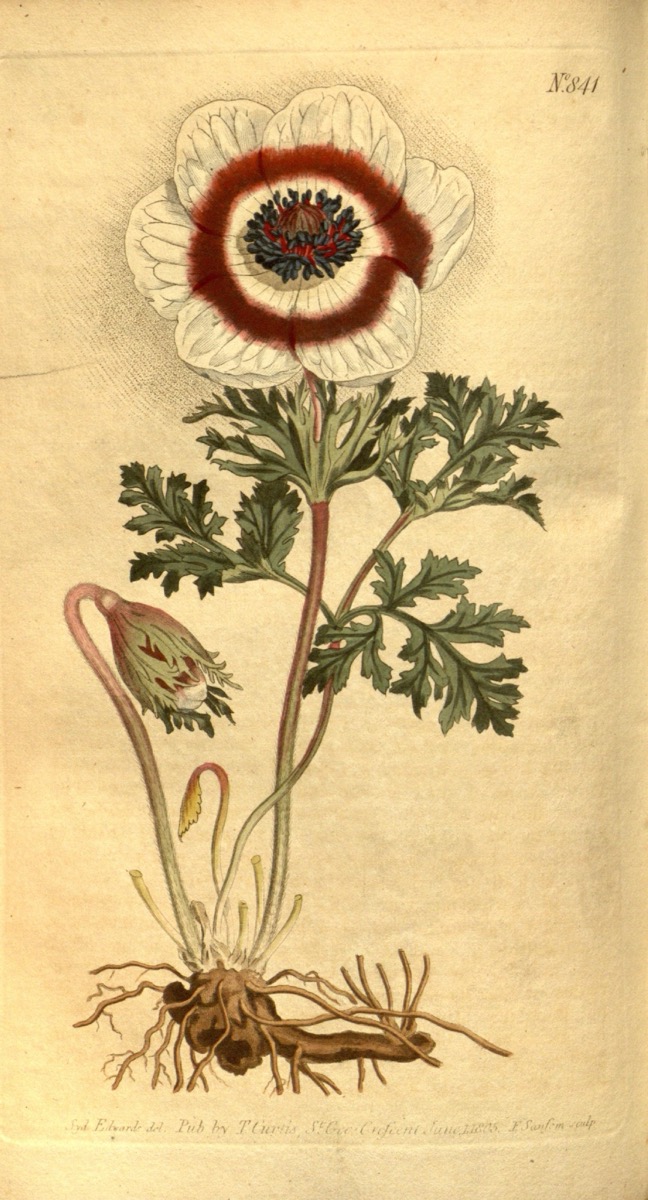
Anemone coronaria
Curtis's Botanical Magazine · 841 · 1805
Sydenham Edwards · scan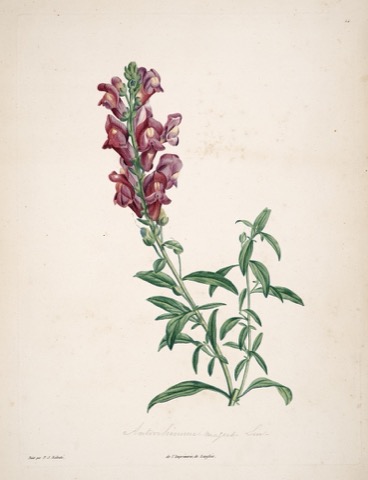
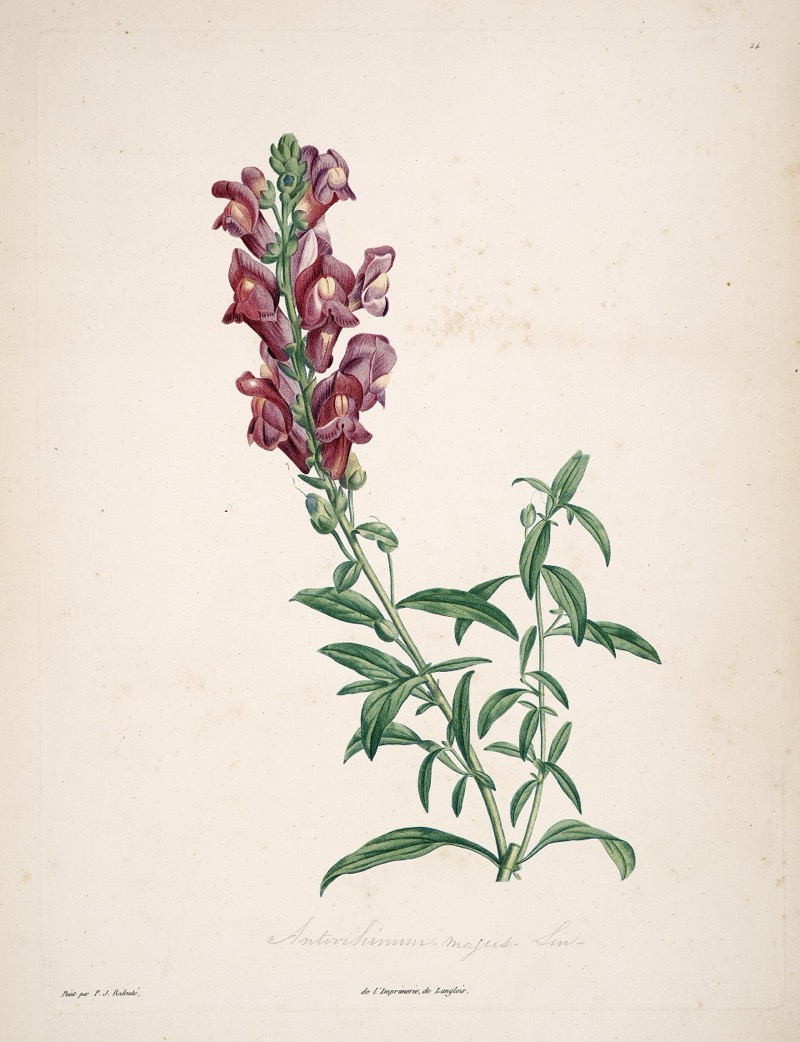
Antirrhinum majus Lin.
La botanique de J.J. Rousseau · Pl. 24 · 1805
Pierre-Joseph Redouté · scan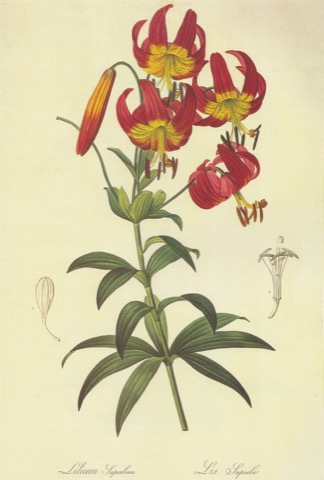
Lilium superbum
Les Liliacées · 103 · 1805
Pierre-Joseph Redouté · scan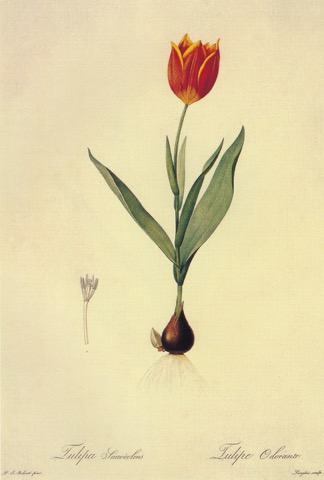
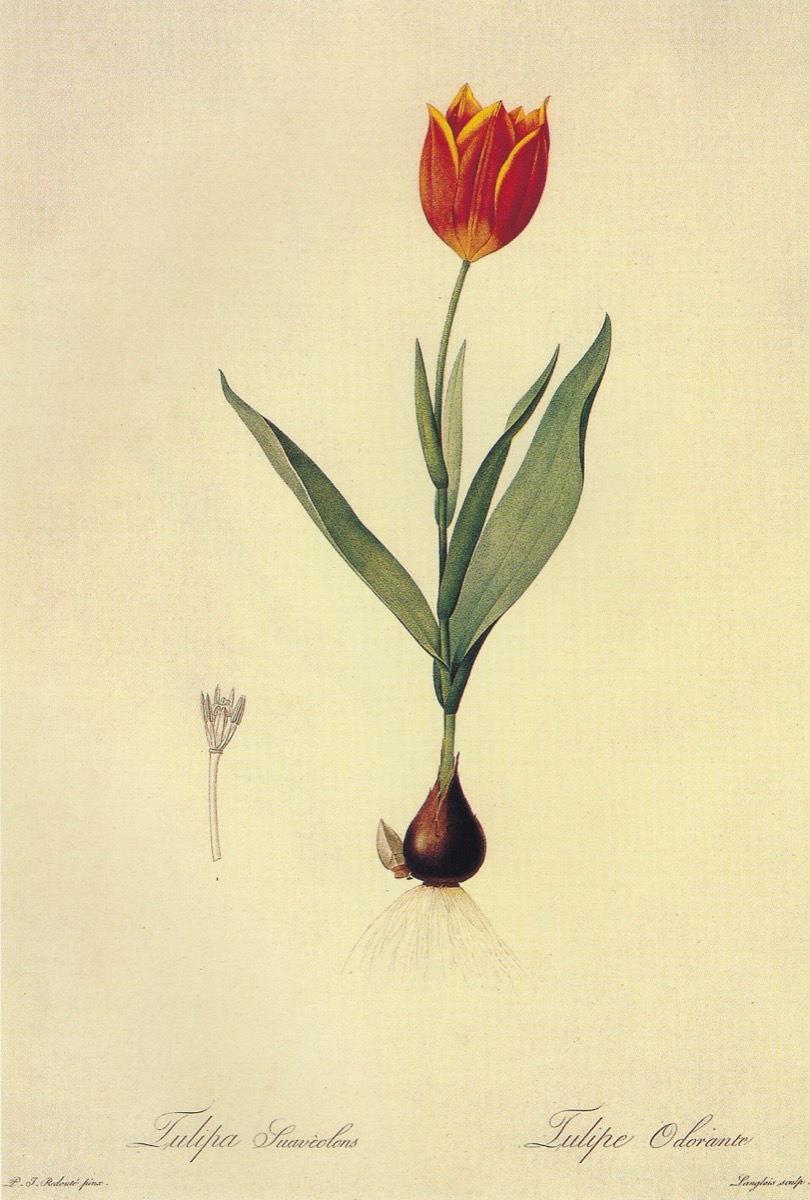
Tulipa suaveolens
Les Liliacées · 111 · 1805
Pierre-Joseph Redouté · scan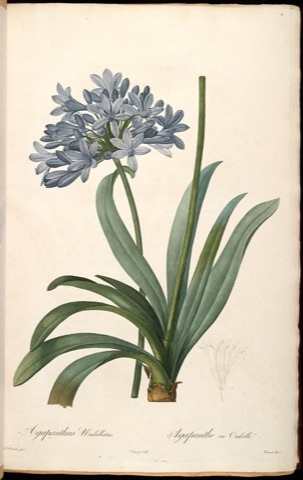
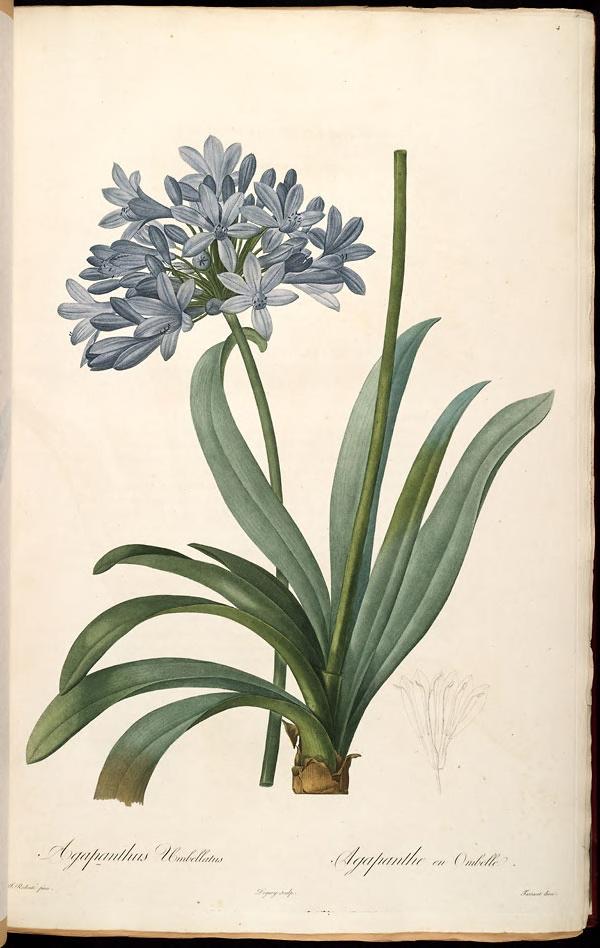
Agapanthus Umbellatus = Agapanthus africanus (L.) Hoffmanns.
Les Liliacées · 4 · 1805
Pierre-Joseph Redouté · scan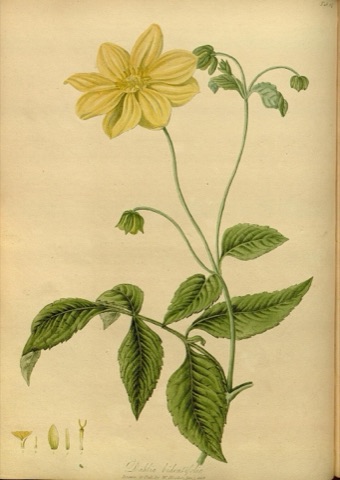
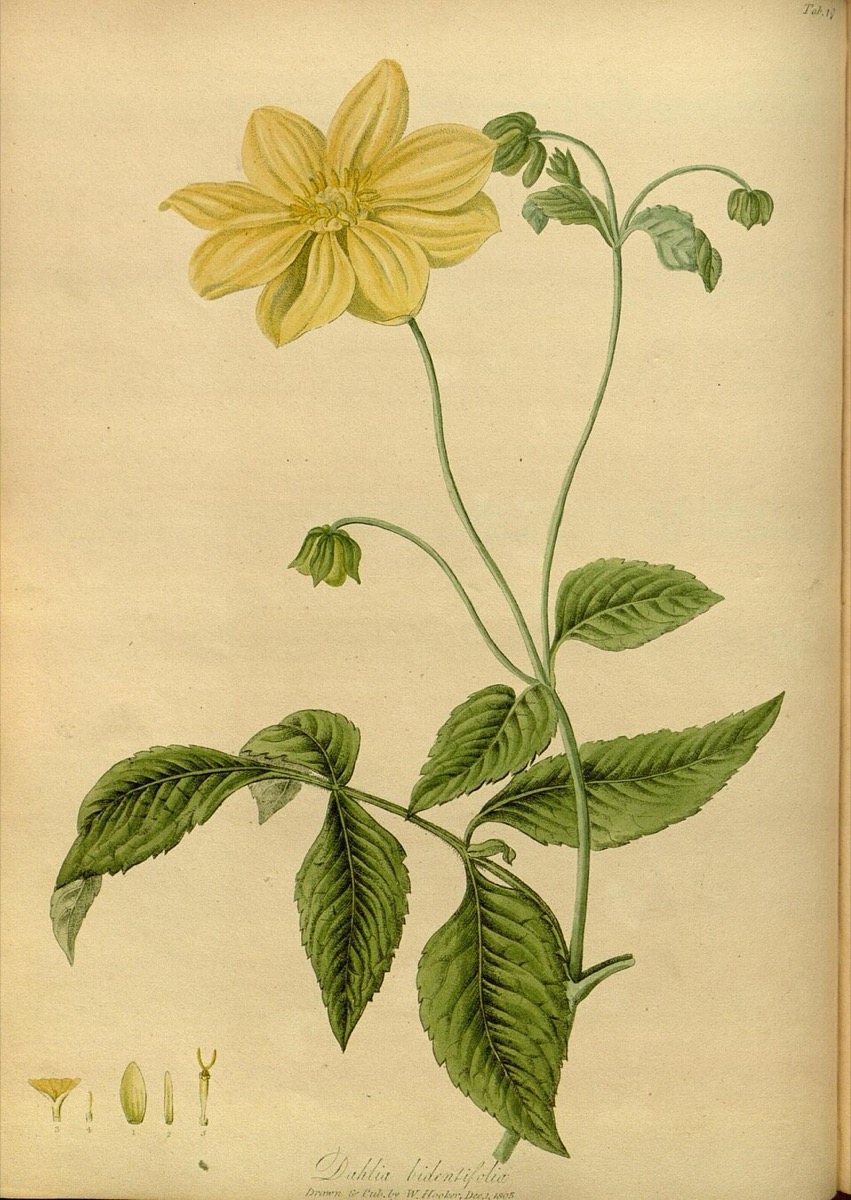
Dahlia bidentifolia = Dahlia coccinea Cav.
The Paradisus Londinensis · · 1805
William Hooker · scan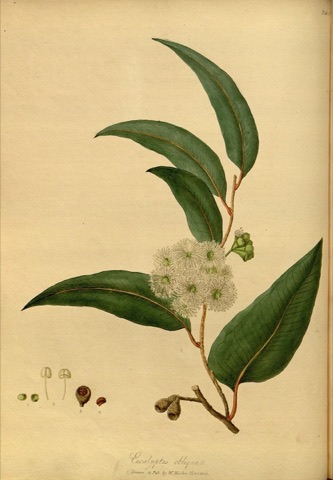
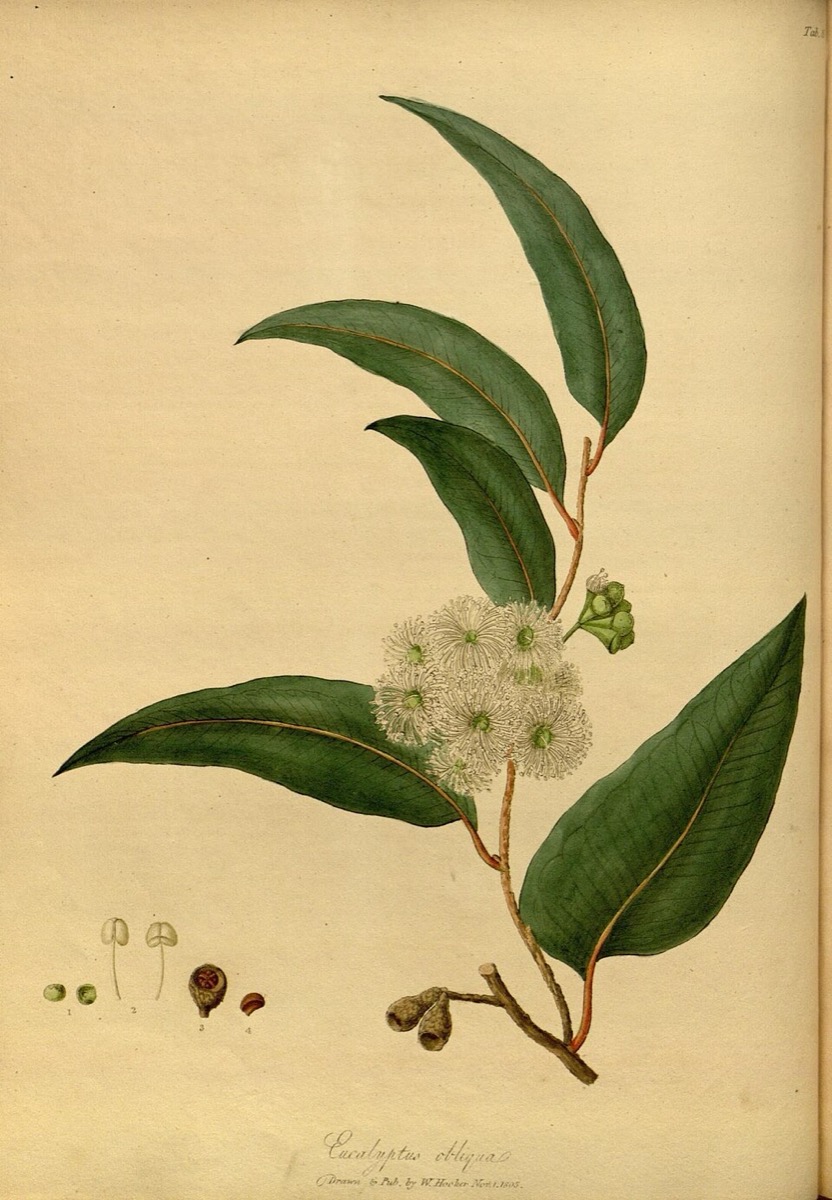
Eucalyptus obliqua
The Paradisus Londinensis · · 1805
William Hooker · scan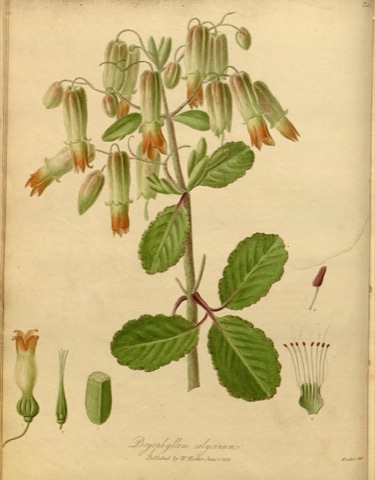
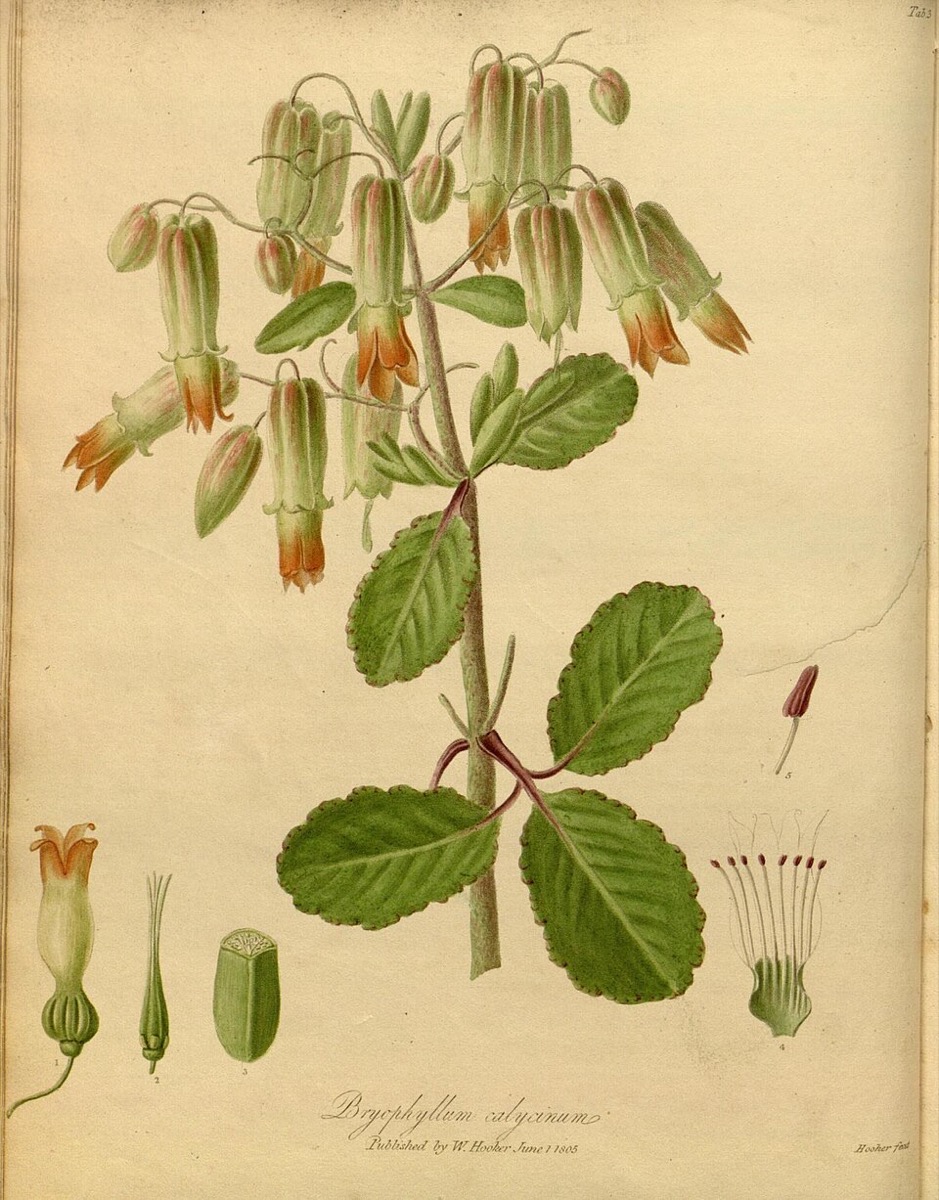
Bryophyllum calycinum = Kalanchoe pinnata (Lam.) Pers.
The Paradisus Londinensis · Tab. 3 · 1805
· scan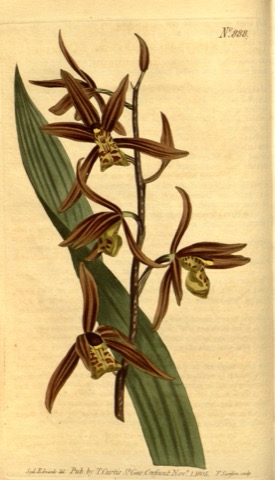
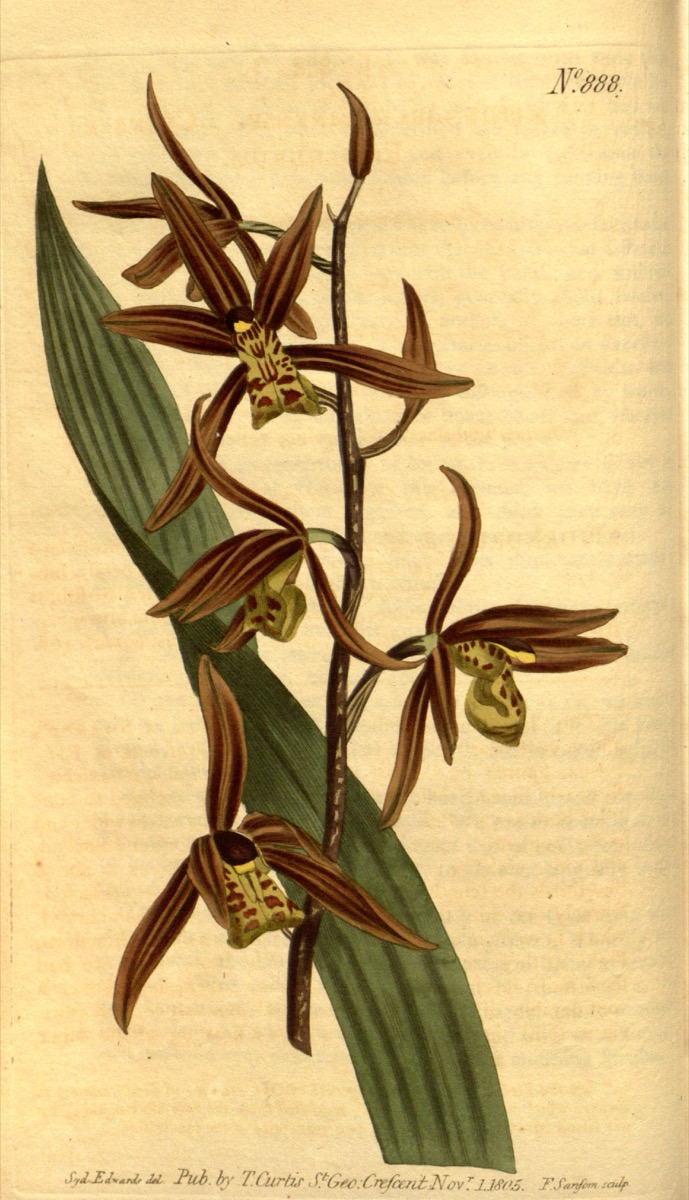
Epidendrum sinense = Cymbidium sinense (Andrews) Willd.
Curtis's Botanical Magazine · 888 · 1806
Sydenham Edwards · scan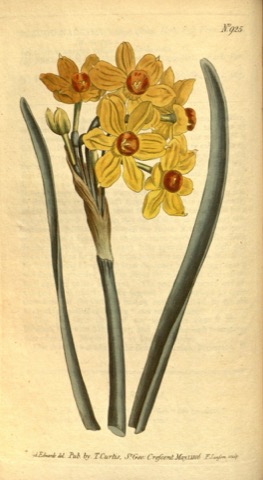
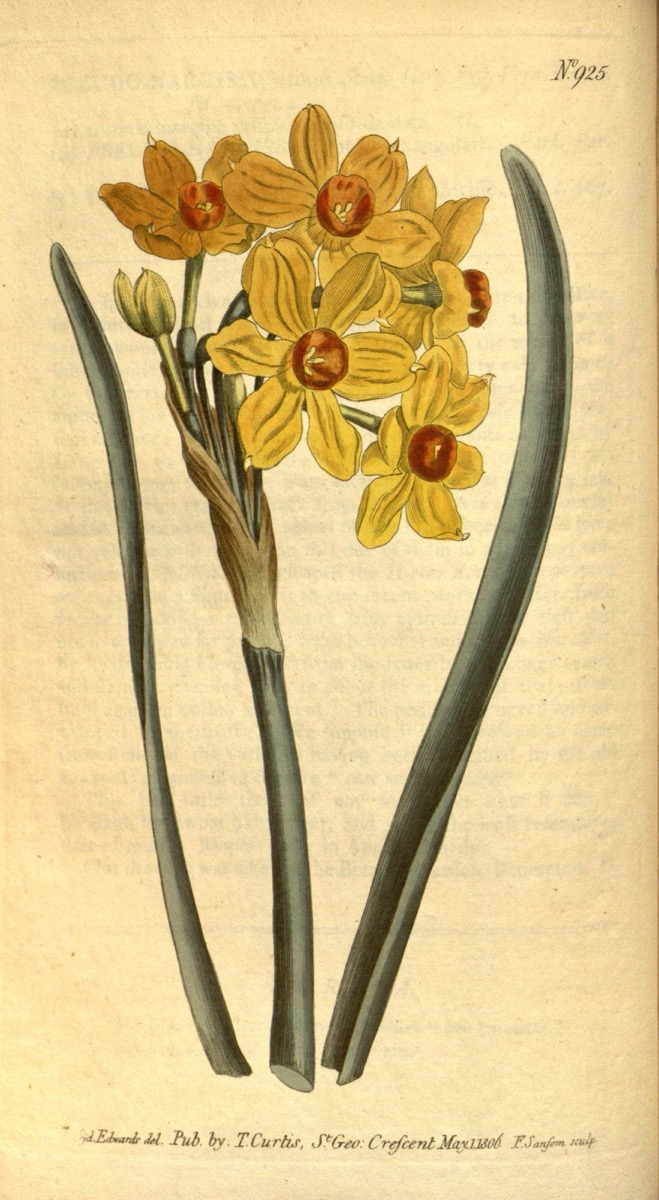
Narcissus Tazetta
Curtis's Botanical Magazine · 925 · 1806
Sydenham Edwards · scan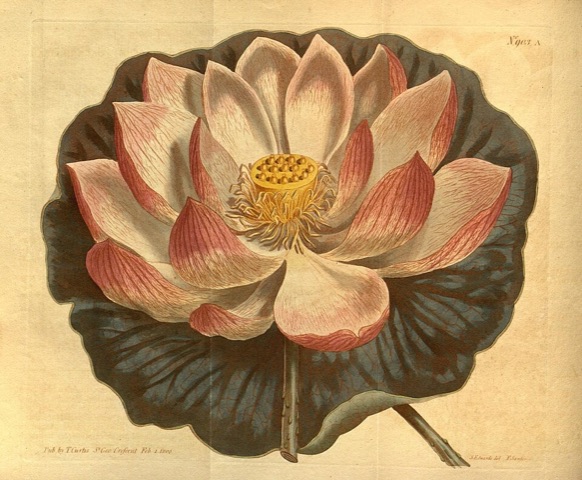
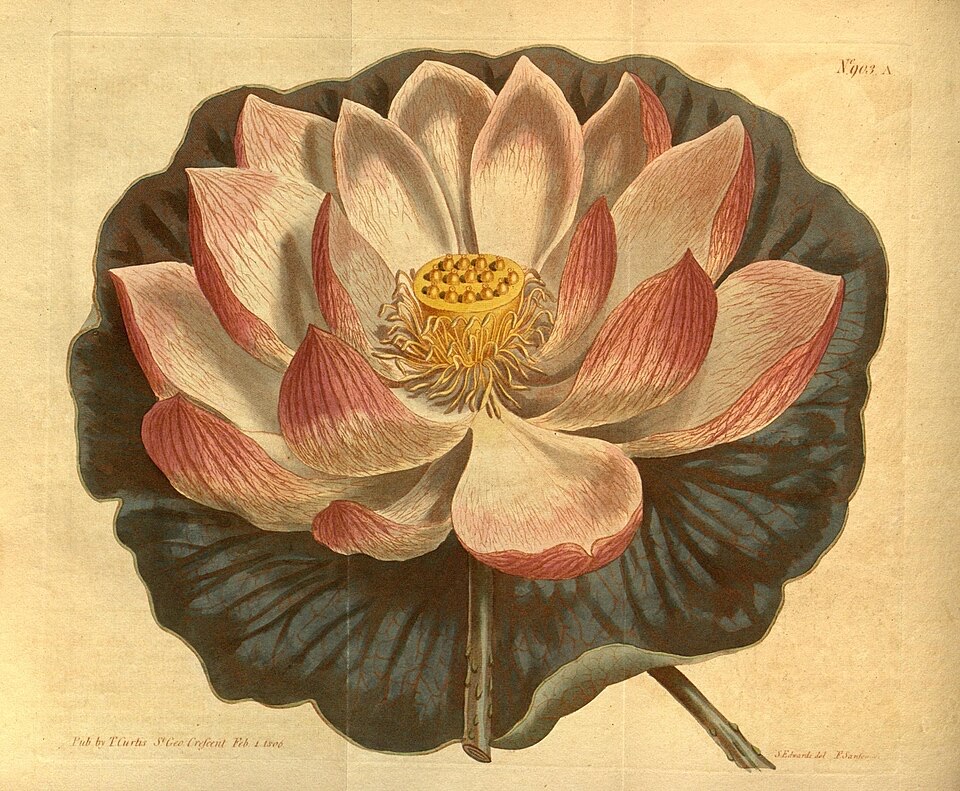
Nelumbium speciosum = Nelumbo nucifera Gaertn.
Curtis's Botanical Magazine · 903 A · 1806
Sydenham Edwards, F. Sansom · scan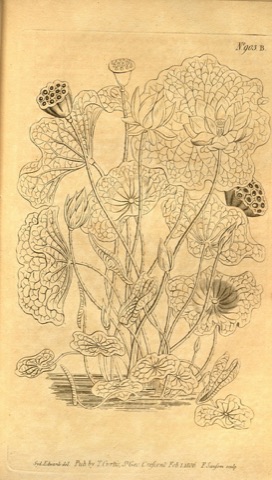
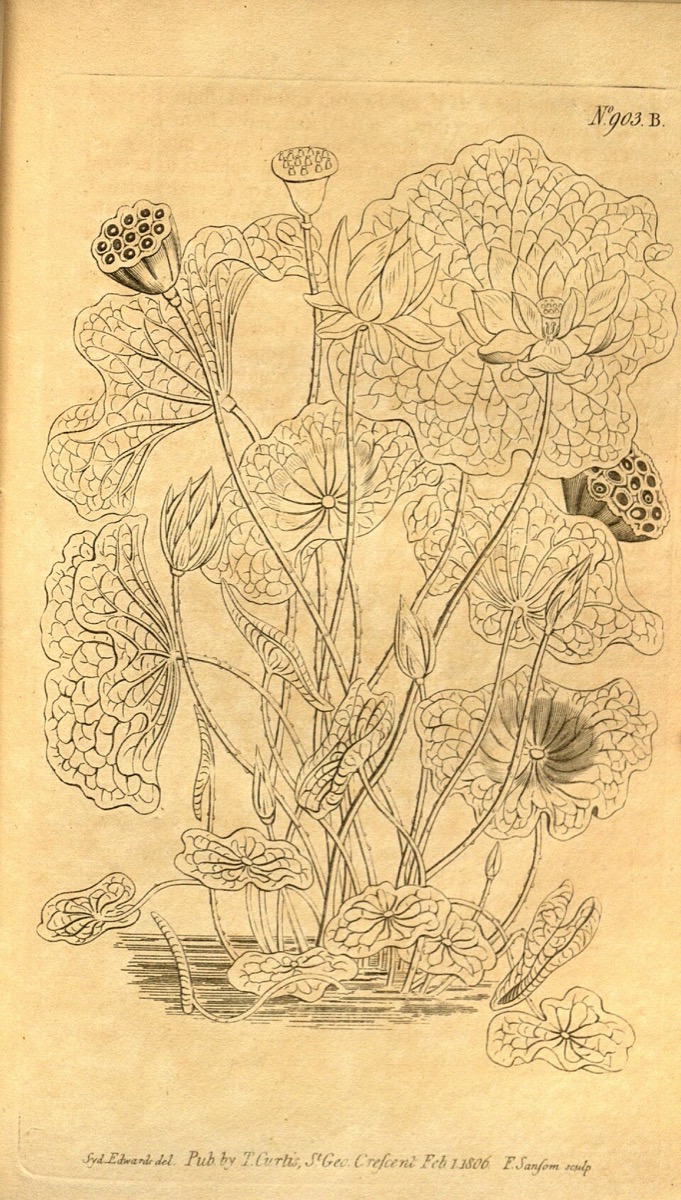
Nelumbium speciosum = Nelumbo nucifera Gaertn.
Curtis's Botanical Magazine · 903 B · 1806
Sydenham Edwards · scan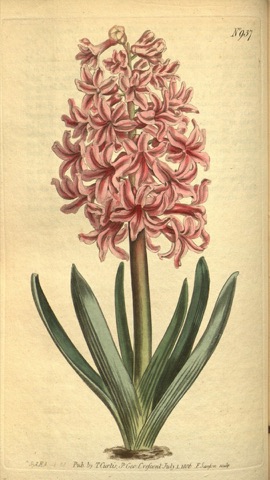
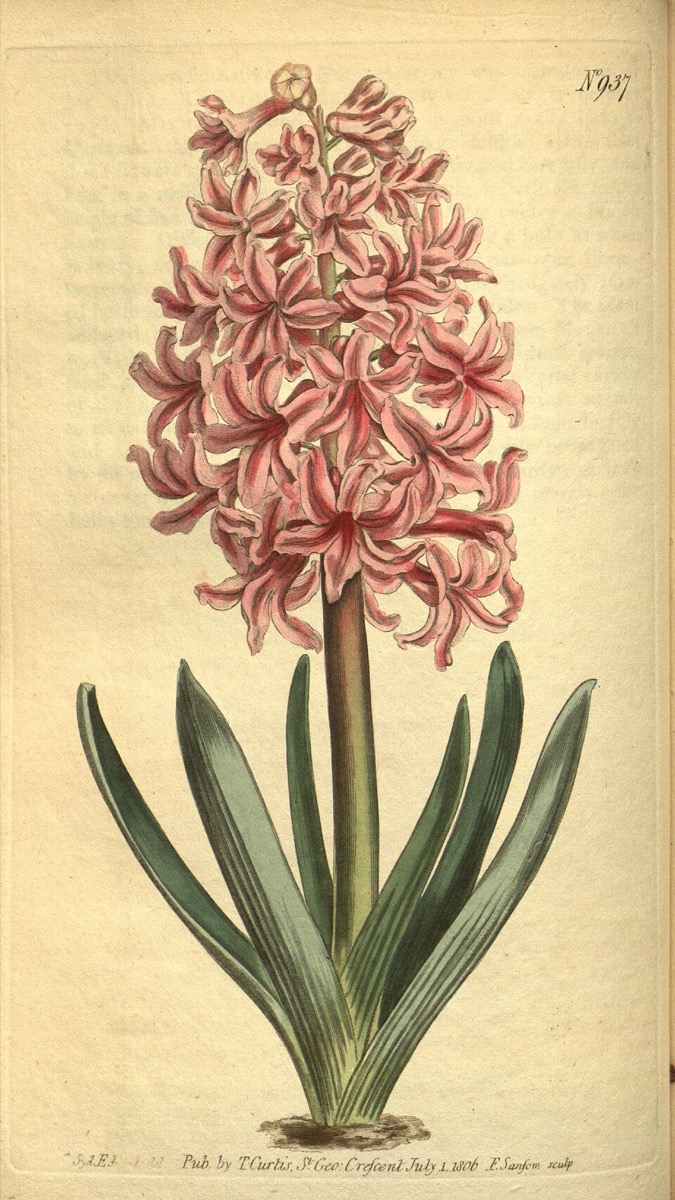
Hyacinthus orientalis
Curtis's Botanical Magazine · 937 · 1806
Sydenham Edwards · scan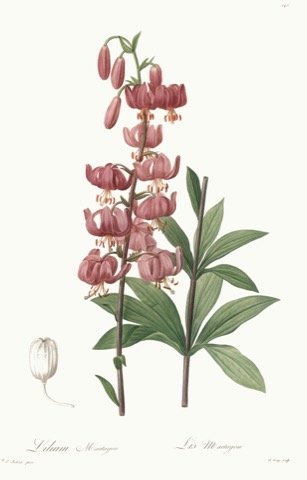
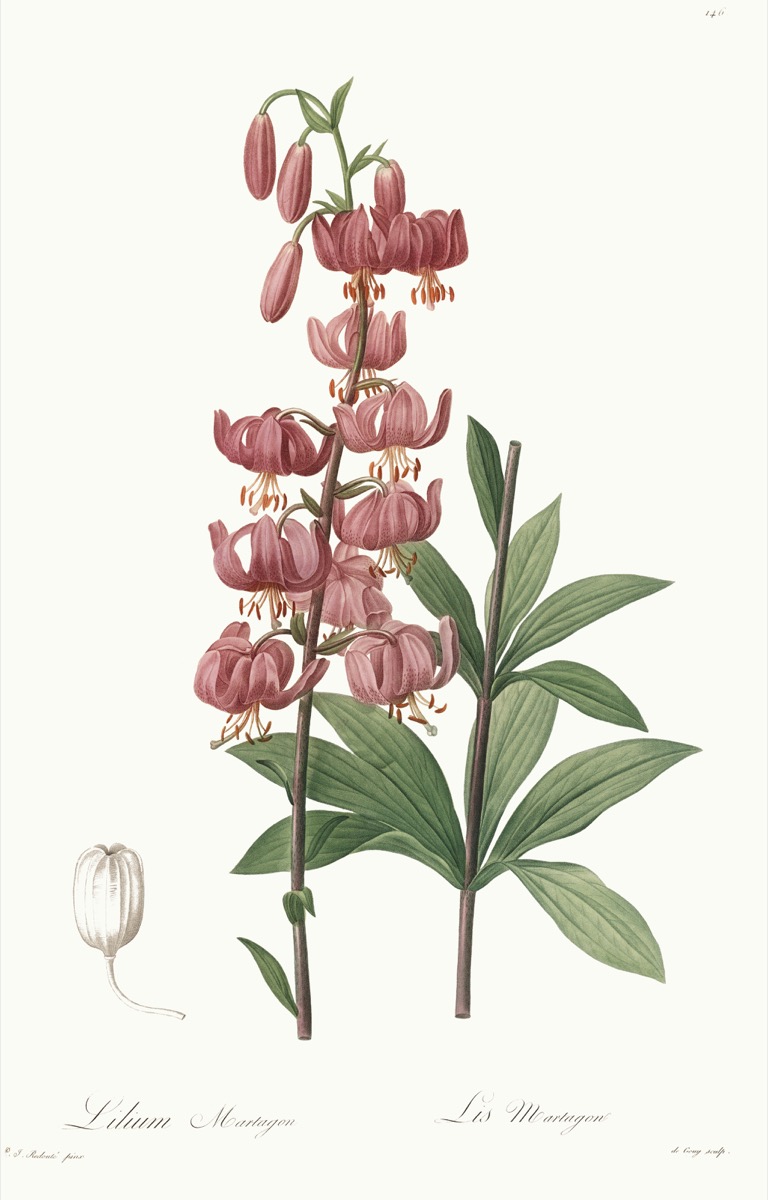
Lilium martagon
Les Liliacées · 146 · 1806
Pierre-Joseph Redouté · scan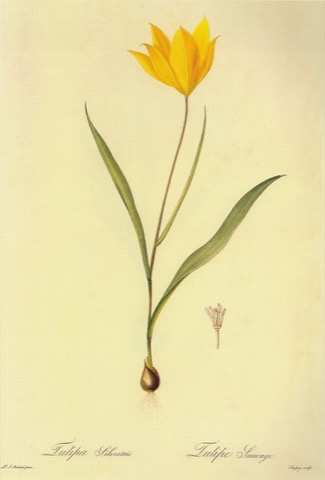
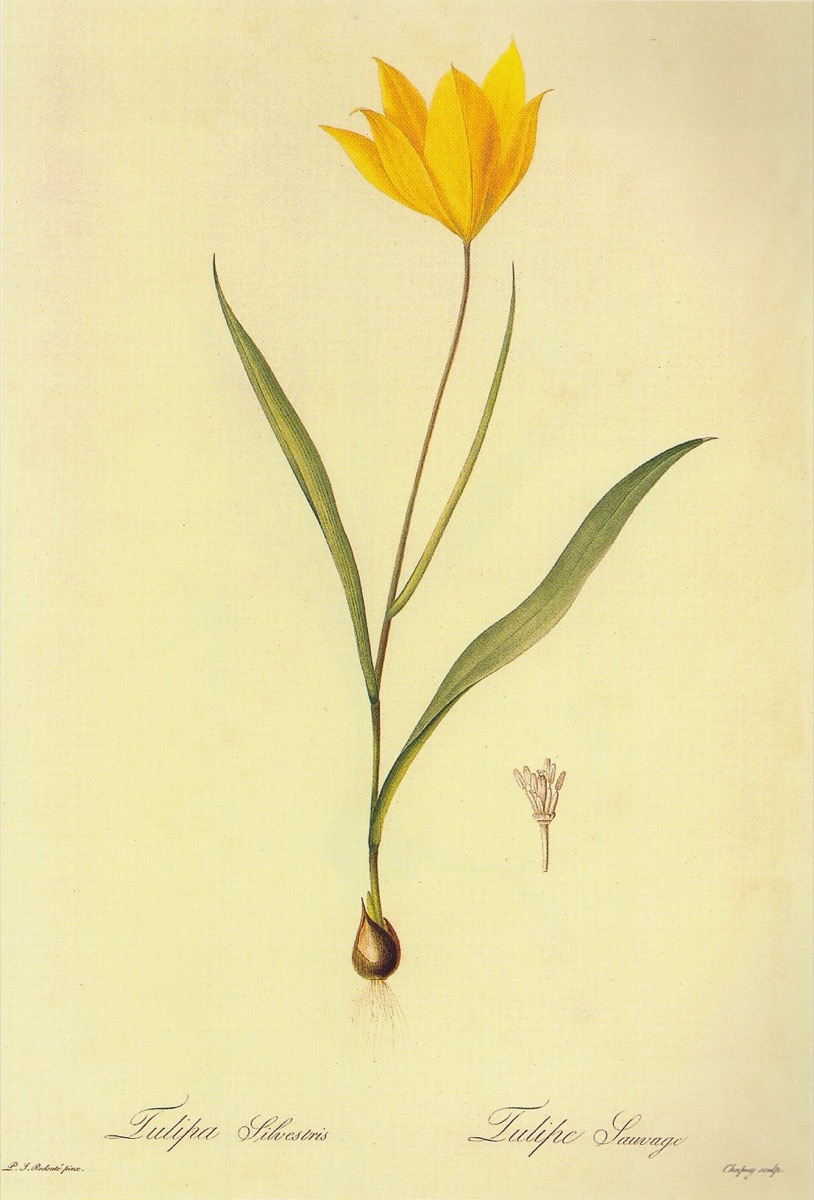
Tulipa sylvestris
Les Liliacées · 165 · 1806
Pierre-Joseph Redouté · scan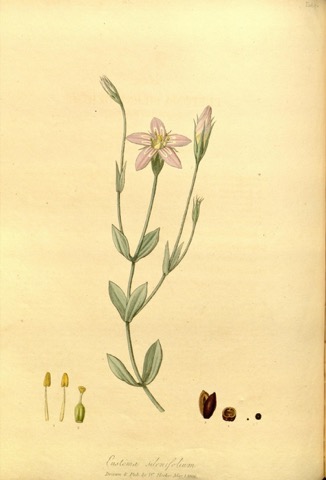
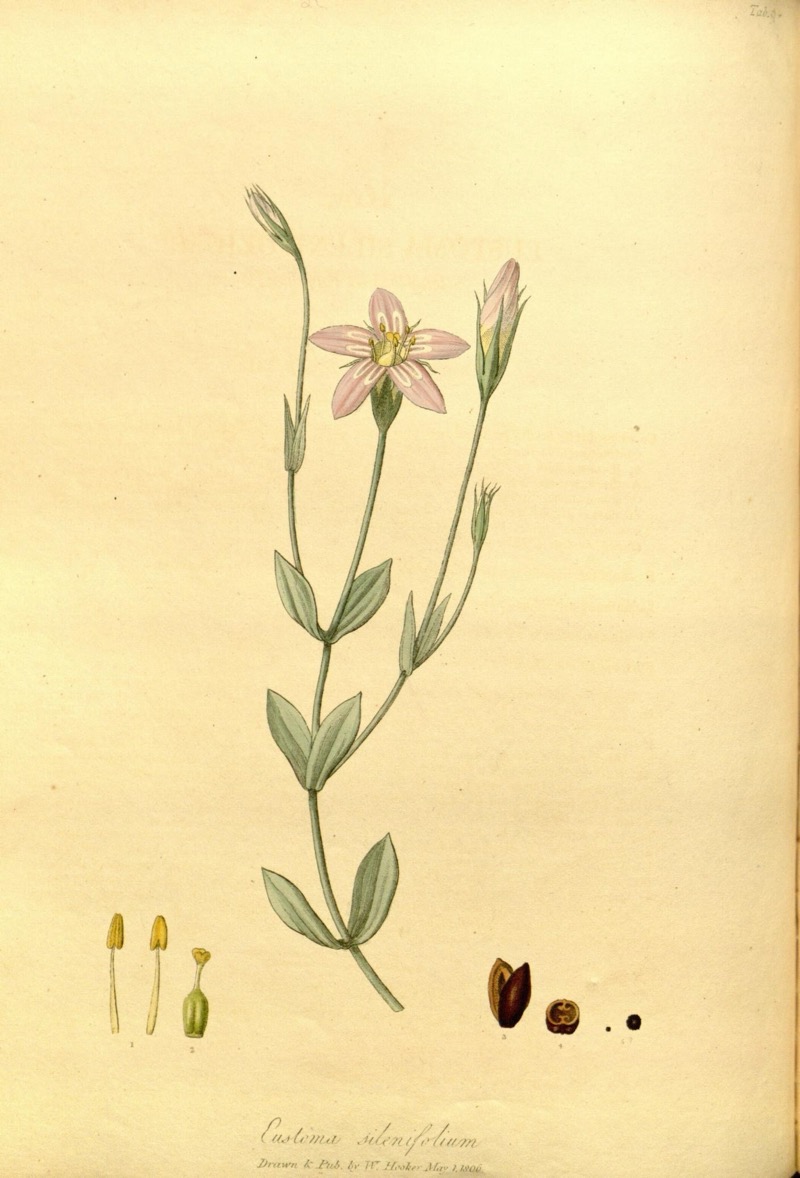
Eustoma silenifolium = Eustoma exaltatum (L.) Salisb. ex G.Don
The Paradisus Londinensis · Tab. 34 · 1806
William Hooker · scan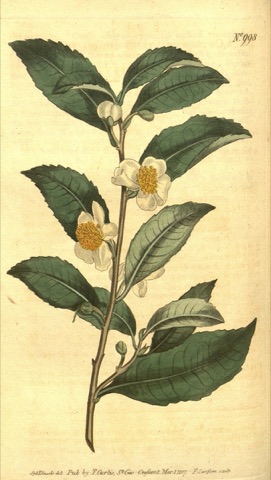
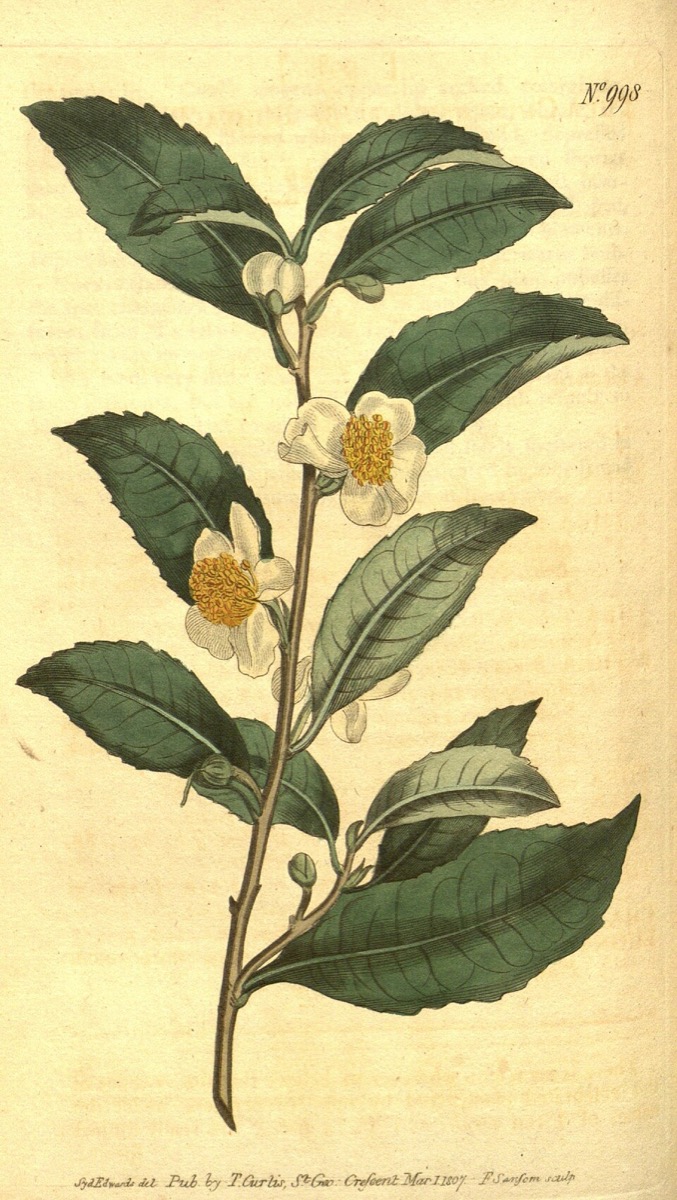
Thea chinensis = Camellia sinensis (L.) Kuntze
Curtis's Botanical Magazine · 998 · 1807
Sydenham Edwards · scan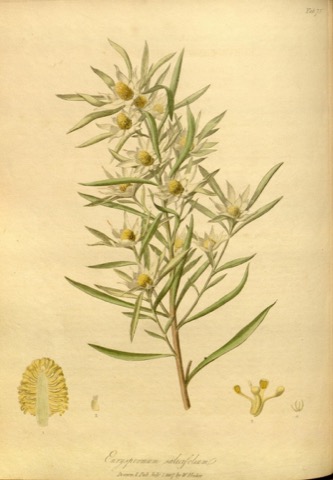
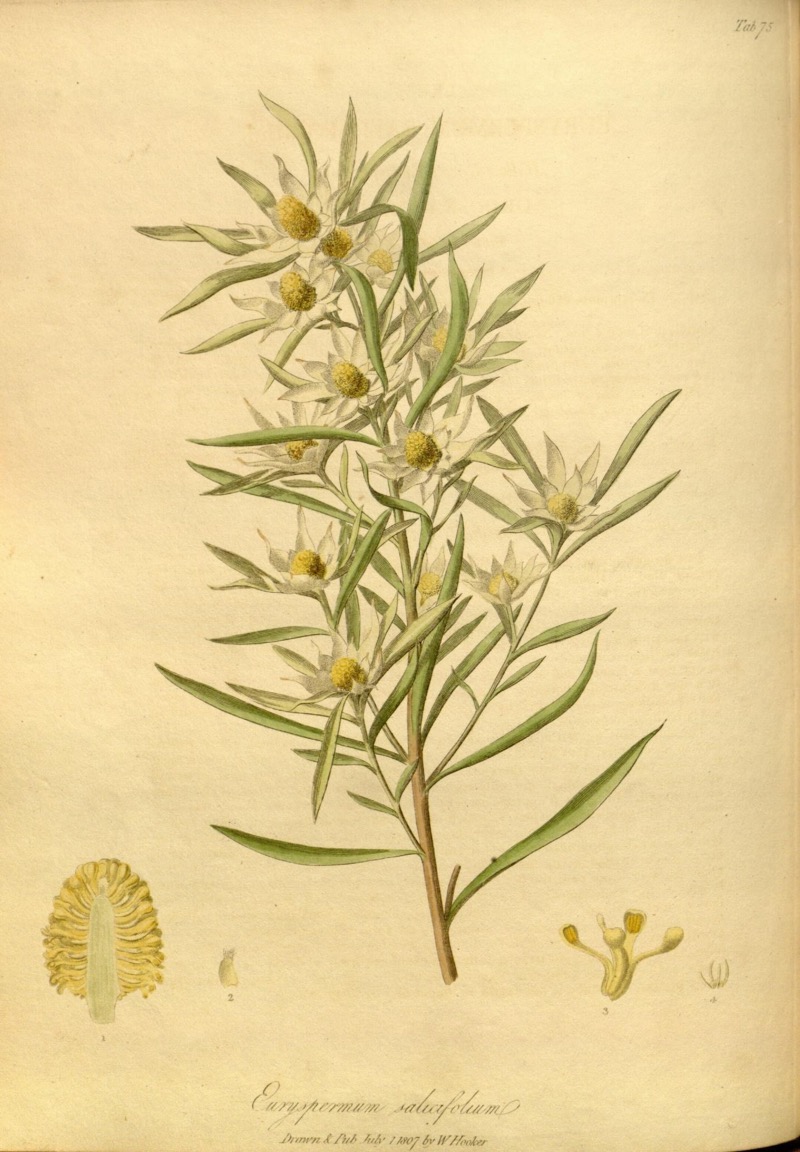
Euryspermum salicifolium = Leucadendron salicifolium (Salisb.) I.Williams
The Paradisus Londinensis · Tab. 75 · 1807
William Hooker · scan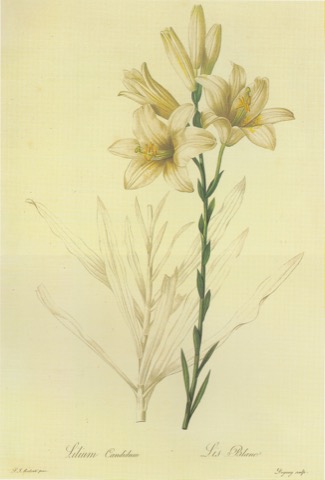
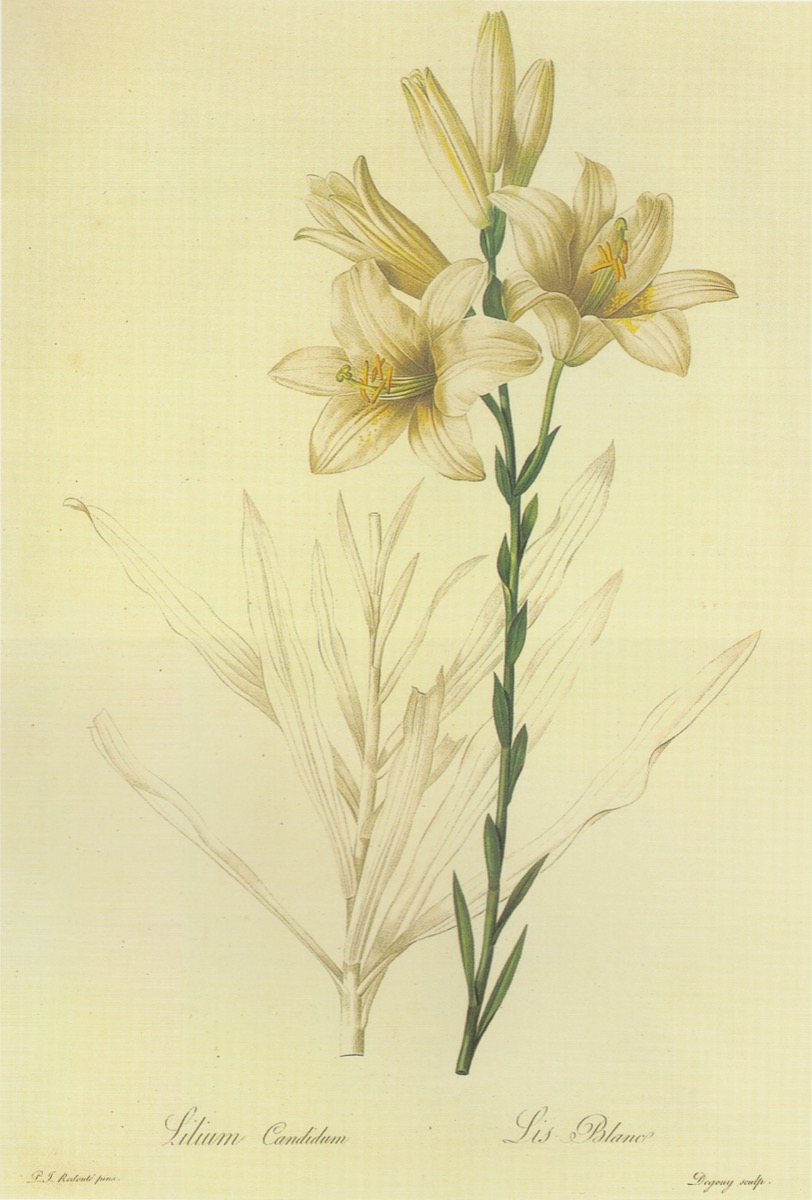
Lilium candidum
Les Liliacées · 199 · 1808
Pierre-Joseph Redouté · scan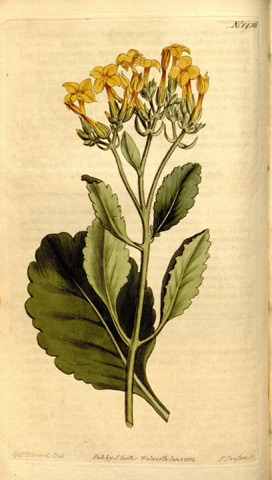
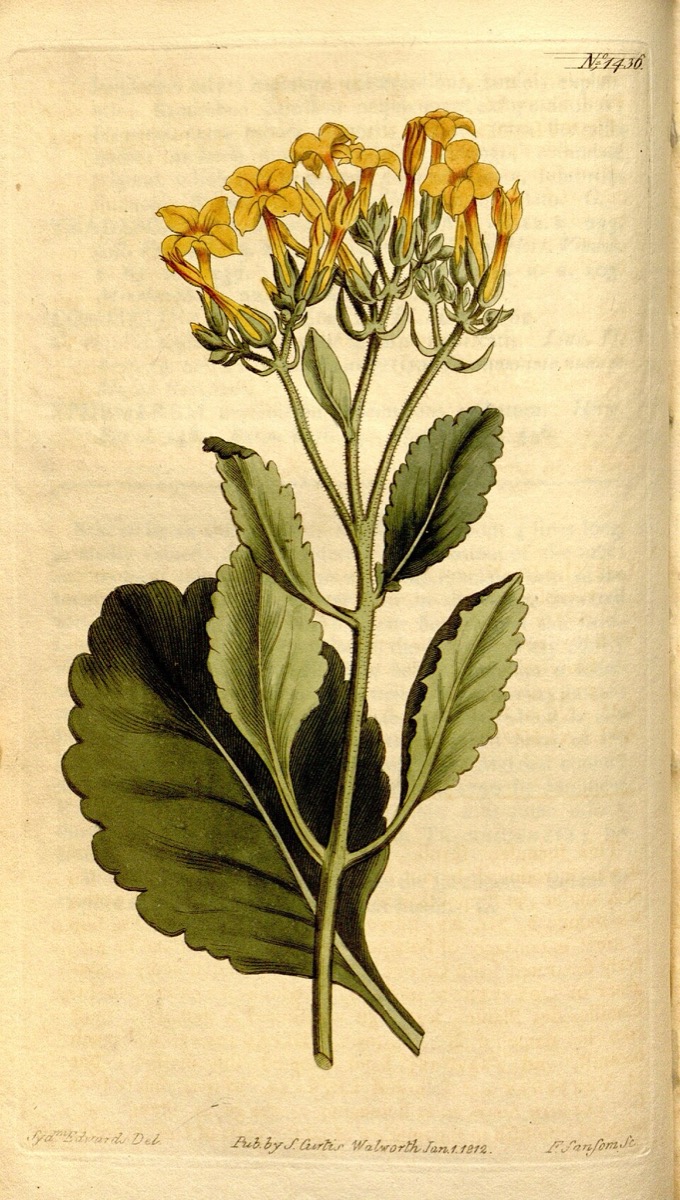
Cotyledon crenata = Kalanchoe crenata (Andrews) Haw.
Curtis's Botanical Magazine · 1436 · 1812
Sydenham Edwards, F. Sansom · scan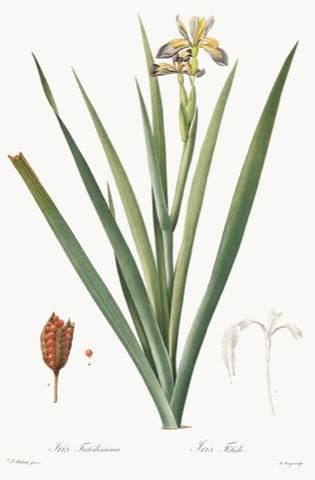
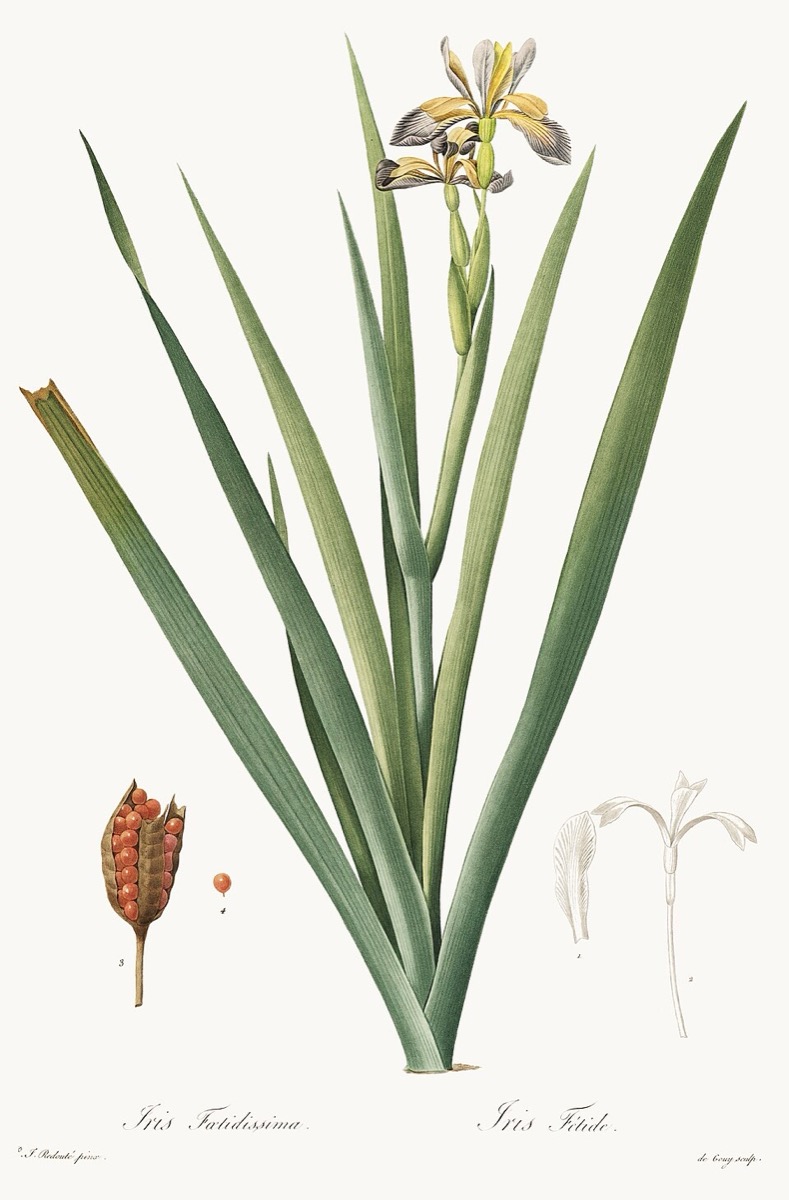
Iris Fœtidissima
Les Liliacées · 351 · 1812
Pierre-Joseph Redouté · scan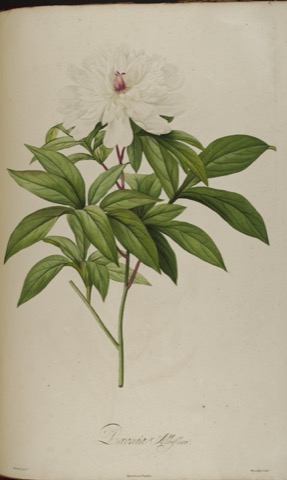
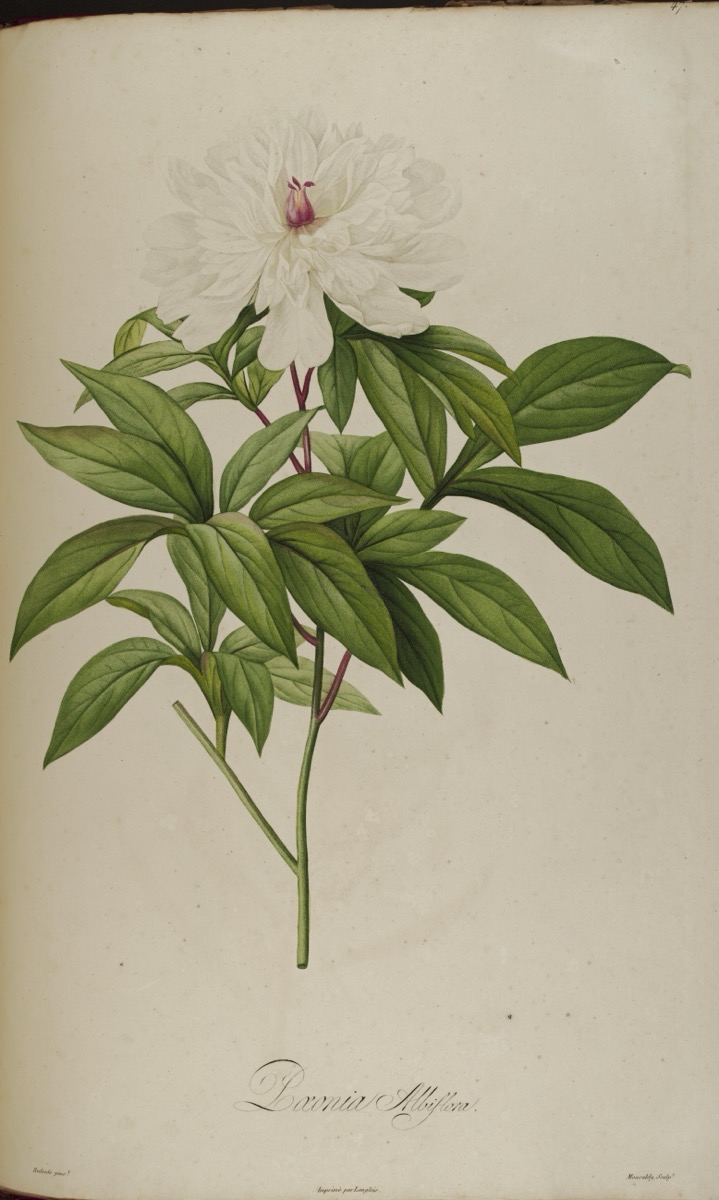
Paeonia Albiflora = Paeonia lactiflora Pall.
Description des plantes rares cultivées à Malmaison et à Navarre · pl. 47 · 1813
Pierre-Joseph Redouté · scan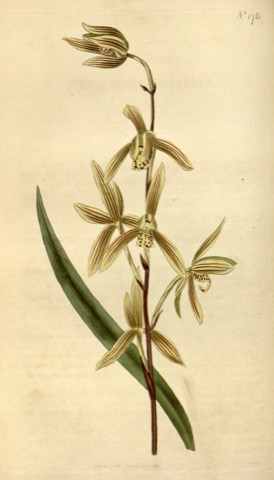
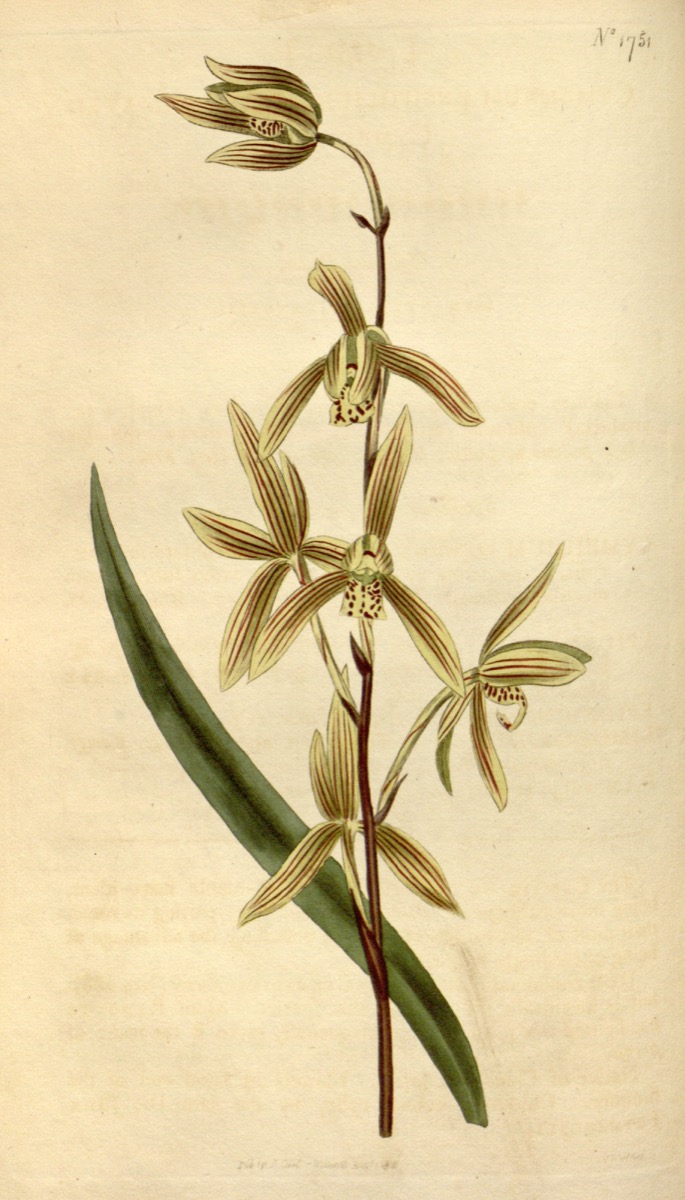
Cymbidium ensifolium
Curtis's Botanical Magazine · 1751 · 1815
Sydenham Edwards · scan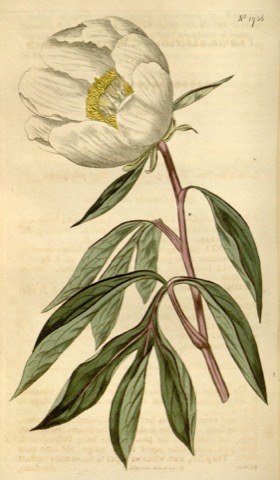
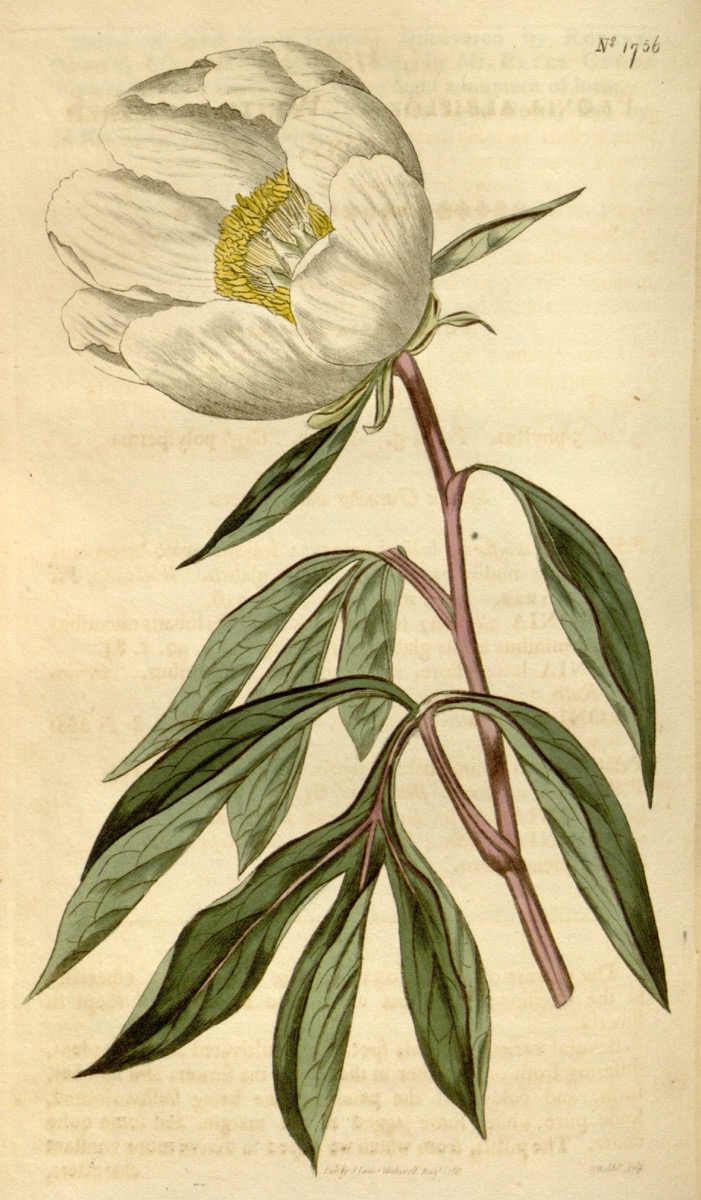
Paeonia albiflora = Paeonia lactiflora Pall.
Curtis's Botanical Magazine · 1756 · 1815
· scan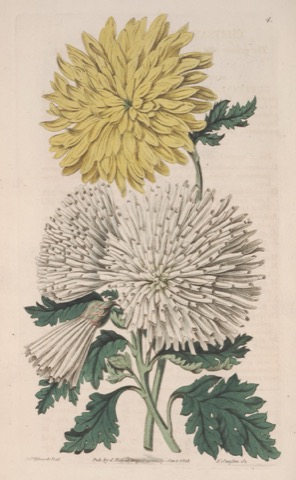
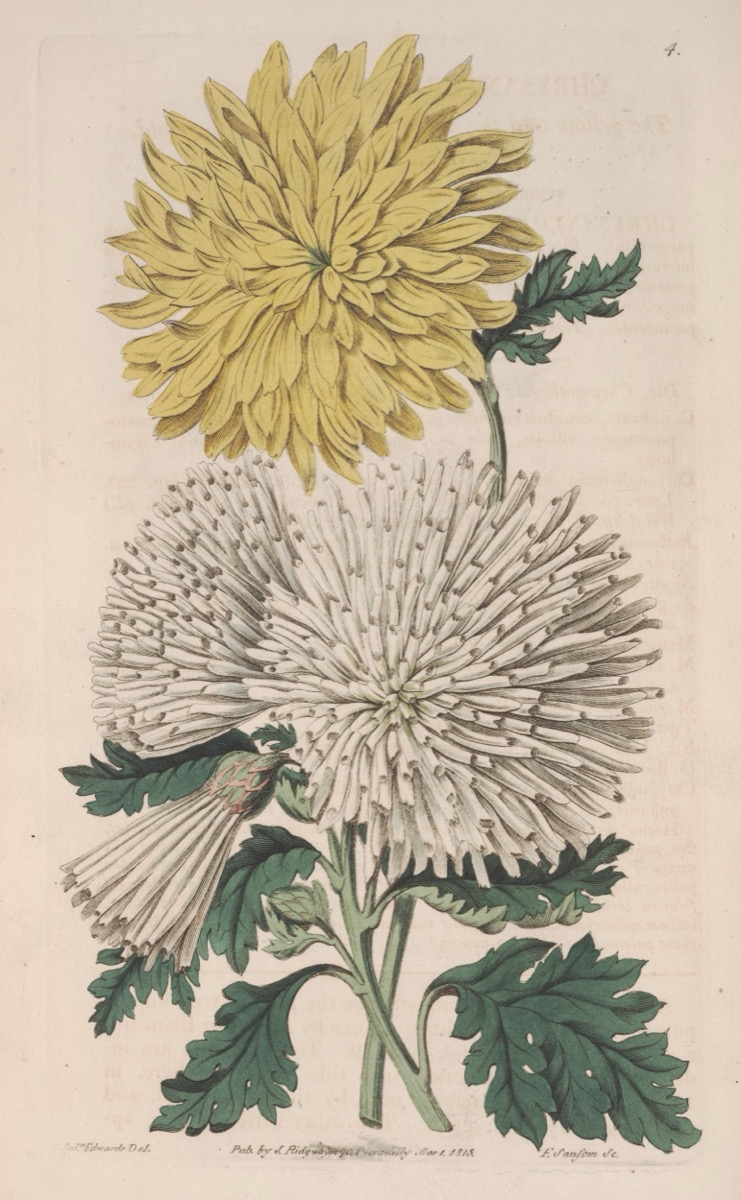
Chrysanthemum indicum var.
Edwards's Botanical Register · Pl. 4 · 1815
Sydenham Edwards, F. Sansom · scan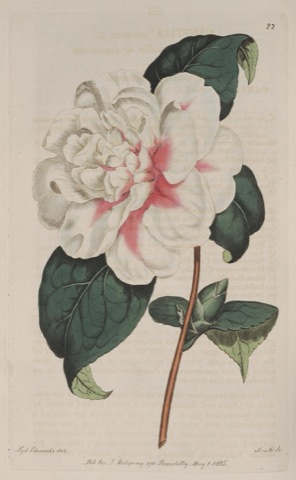
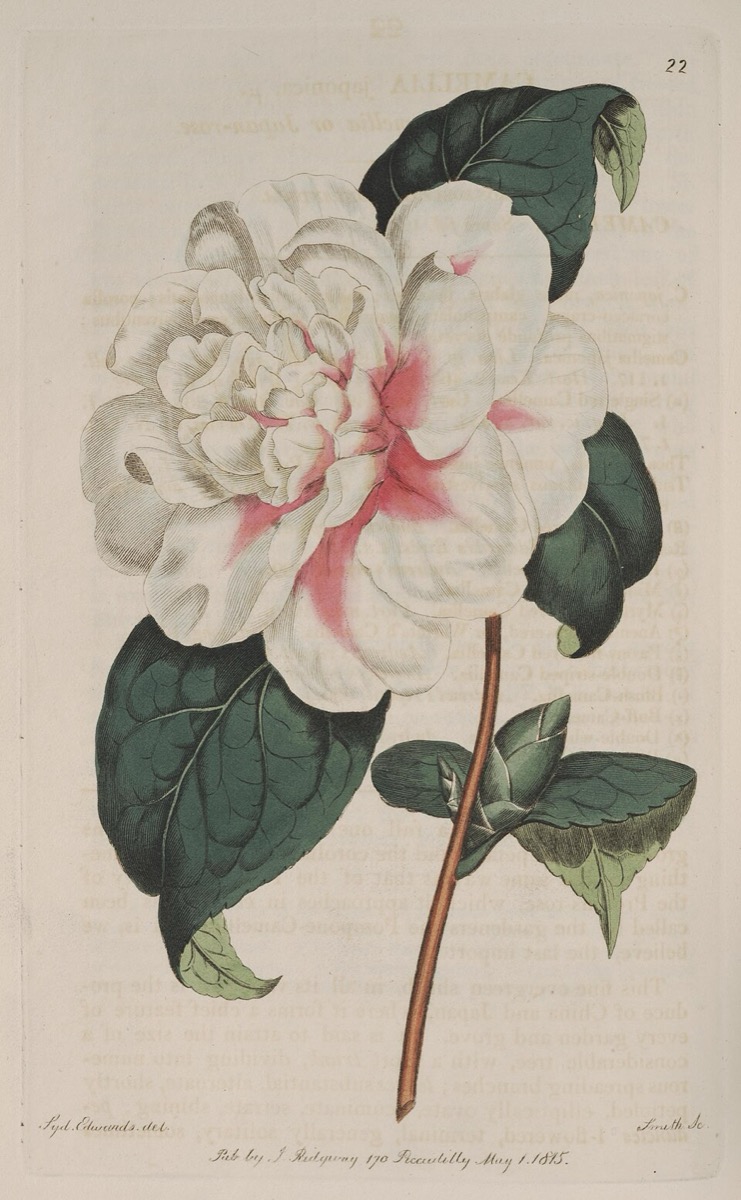
Camellia japonica
Edwards's Botanical Register · 22 · 1815
Sydenham Edwards, Smith · scan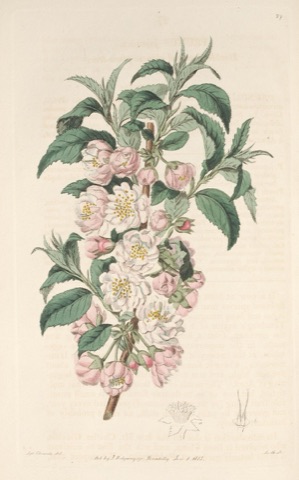
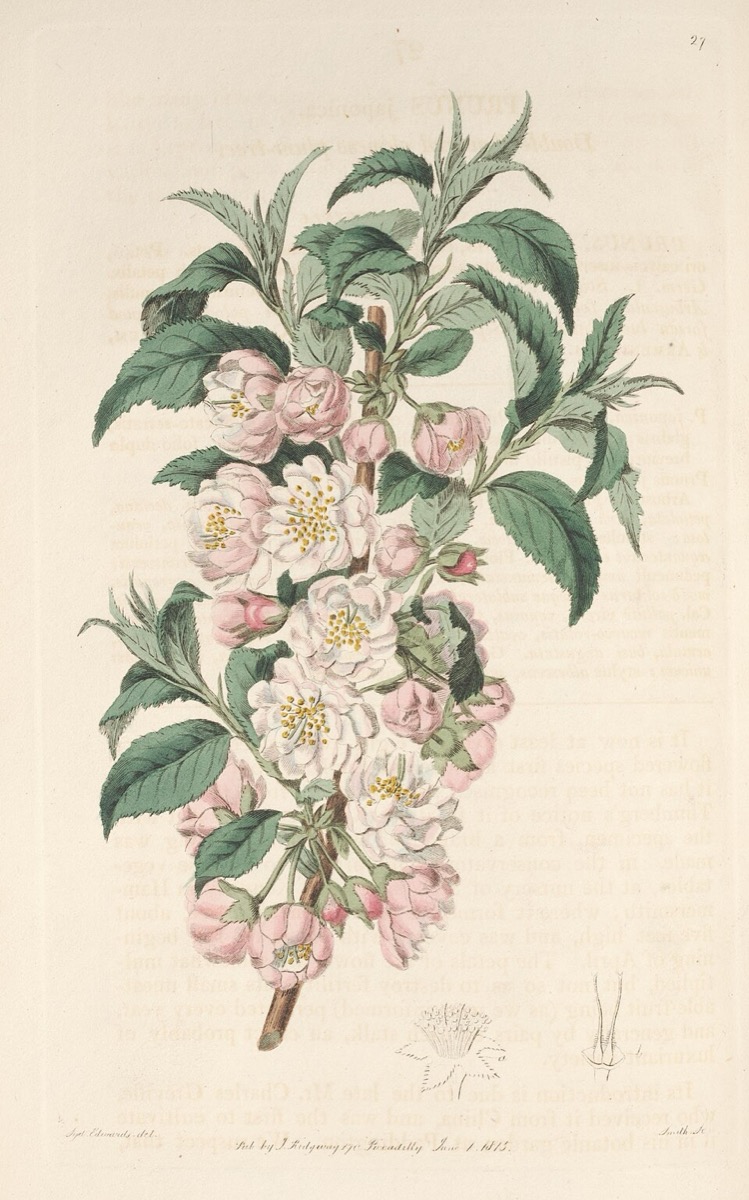
Prunus japonica
Edwards's Botanical Register · 27 · 1815
Sydenham Edwards, Smith · scan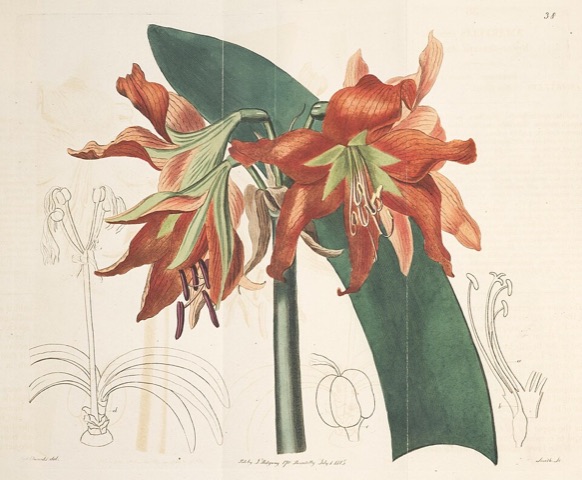
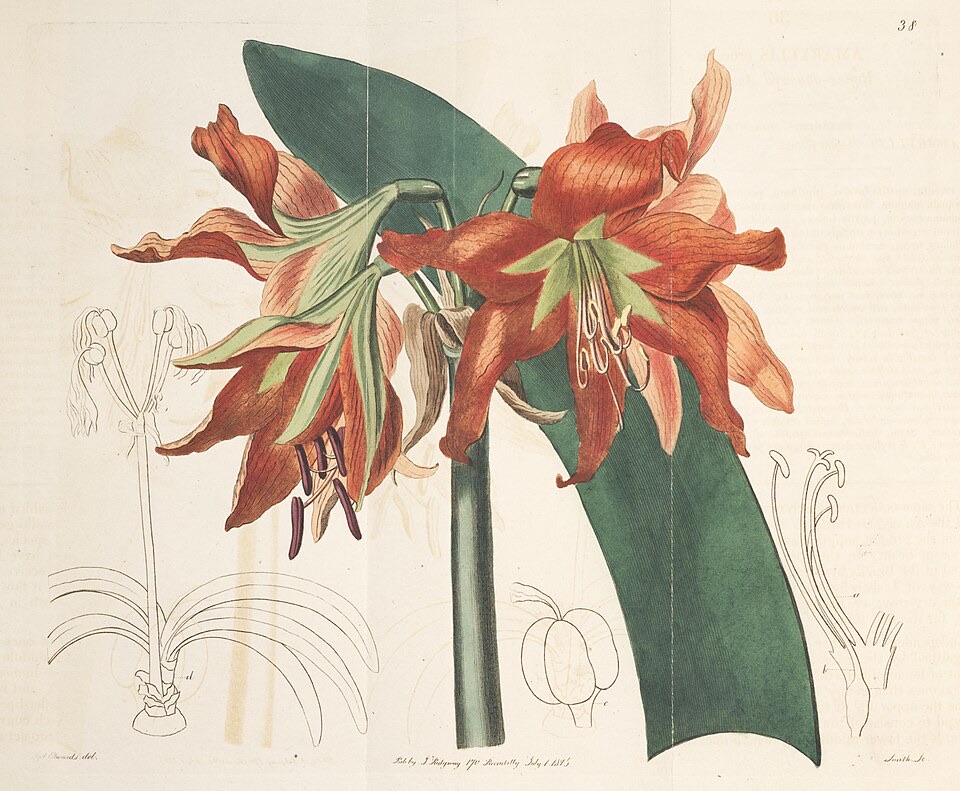
Amaryllis crocata = Hippeastrum striatum (Lam.) H.E.Moore
Edwards's Botanical Register · 38 · 1815
Sydenham Edwards, Smith · scan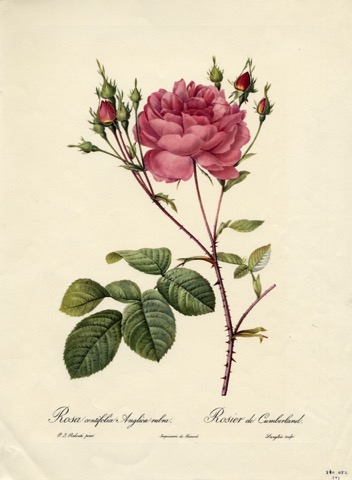
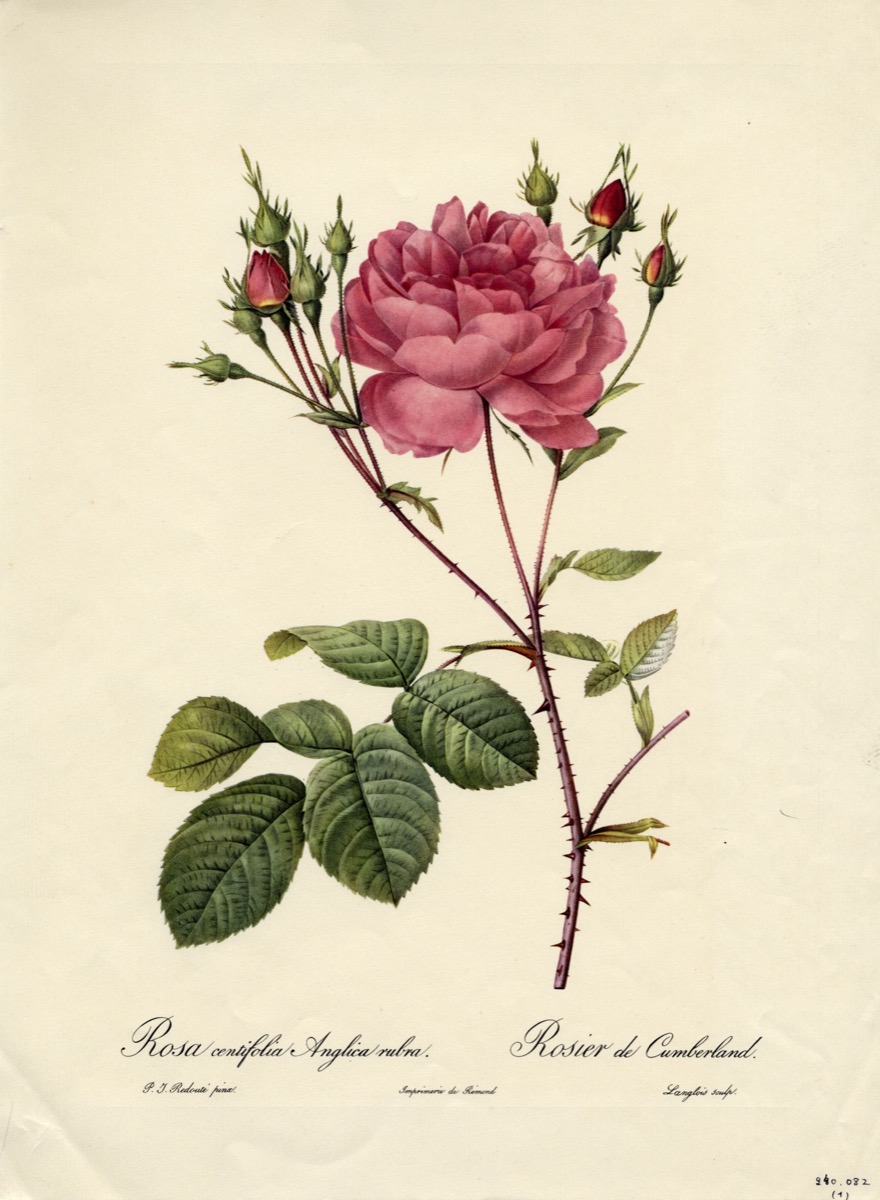
Rosa Centifolia Anglica rubra
Les Roses · · 1817–1824
Pierre-Joseph Redouté · scan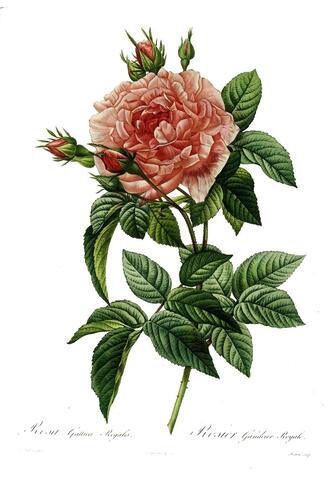
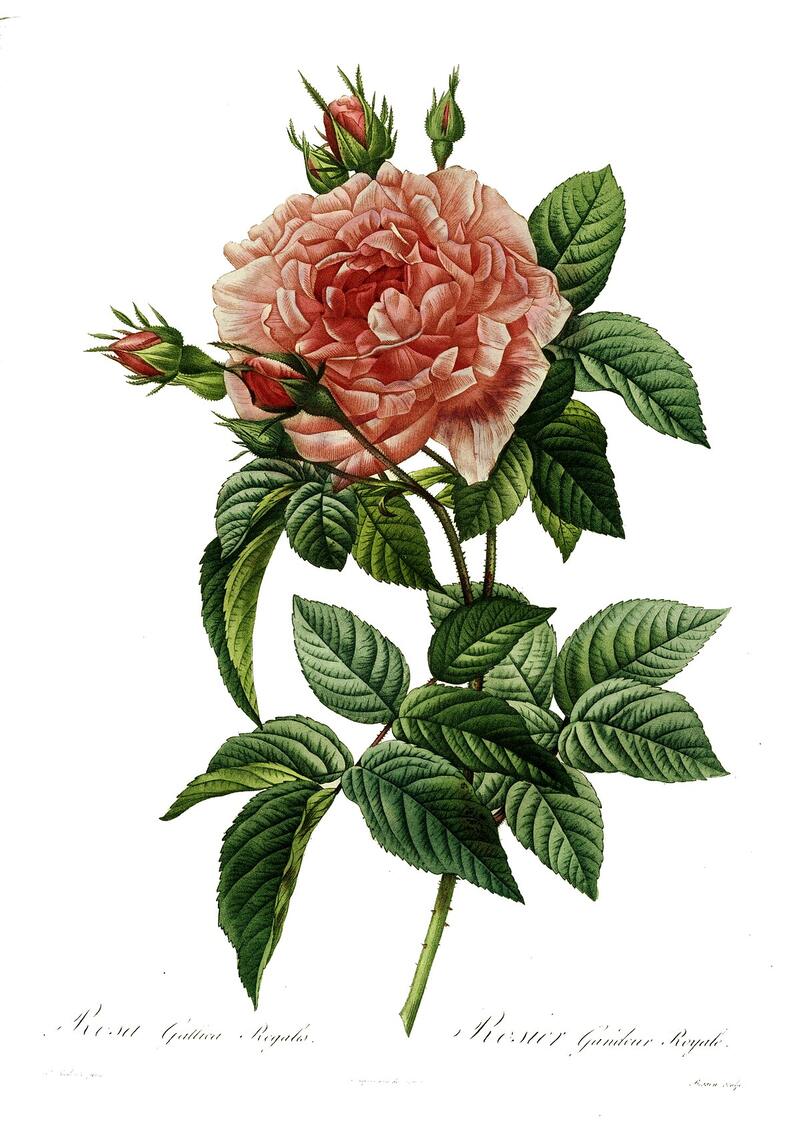
Rosa Gallica Regalis = Rosa gallica L.
Les Roses · · 1817–1824
Pierre-Joseph Redouté · scan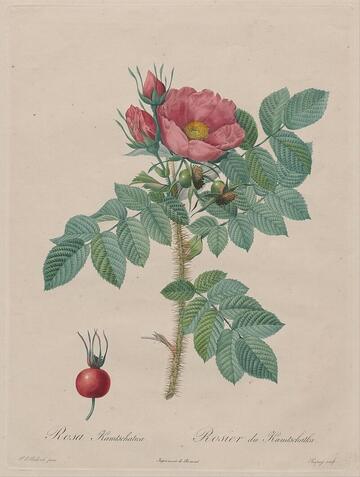
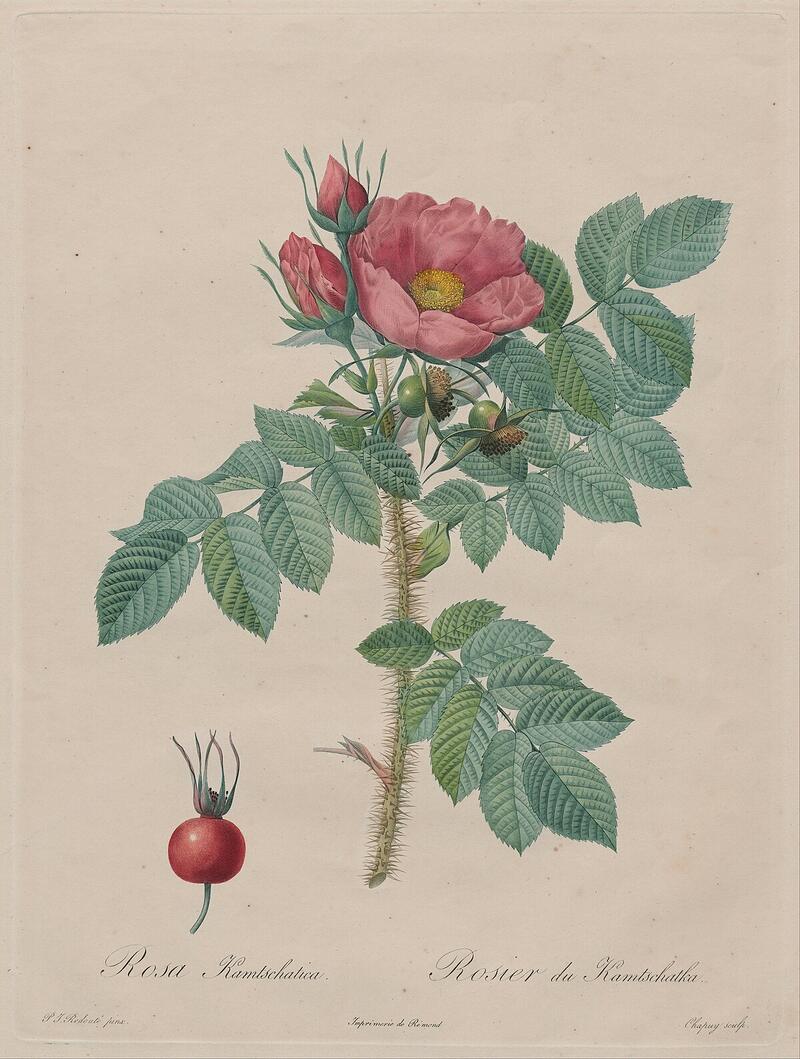
Rosa Kamtschatica = Rosa rugosa Thunb.
Les Roses · · 1817–1824
Pierre-Joseph Redouté · scan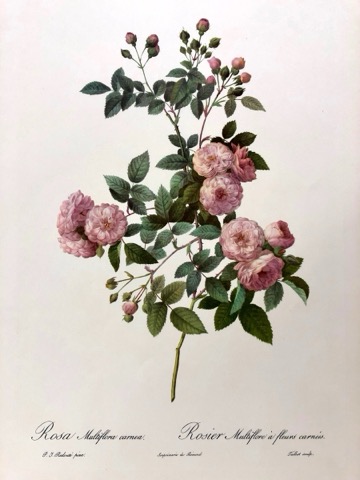
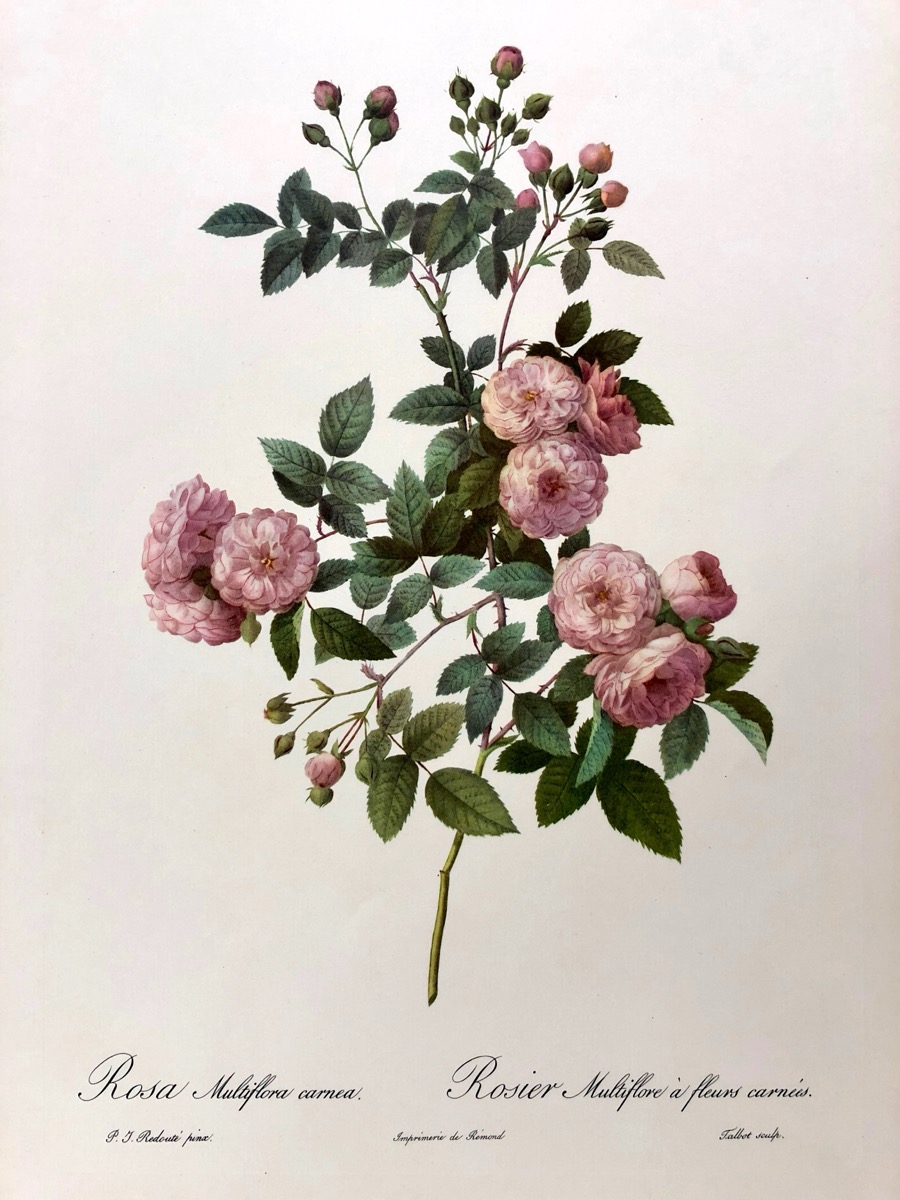
Rosa multiflora carnea
Les Roses · · 1817–1824
Pierre-Joseph Redouté · scan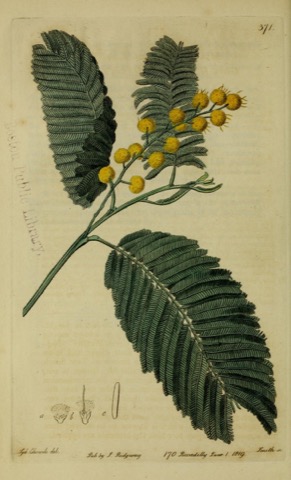
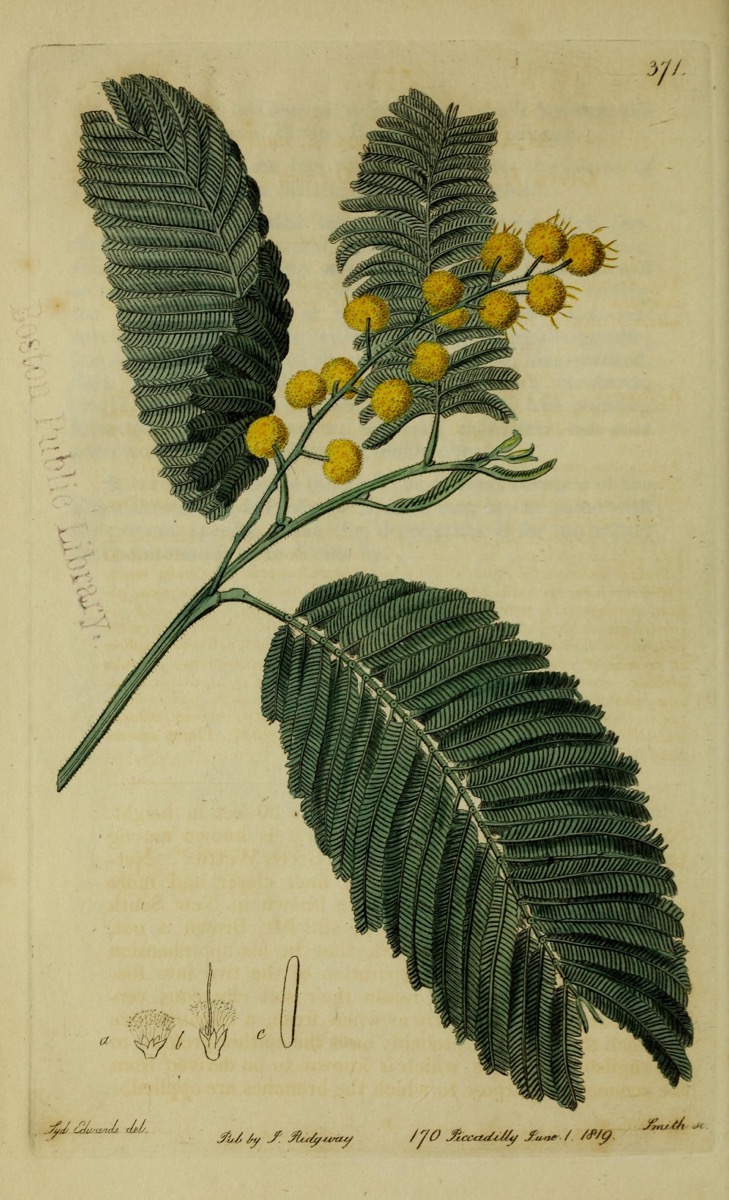
Acacia decurrens β mollis = Acacia dealbata Link
Edwards's Botanical Register · 371 · 1819
Sydenham Edwards, Smith · scan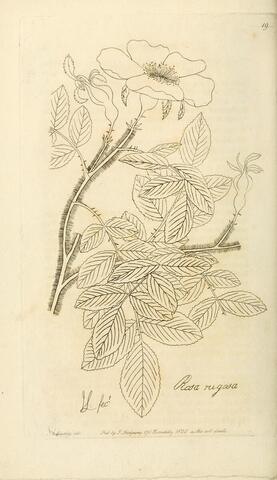
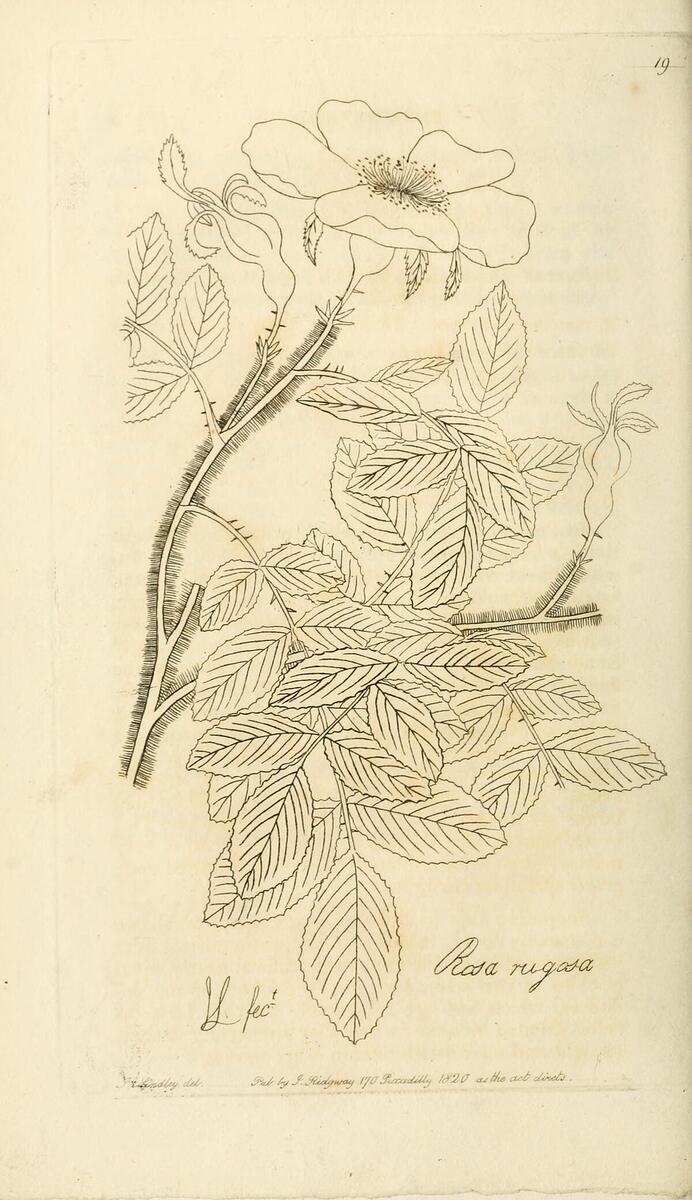
Rosa rugosa
Rosarum Monographia; or, A Botanical History of Roses · 19 · 1820
John Lindley · scan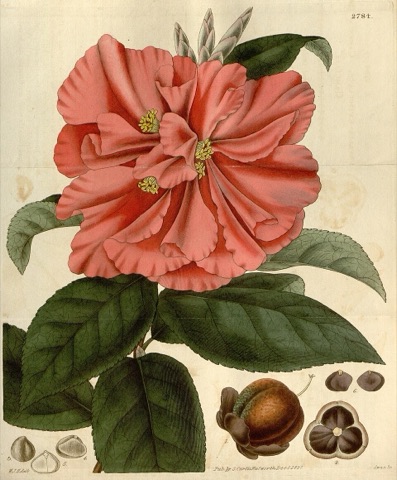
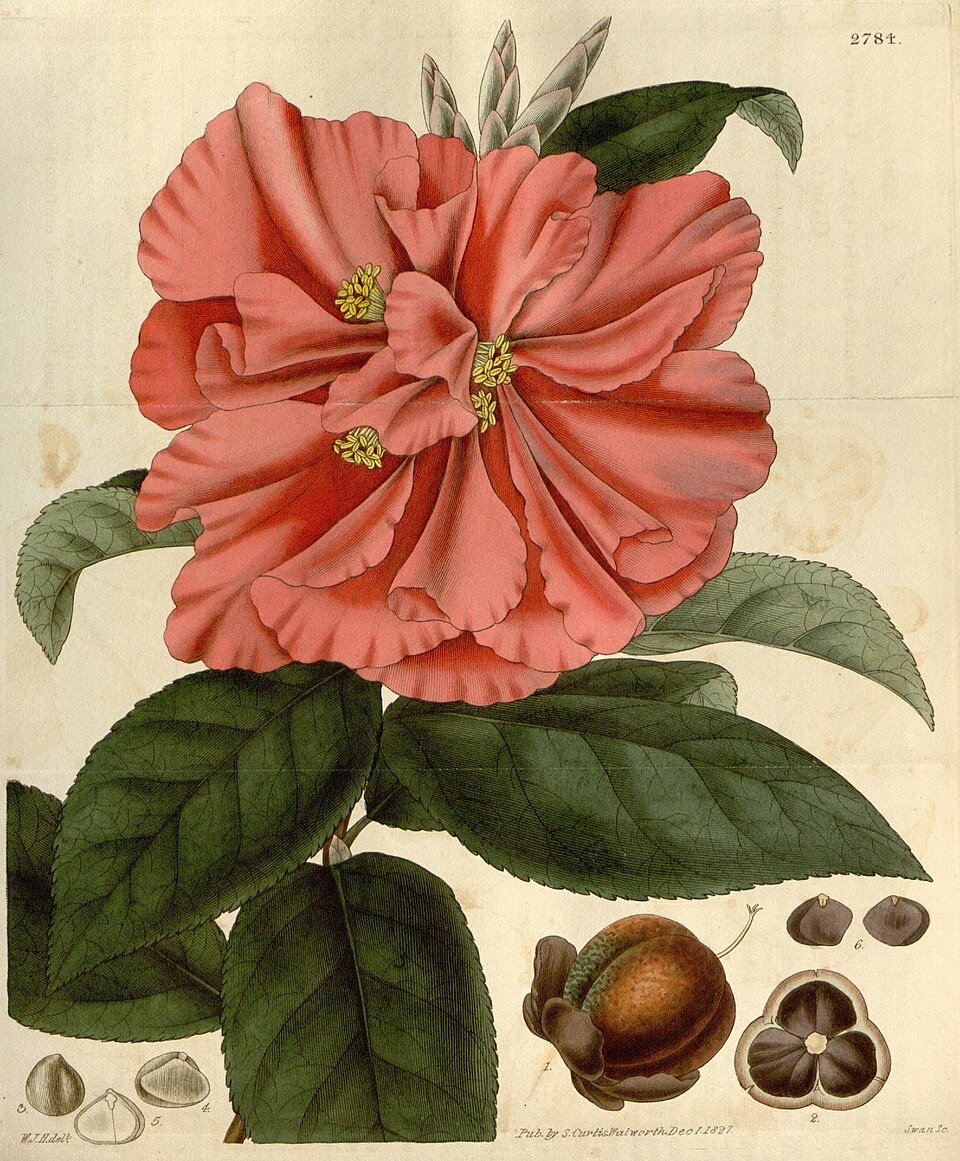
Camellia reticulata
Curtis's Botanical Magazine · 2784 · 1827
William Jackson Hooker, Joseph Swan · scan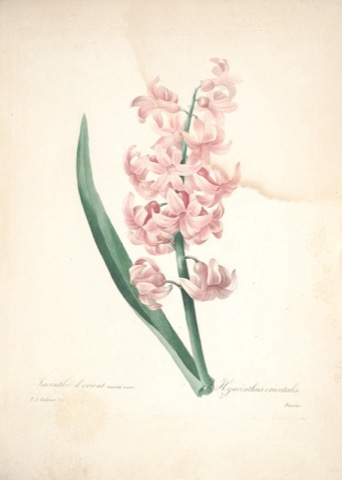
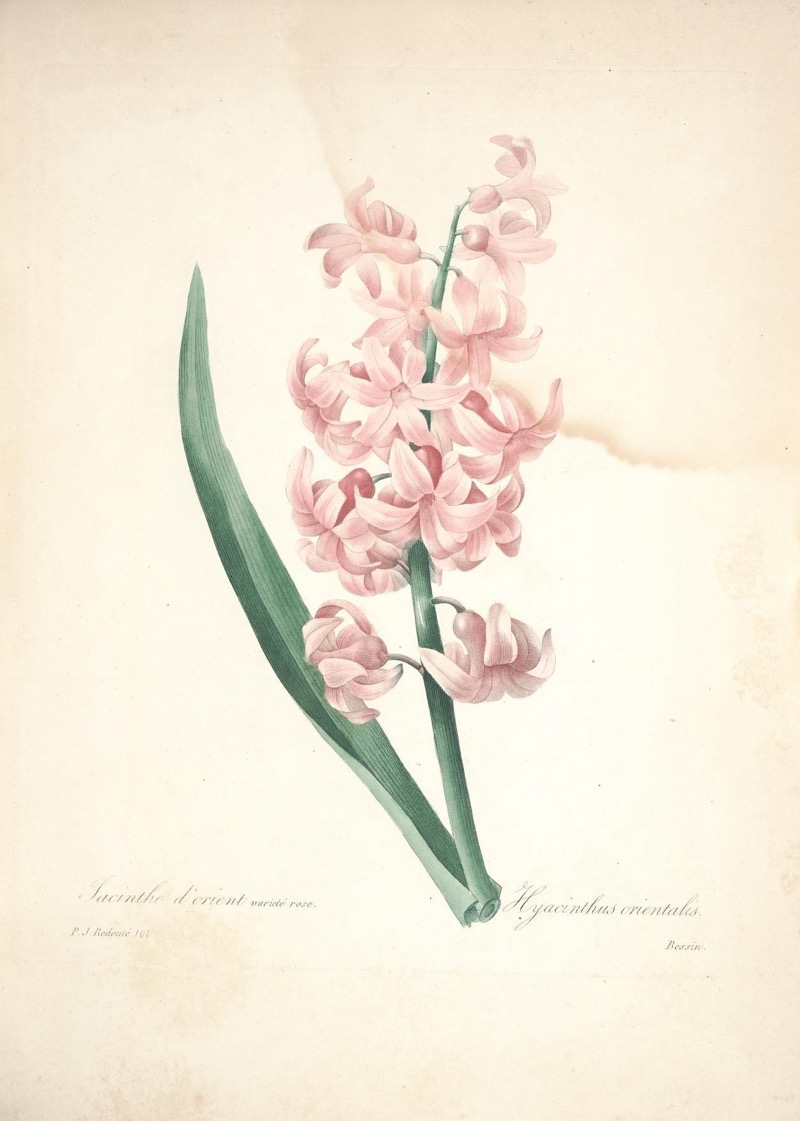
Hyacinthus orientalis
Choix des plus belles fleurs · 100 · 1827–1833
Pierre-Joseph Redouté · scan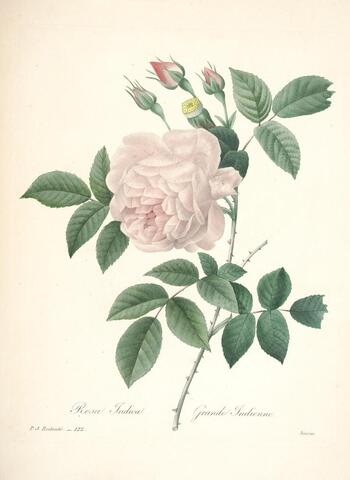
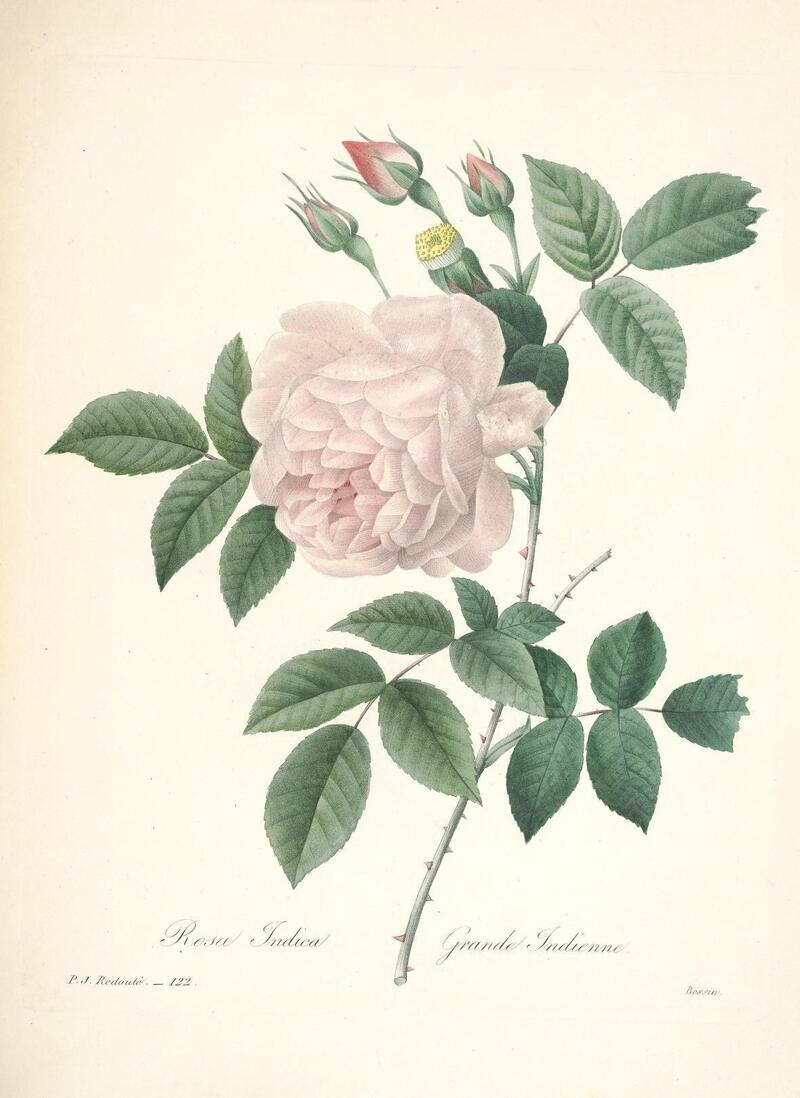
Rosa Indica = Rosa chinensis Jacq.
Choix des plus belles fleurs · 122 · 1827–1833
Pierre-Joseph Redouté · scan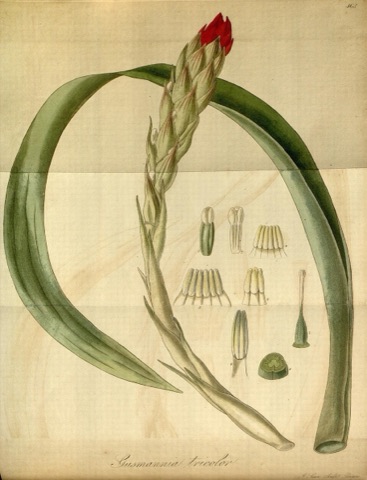
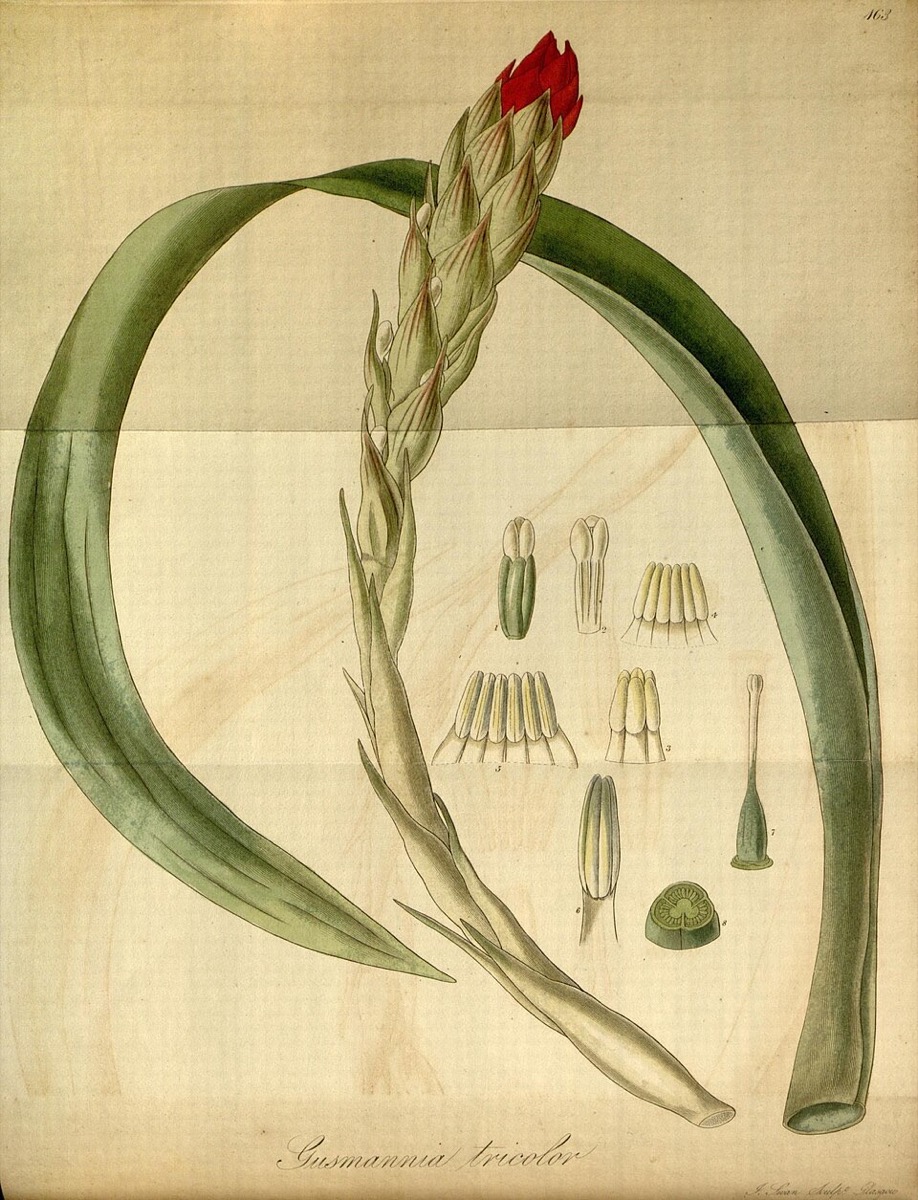
Gusmannia tricolor = Guzmania monostachia (L.) Rusby ex Mez
Exotic Flora · 163* · 1827
· scan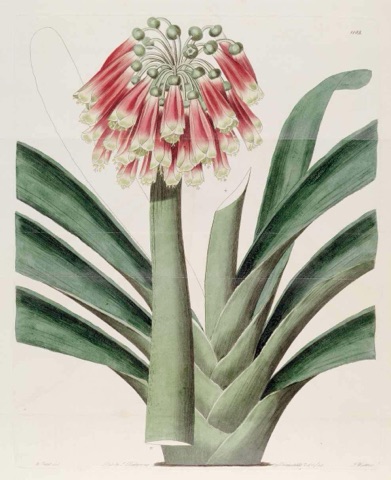
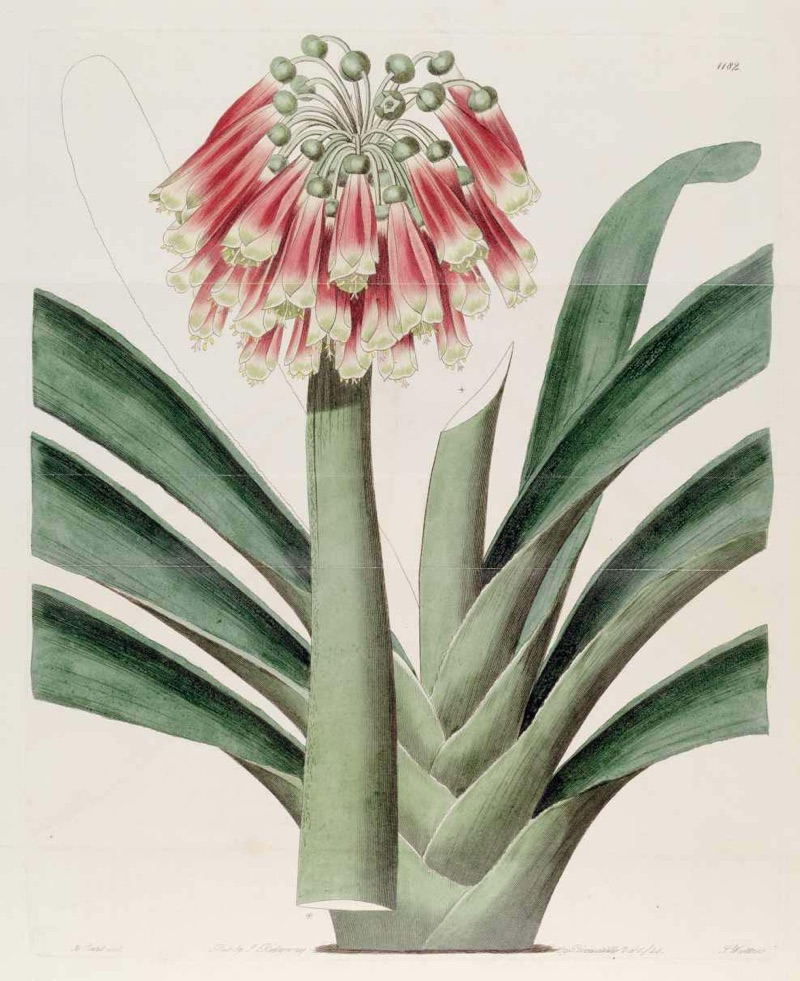
Clivia nobilis
Edwards's Botanical Register · 1182 · 1828
· scan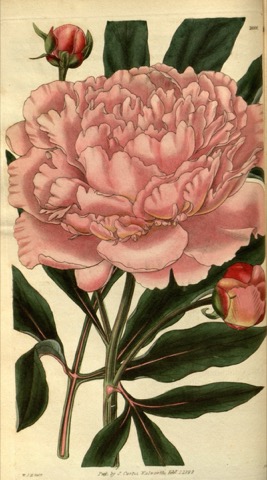
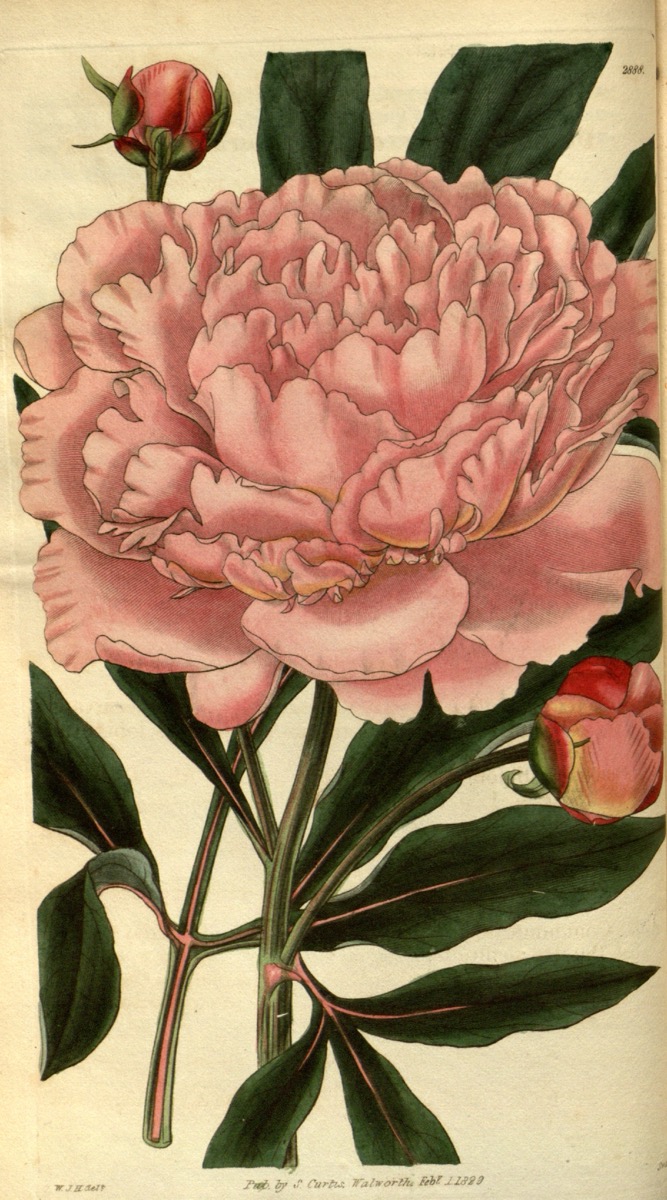
Paeonia albiflora var. rosea = Paeonia lactiflora Pall.
Curtis's Botanical Magazine · 2888 · 1829
William Jackson Hooker · scan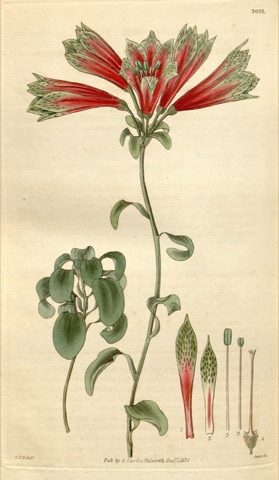
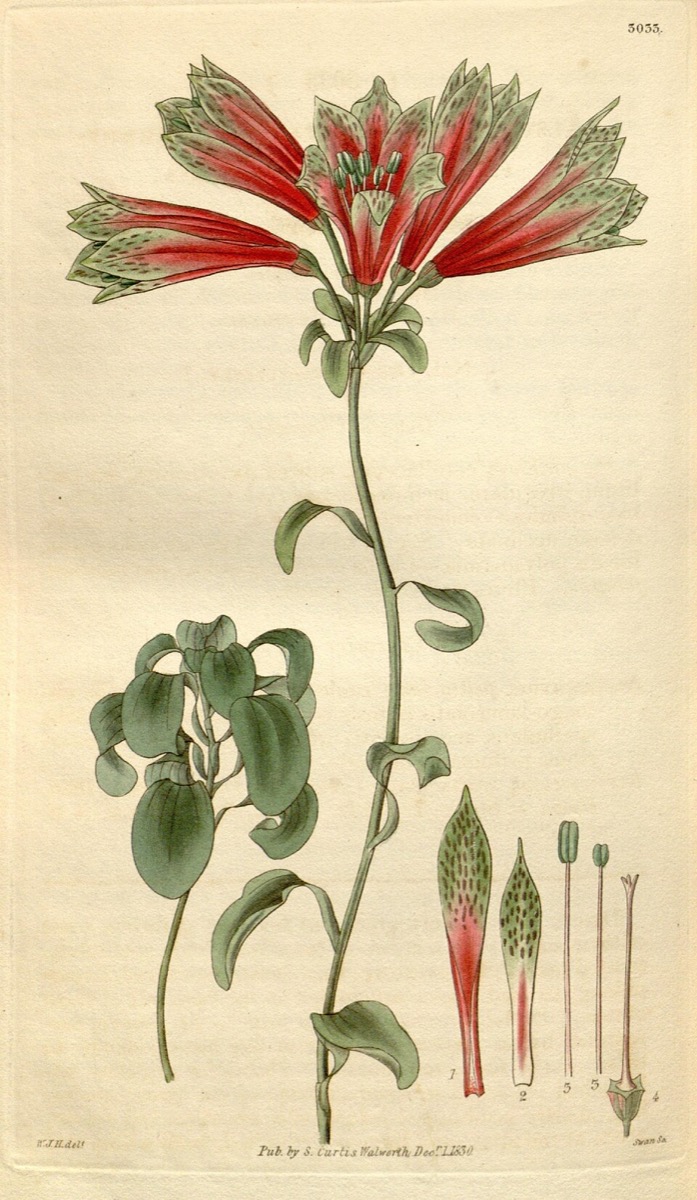
Alstroemeria psittacina
Curtis's Botanical Magazine · 3033 · 1830
William Jackson Hooker, Joseph Swan · scan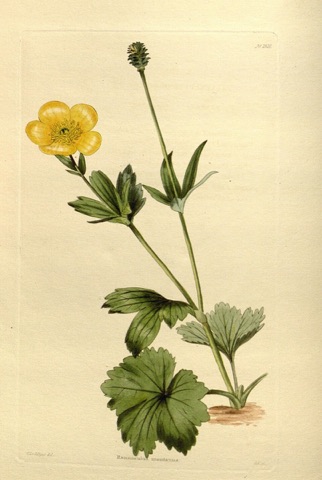
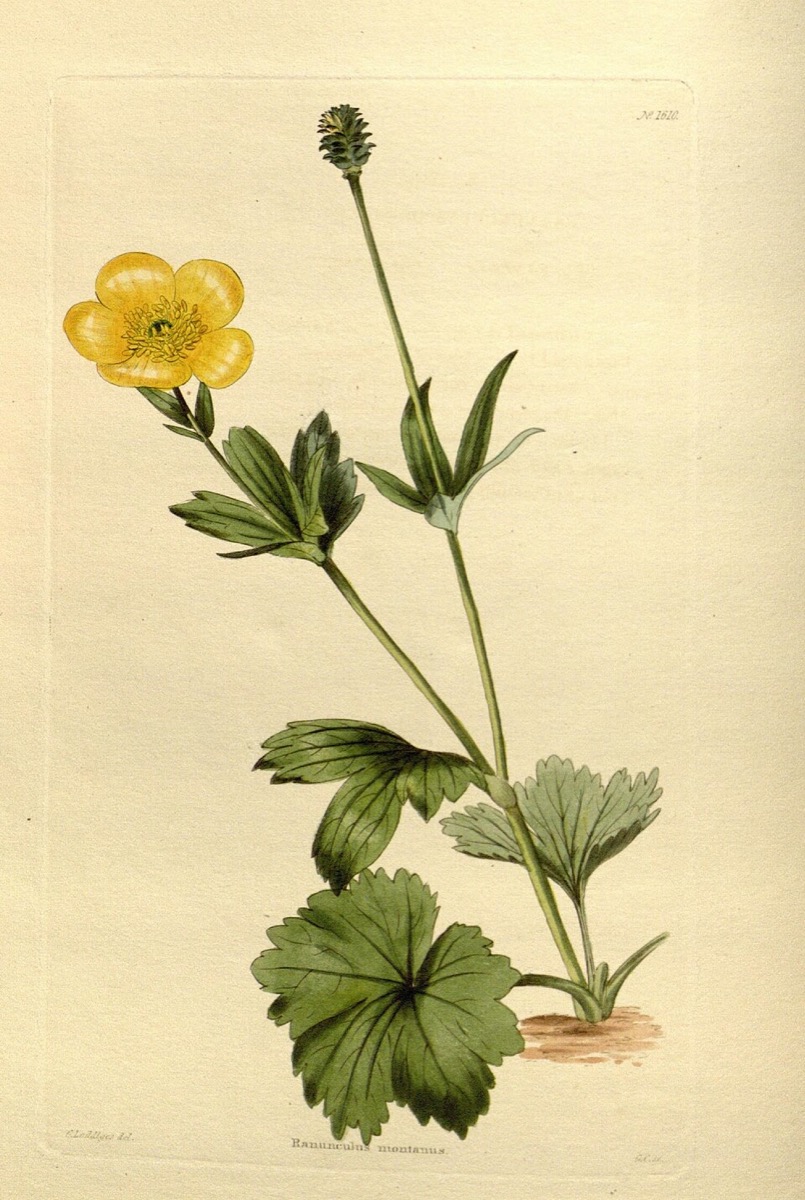
Ranunculus montanus
The Botanical Cabinet · 1610 · 1830
George Loddiges · scan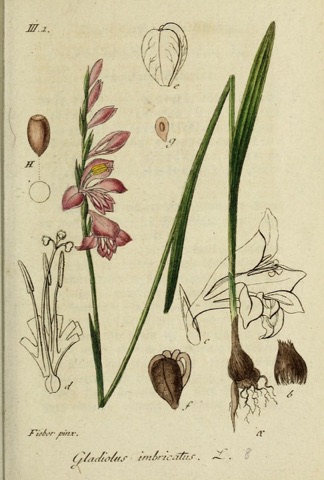
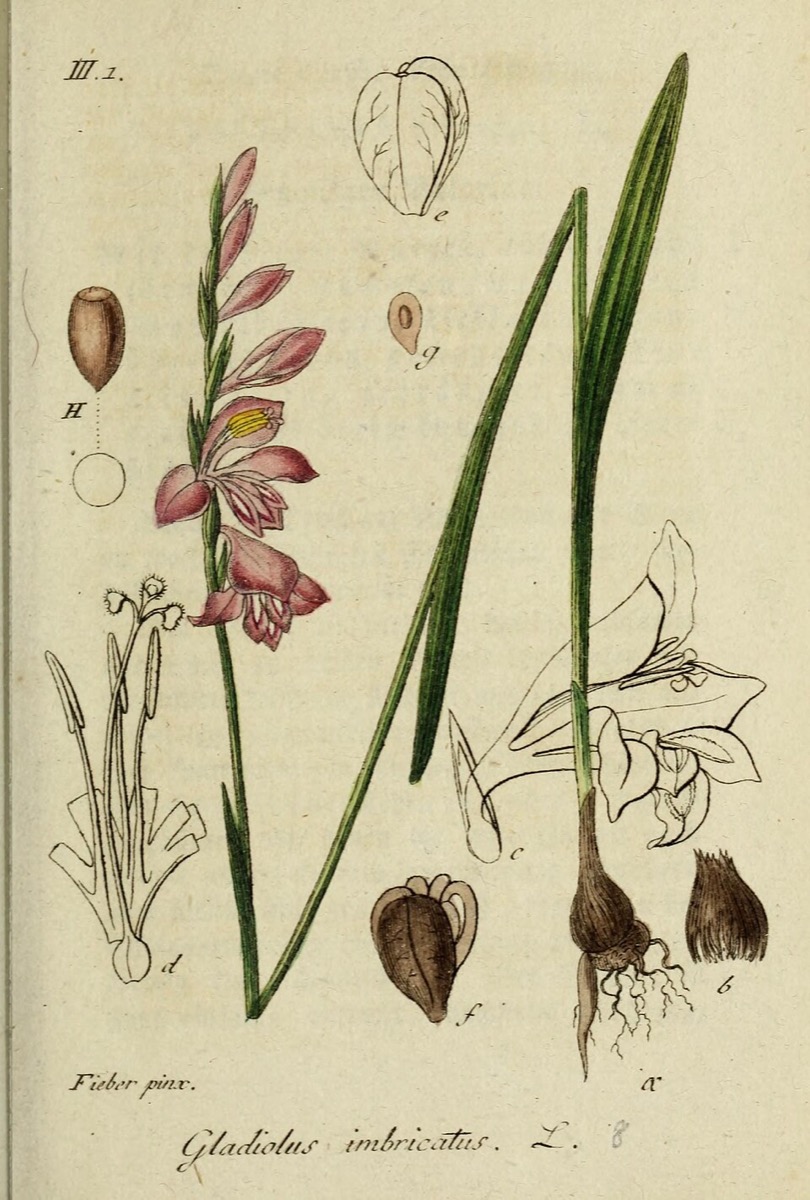
Gladiolus imbricatus
Deutschlands Flora in Abbildungen · · 1830
Fieber · scan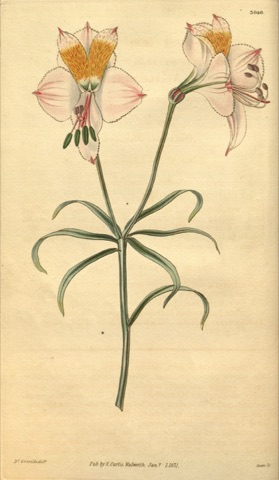
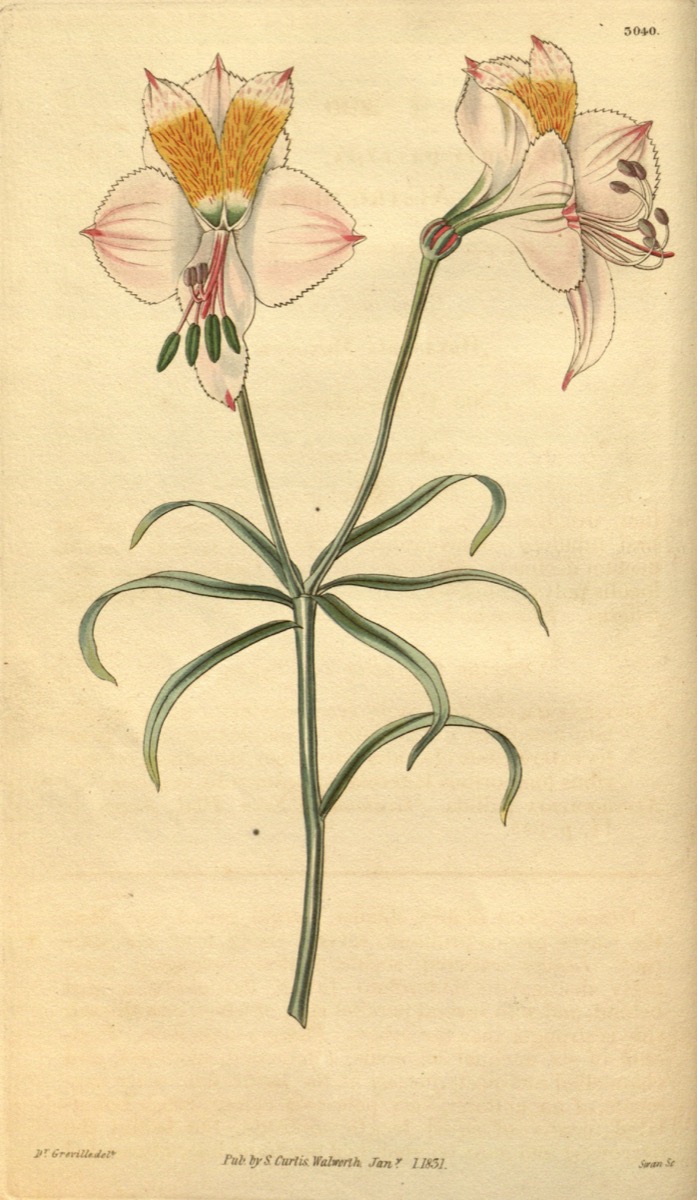
Alstroemeria pallida
Curtis's Botanical Magazine · 3040 · 1831
Robert Kaye Greville, Joseph Swan · scan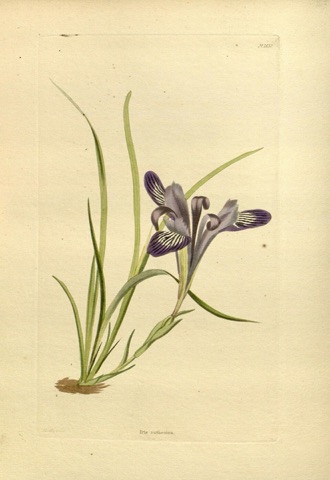
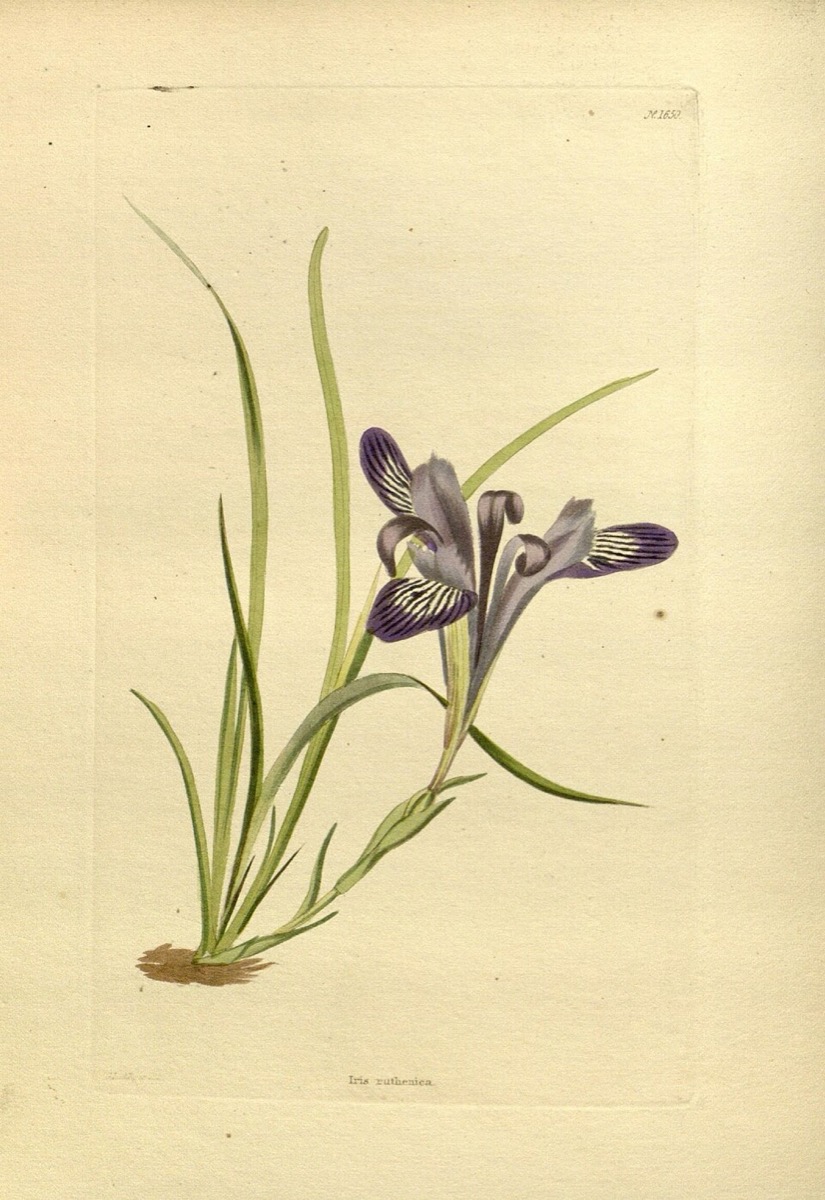
Iris ruthenica
The Botanical Cabinet · 1650 · 1831
George Loddiges · scan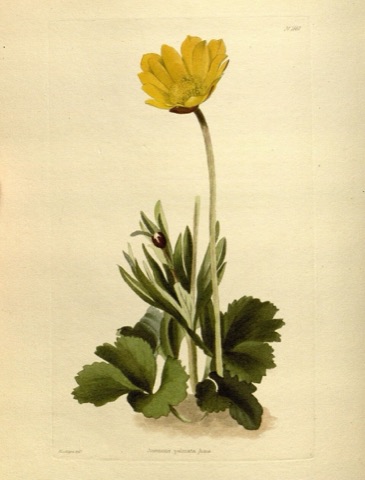
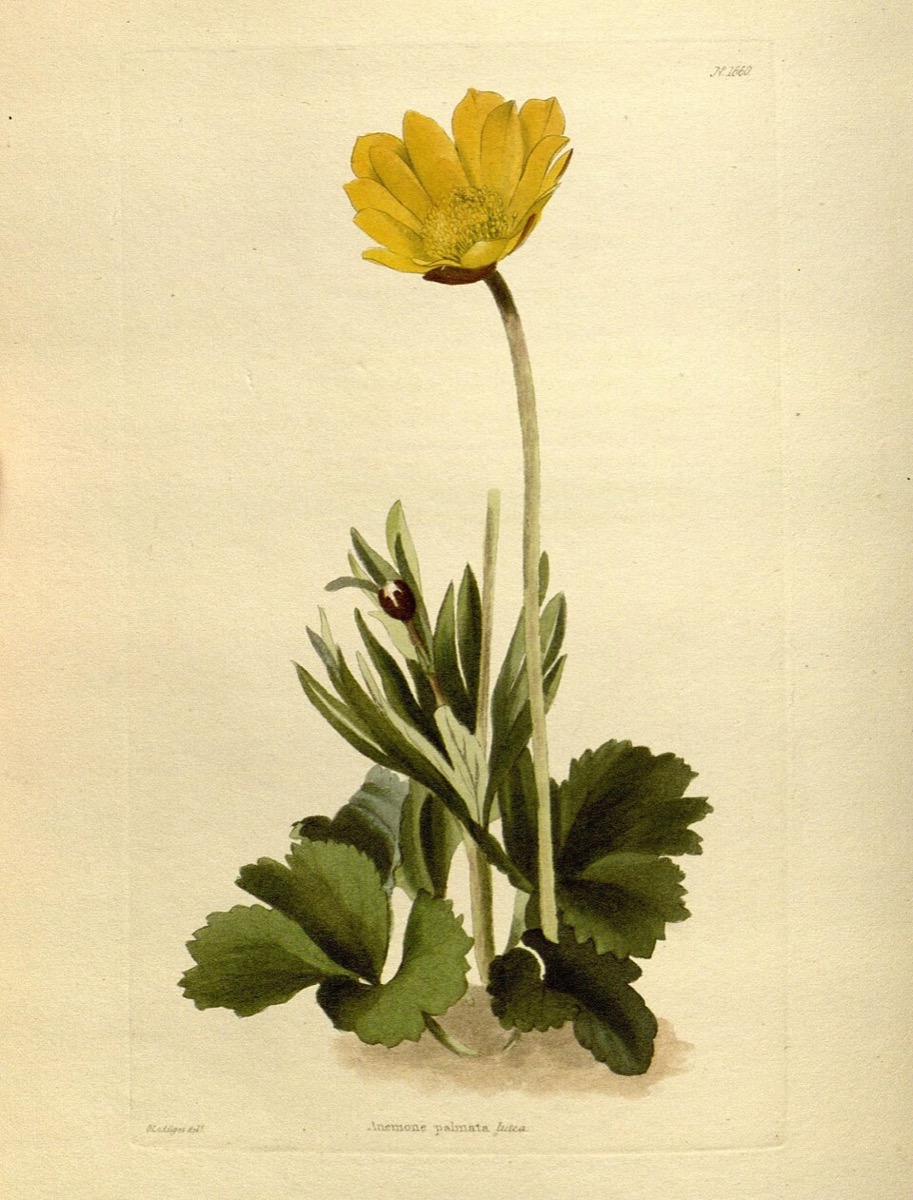
Anemone palmata lutea
The Botanical Cabinet · 1660 · 1831
George Loddiges · scan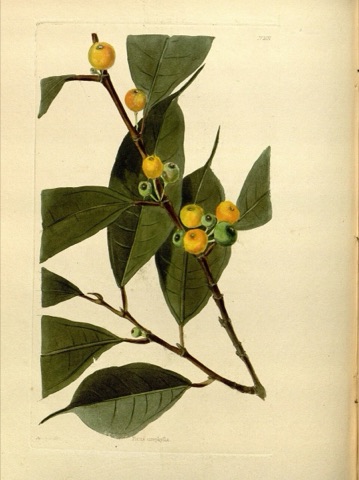
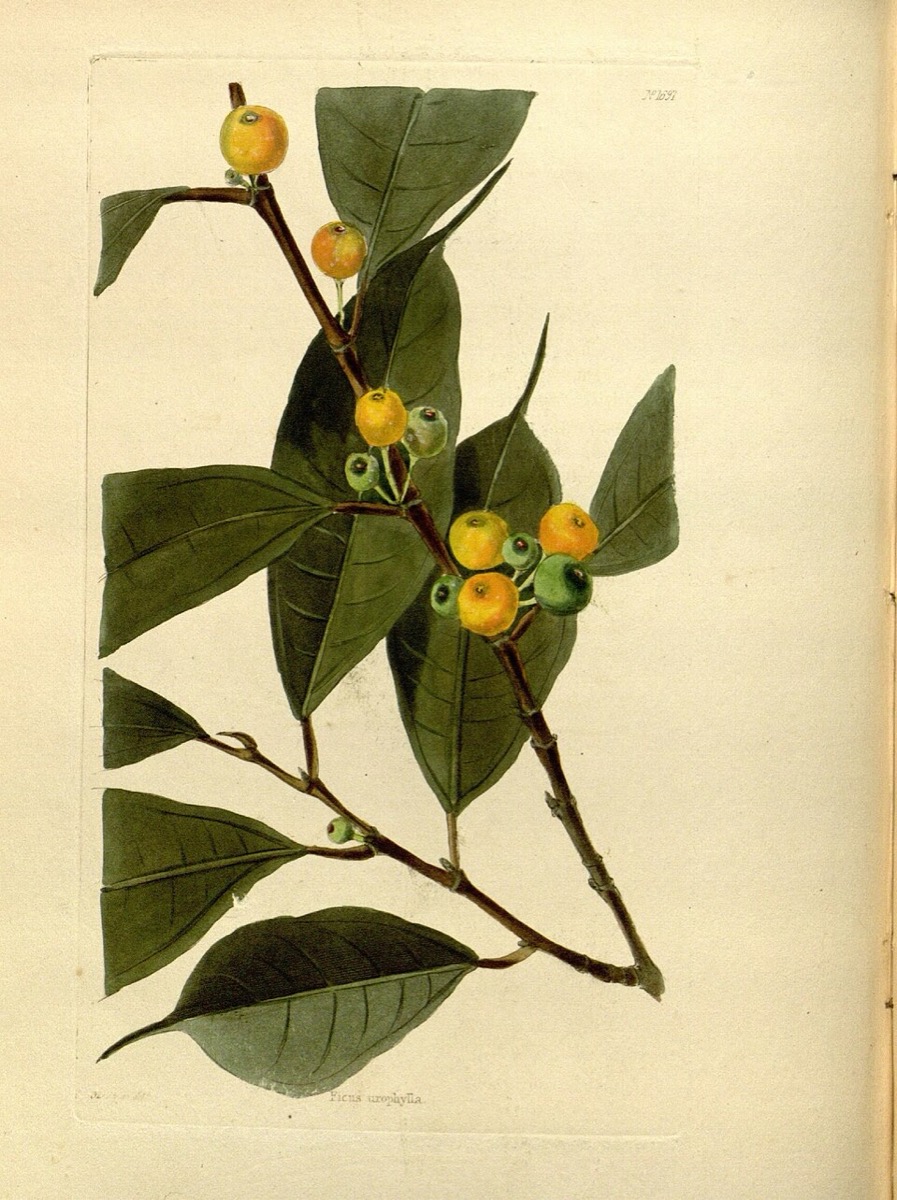
Ficus urophylla = Ficus heteropleura Blume
The Botanical Cabinet · 1697 · 1831
George Loddiges · scan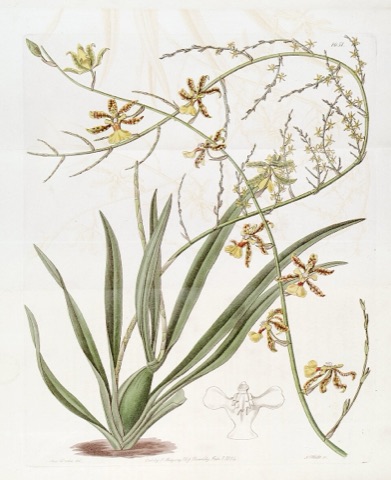
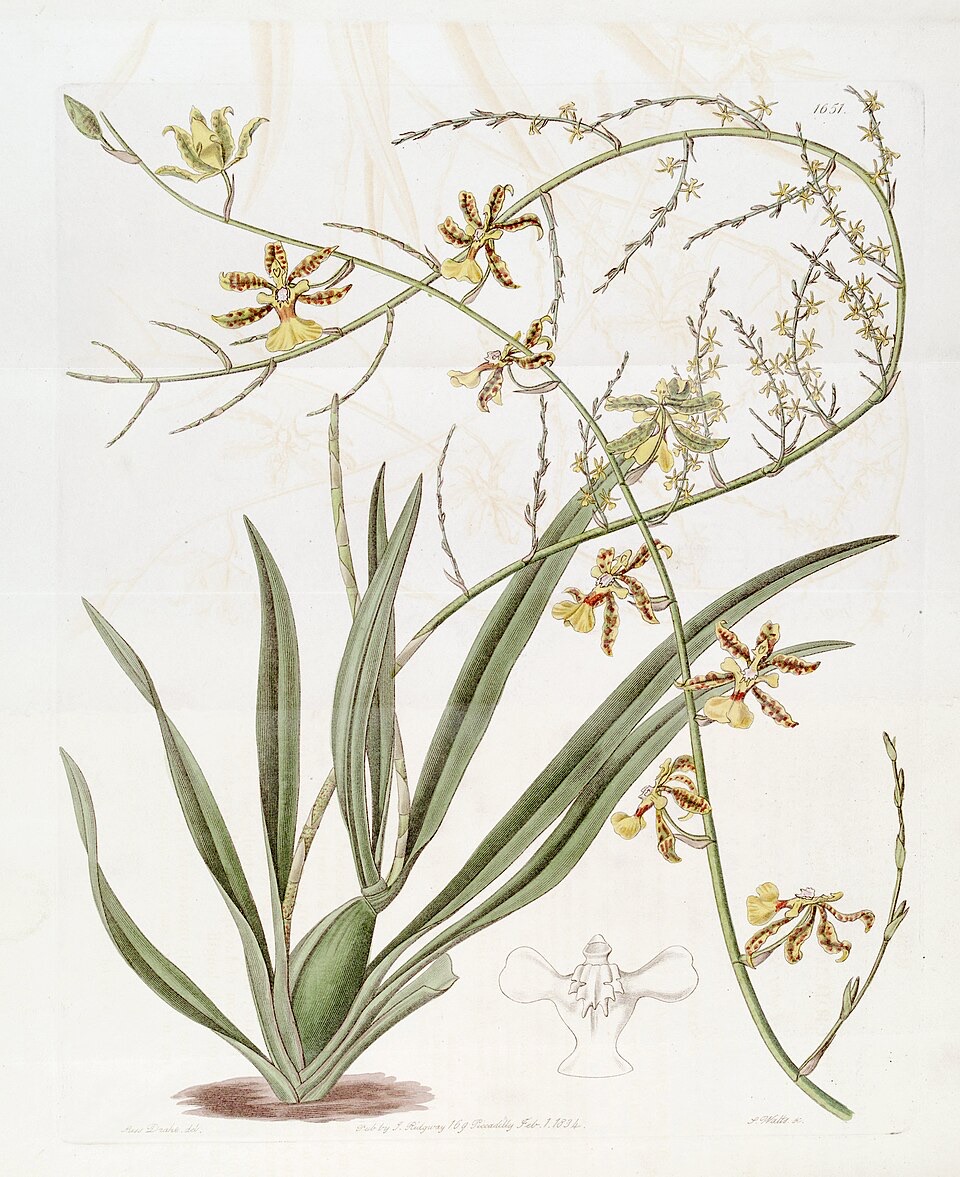
Oncidium altissimum
Edwards's Botanical Register · 1651 · 1833
Sarah Anne Drake, J. Watts · scan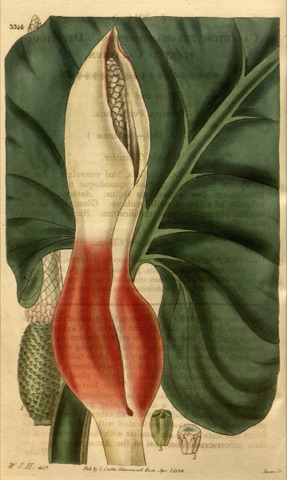
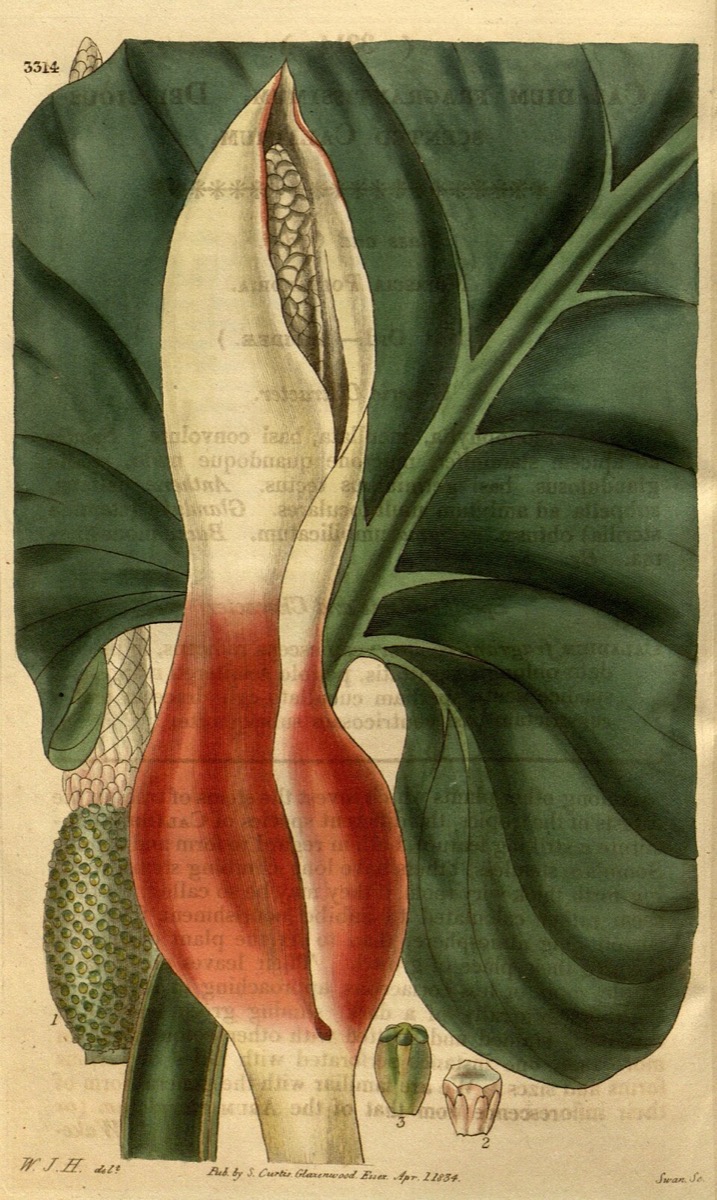
Caladium fragrantissimum = Philodendron fragrantissimum (Hook.) G.Don
Curtis's Botanical Magazine · 3314 · 1834
William Jackson Hooker, Joseph Swan · scan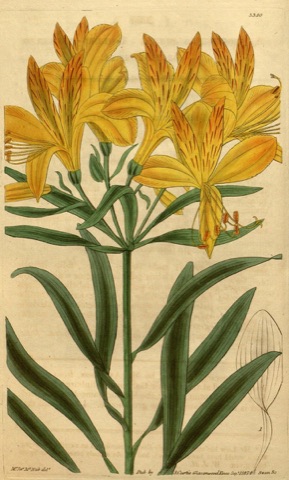
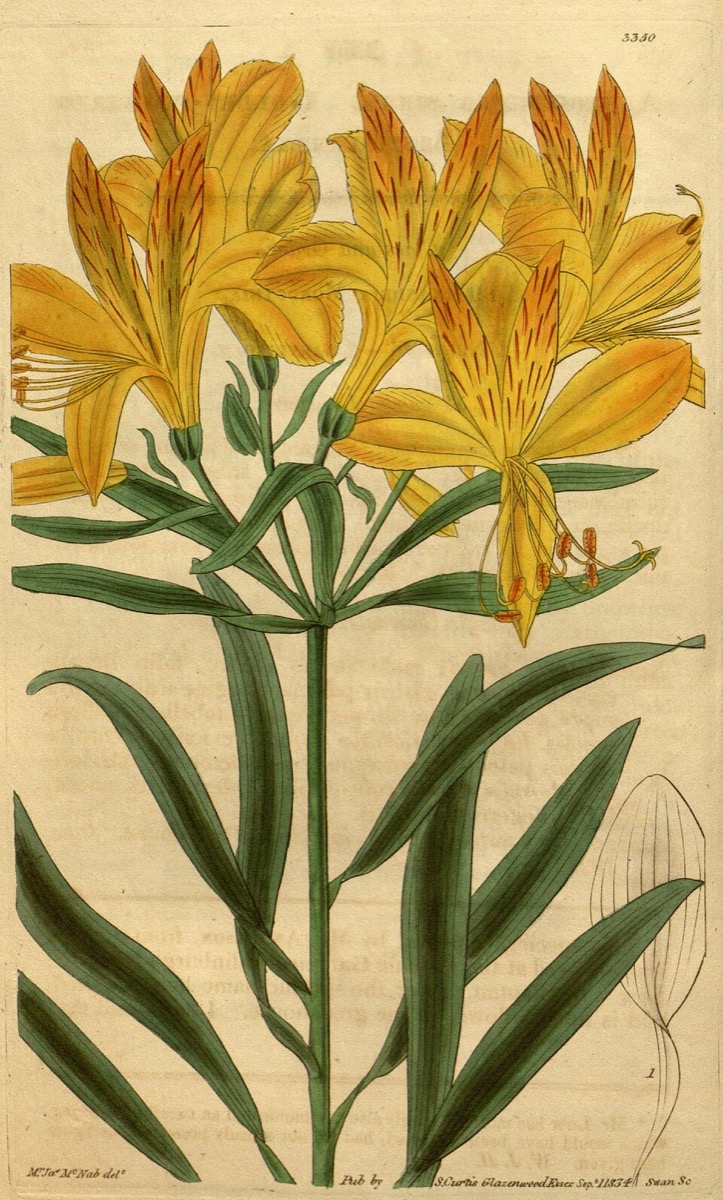
Alstroemeria aurea
Curtis's Botanical Magazine · 3350 · 1834
Mrs James McNab, Joseph Swan · scan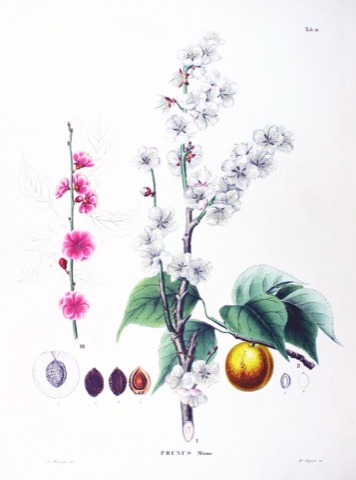
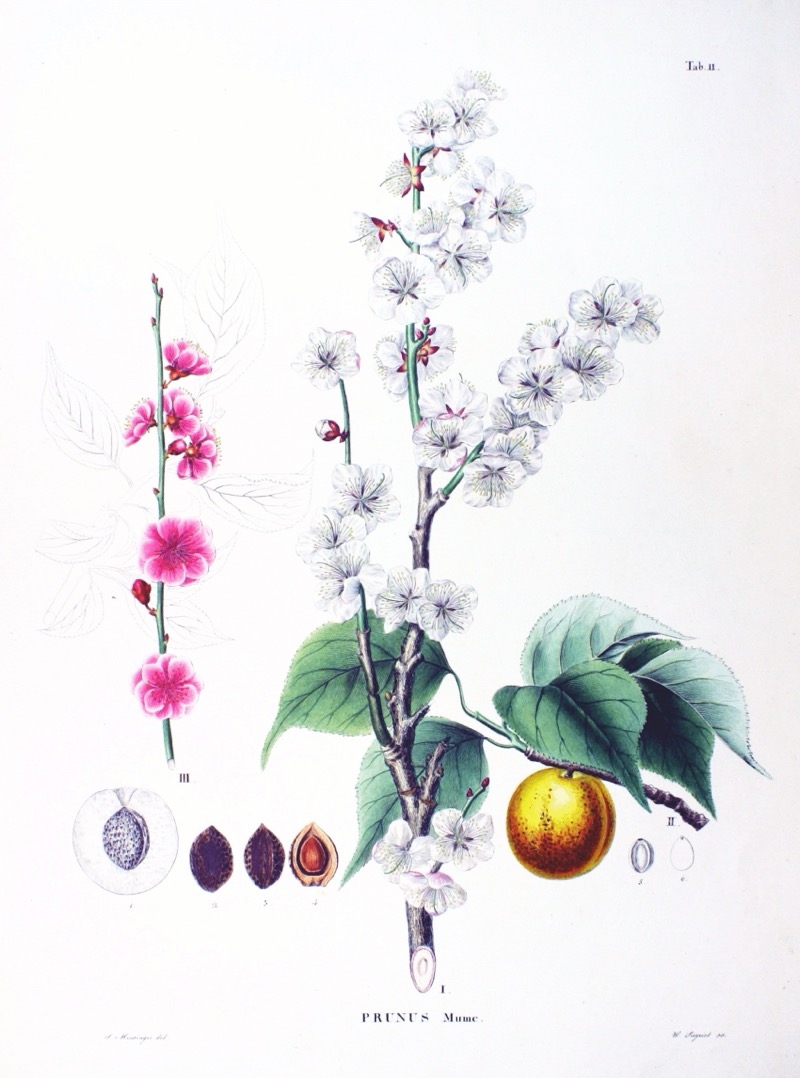
Prunus Mume
Flora Japonica · Tab. 11 · 1835–1870
S. Minsinger, W. Siegrist · scan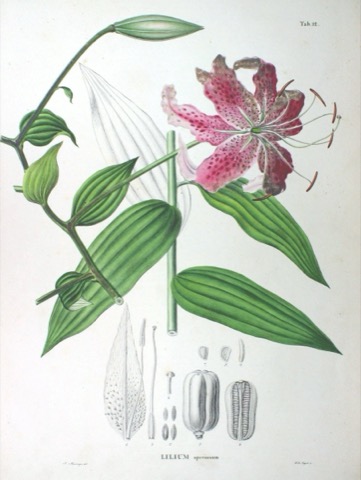
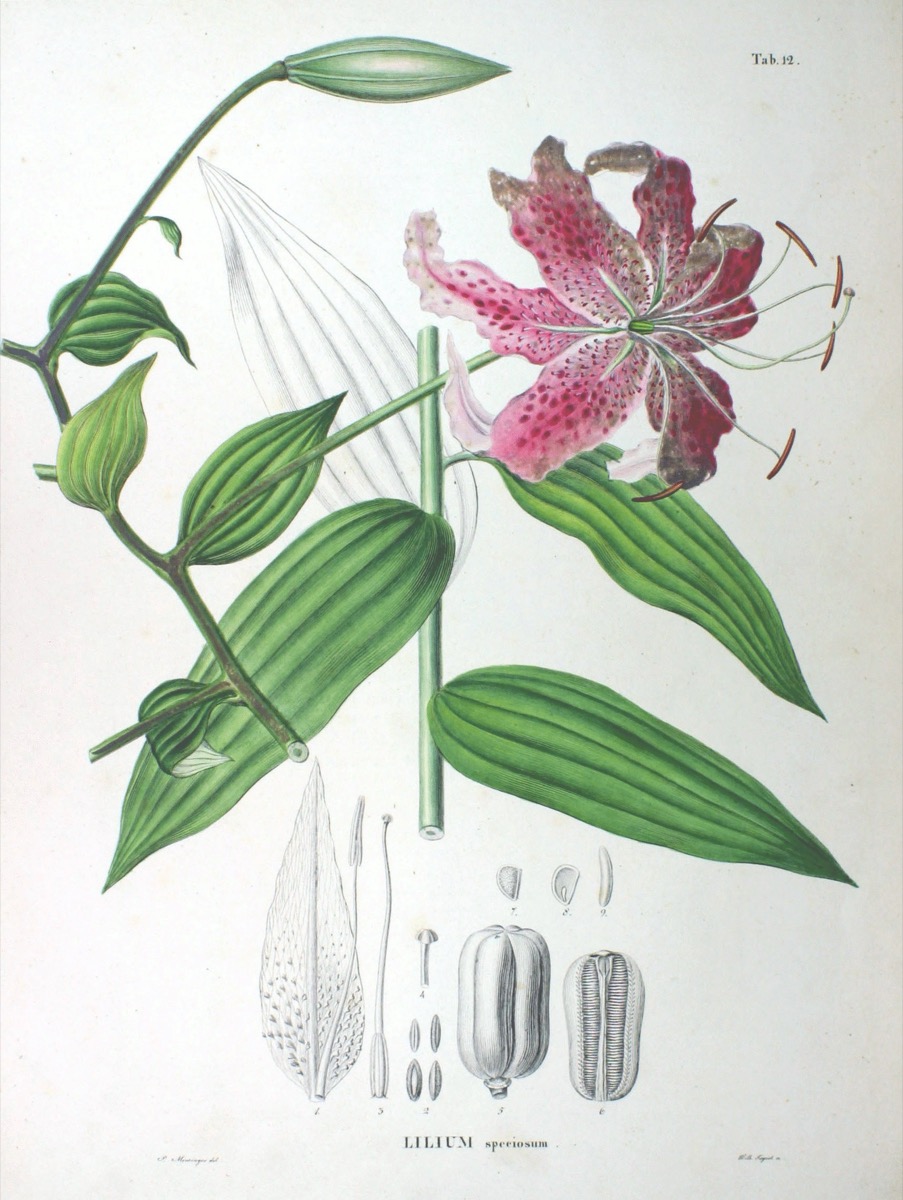
Lilium longiflorum
Flora Japonica · Tab. 12 · 1835
· scan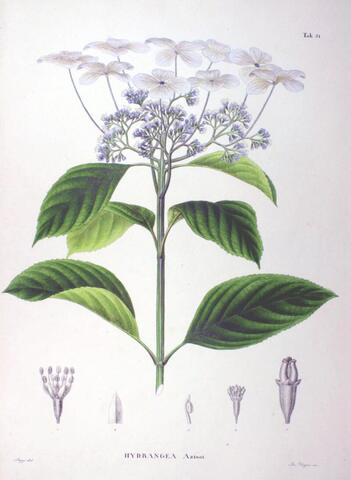
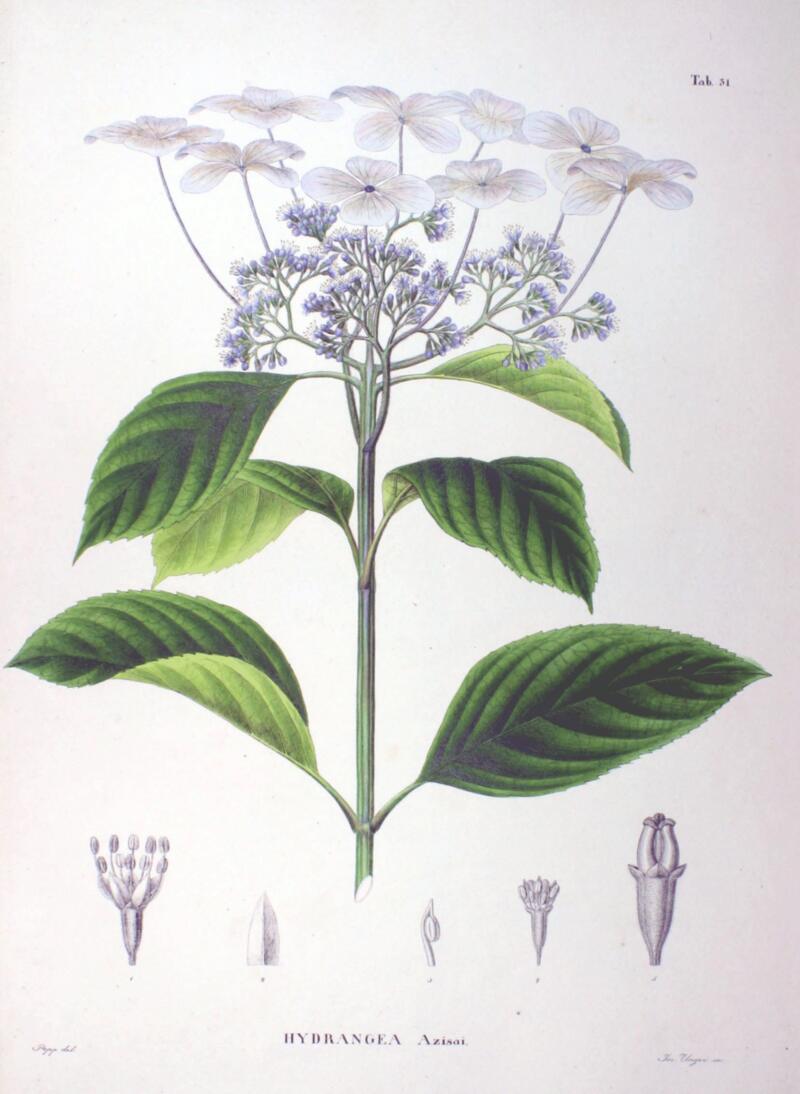
Hydrangea Azisai = Hydrangea macrophylla (Thunb.) Ser.
Flora Japonica · Tab. 51 · 1835–1870
Popp, Jos. Unger · scan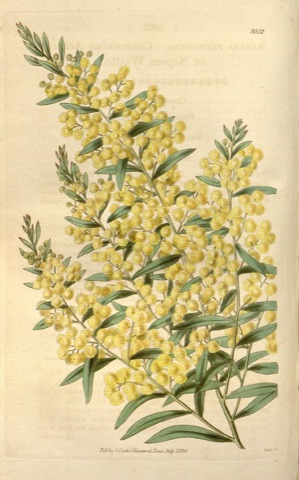
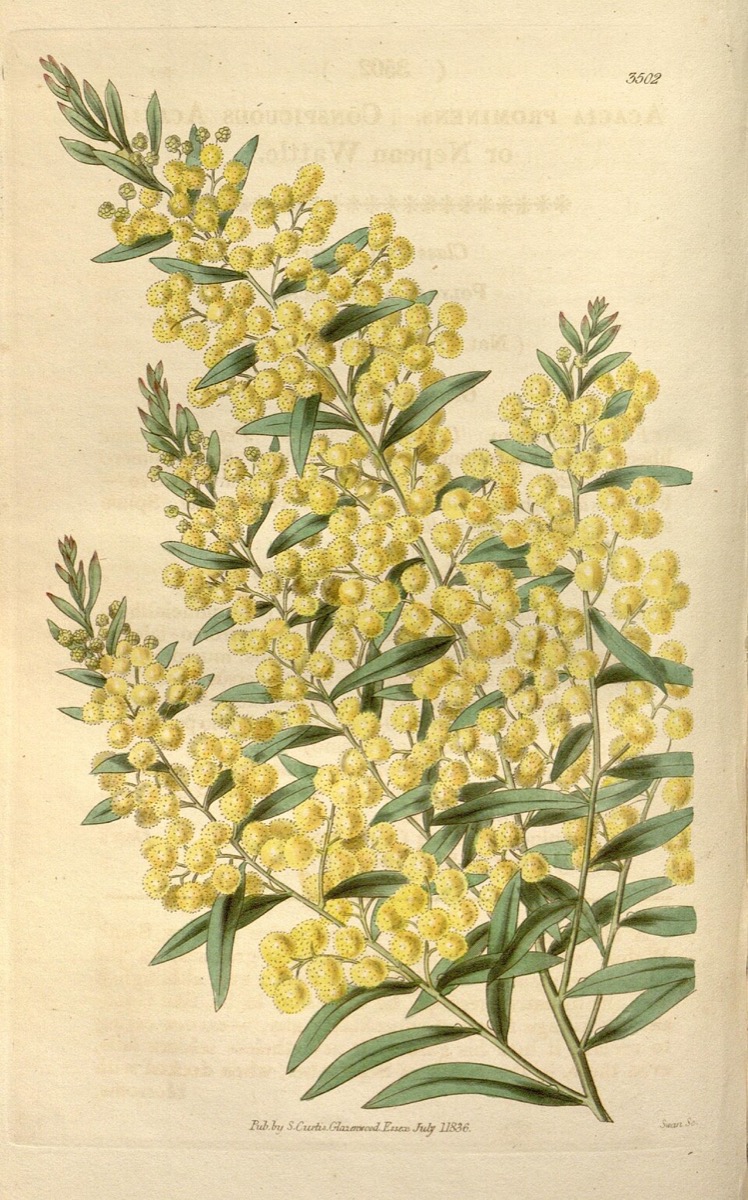
Acacia prominens
Curtis's Botanical Magazine · 3502 · 1836
Joseph Swan · scan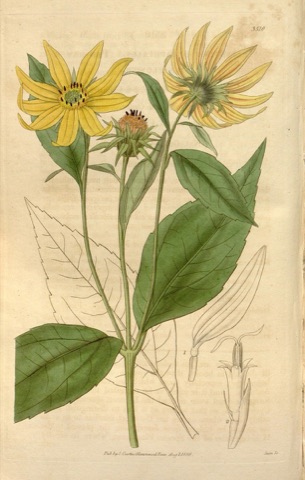
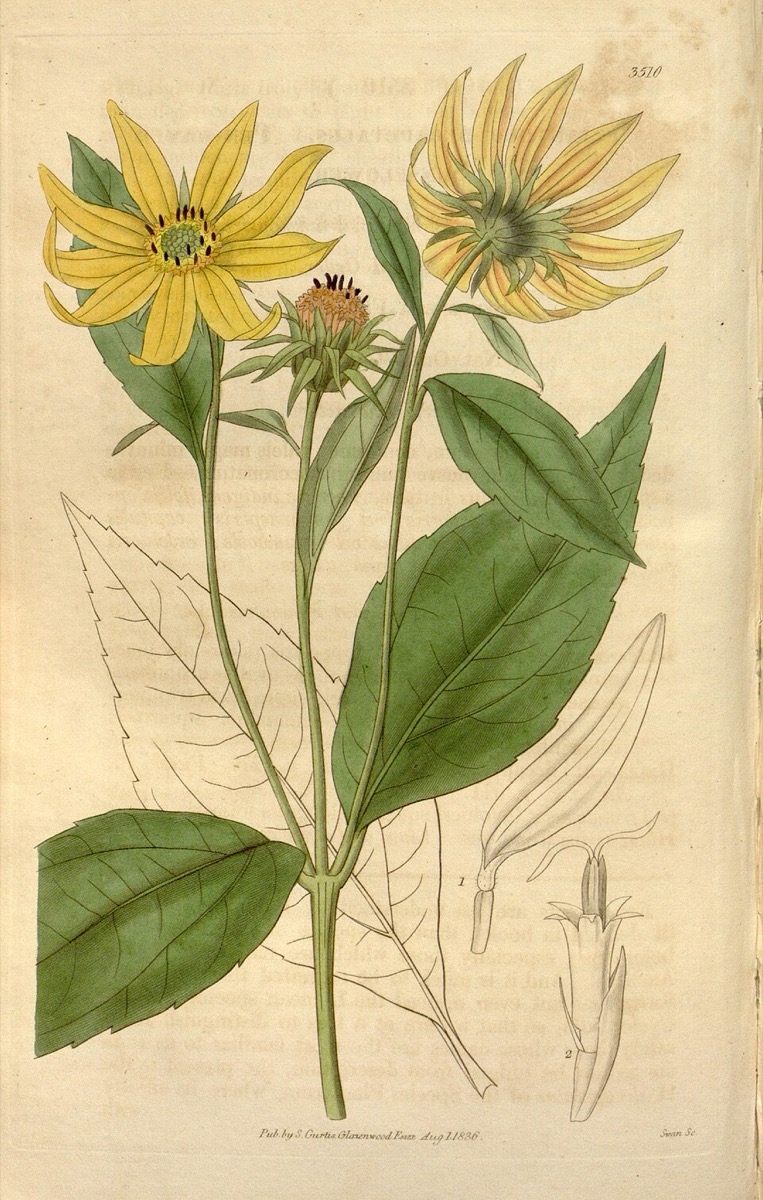
Helianthus decapetalus
Curtis's Botanical Magazine · 3510 · 1836
Joseph Swan · scan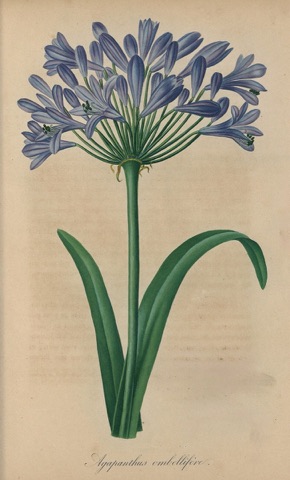
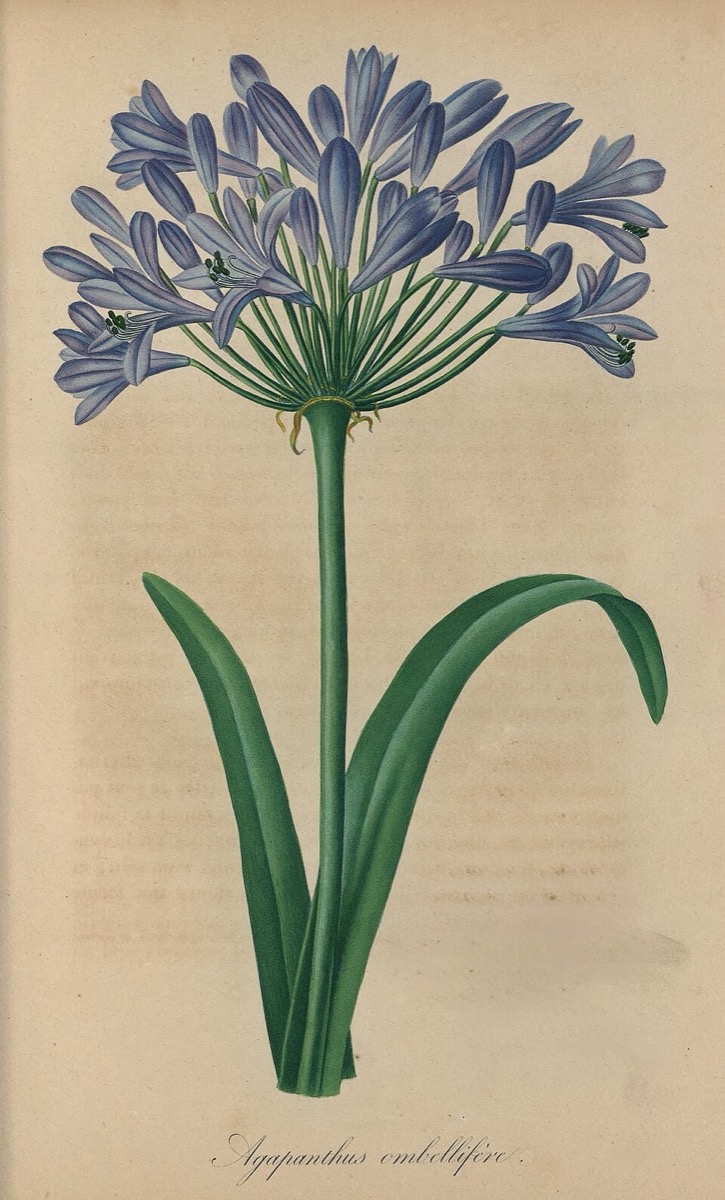
Agapanthus ombellifère = Agapanthus africanus (L.) Hoffmanns.
Choix des plus belles fleurs · · 1837
· scan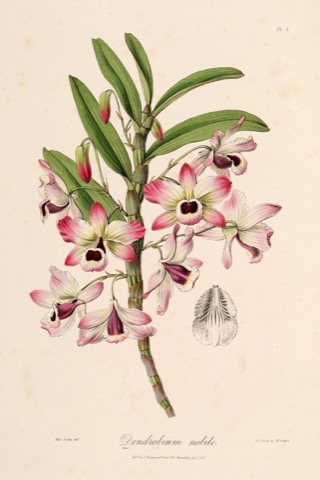
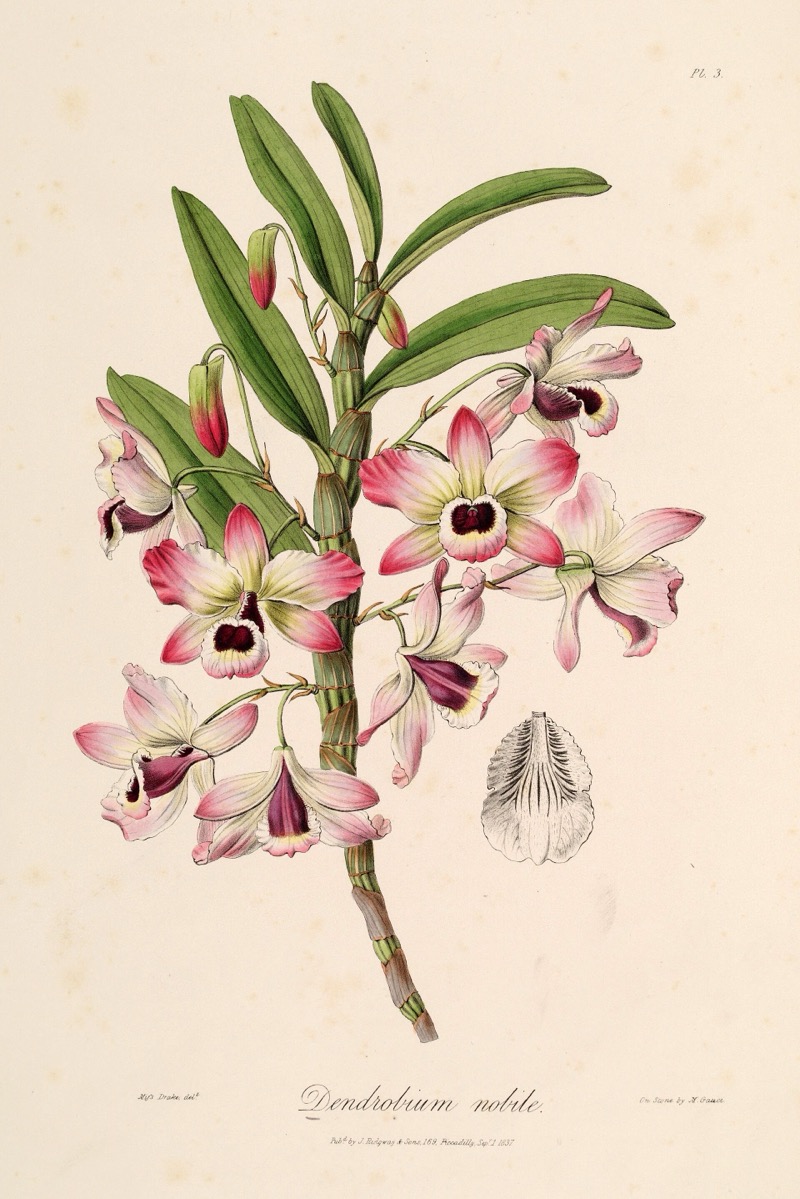
Dendrobium nobile
Sertum Orchidaceum · Pl. 3 · 1837
Sarah Anne Drake, Maxim Gauci · scan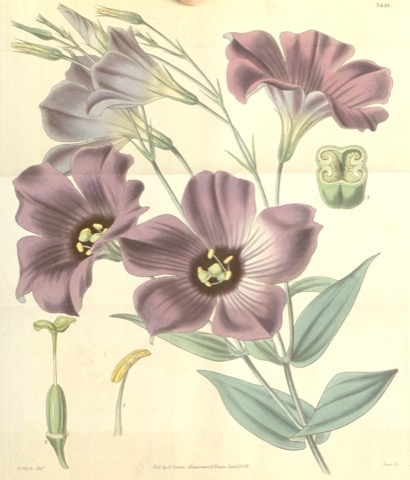
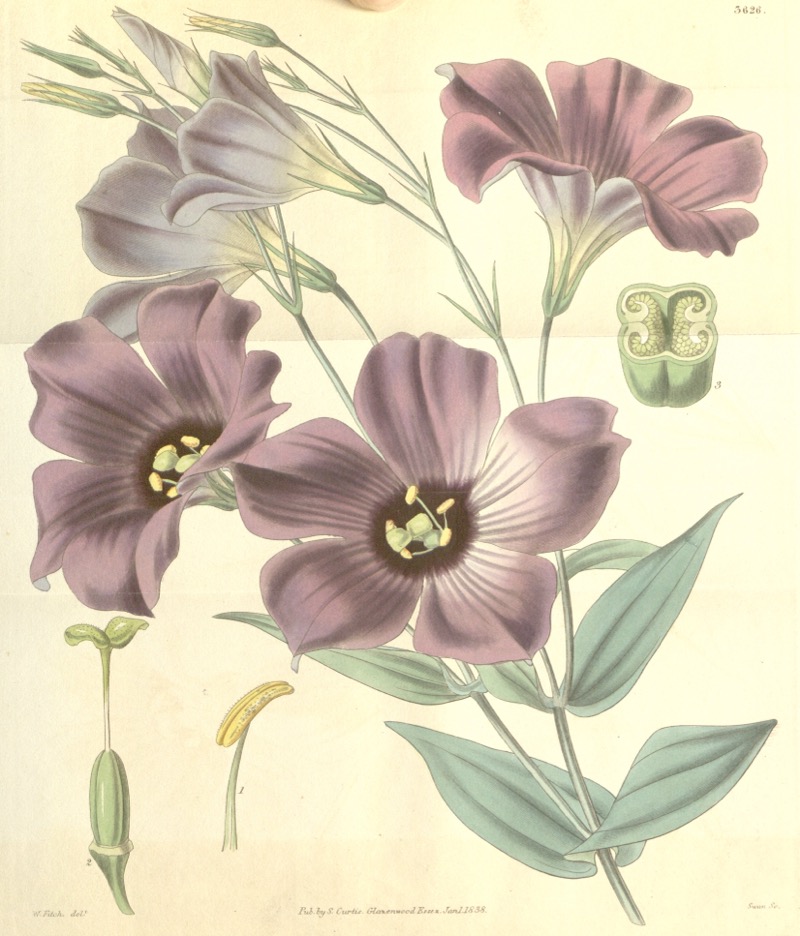
Lisianthius russellianus = Eustoma russellianum (Hook.) G.Don
Curtis's Botanical Magazine · 3626 · 1838
Walter Hood Fitch, Joseph Swan · scan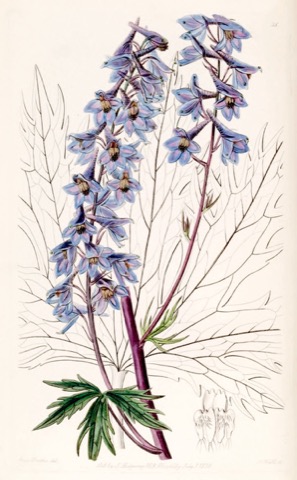
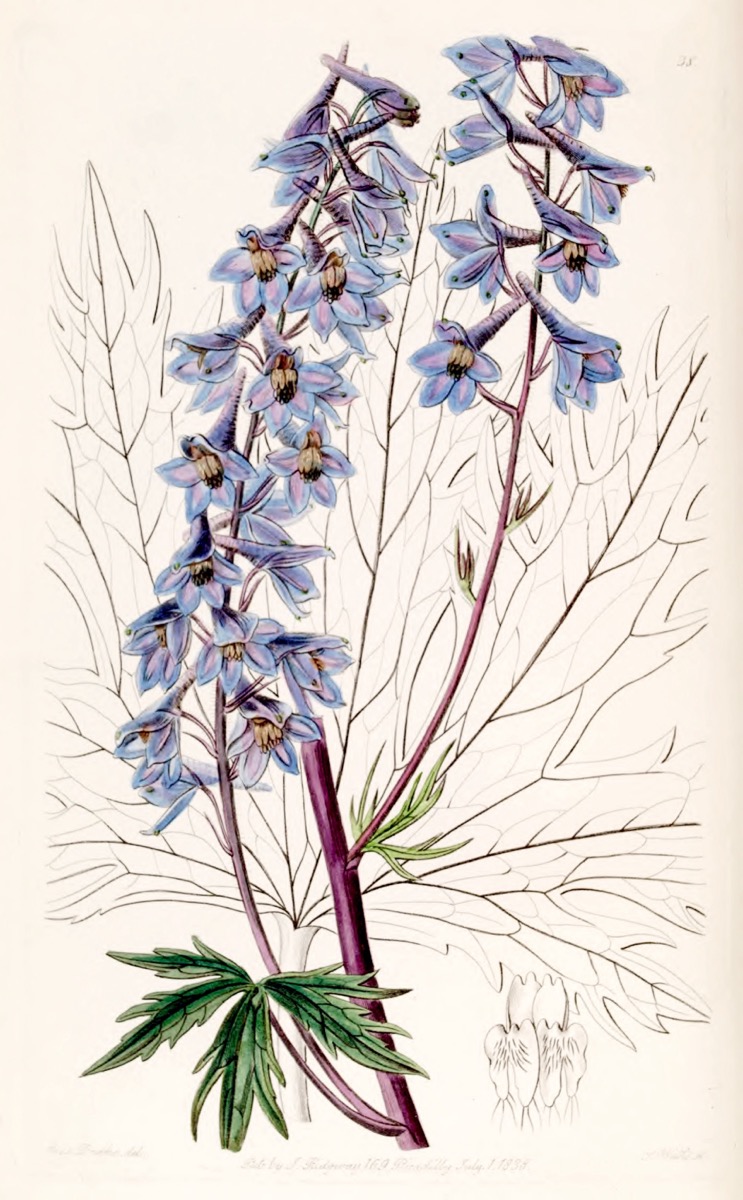
Delphinium intermedium var. palmatifidum = Delphinium elatum L.
Edwards's Botanical Register · Tab. 38 · 1838
Sarah Anne Drake · scan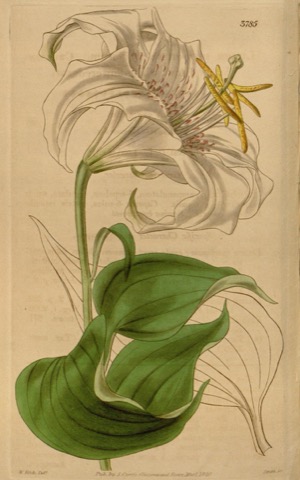
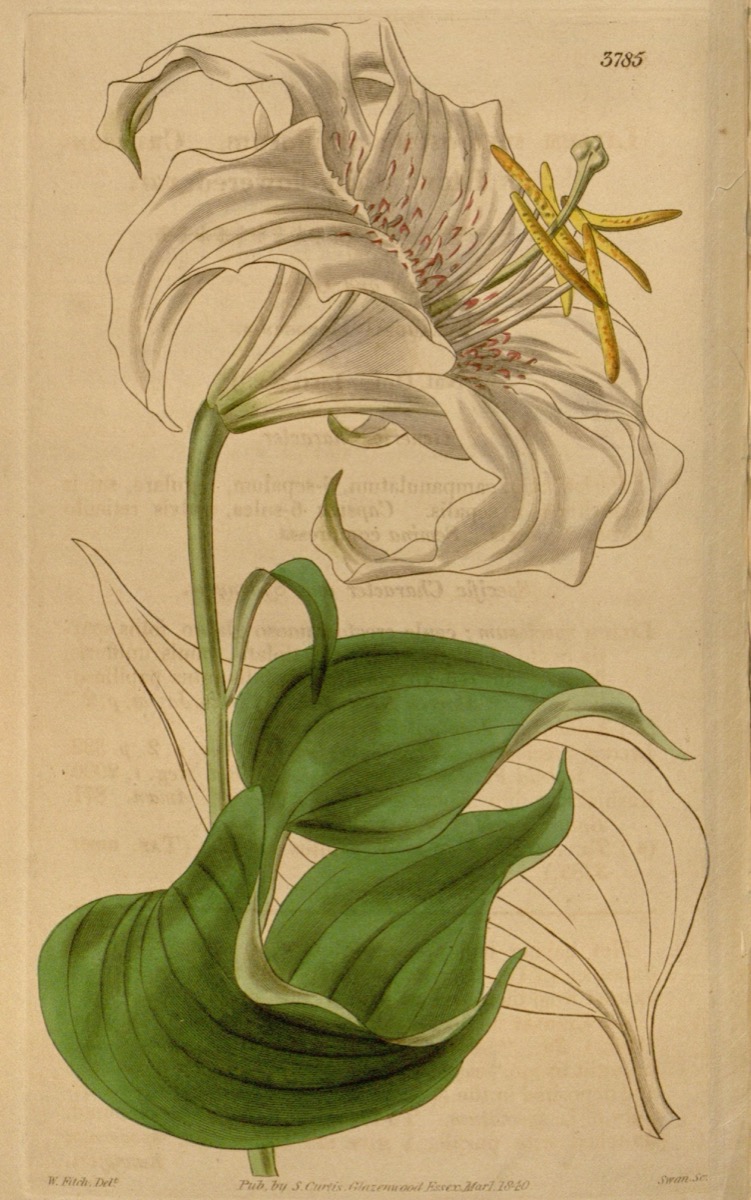
Lilium speciosum
Curtis's Botanical Magazine · Tab. 3785 · 1840
Walter Hood Fitch · scan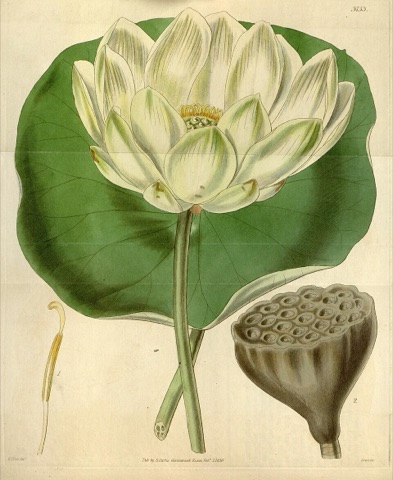
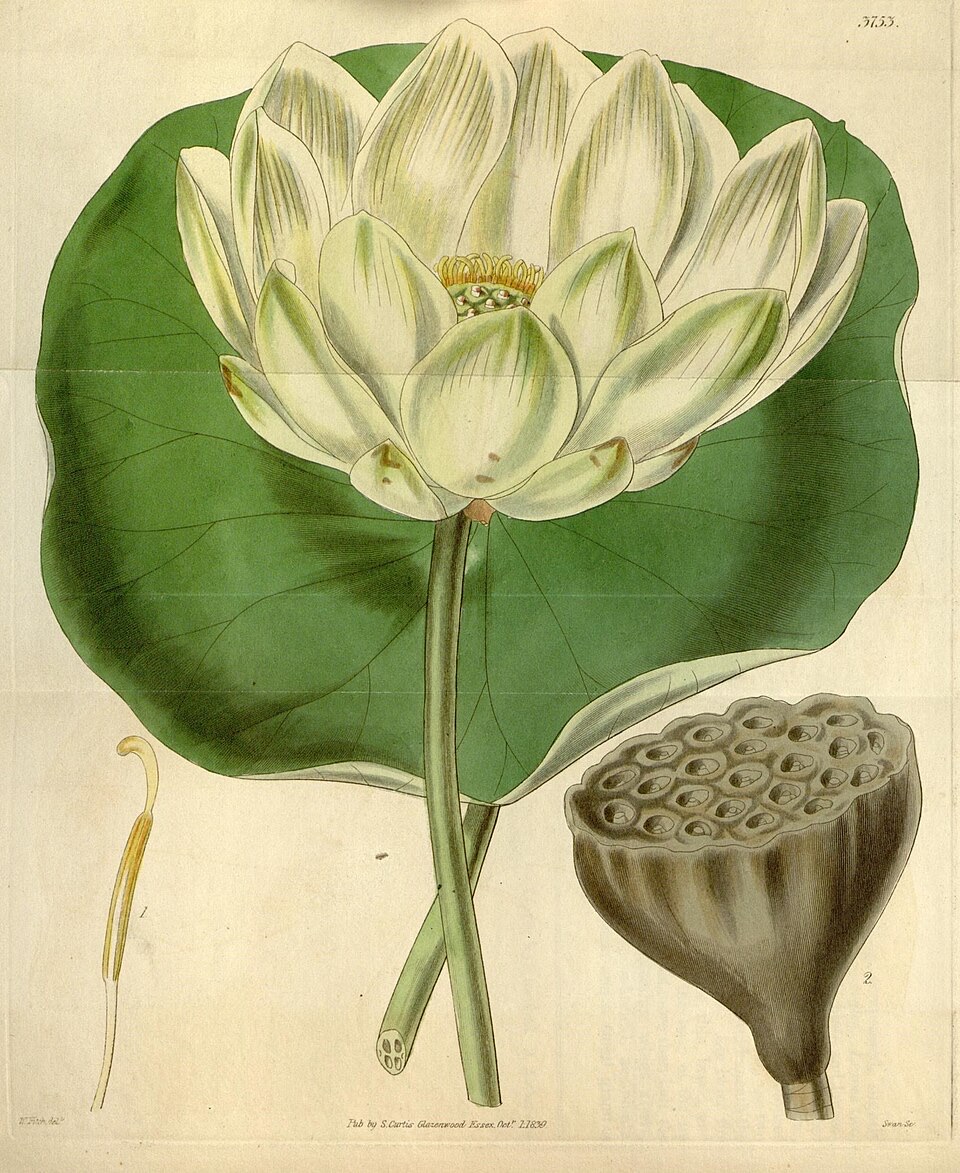
Nelumbium luteum = Nelumbo lutea (Willd.) Pers.
Curtis's Botanical Magazine · 3753 · 1840
Walter Hood Fitch, Joseph Swan · scan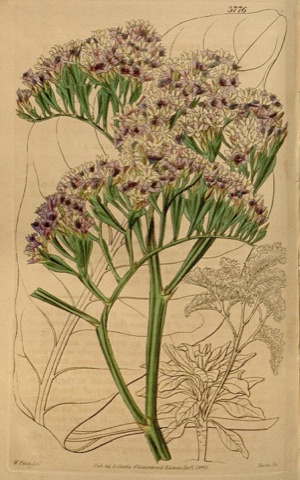
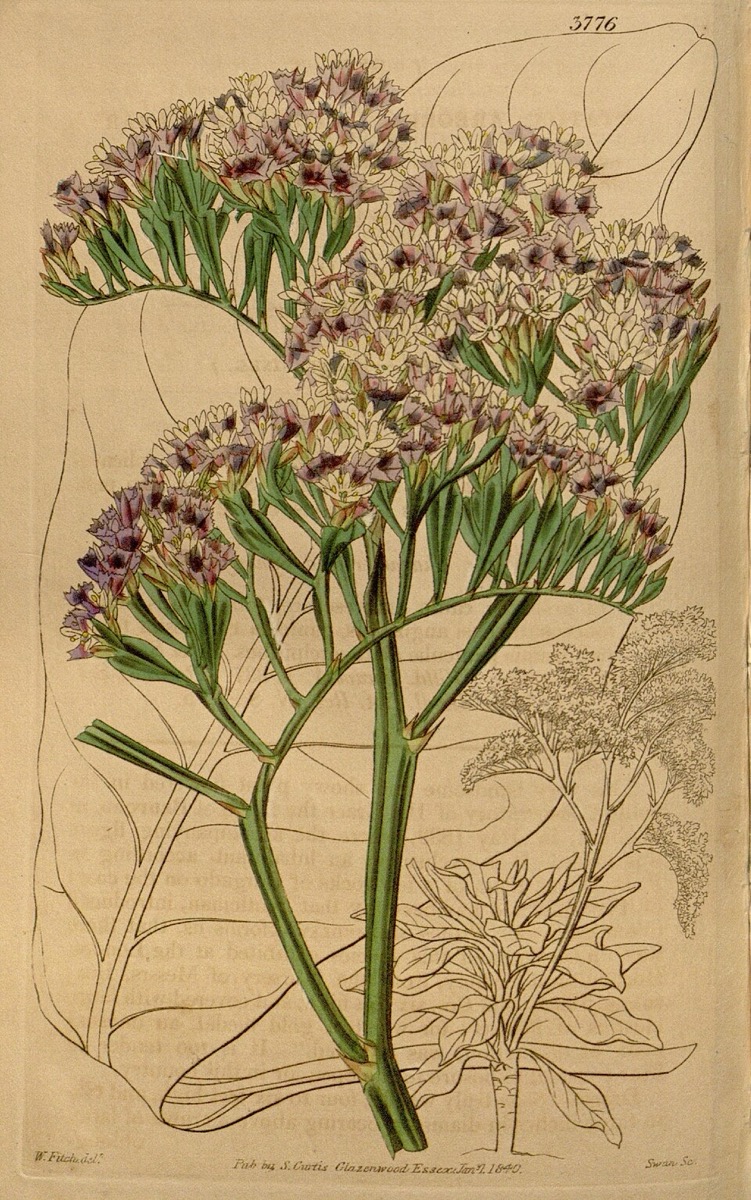
Statice arborea = Limonium arboreum (Willd.) H.Arnaud
Curtis's Botanical Magazine · 3776 · 1840
Walter Hood Fitch, Joseph Swan · scan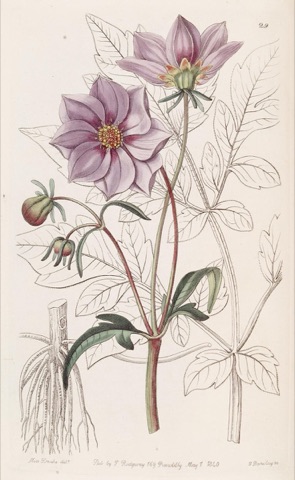
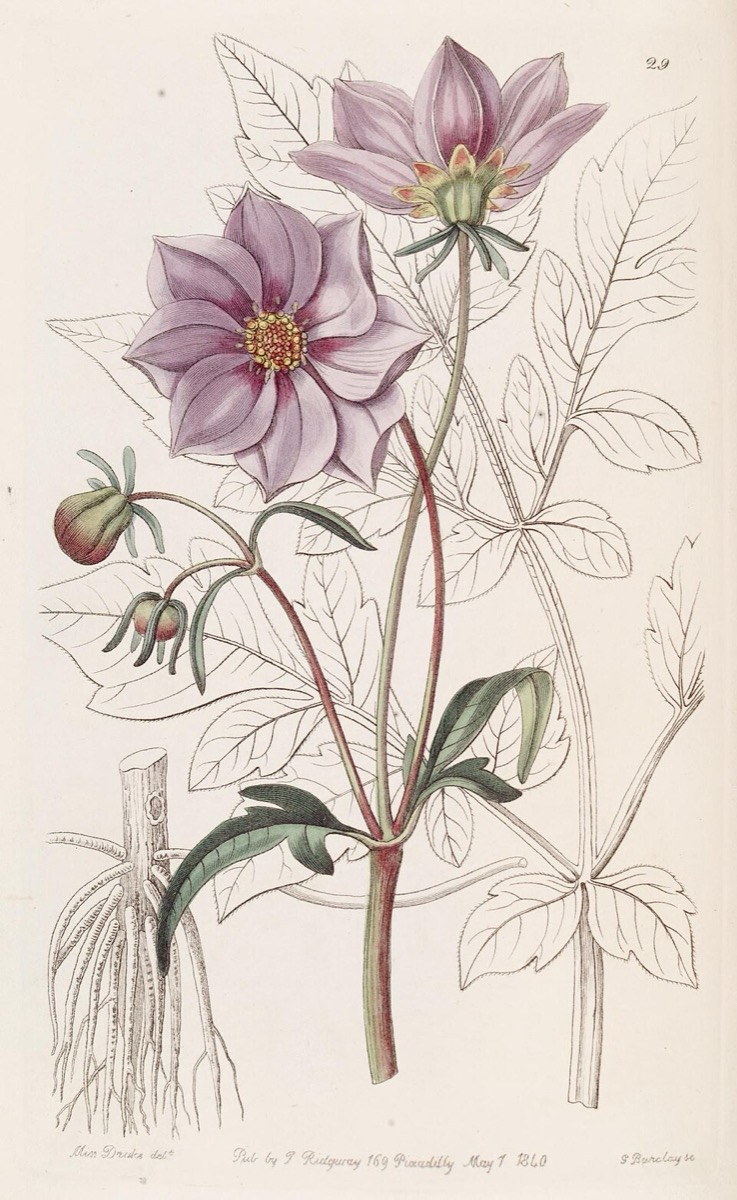
Dahlia glabrata = Dahlia merckii Lehm.
Edwards's Botanical Register · 29 · 1840
Sarah Anne Drake, G. Barclay · scan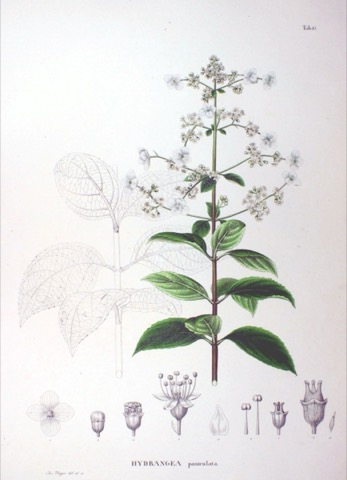
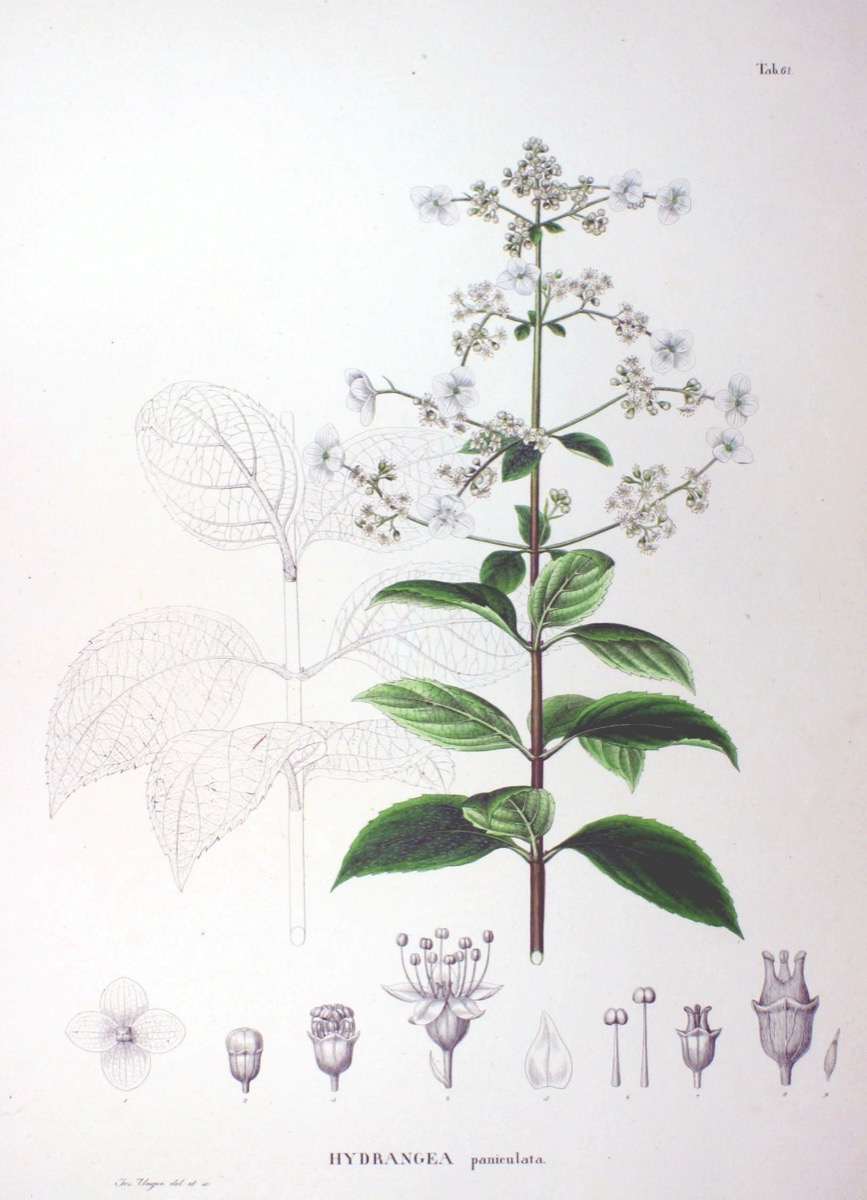
Hydrangea paniculata
Flora Japonica · Tab. 61 · 1840
· scan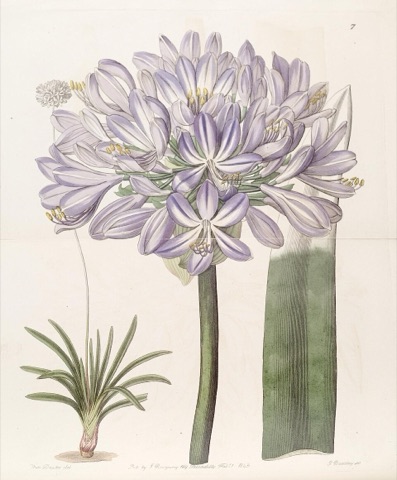
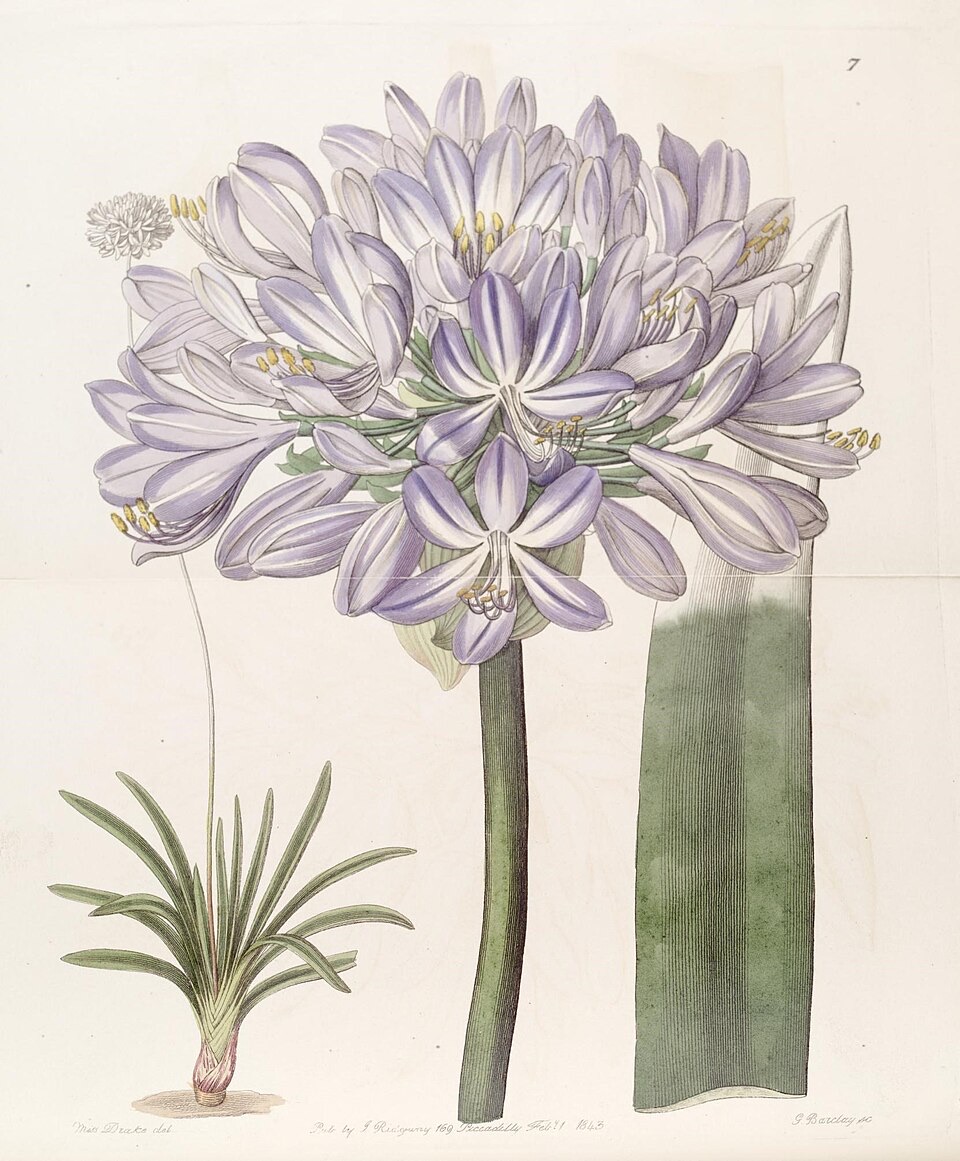
Agapanthus umbellatus = Agapanthus africanus (L.) Hoffmanns.
Edwards's Botanical Register · 7 · 1843
Sarah Anne Drake, G. Barclay · scan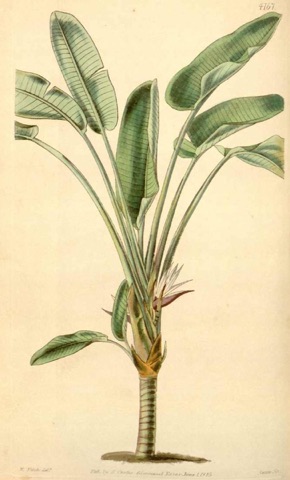
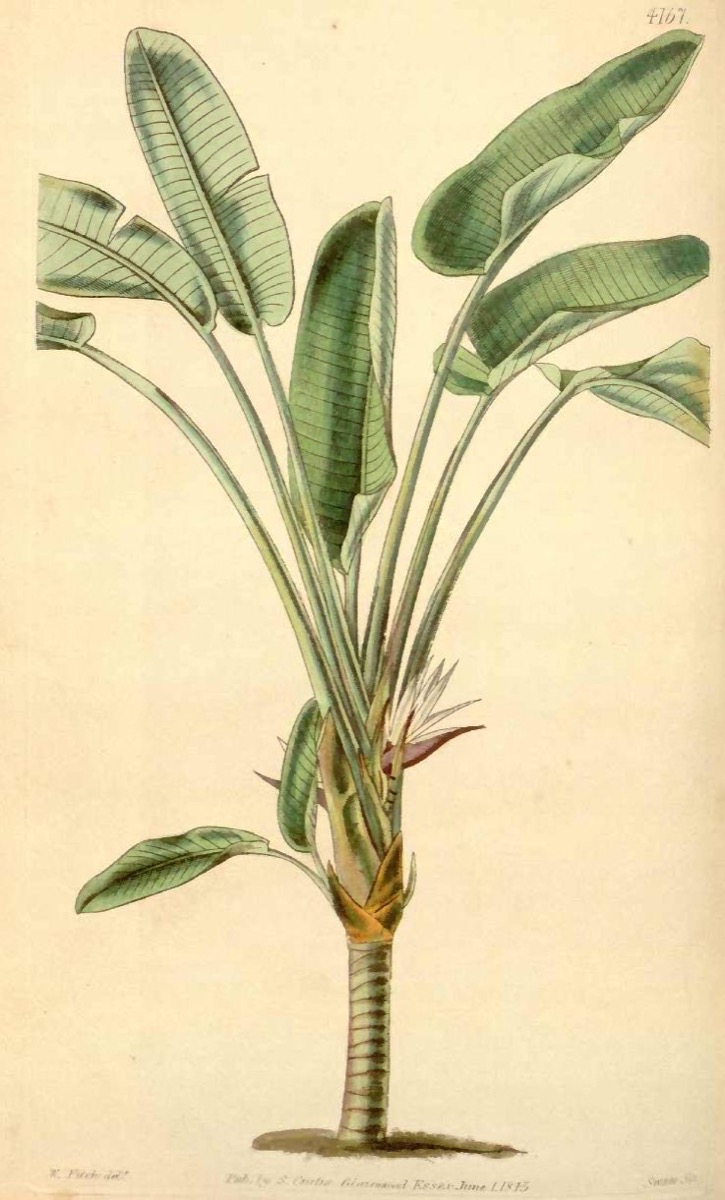
Strelitzia augusta = Strelitzia alba (L.f.) Skeels
Curtis's Botanical Magazine · 4167 · 1845
Walter Hood Fitch, Joseph Swan · scan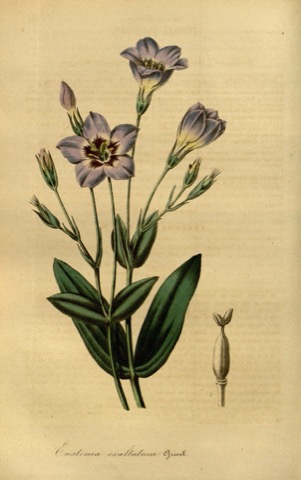
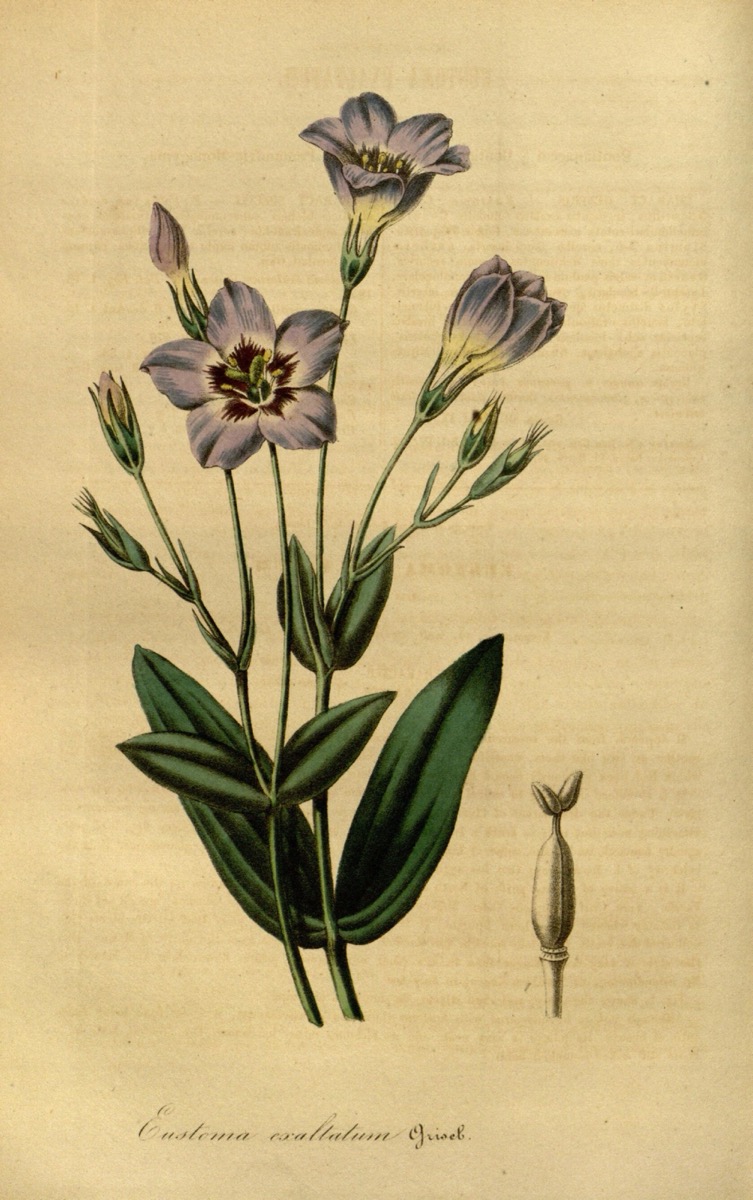
Eustoma exaltatum Griseb.
Flore des serres et des jardins de l'Europe · · 1845
· scan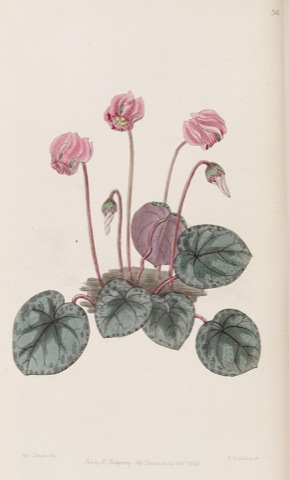
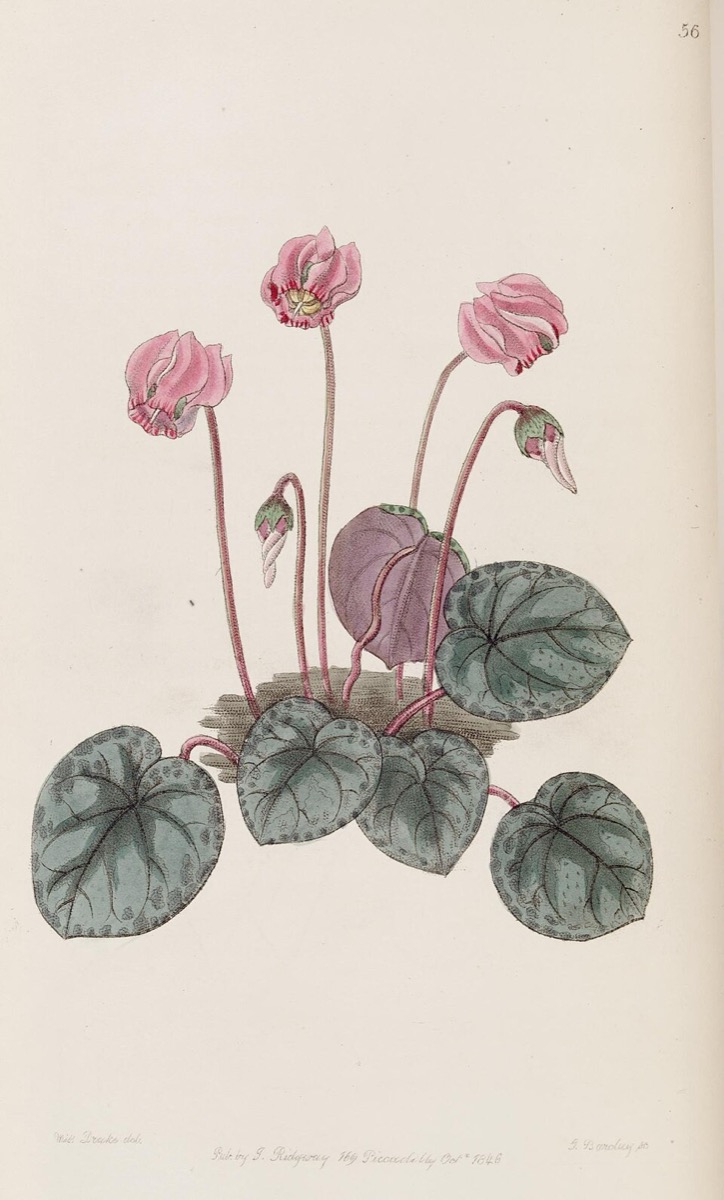
Cyclamen littorale = Cyclamen purpurascens Mill.
Edwards's Botanical Register · 56 · 1846
Sarah Anne Drake, G. Barclay · scan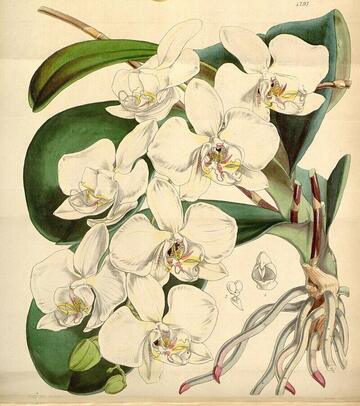
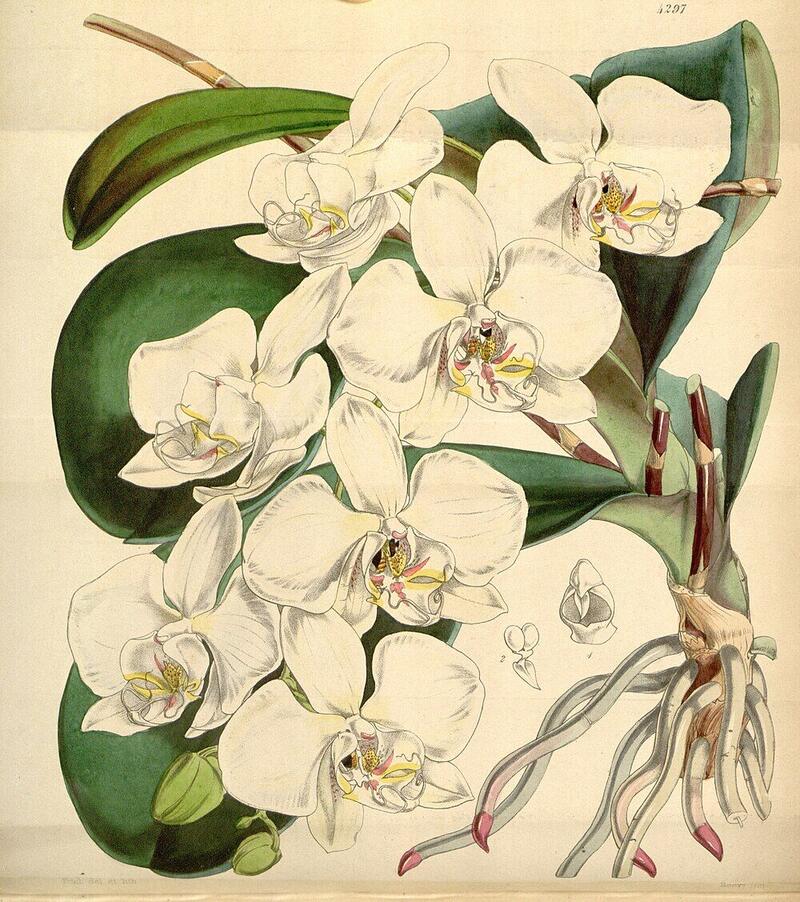
Phalaenopsis amabilis
Curtis's Botanical Magazine · 4297 · 1847
Walter Hood Fitch · scan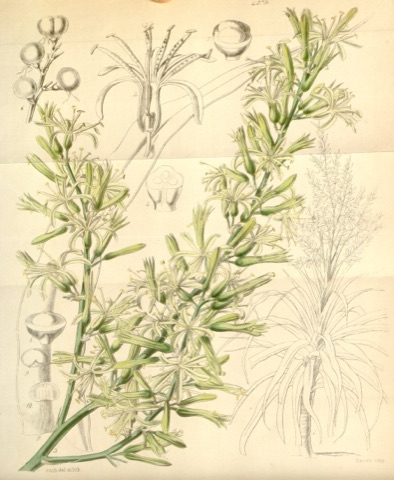
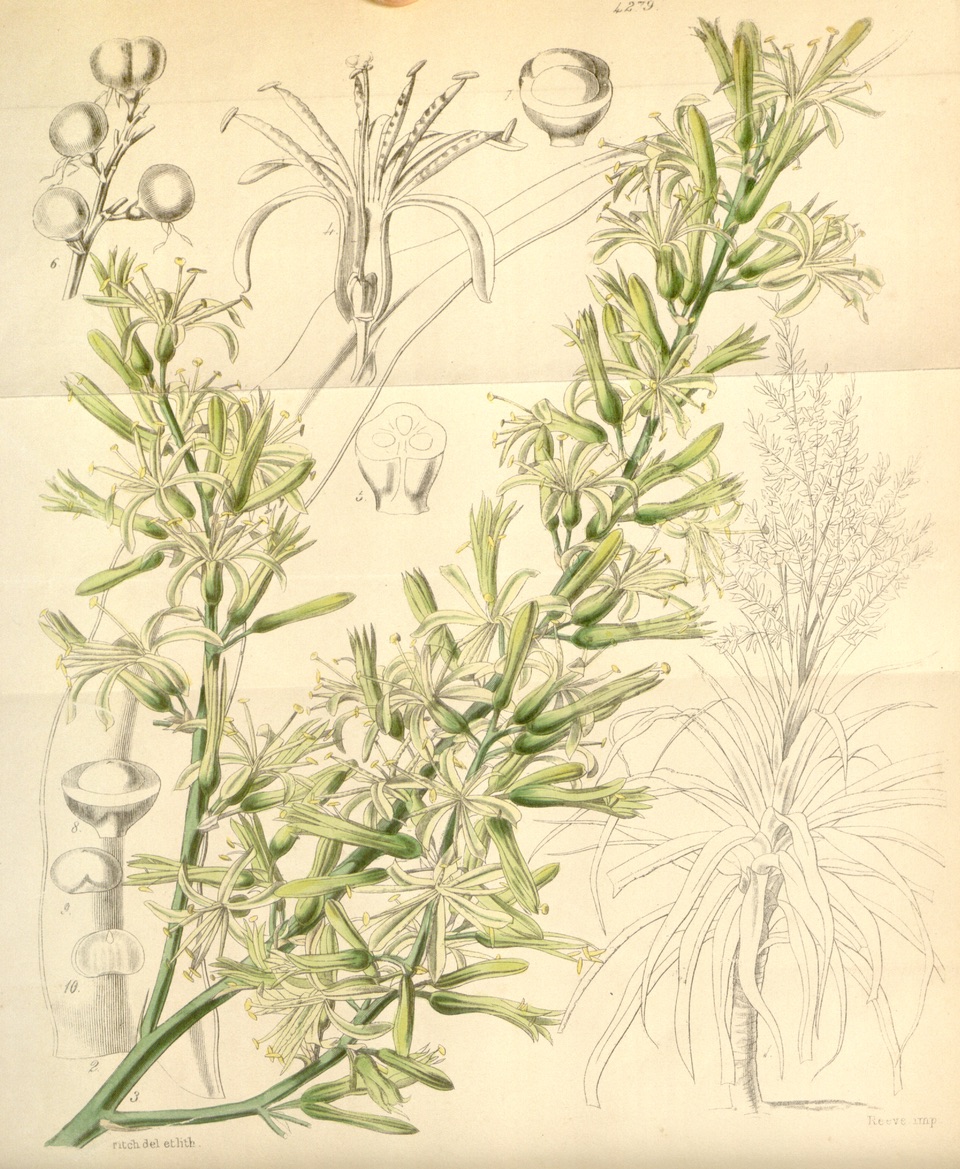
Cordyline rumphii = Dracaena angustifolia (Medik.) Roxb.
Curtis's Botanical Magazine · 4279 · 1847
Walter Hood Fitch · scan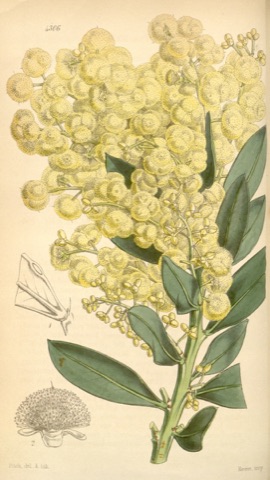
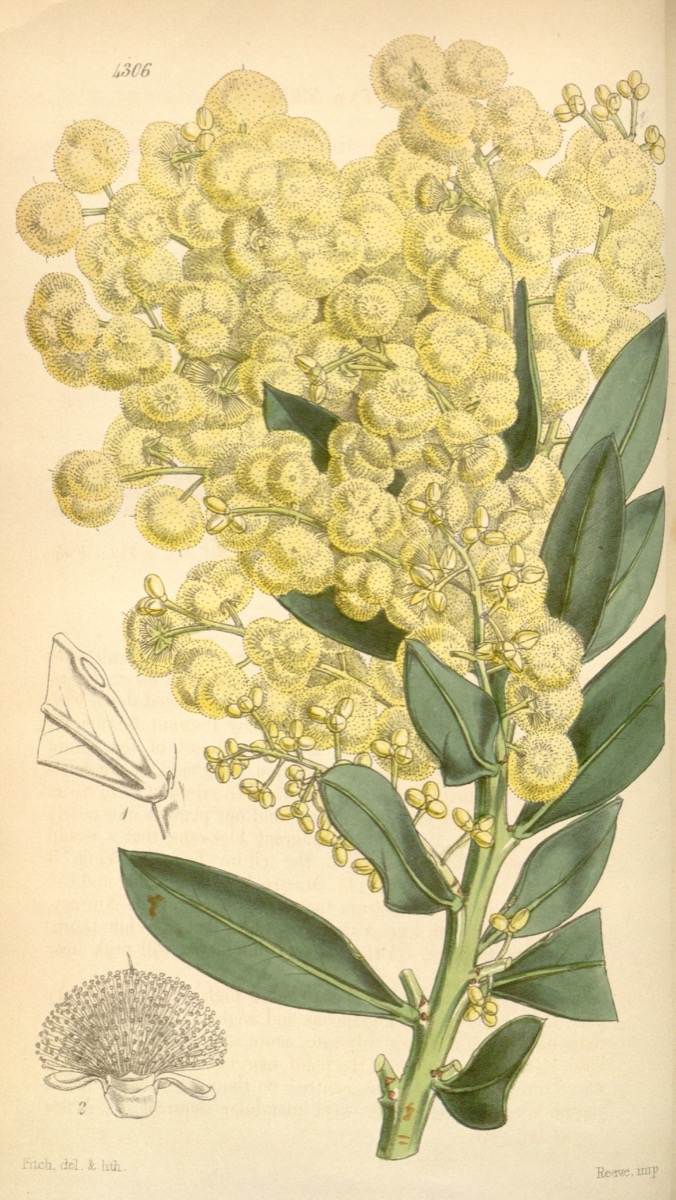
Acacia celastrifolia
Curtis's Botanical Magazine · 4306 · 1847
Walter Hood Fitch · scan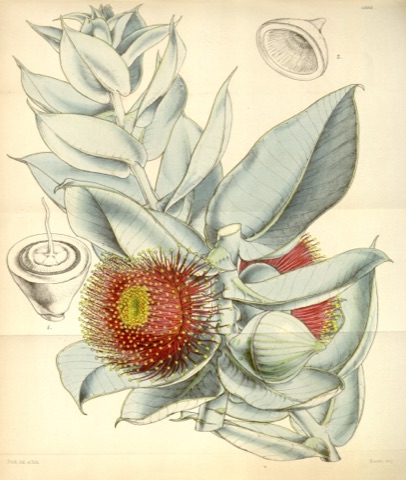
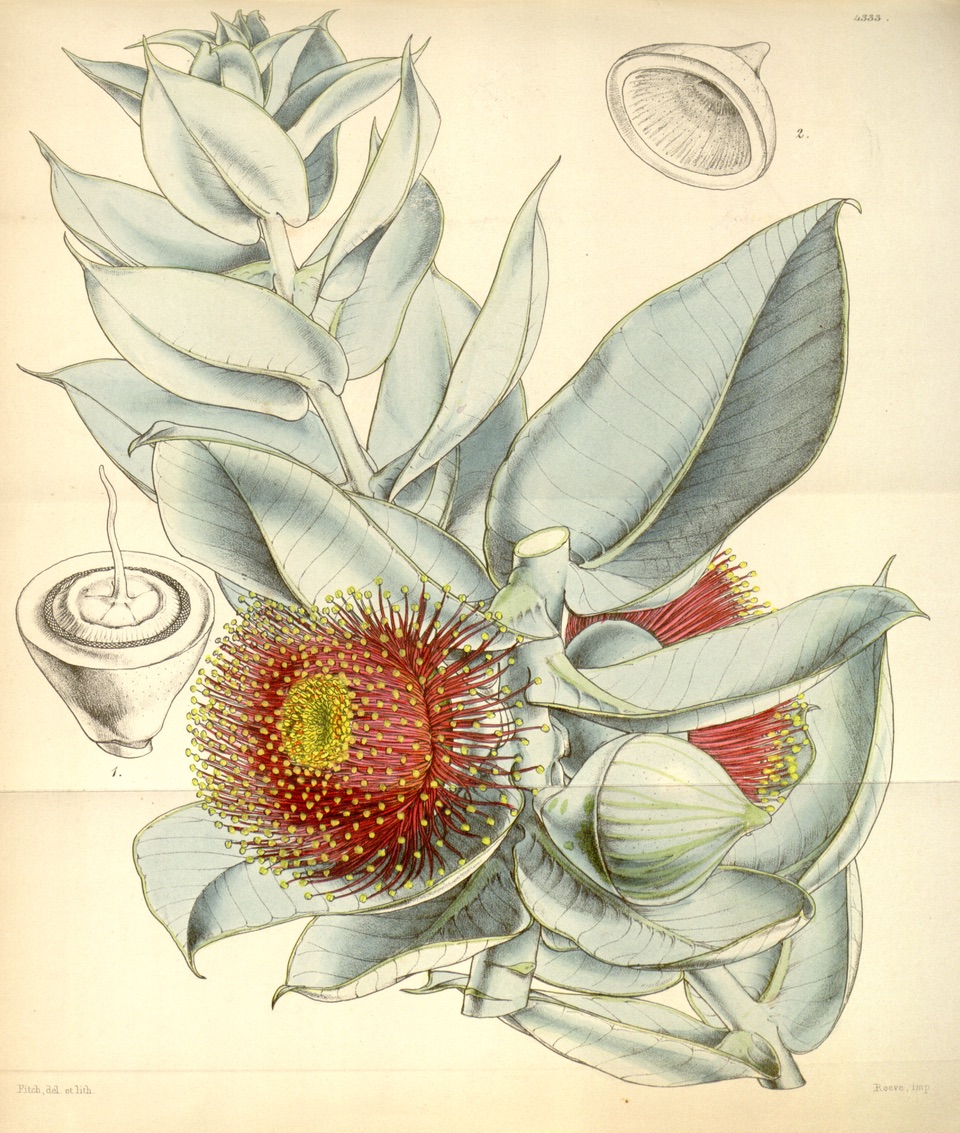
Eucalyptus macrocarpa
Curtis's Botanical Magazine · 4333 · 1847
Walter Hood Fitch · scan
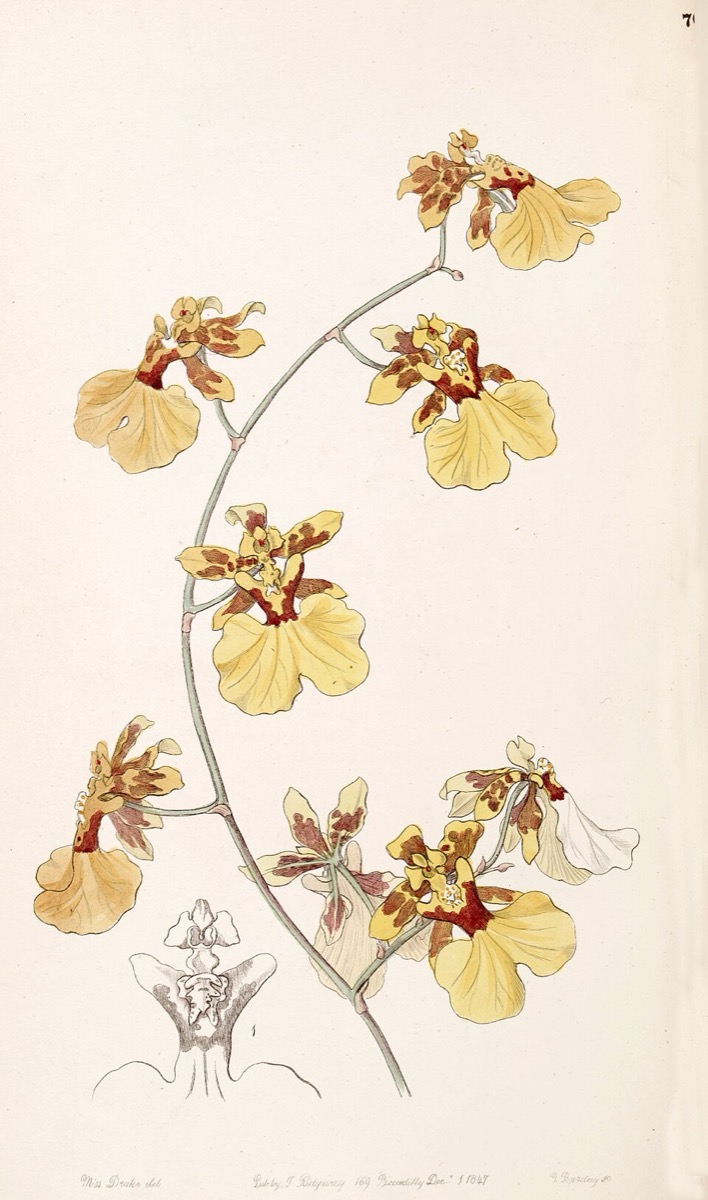
Oncidium pelicanum = Oncidium reflexum Lindl.
Edwards's Botanical Register · 70 · 1847
Sarah Anne Drake, G. Barclay · scan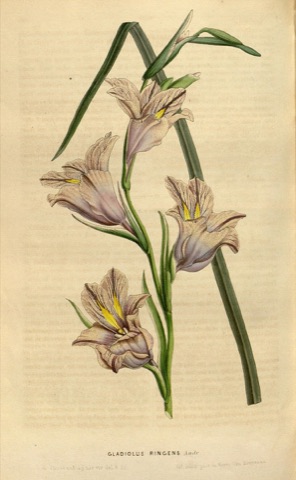
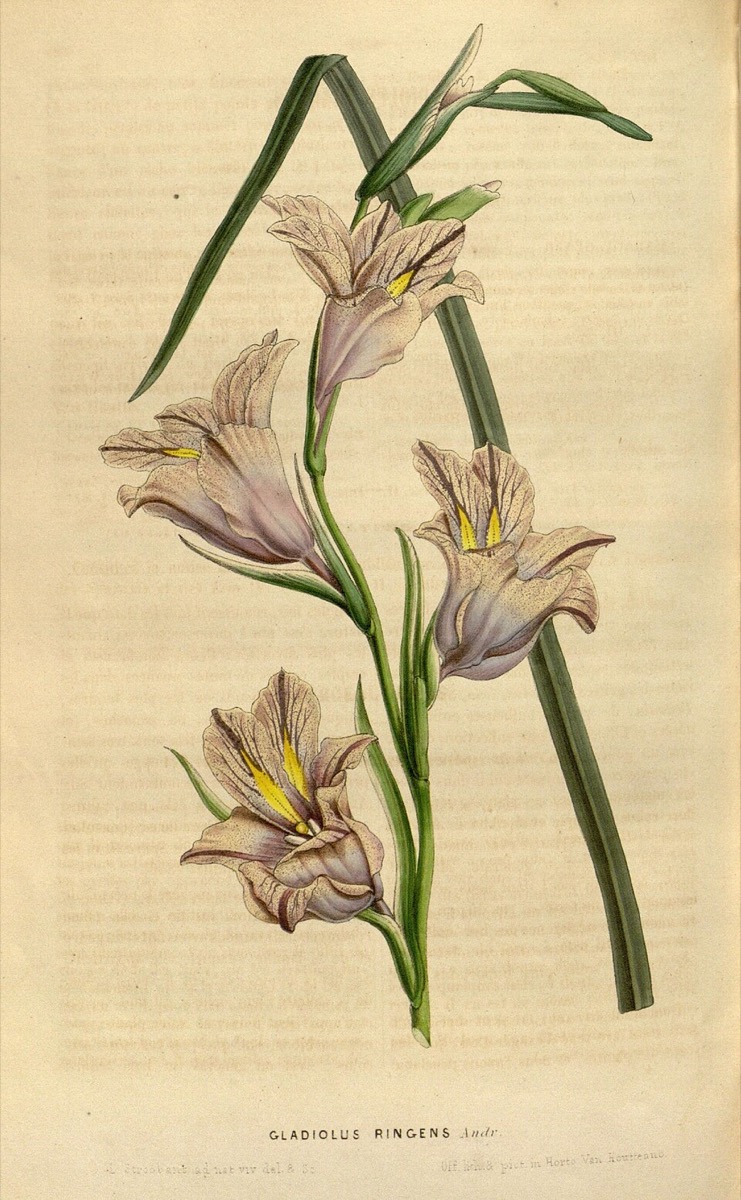
Gladiolus ringens = Gladiolus carinatus Aiton
Flore des serres et des jardins de l'Europe · · 1848
L. Stroobant, Louis van Houtte · scan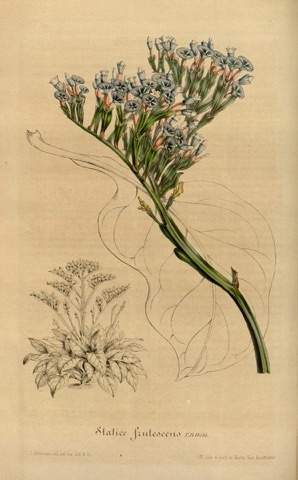
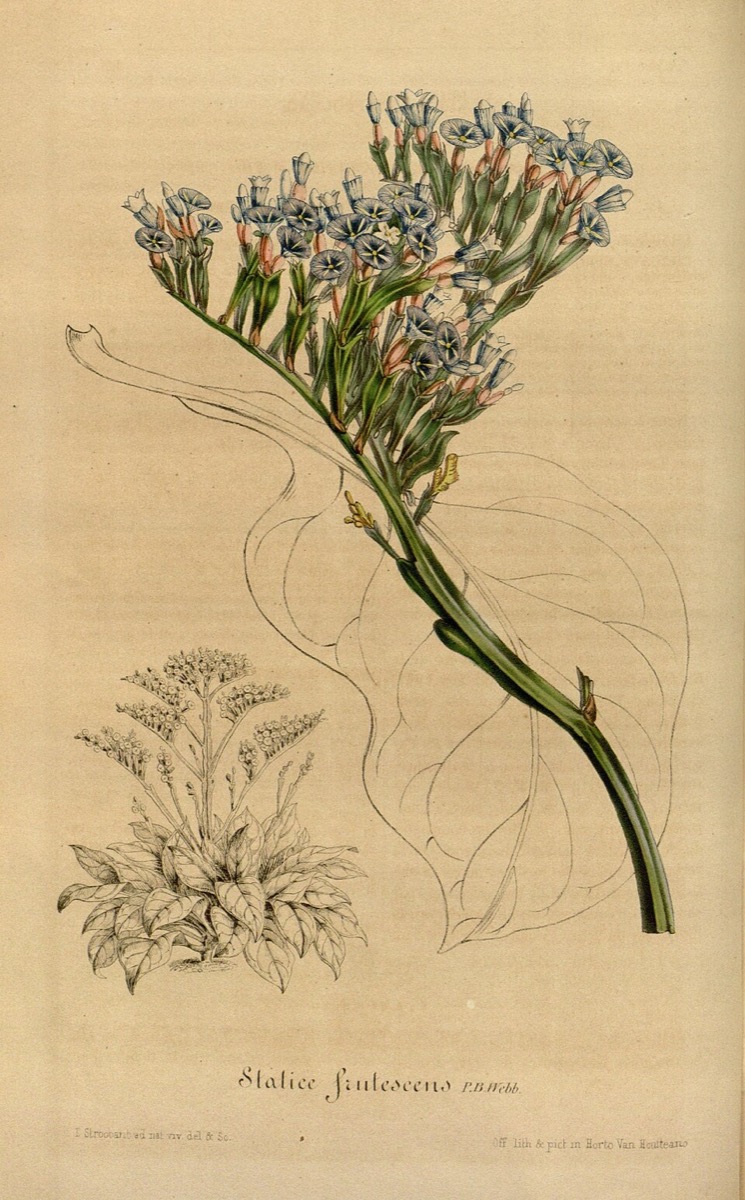
Statice frutescens = Limonium frutescens (Lem.) Erben, A.Santos & Reyes-Bet.
Flore des serres et des jardins de l'Europe · · 1848
L. Stroobant, Louis van Houtte · scan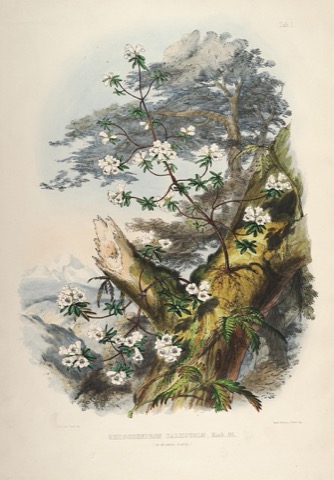
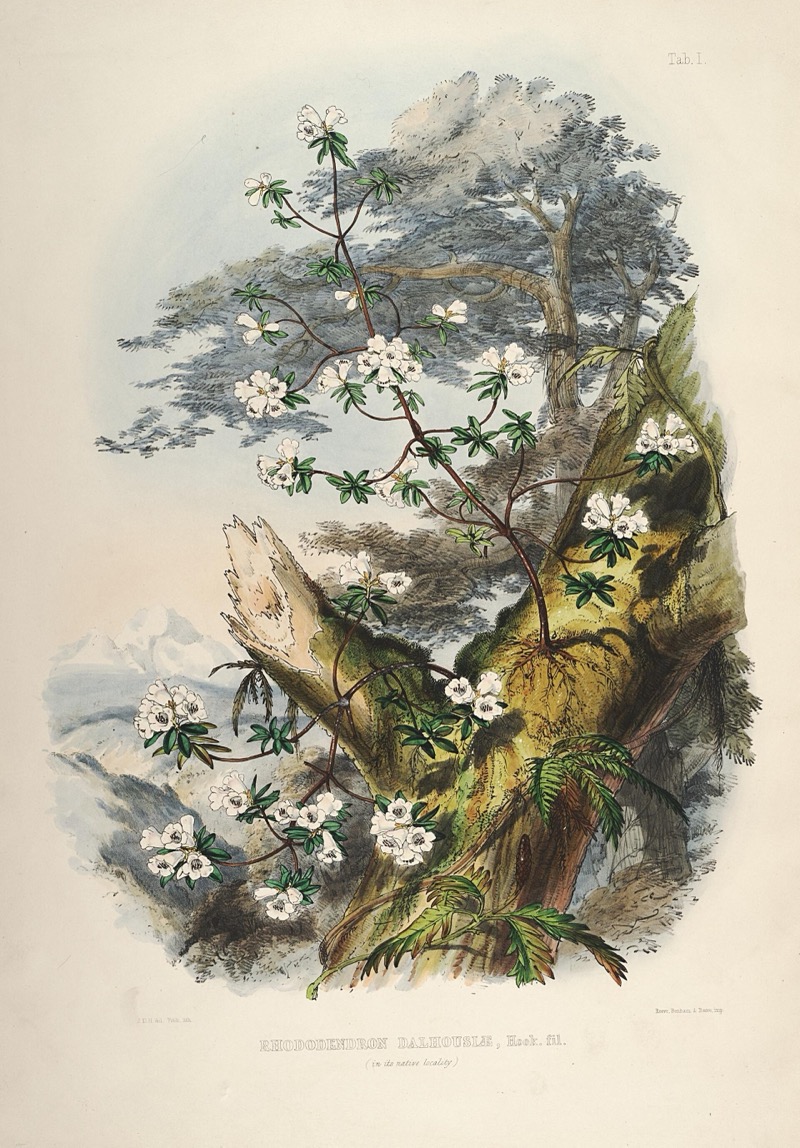
Rhododendron Dalhousiæ, Hook. fil. = Rhododendron dalhousieae Hook.f.
The Rhododendrons of Sikkim-Himalaya · Tab. I · 1849
Joseph Dalton Hooker, Walter Hood Fitch · scan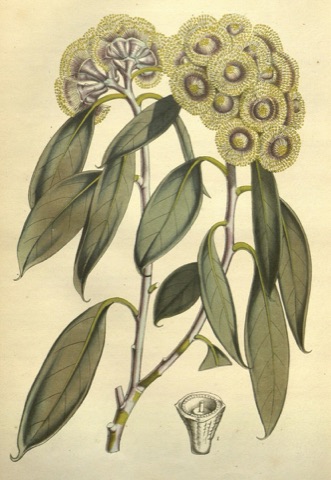
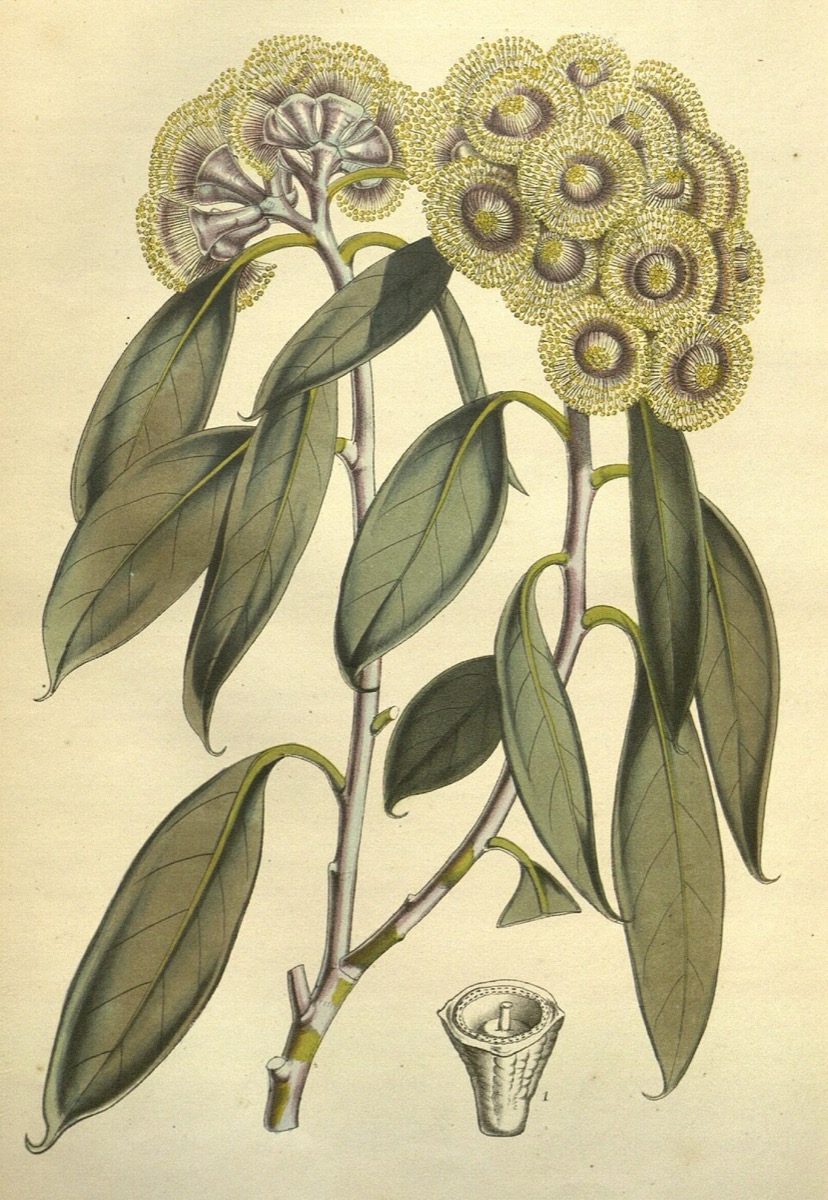
Eucalyptus coccifera
Flore des serres et des jardins de l'Europe · 735 · 1851
· scan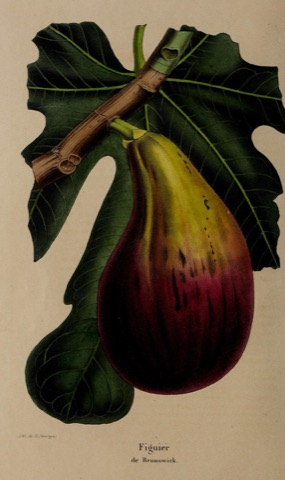
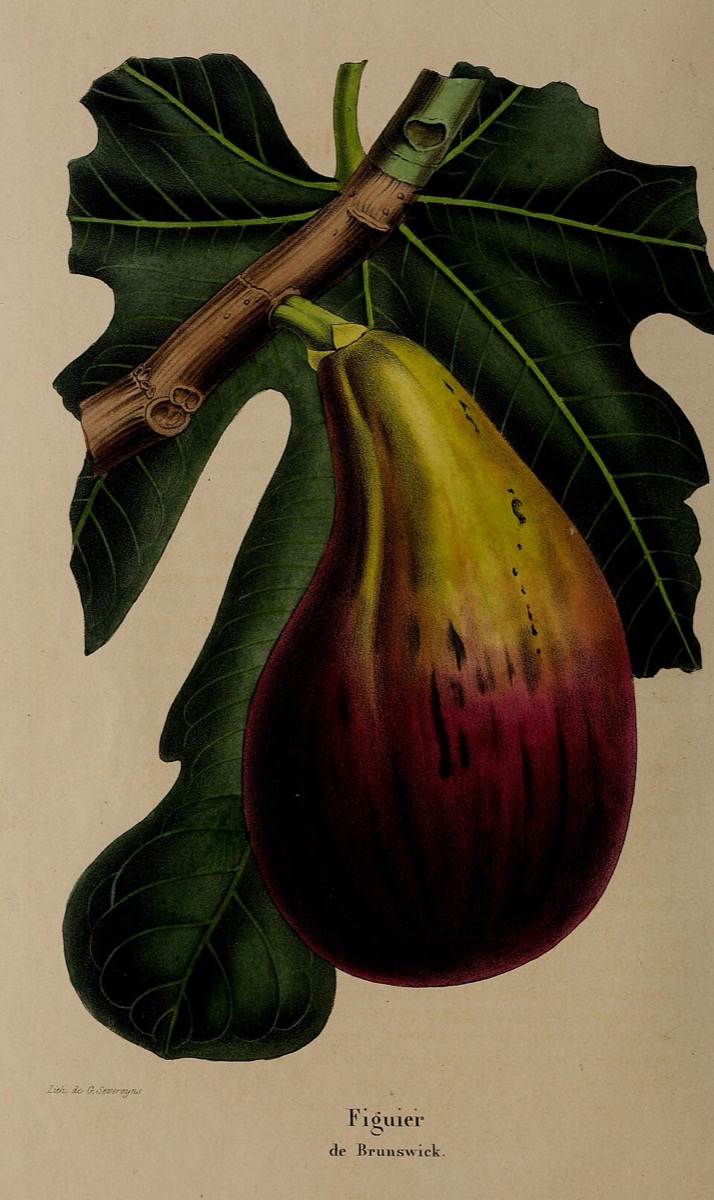
Figuier de Brunswick = Ficus carica L.
La Belgique horticole · · 1852
C. Severeyns · scan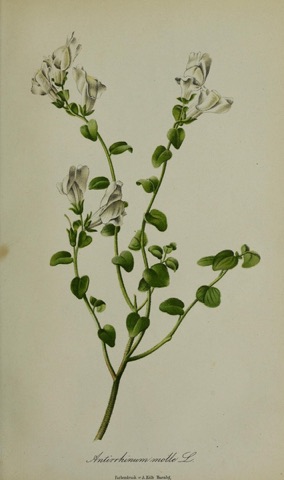
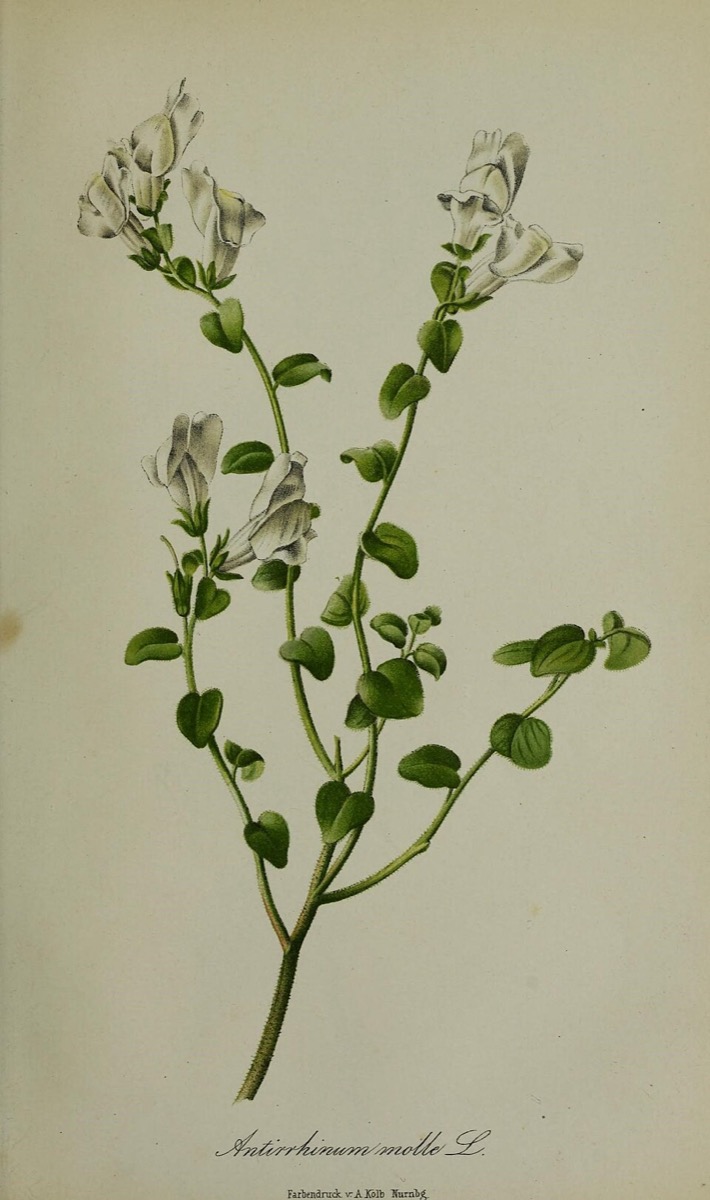
Antirrhinum molle
Gartenflora · · 1853
· scan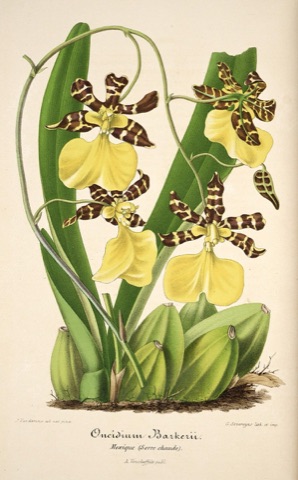
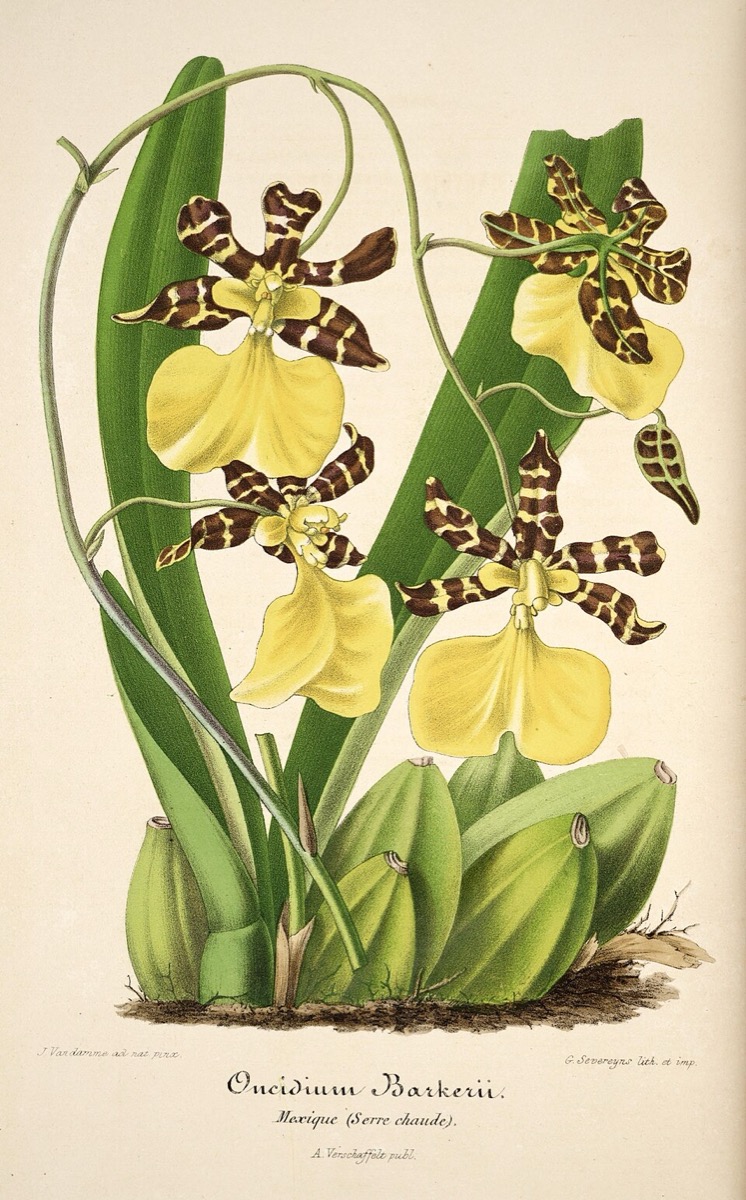
Oncidium Barkerii = Oncidium tigrinum Lex.
L'Illustration horticole · 002 · 1854
J. Vandamme, C. Severeyns · scan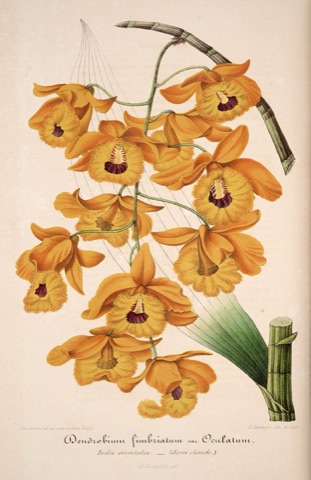
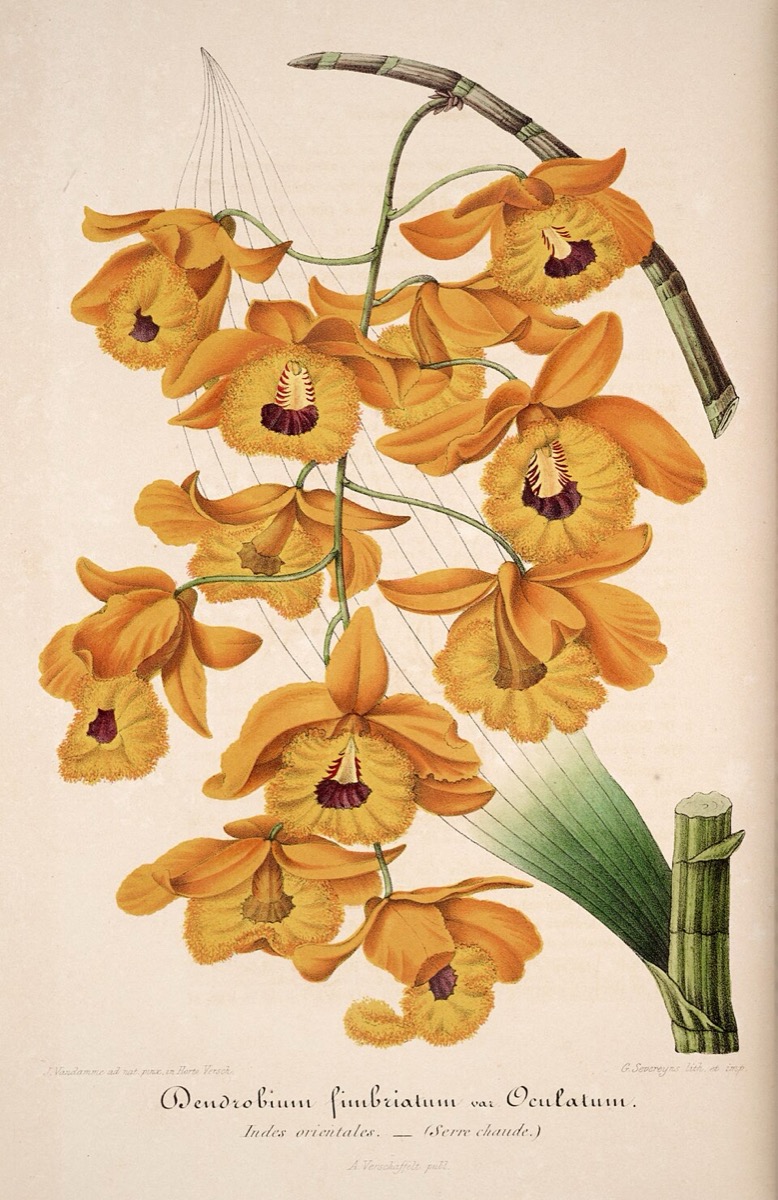
Dendrobium fimbriatum var. Oculatum = Dendrobium fimbriatum Hook.
L'Illustration horticole · 015 · 1854
J. Vandamme, C. Severeyns · scan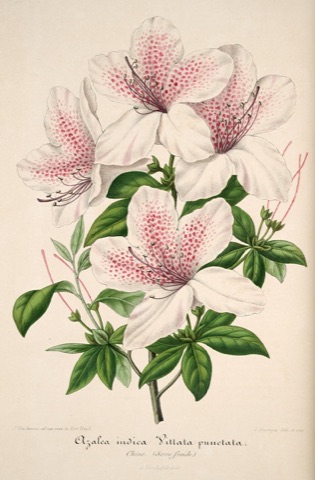
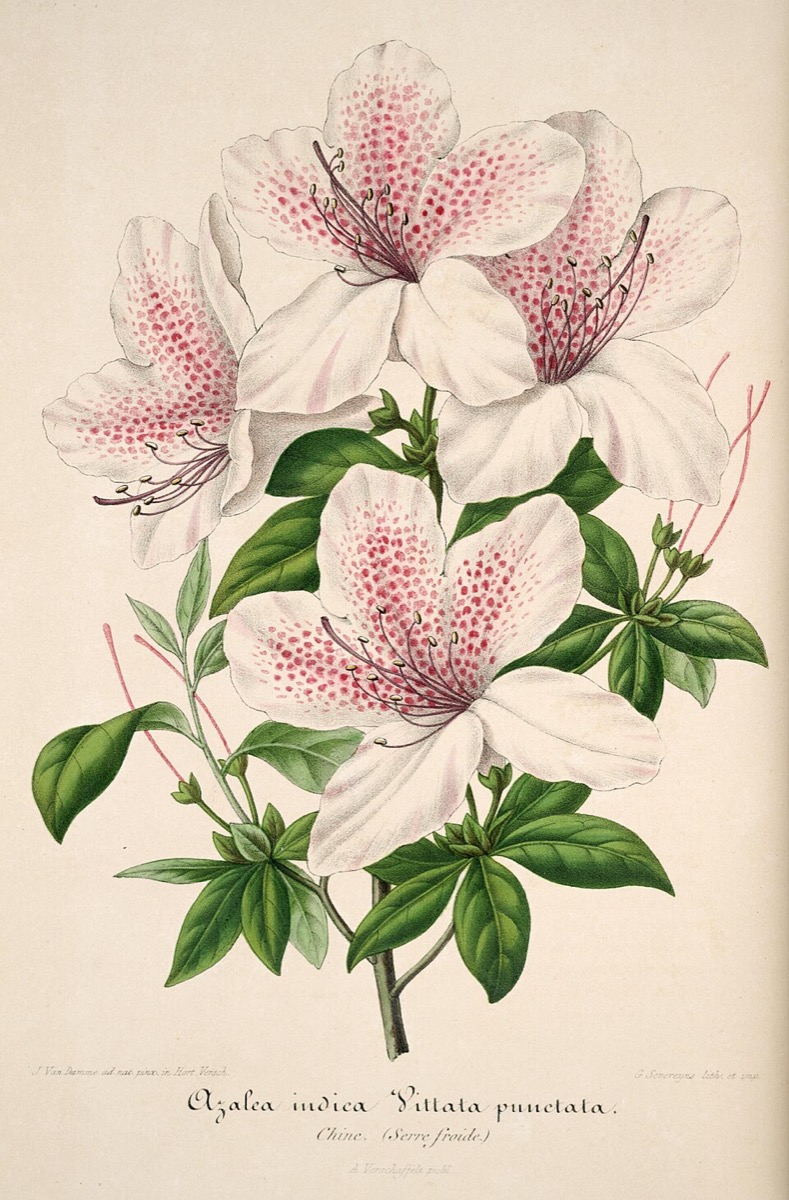
Azalea indica Vittata punctata = Rhododendron indicum (L.) Sweet
L'Illustration horticole · 020 · 1854
J. Vandamme, C. Severeyns · scan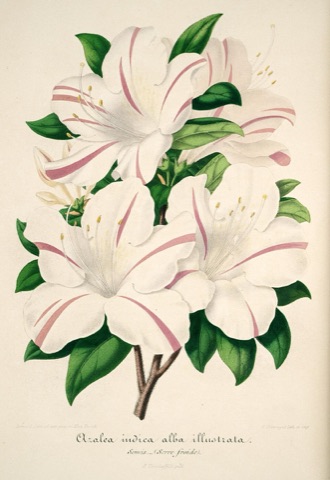
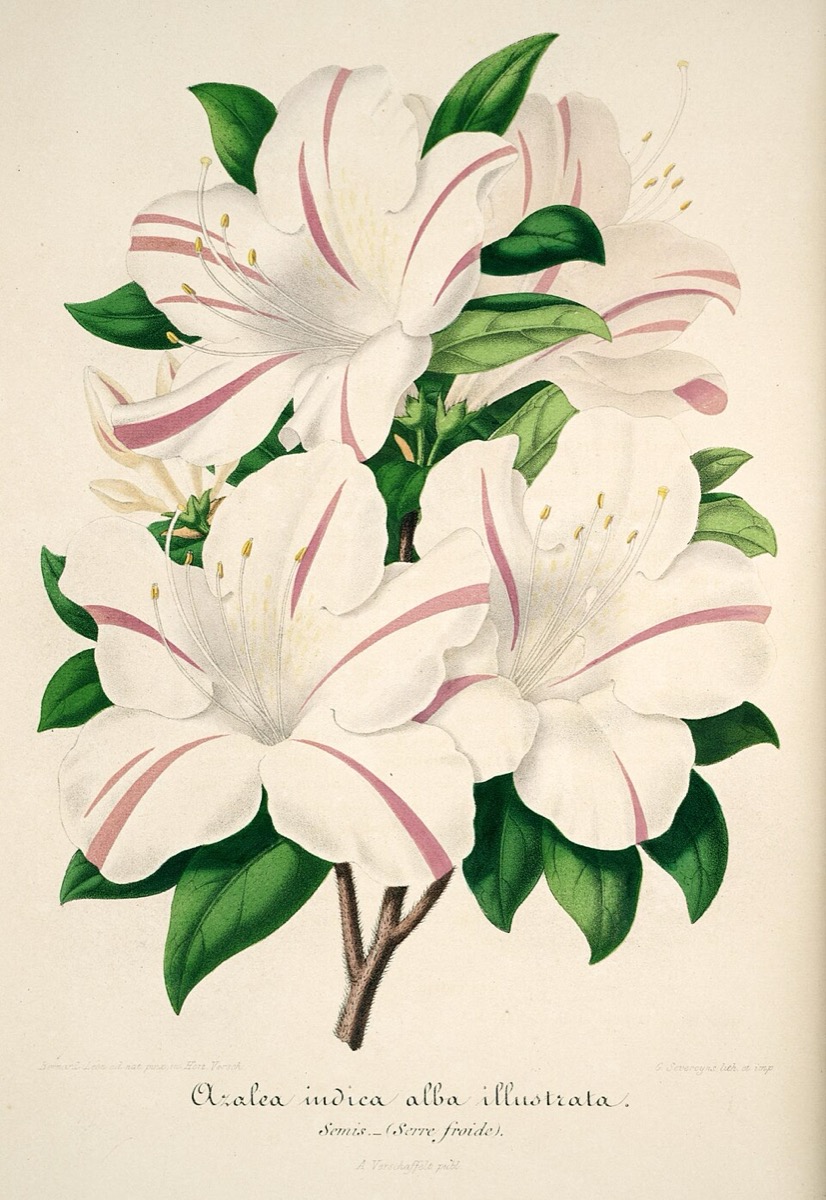
Azalea indica alba illustrata = Rhododendron indicum (L.) Sweet
L'Illustration horticole · 038 · 1854
C. Severeyns · scan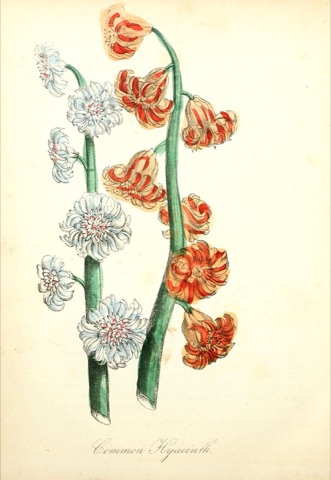
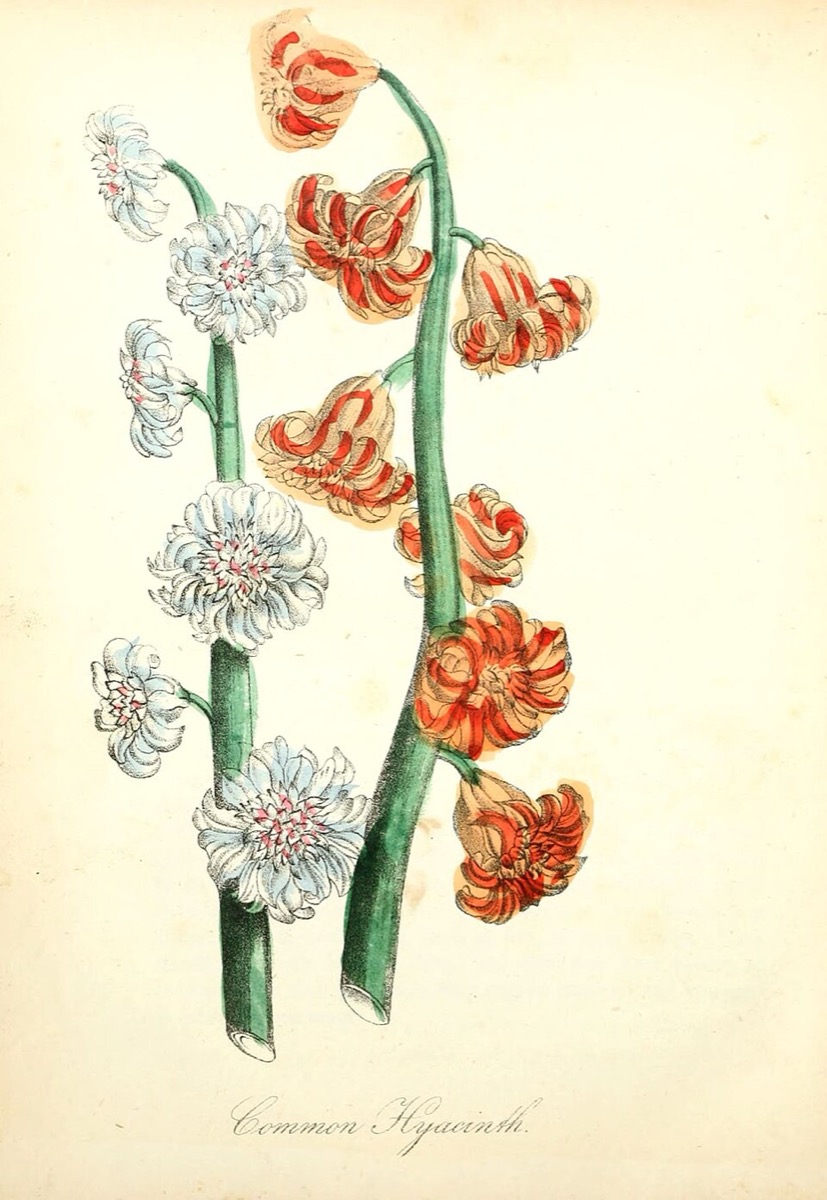
Common Hyacinth
The American Flora · 48 · 1855
· scan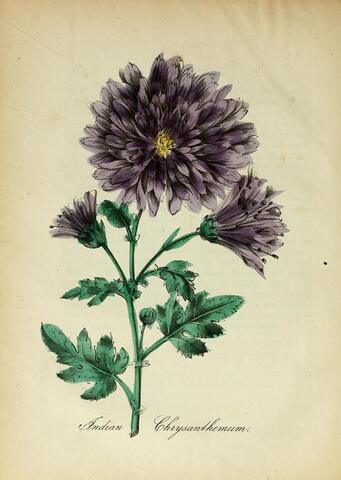
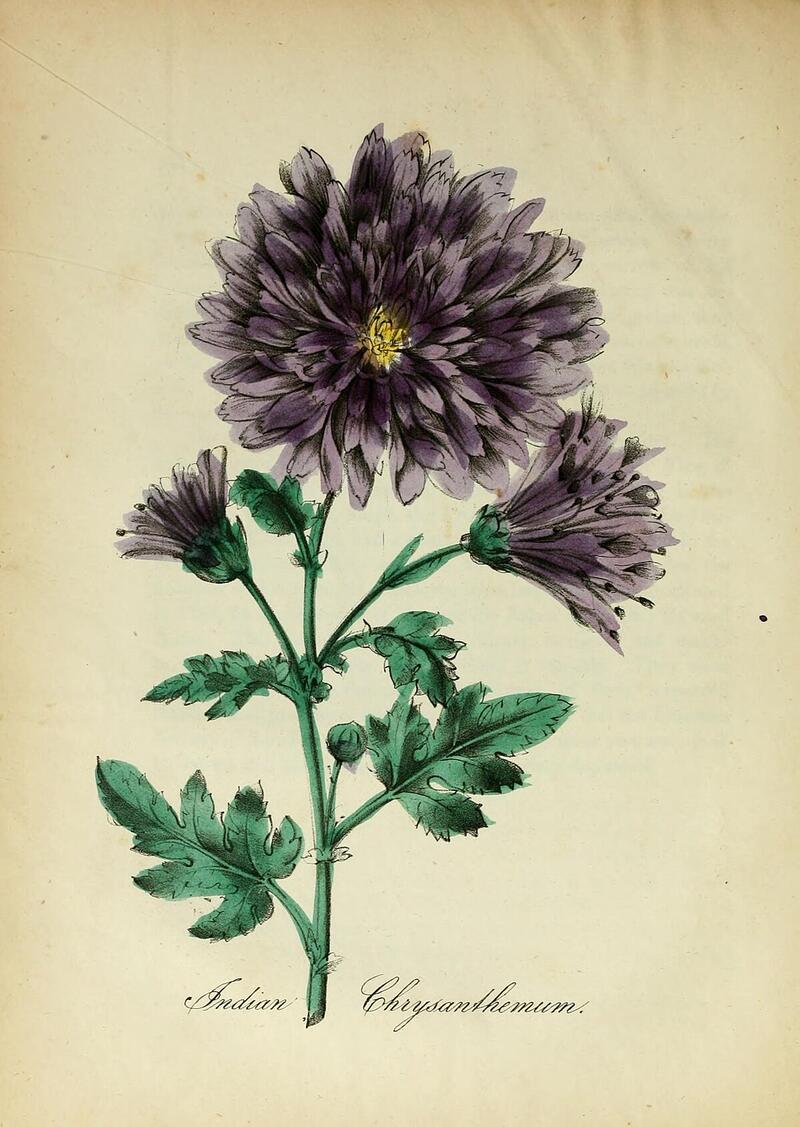
Indian Chrysanthemum = Chrysanthemum × morifolium (Ramat.) Hemsl.
The American Flora · pl. 1 · 1855
· scan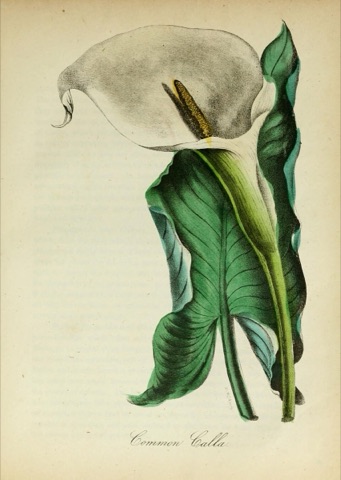
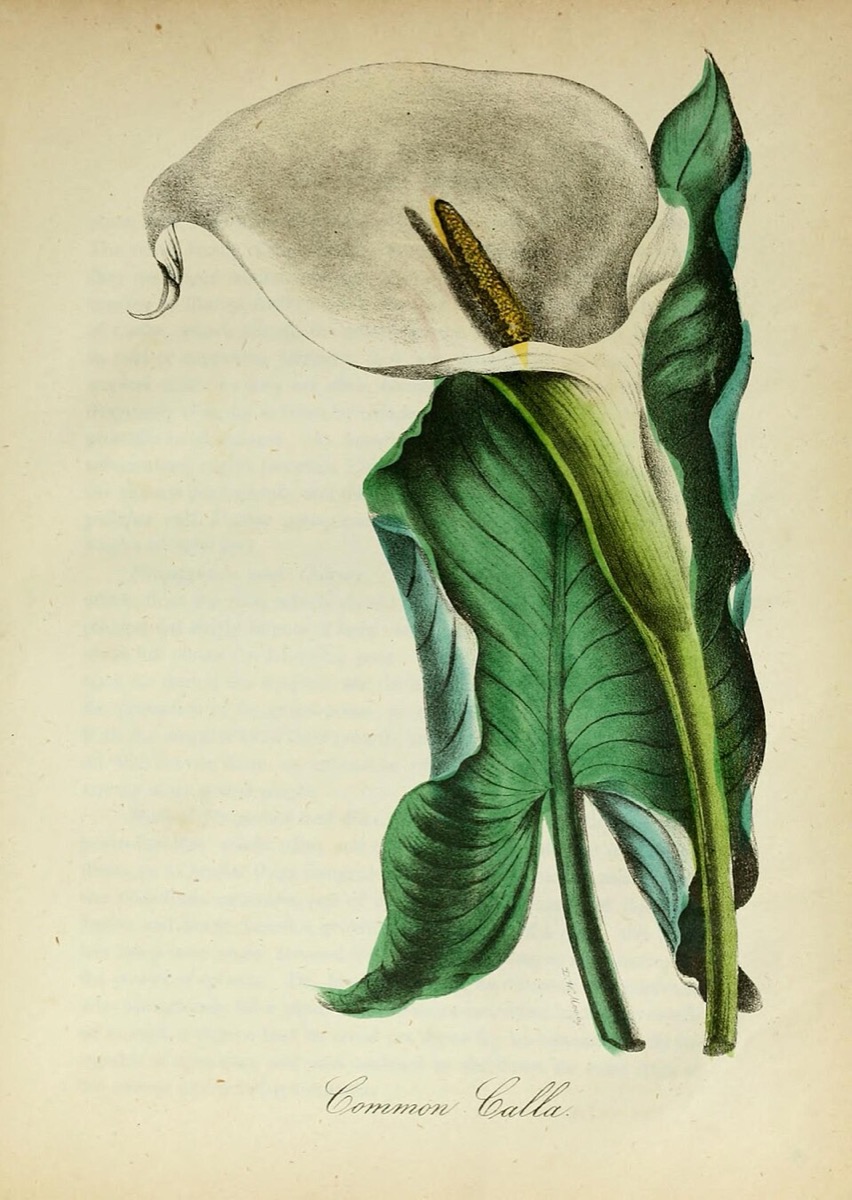
Common Calla
The American Flora · 36 · 1855
· scan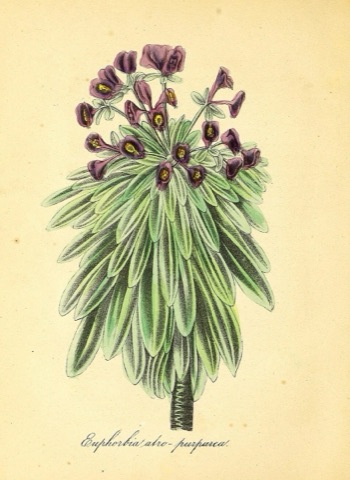
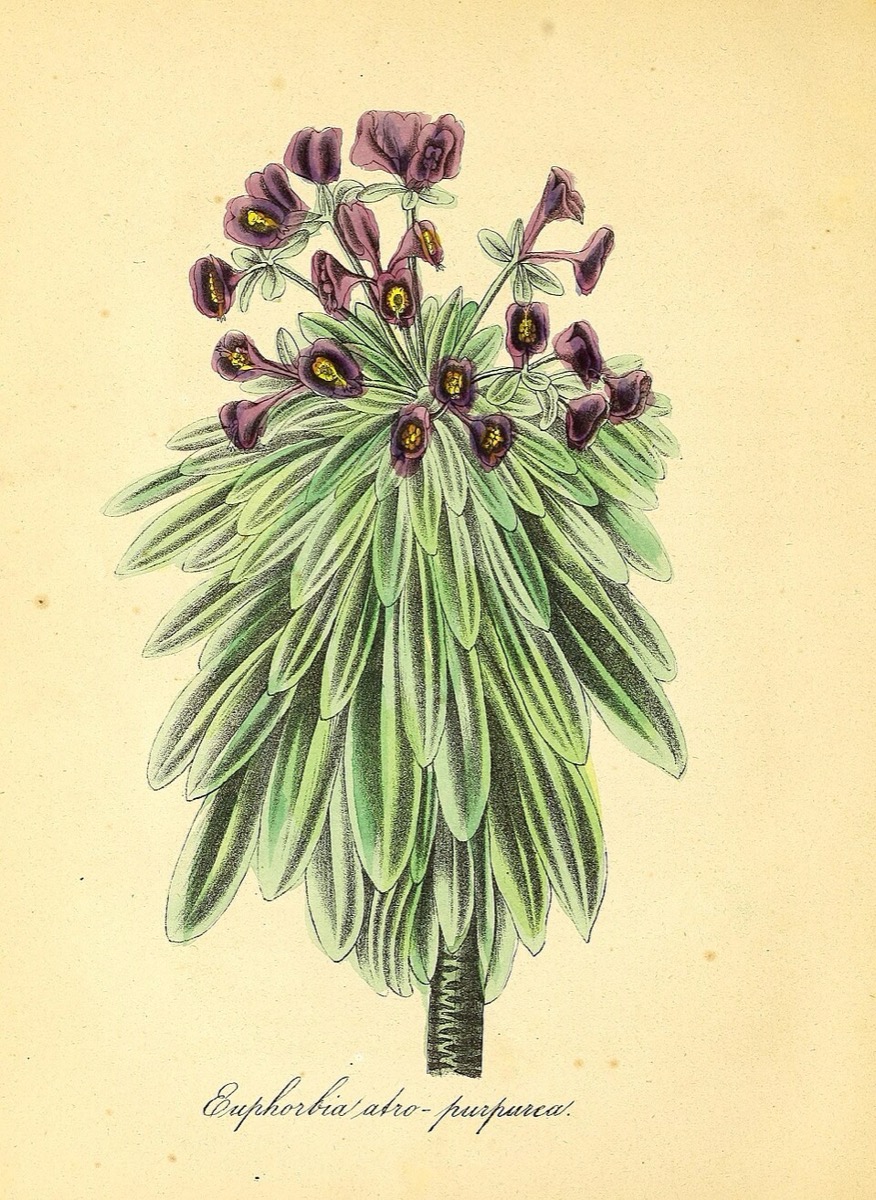
Euphorbia atro-purpurea = Euphorbia atropurpurea Brouss. ex Willd.
The American Flora · 32 · 1855
· scan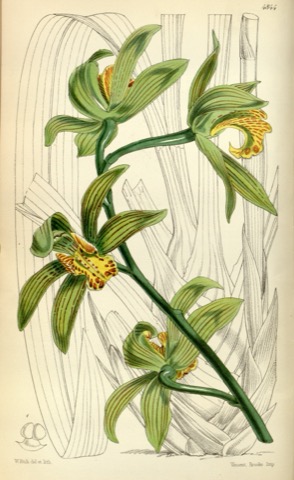
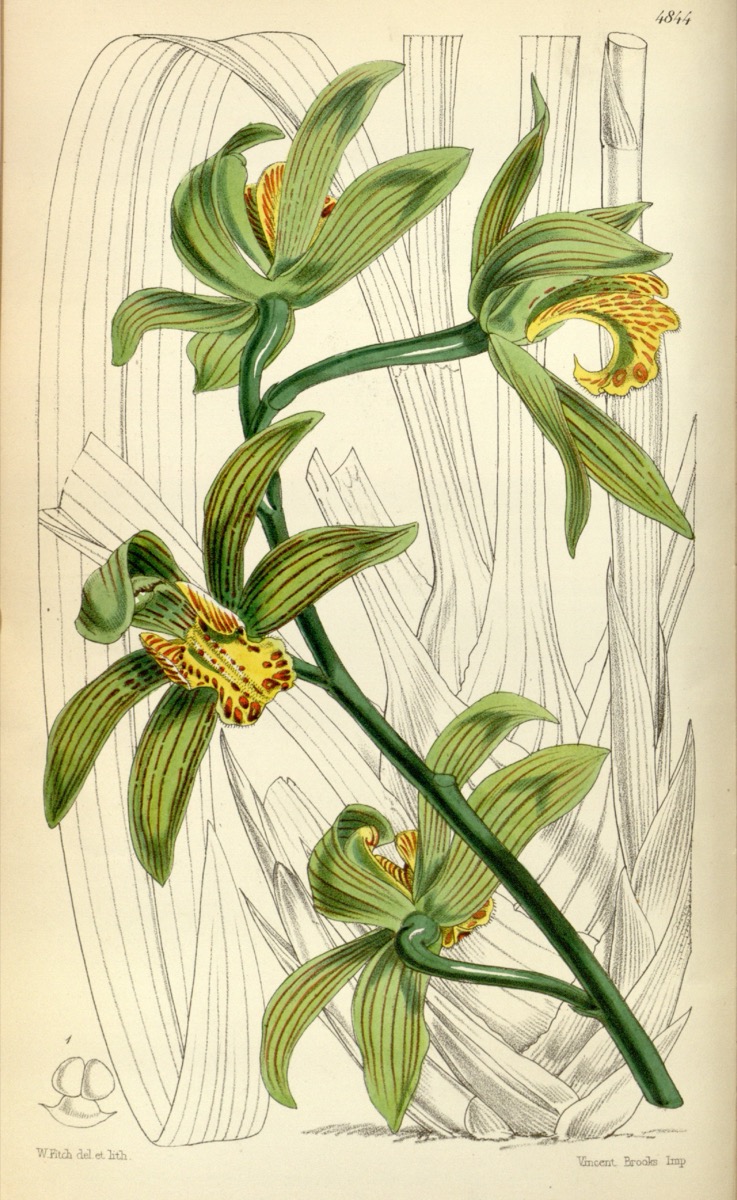
Cymbidium giganteum = Cymbidium iridioides D.Don
Curtis's Botanical Magazine · 4844 · 1855
Walter Hood Fitch · scan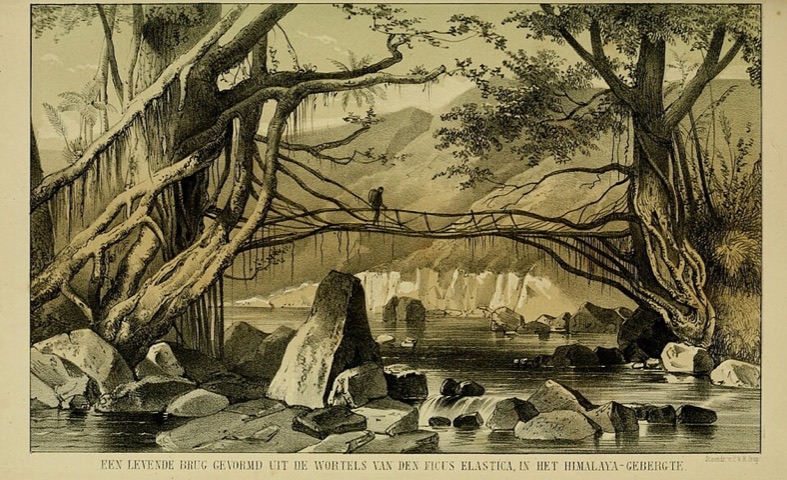
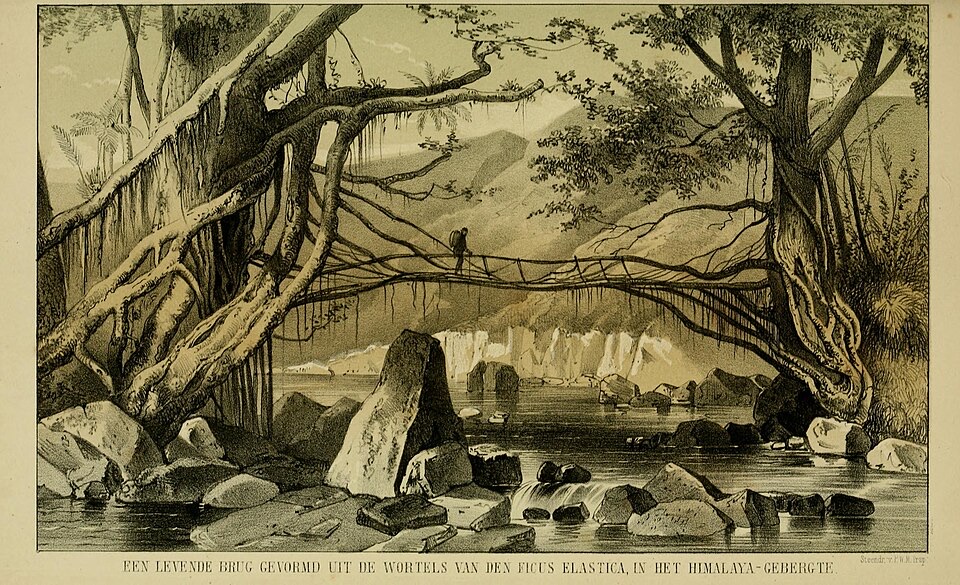
Ficus elastica
Tuinbouw-flora van Nederland en zijne overzeesche bezittingen · 8 · 1855
· scan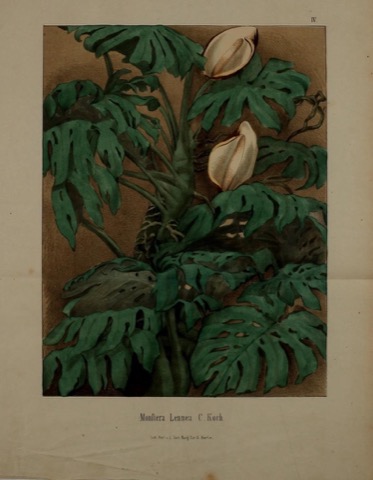
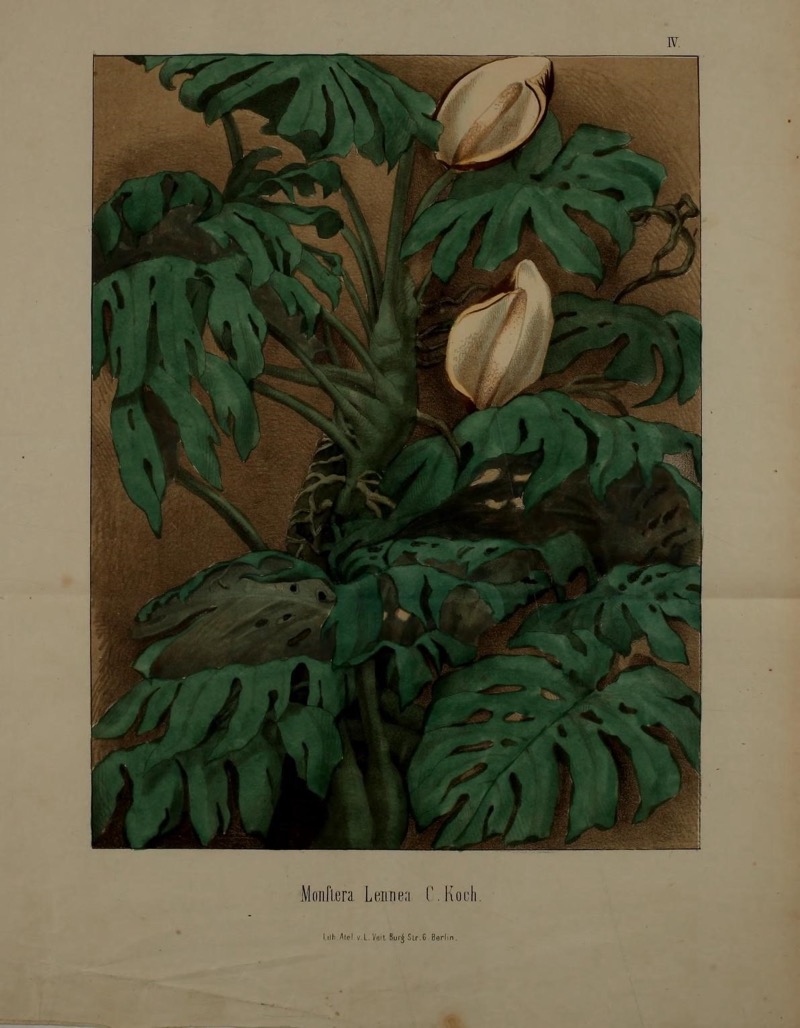
Monstera Lennea C. Koch = Monstera deliciosa Liebm.
Berliner allgemeine Gartenzeitung · Taf. IV · 1857
· scan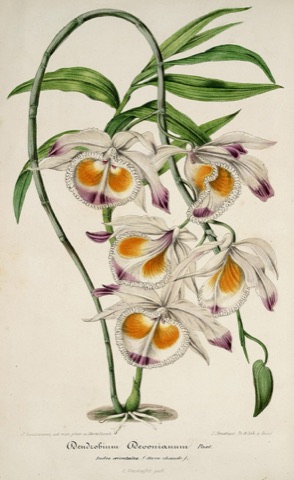
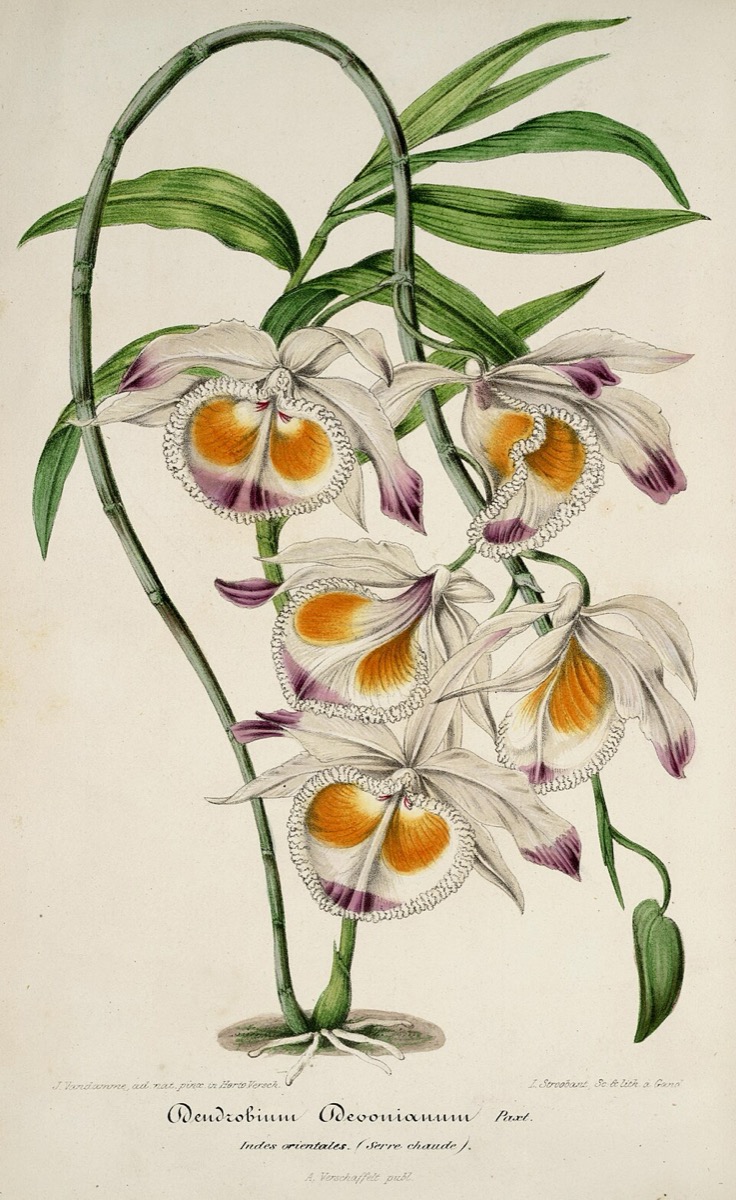
Dendrobium Devonianum
L'Illustration horticole · 145 · 1857
J. Vandamme, L. Stroobant · scan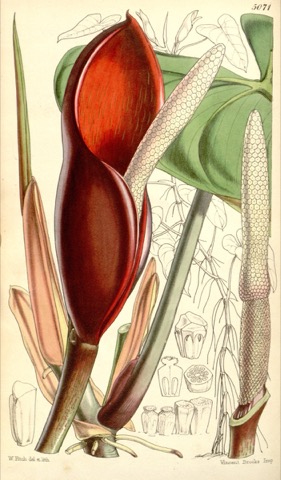
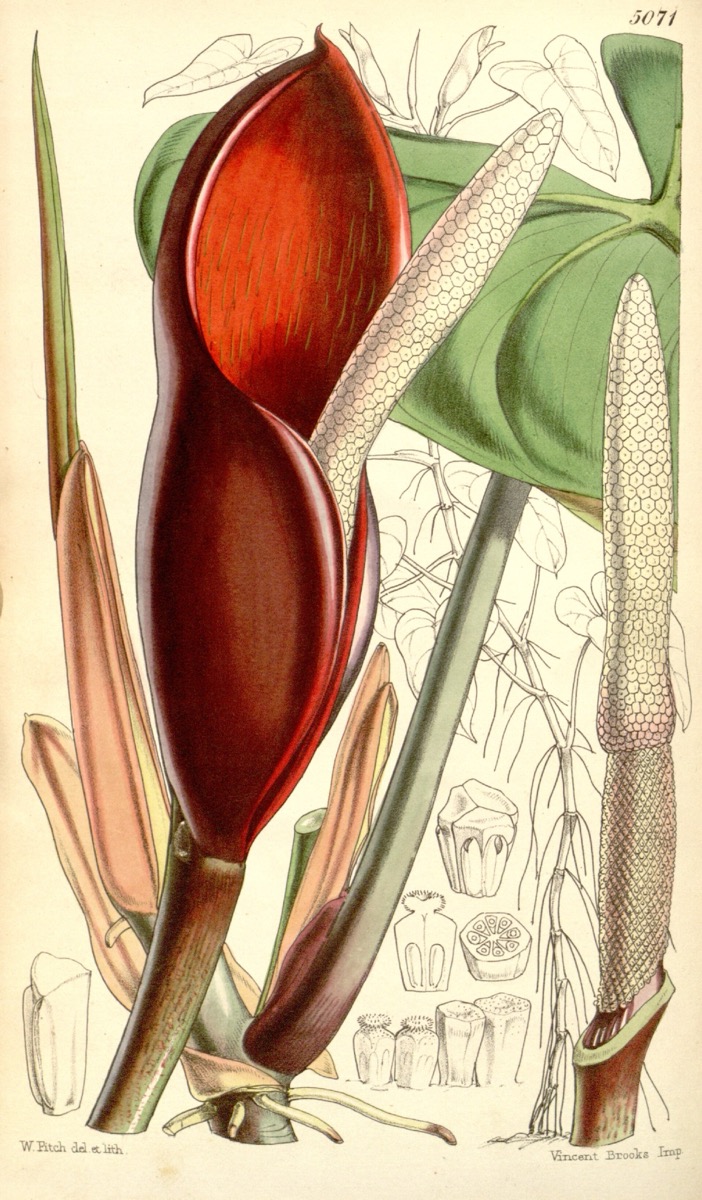
Philodendron erubescens
Curtis's Botanical Magazine · 5071 · 1858
Walter Hood Fitch · scan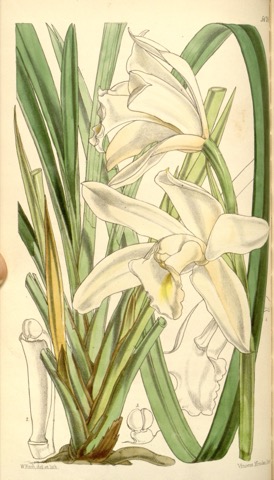
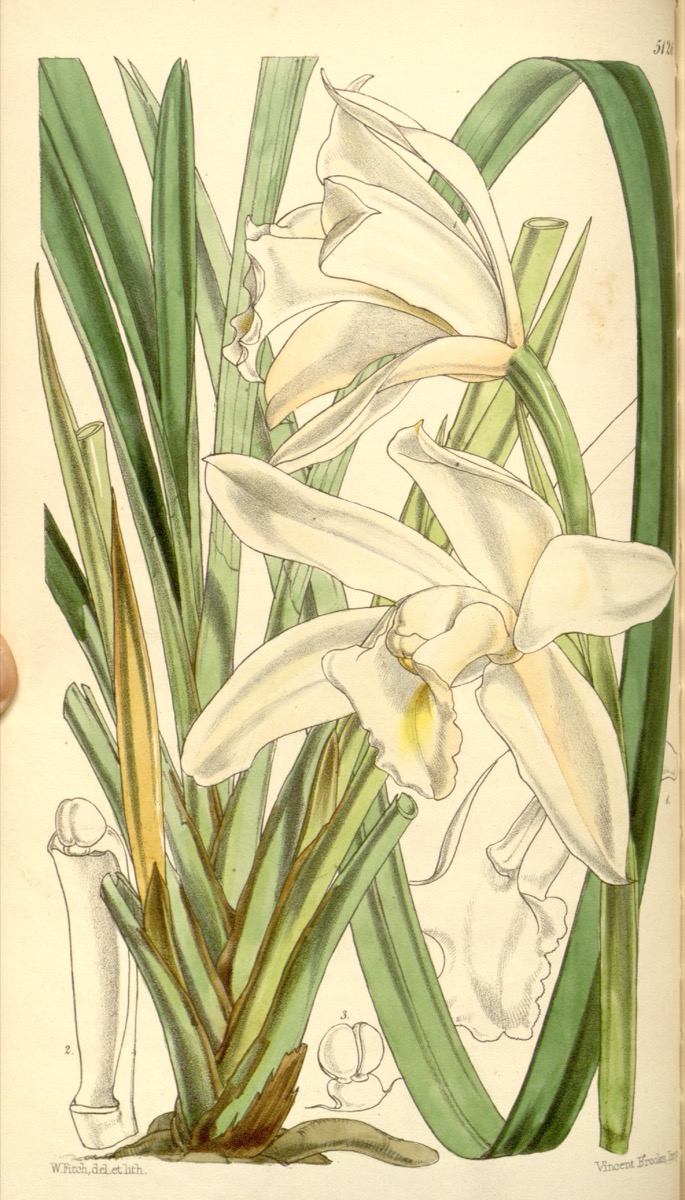
Cymbidium eburneum
Curtis's Botanical Magazine · 5126 · 1859
Walter Hood Fitch · scan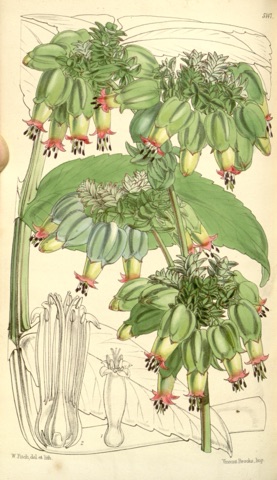
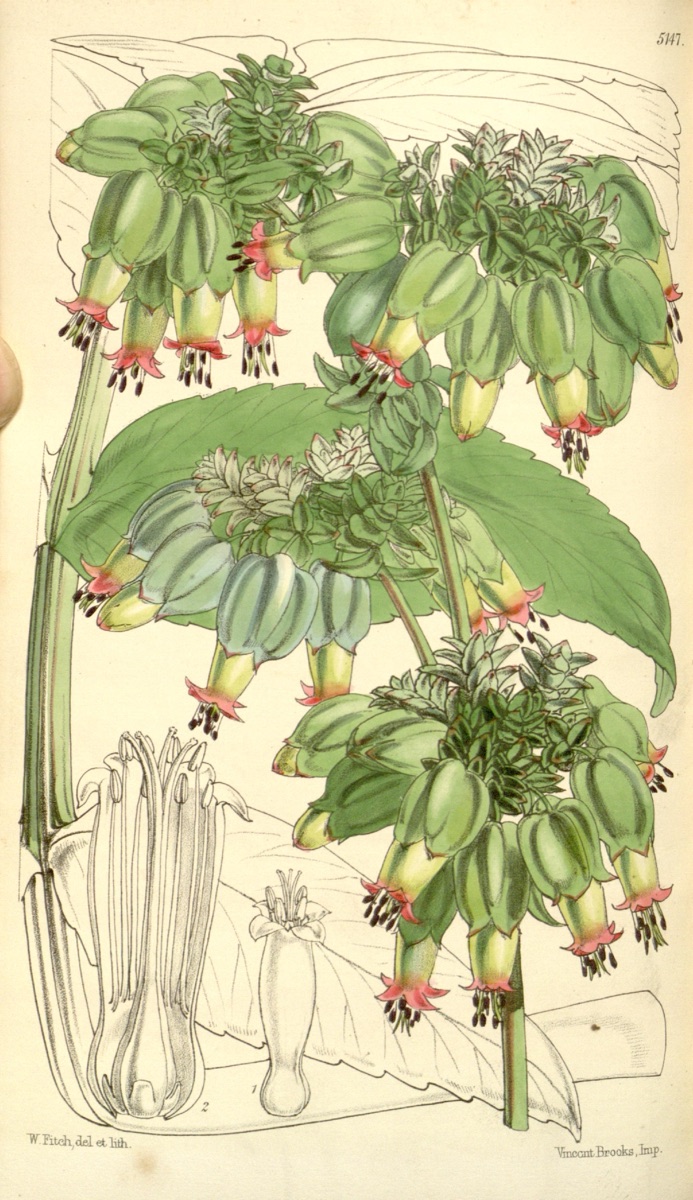
Bryophyllum proliferum = Kalanchoe prolifera (Bowie ex Hook.) Raym.-Hamet
Curtis's Botanical Magazine · 5147 · 1859
Walter Hood Fitch · scan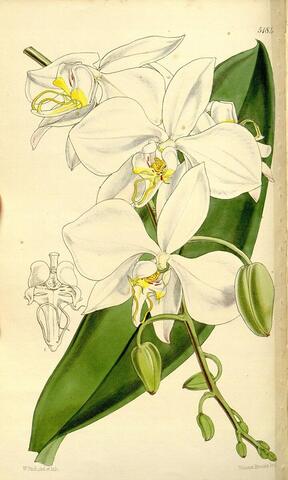
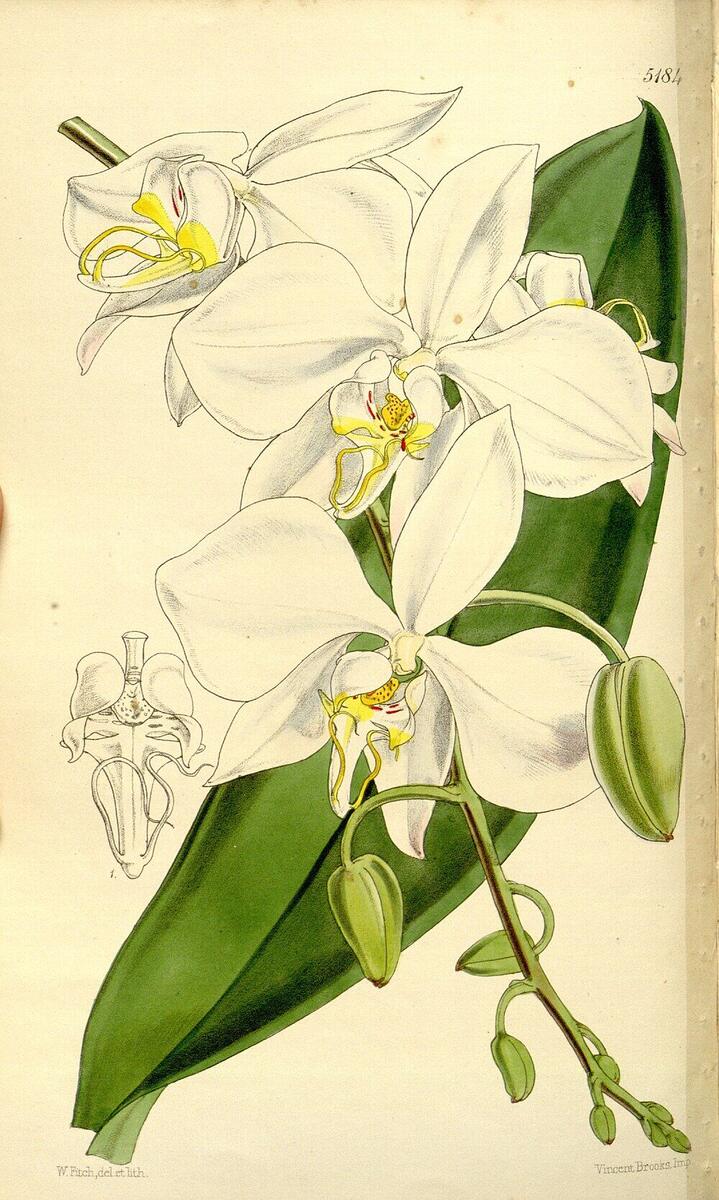
Phalaenopsis grandiflora = Phalaenopsis amabilis subsp. amabilis
Curtis's Botanical Magazine · 5184 · 1860
Walter Hood Fitch · scan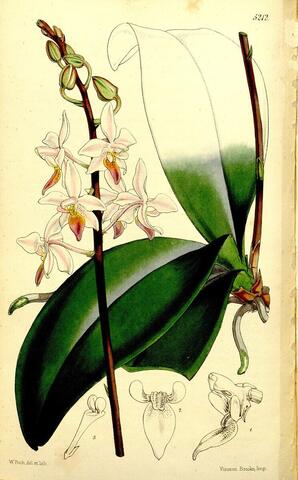
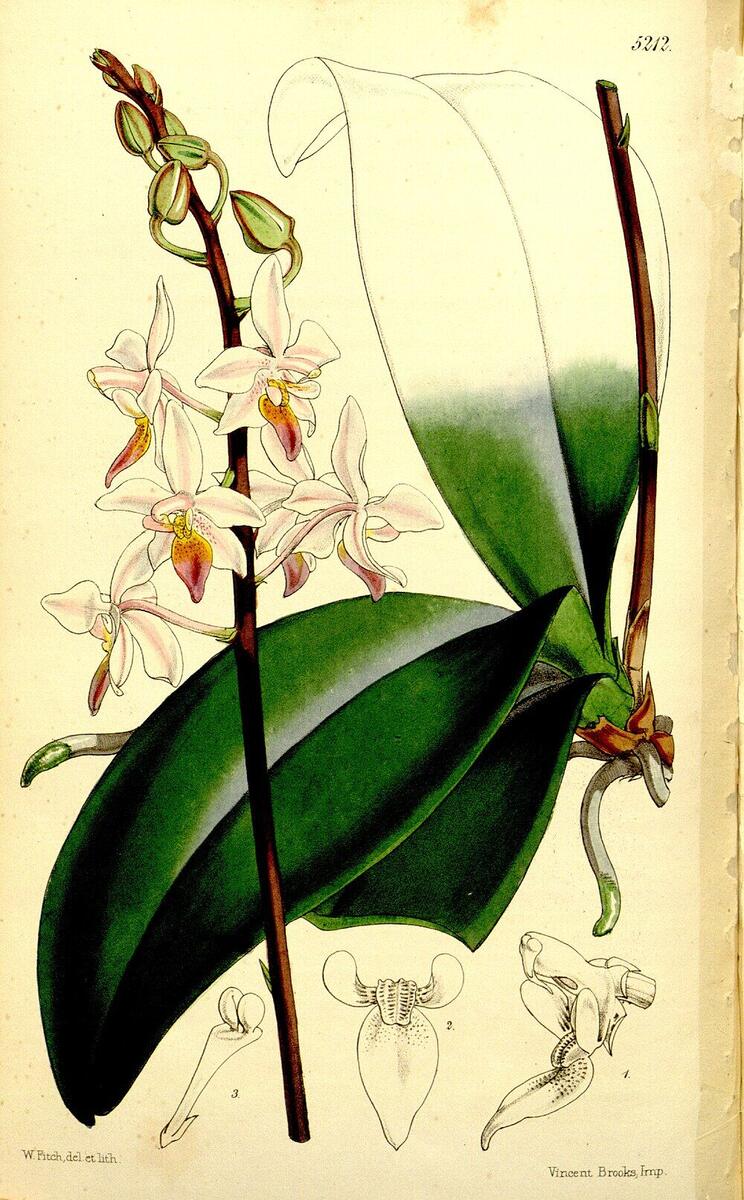
Phalaenopsis rosea = Phalaenopsis equestris (Schauer) Rchb.f.
Curtis's Botanical Magazine · 5212 · 1860
Walter Hood Fitch · scan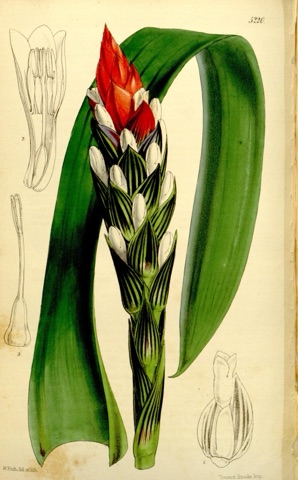
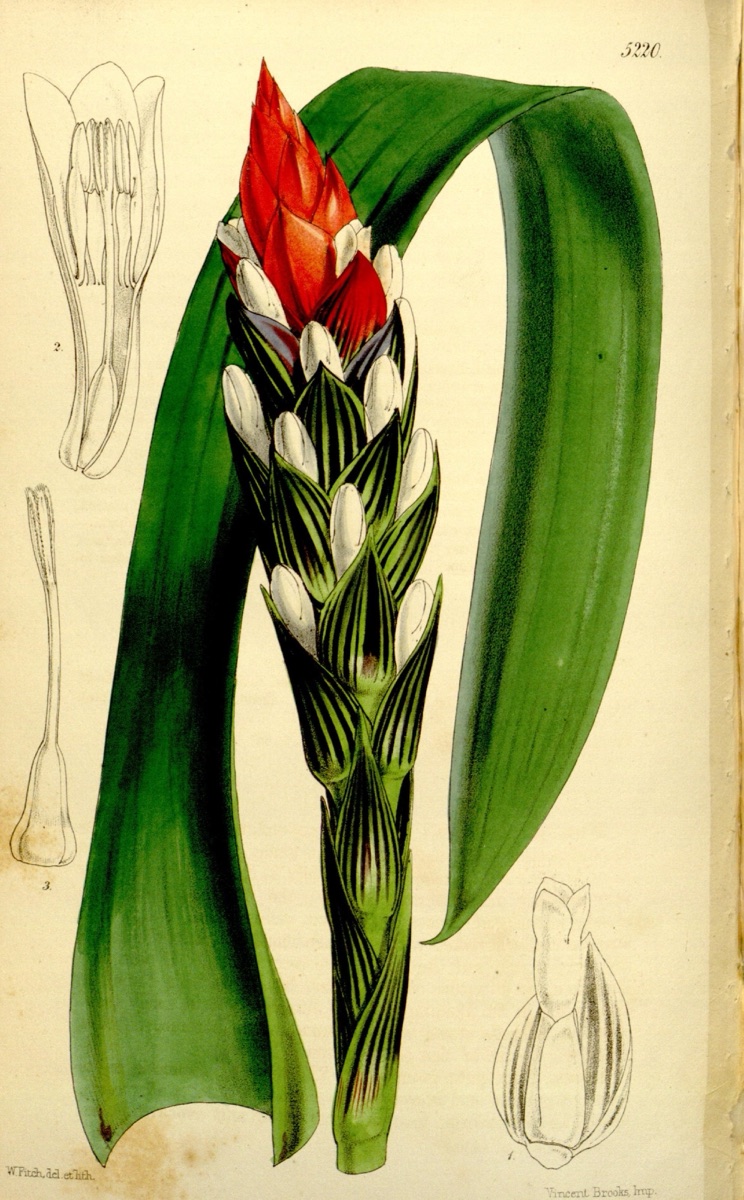
Guzmannia tricolor = Guzmania monostachia (L.) Rusby ex Mez
Curtis's Botanical Magazine · 5220 · 1860
Walter Hood Fitch · scan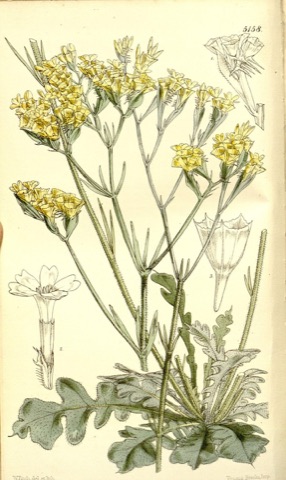
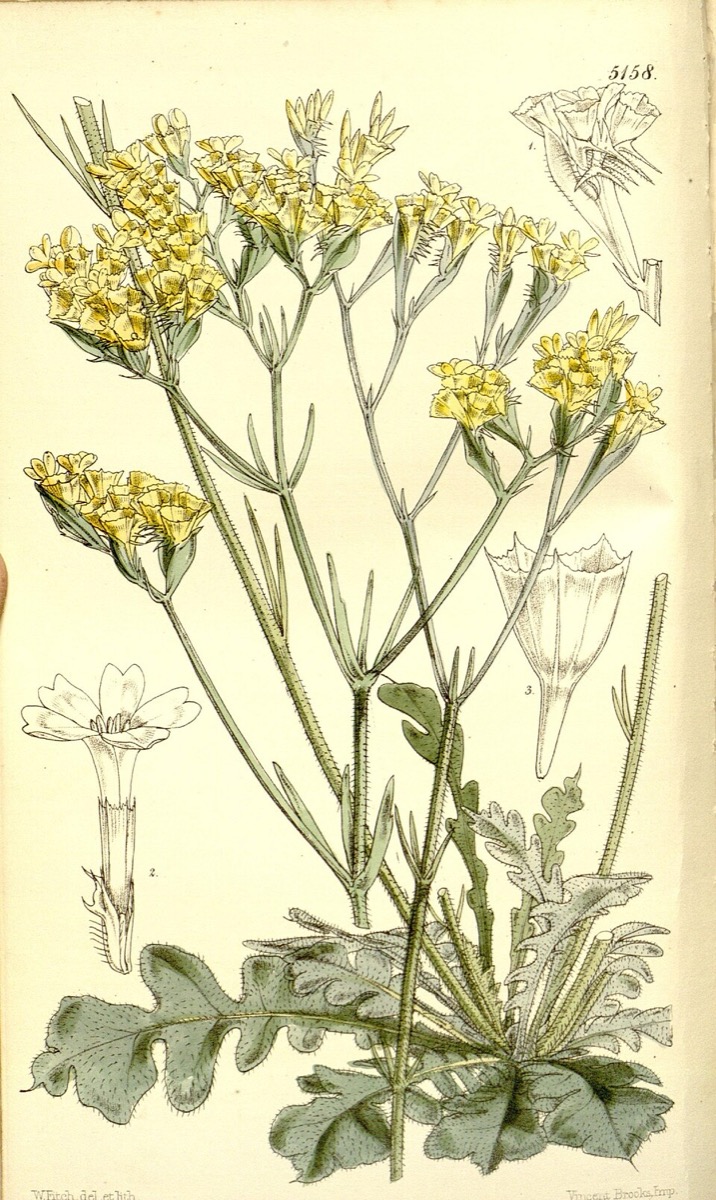
Statice bonduellei = Limonium bonduellei (T.Lestib.) Kuntze
Curtis's Botanical Magazine · 5158 · 1860
Walter Hood Fitch · scan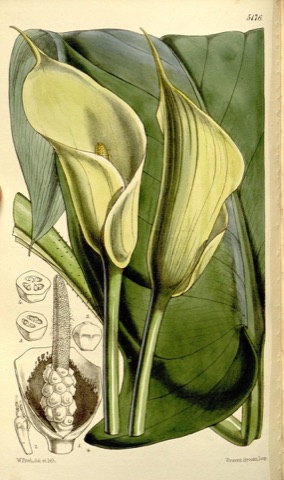
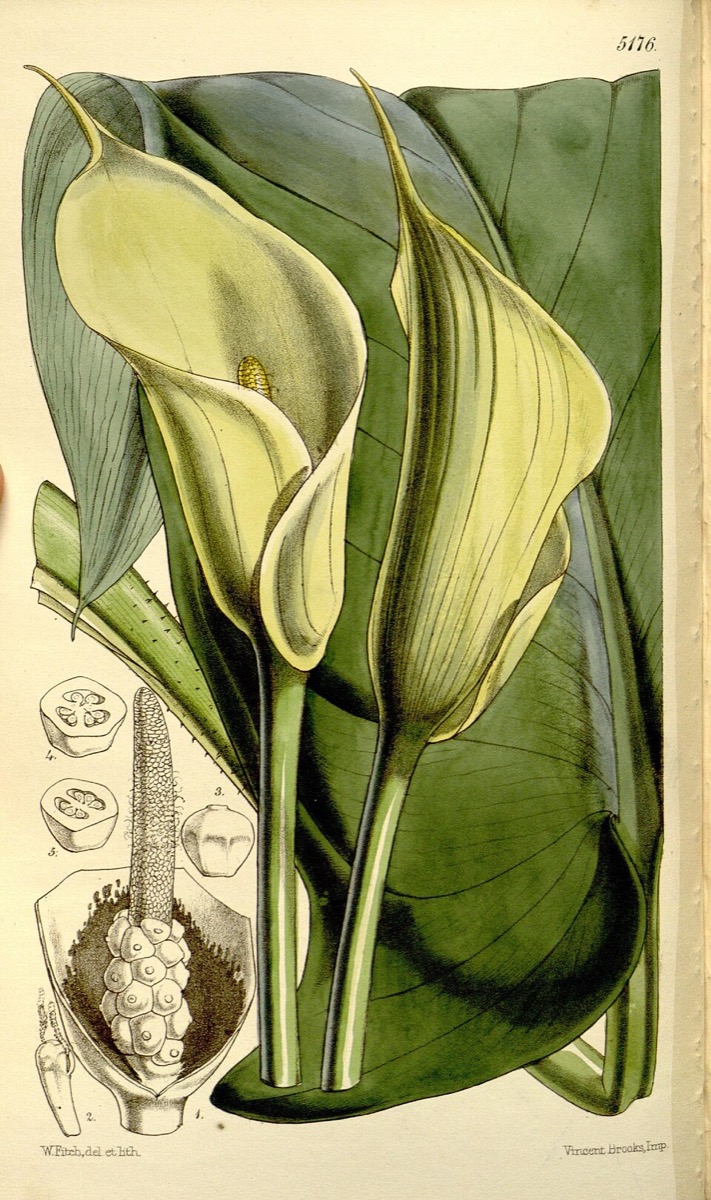
Richardia albomaculata = Zantedeschia albomaculata (Hook.) Baill.
Curtis's Botanical Magazine · 5176 · 1860
Walter Hood Fitch · scan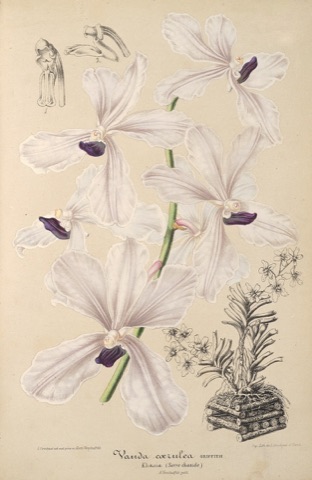
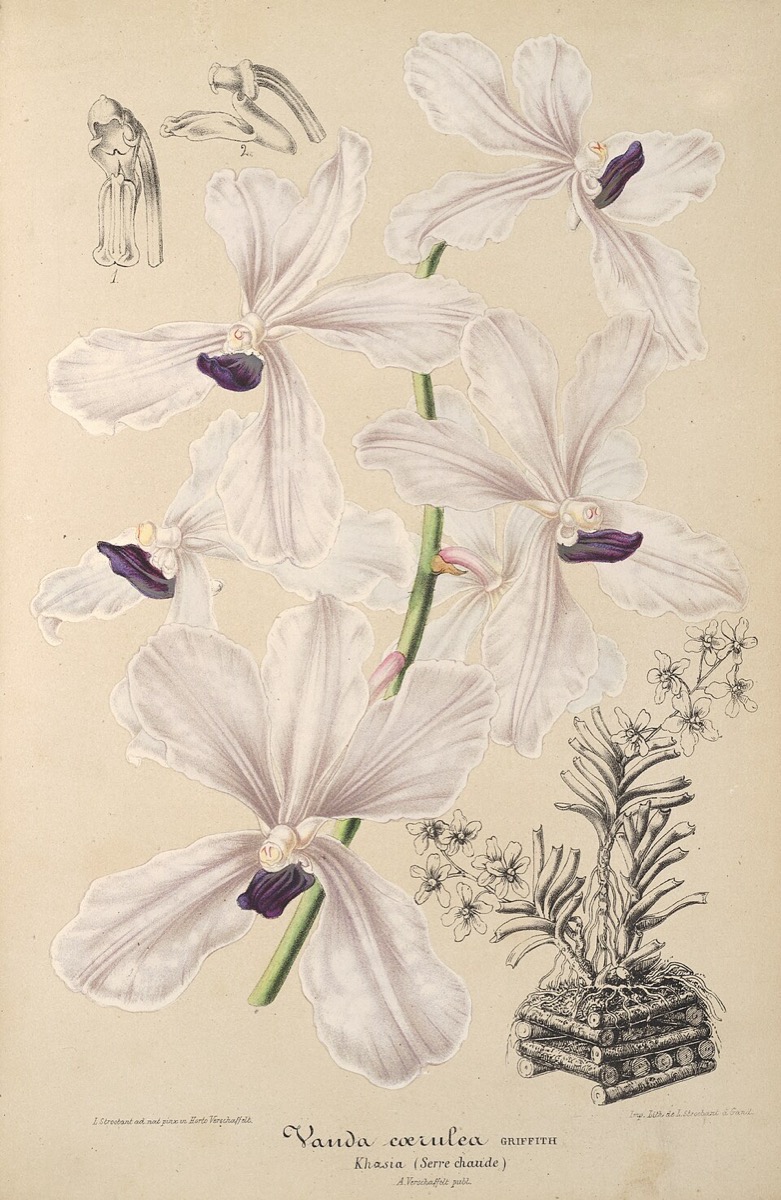
Vanda cœrulea
L'Illustration horticole · · 1860
L. Stroobant · scan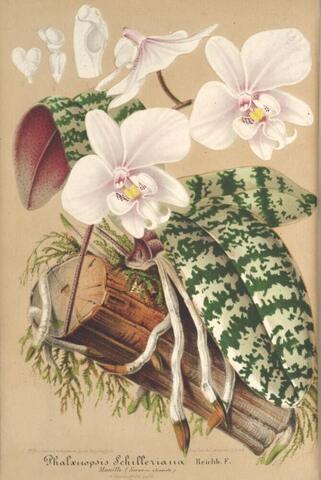
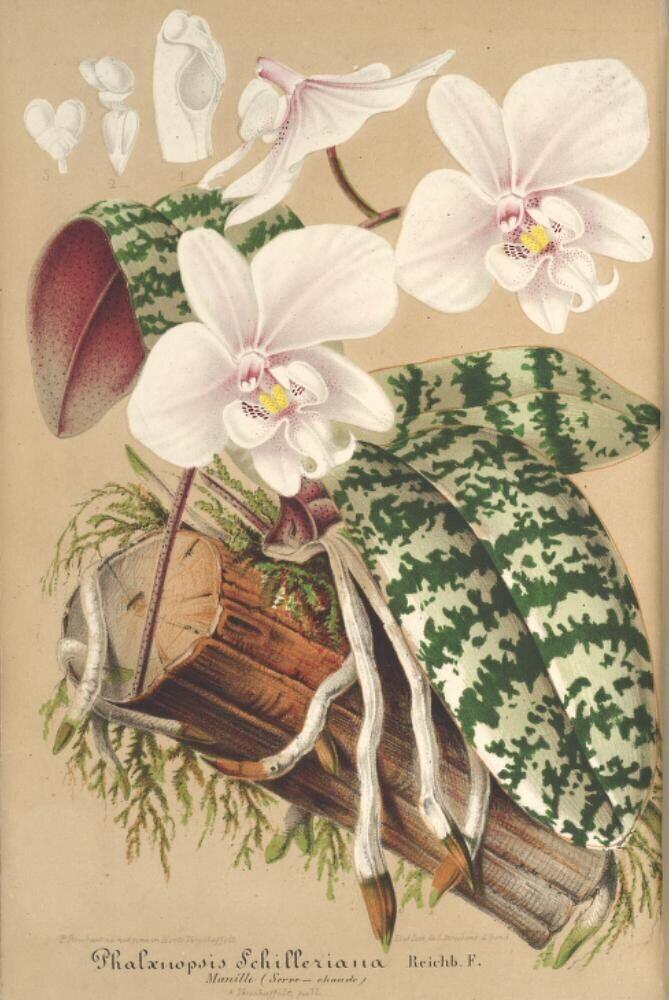
Phalaenopsis schilleriana Reichb. f.
L'Illustration horticole · 348 · 1863
P. Stroobant, L. Stroobant · scan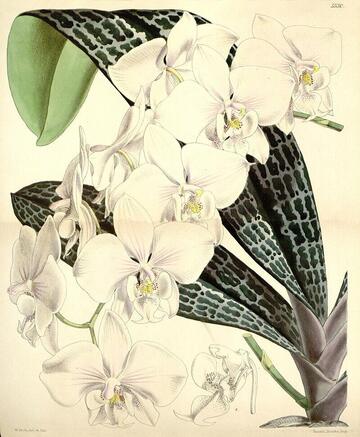
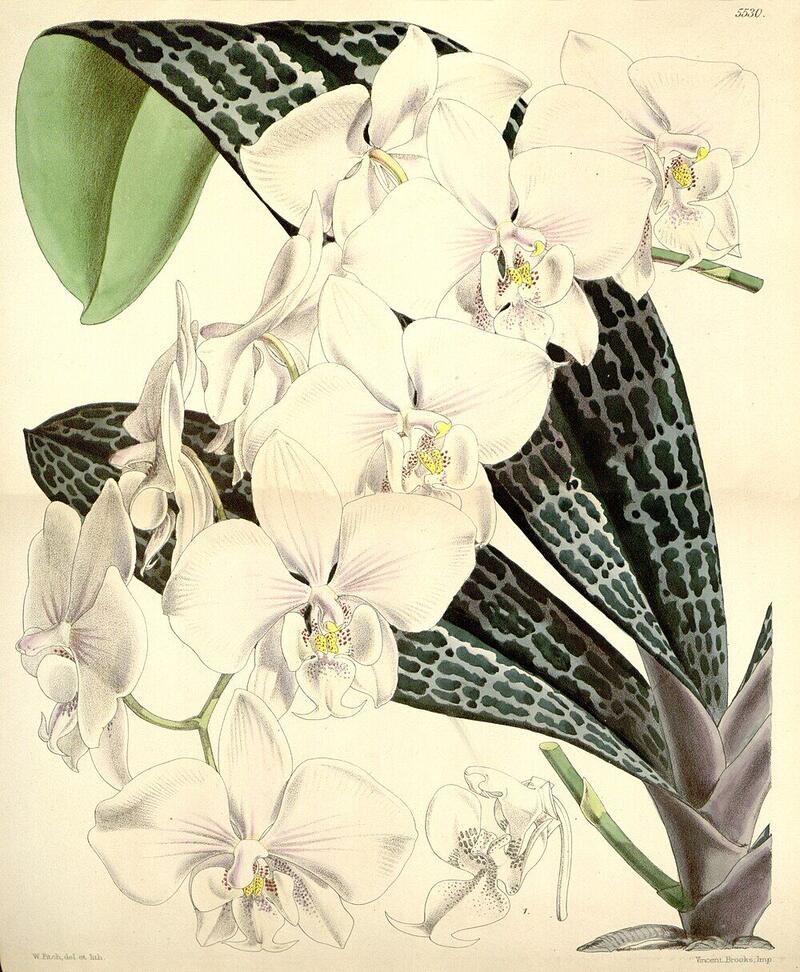
Phalaenopsis schilleriana
Curtis's Botanical Magazine · 5530 · 1865
Walter Hood Fitch · scan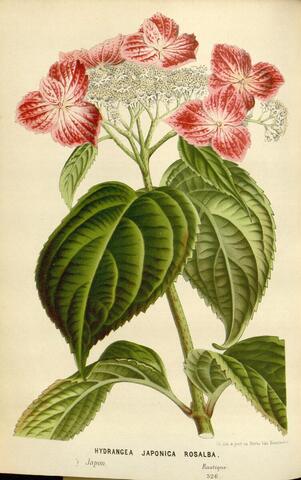
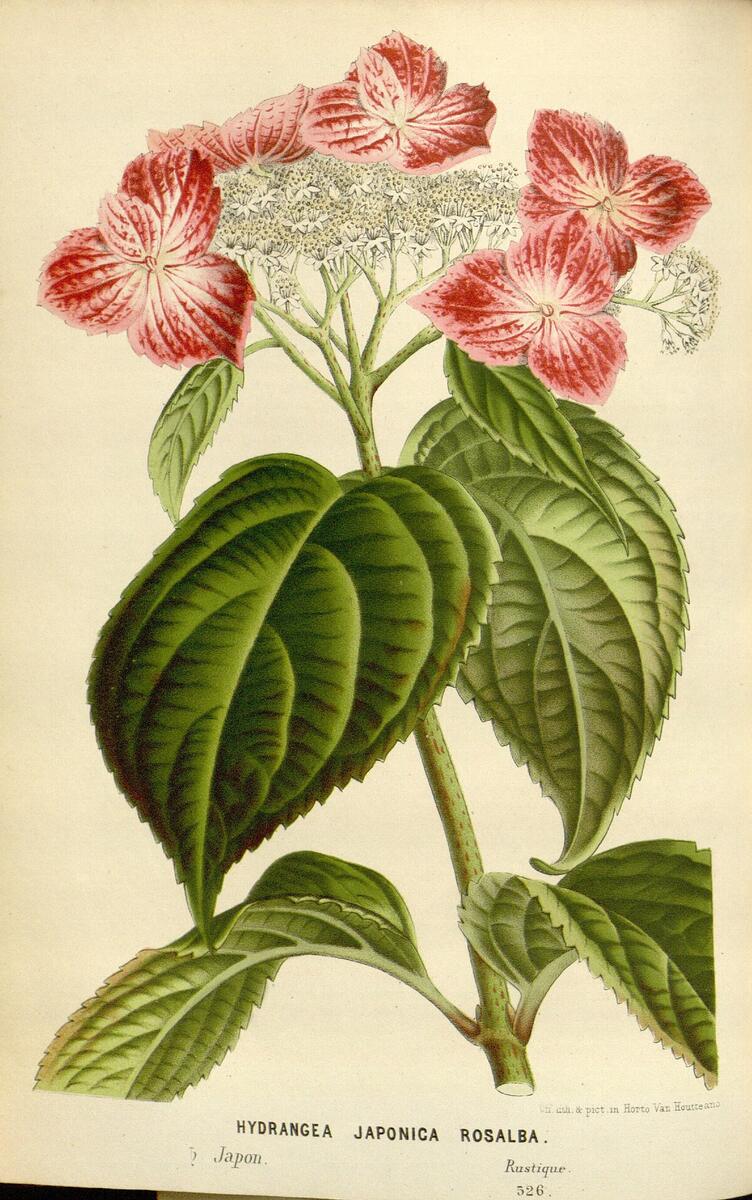
Hydrangea japonica Rosalba = Hydrangea serrata (Thunb.) Ser.
Flore des serres et des jardins de l'Europe · 526 (printed on plate) · 1865–1867
· scan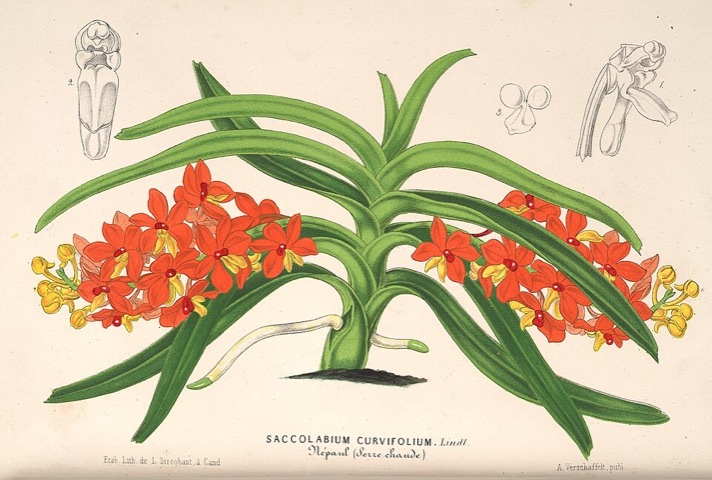
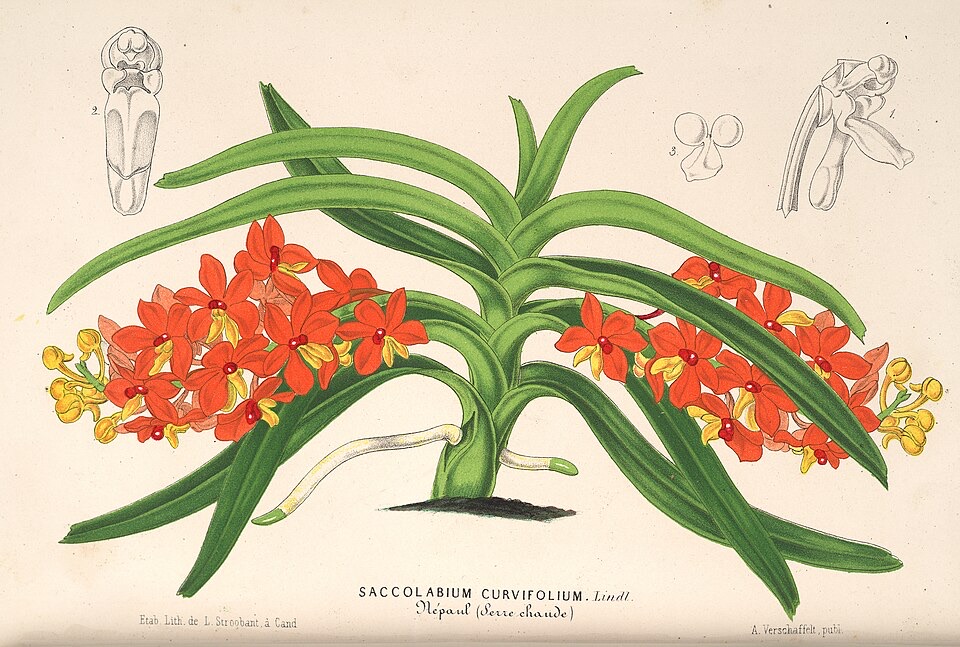
Saccolabium curvifolium = Vanda curvifolia (Lindl.) L.M.Gardiner
L'Illustration horticole · · 1866
L. Stroobant · scan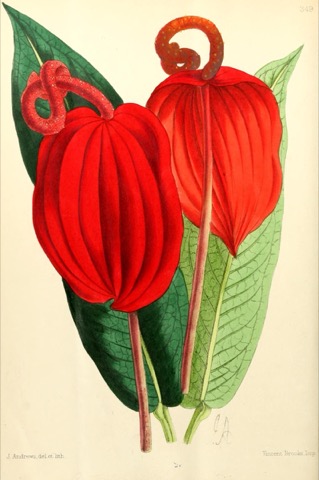
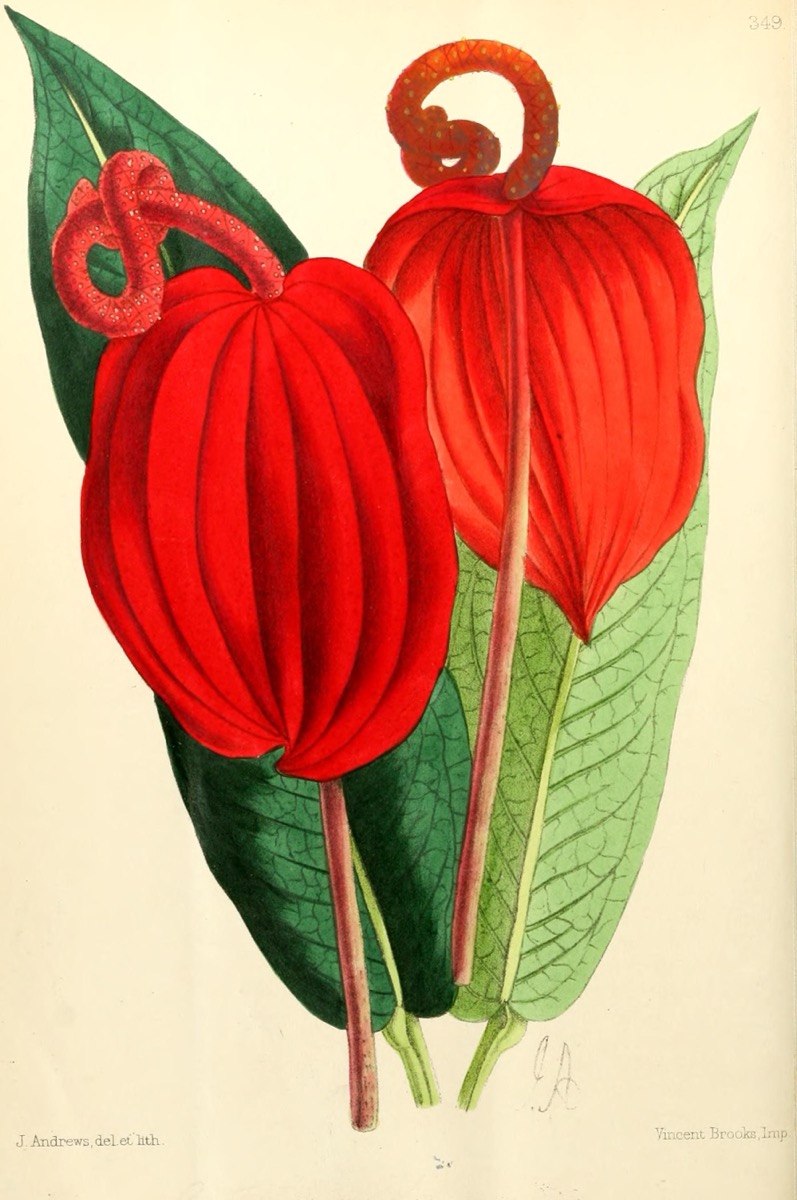
Anthurium Scherzerianum
The Floral Magazine · Plate 349 · 1867
James Andrews · scan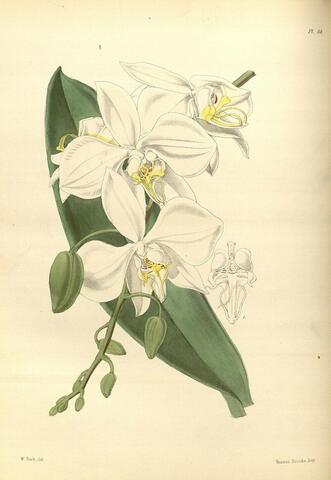
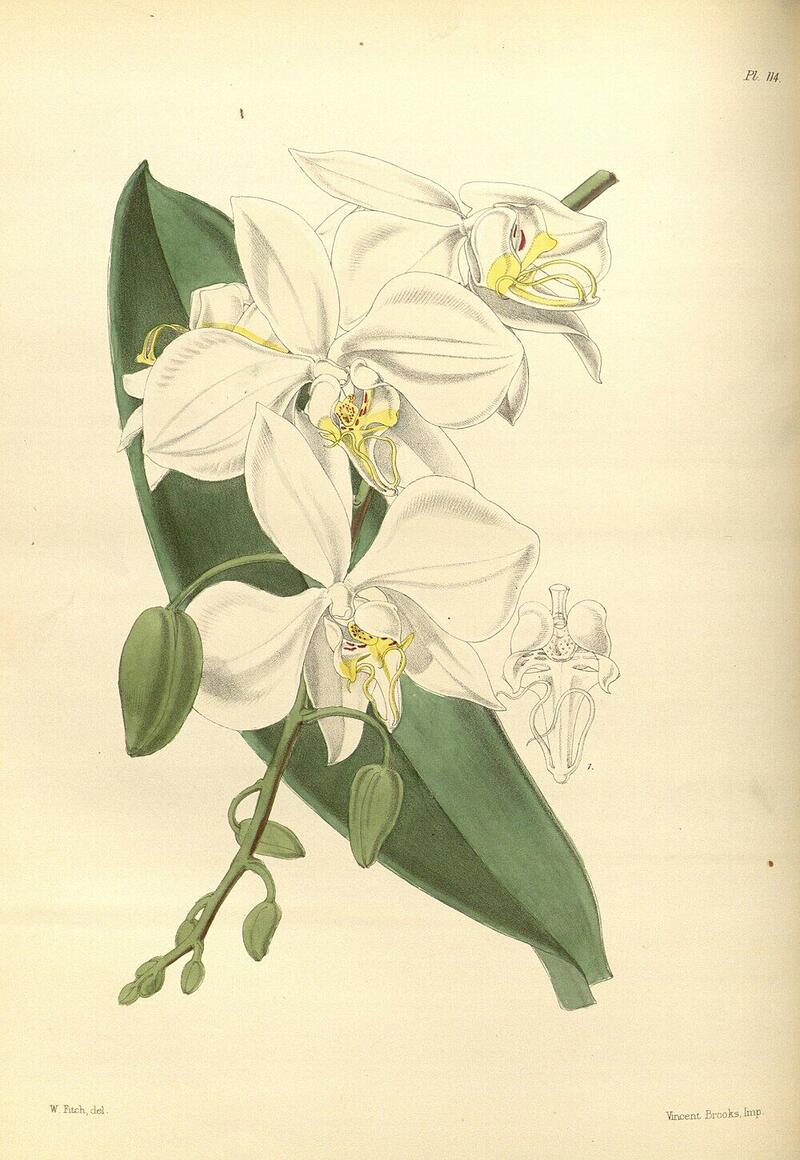
Phalaenopsis grandiflora (in text) = Phalaenopsis amabilis subsp. amabilis
A Second Century of Orchidaceous Plants · Pl. 114 · 1867
Walter Hood Fitch · scan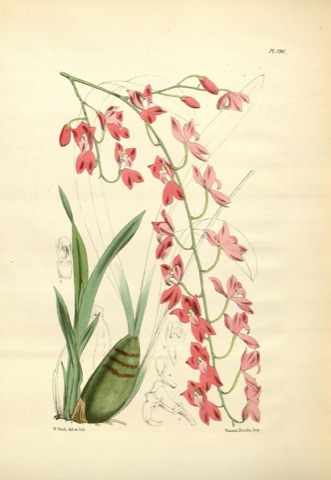
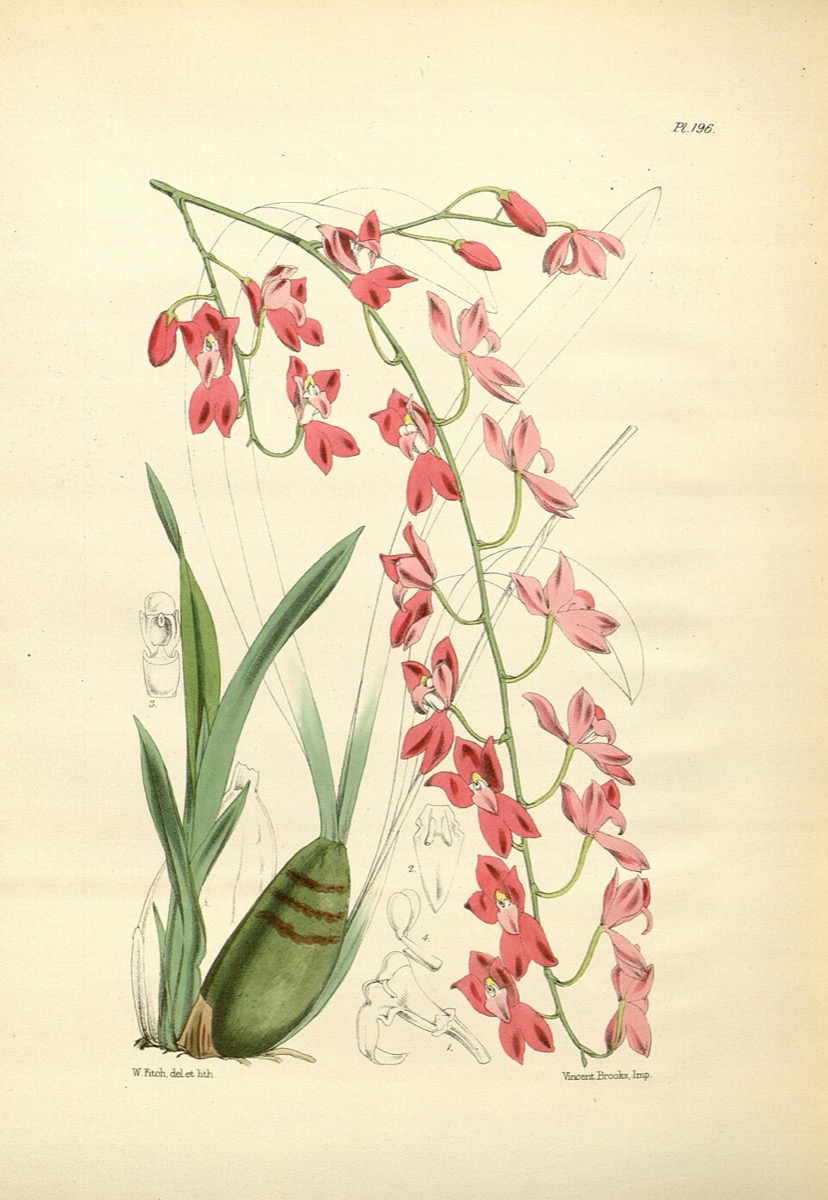
Oncidium strictum
A Second Century of Orchidaceous Plants · 196 · 1867
Walter Hood Fitch · scan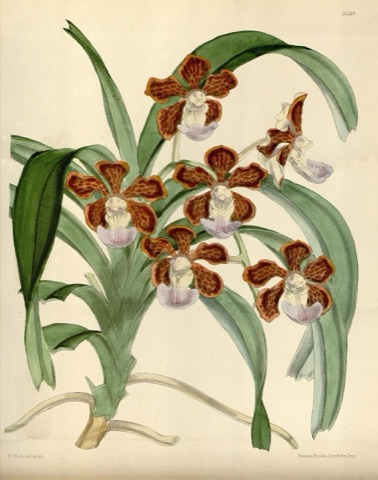
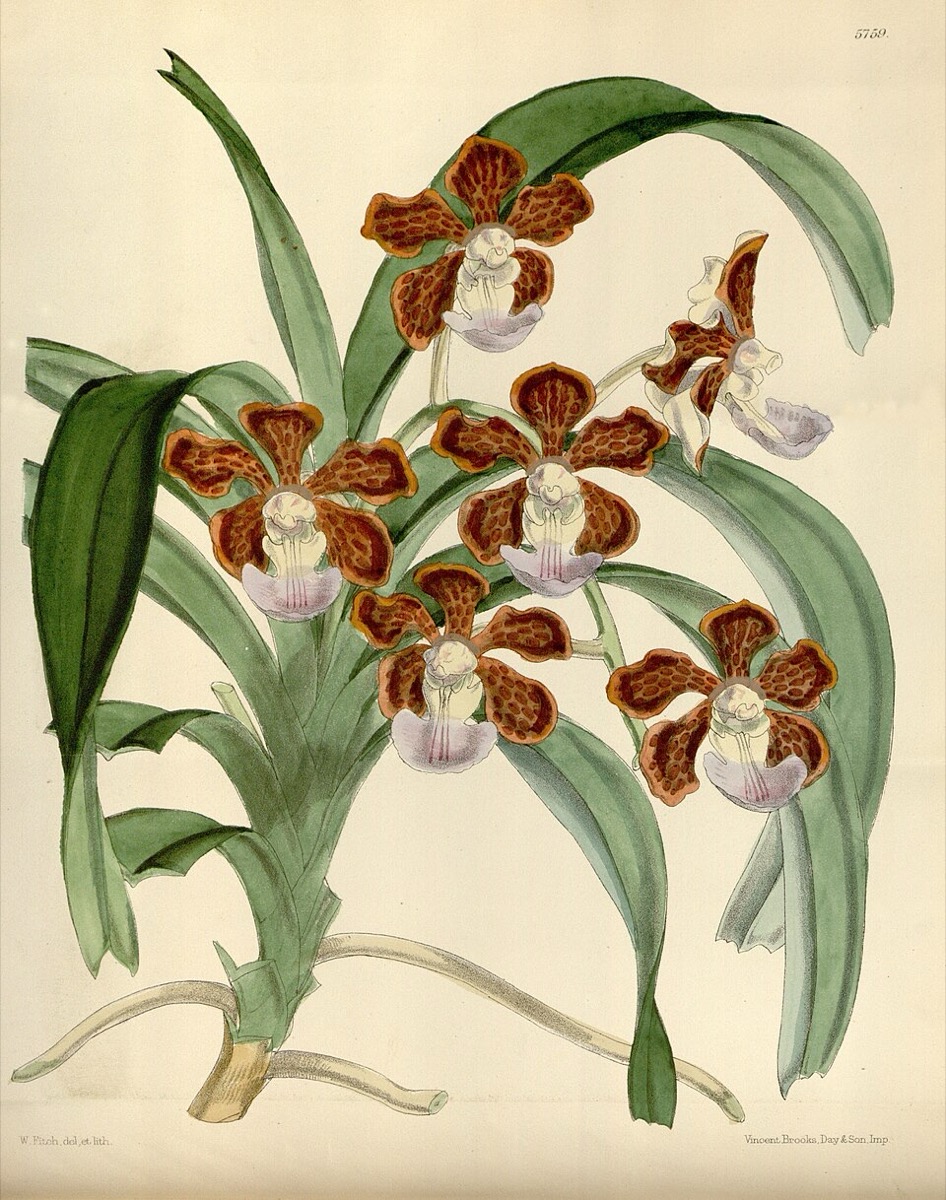
Vanda insignis
Curtis's Botanical Magazine · 5759 · 1869
Walter Hood Fitch · scan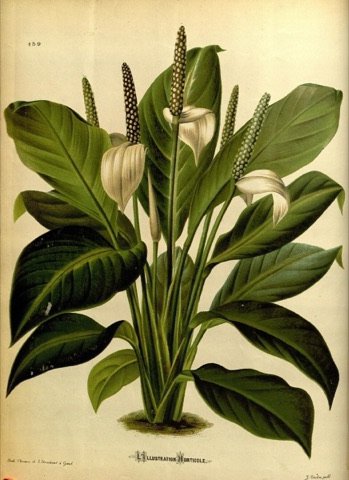
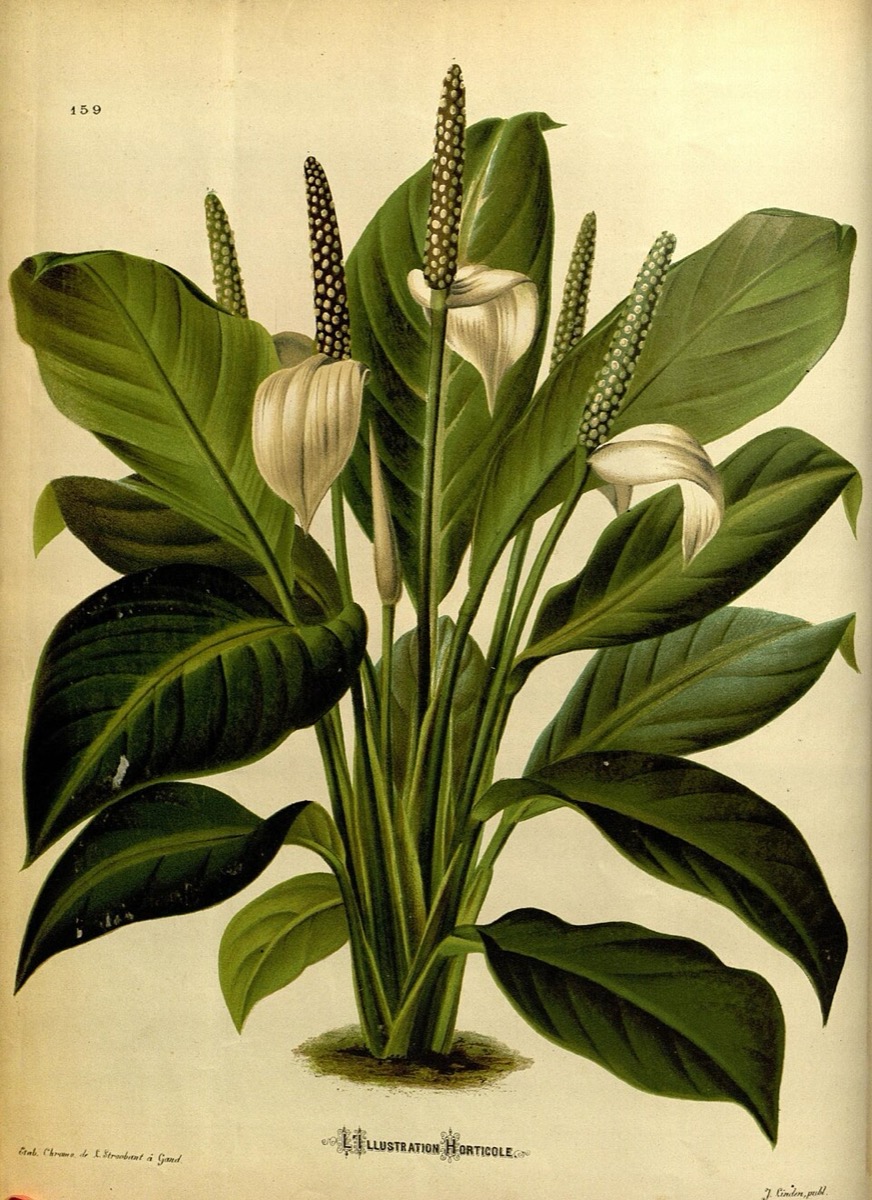
Spathiphyllum floribundum
L'Illustration horticole · 159 · 1874
L. Stroobant · scan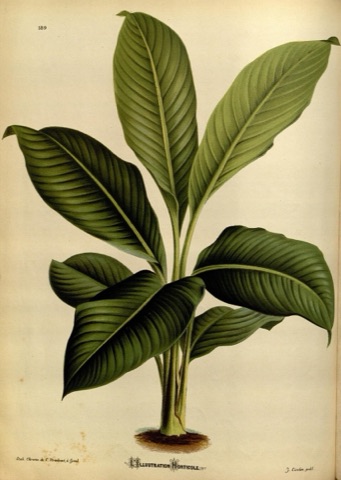
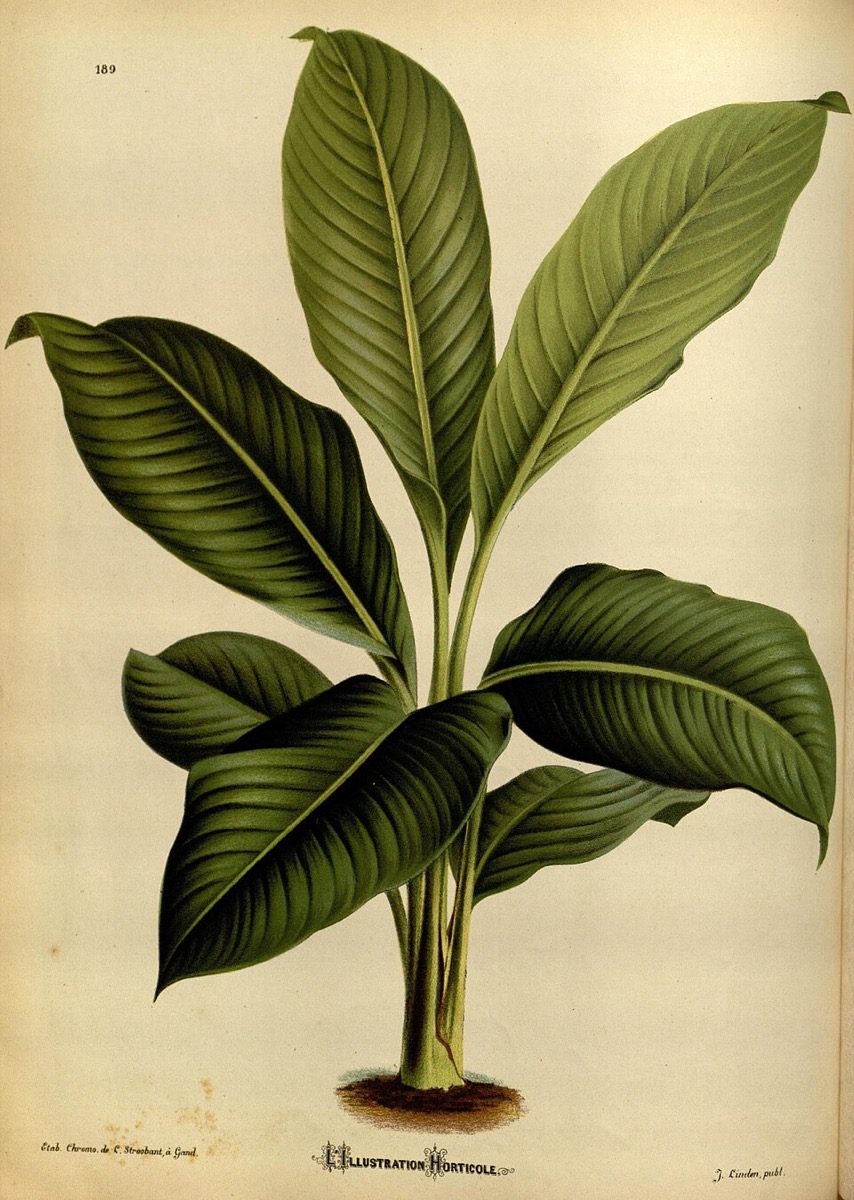
Spathiphyllum cochlearispathum
L'Illustration horticole · 189 · 1874
L. Stroobant · scan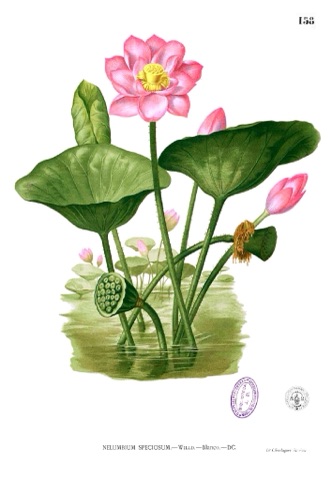
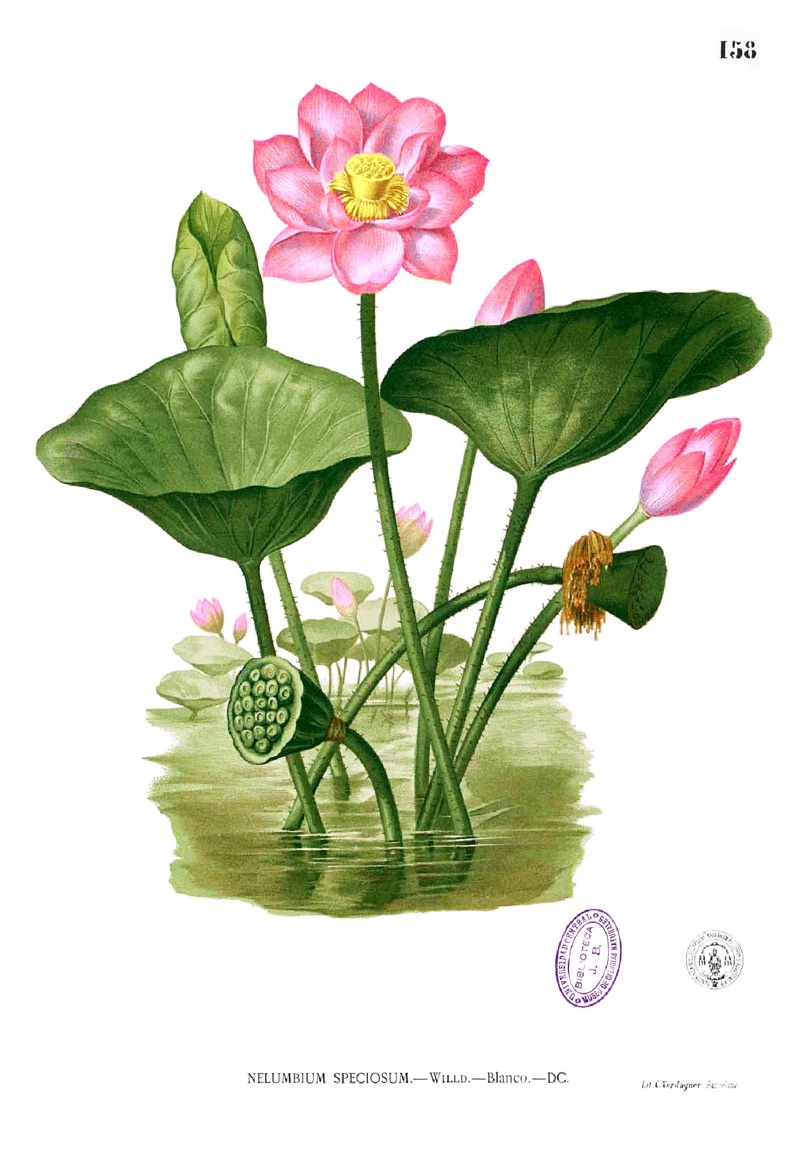
Nelumbium speciosum = Nelumbo nucifera Gaertn.
Flora de Filipinas, gran edición (Atlas) · 158 · 1880–1883
C. Verdaguer · scan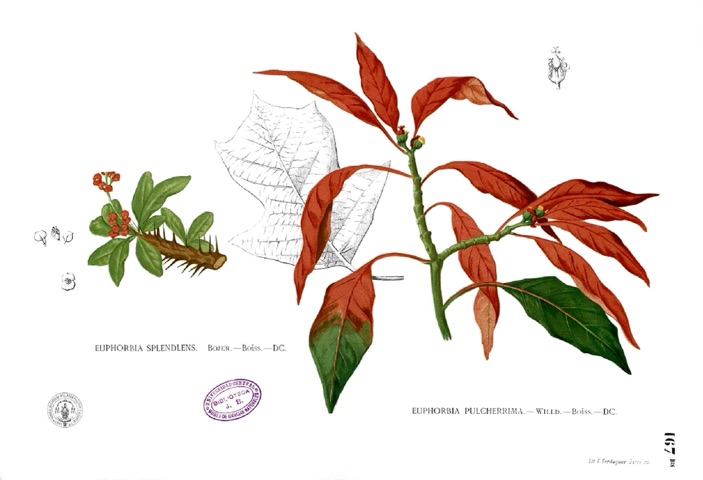
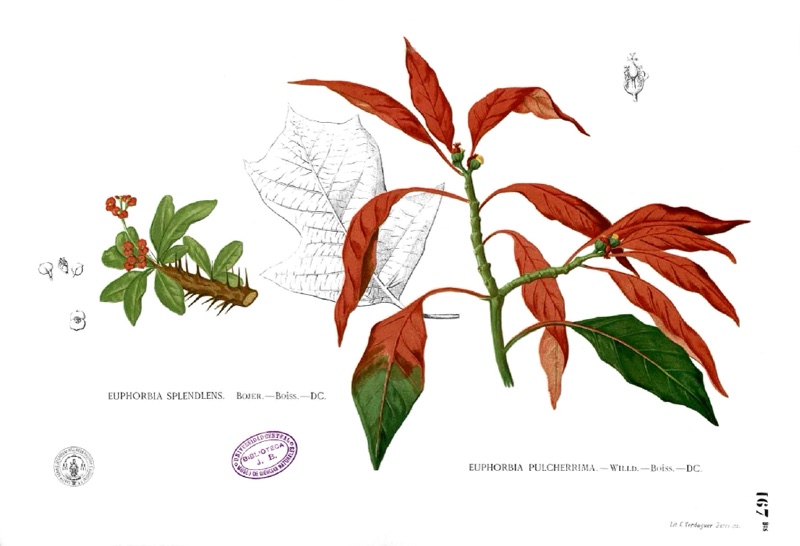
Euphorbia pulcherrima
Flora de Filipinas, gran edición (Atlas) · 167 bis · 1880–1883
Euphorbia splendlens = Euphorbia splendens Bojer ex Hook.
C. Verdaguer · scan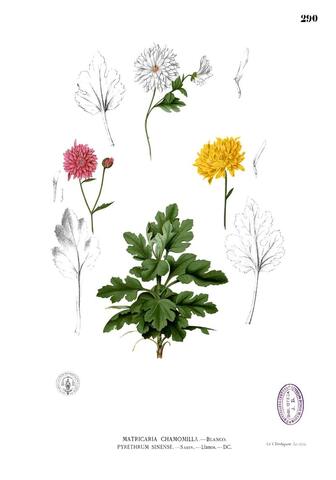
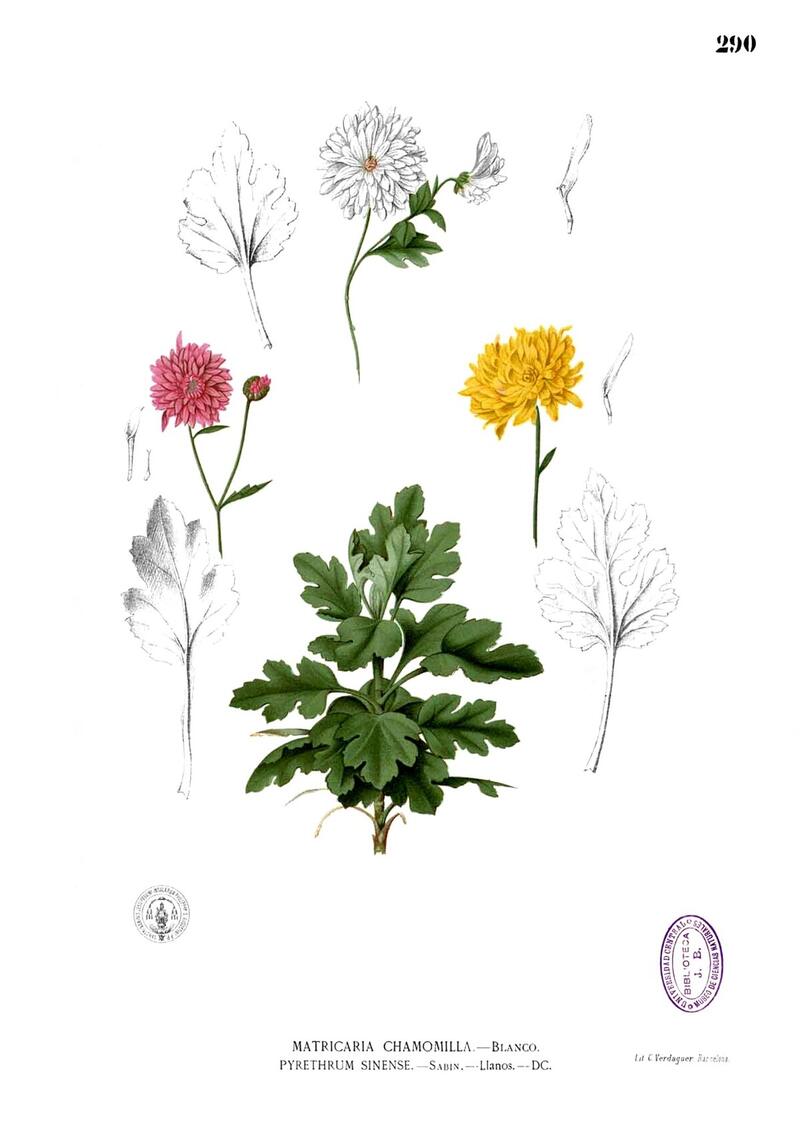
Pyrethrum sinense = Chrysanthemum × morifolium (Ramat.) Hemsl.
Flora de Filipinas, gran edición (Atlas) · 290 · 1880–1883
C. Verdaguer · scan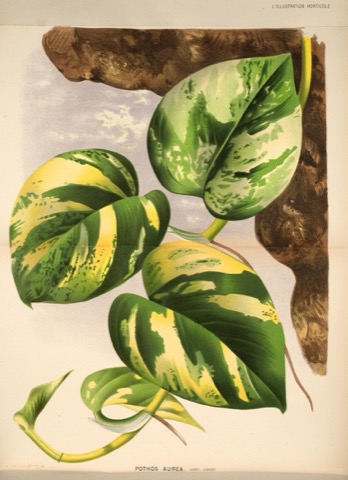
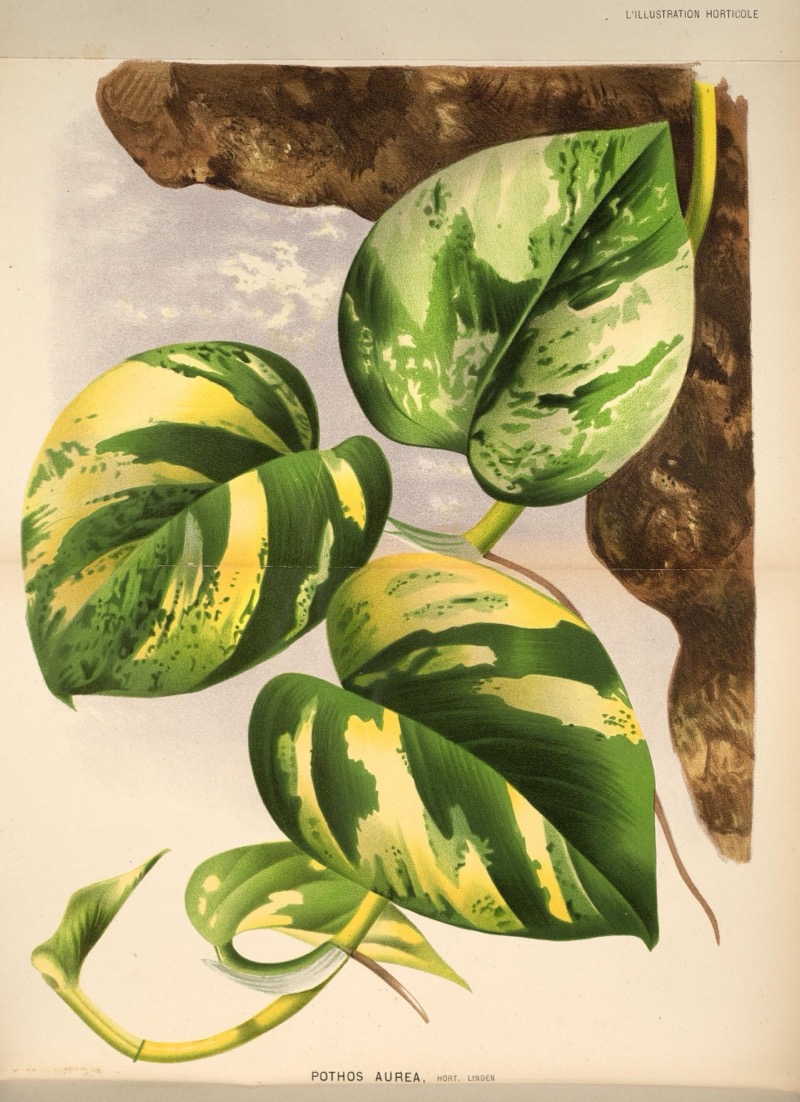
Pothos aurea, Hort. Linden = Epipremnum aureum (Linden & André) G.S.Bunting
L'Illustration horticole · Pl. CCCLXXXI · 1880
· scan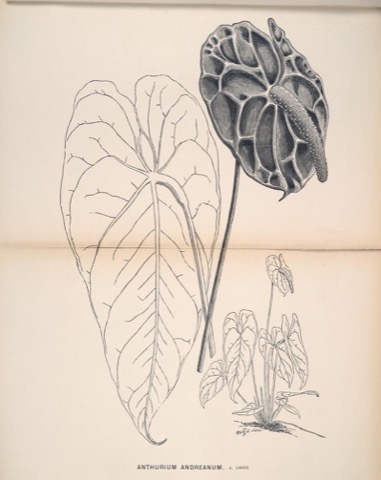
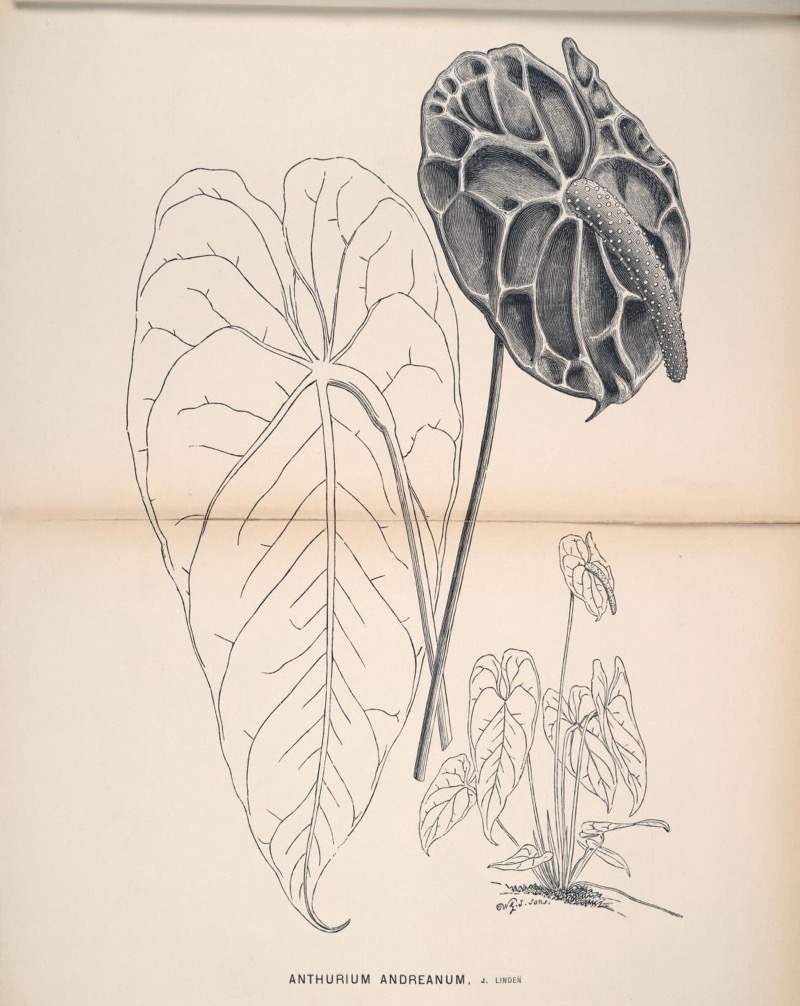
Anthurium Andreanum, J. Linden = Anthurium andraeanum Linden ex André
L'Illustration horticole · Pl. CCCLXXXII · 1880
· scan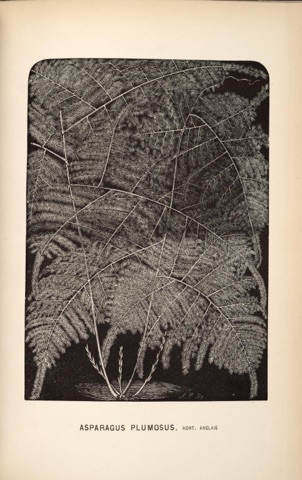
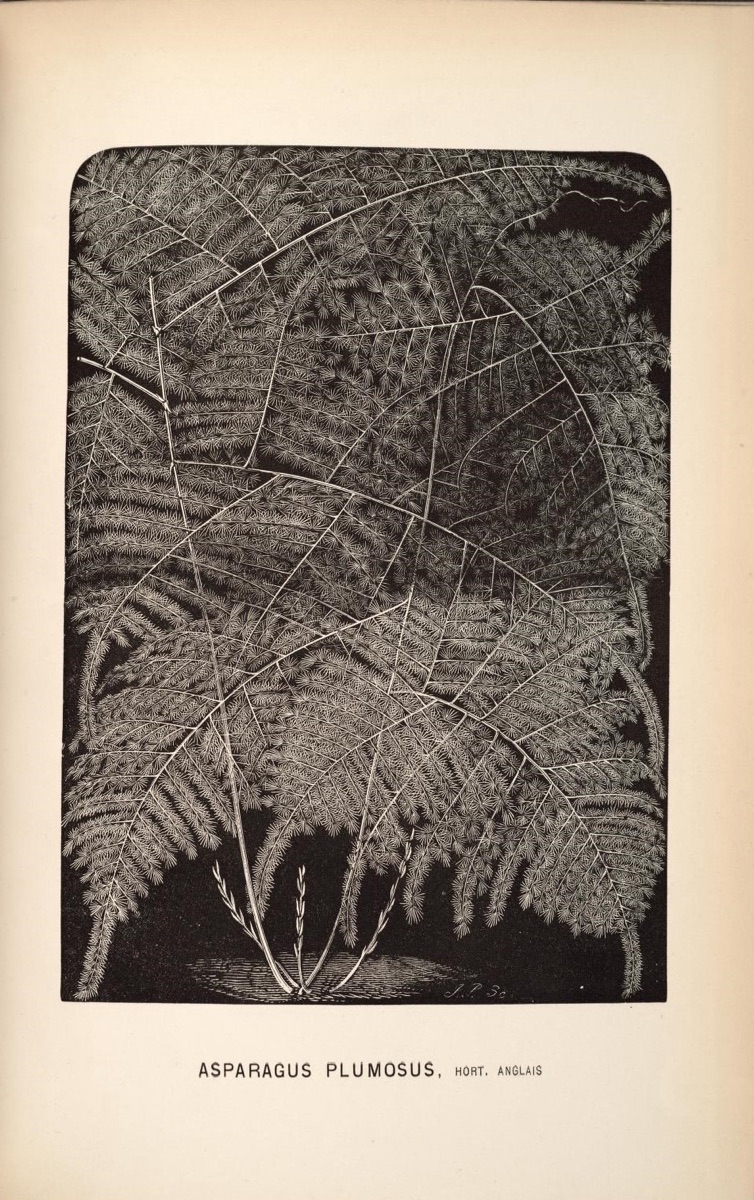
Asparagus plumosus = Asparagus setaceus (Kunth) Jessop
L'Illustration horticole · 394 · 1880
· scan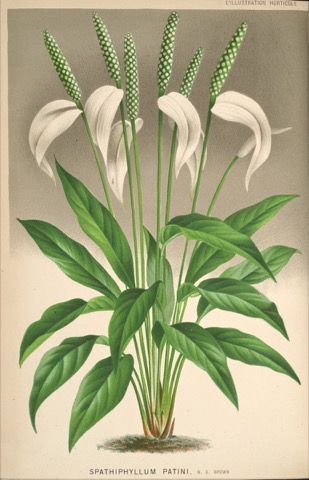
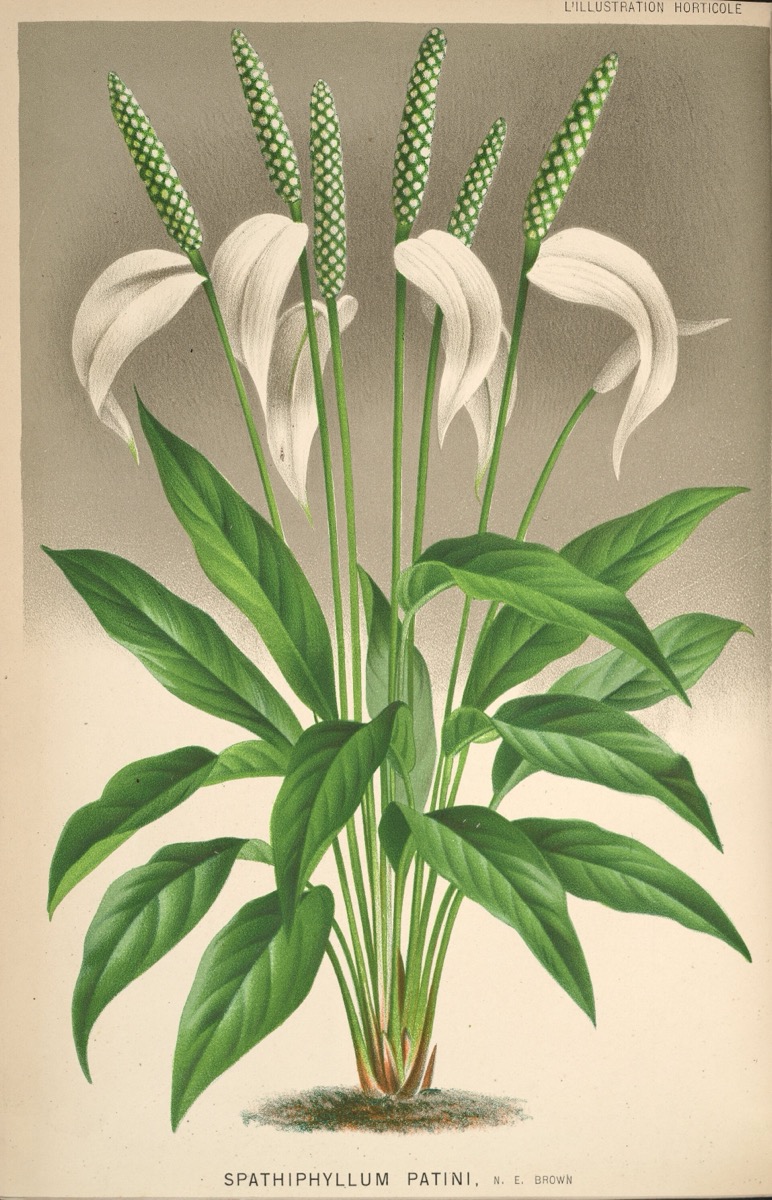
Spathiphyllum Patini, N. E. Brown
L'Illustration horticole · Pl. CCCXCVII · 1880
· scan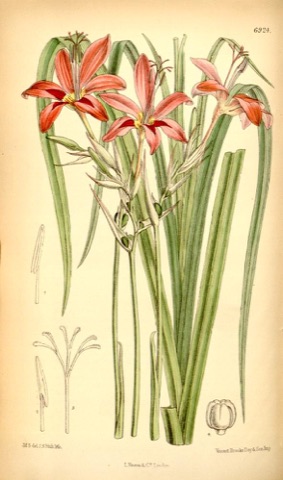
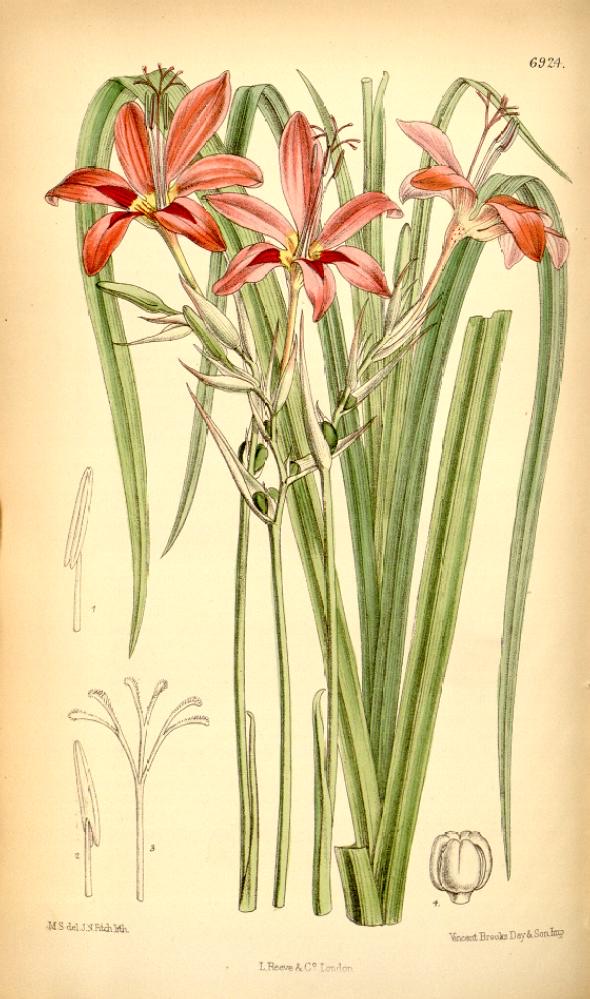
Lapeirousia grandiflora = Freesia grandiflora (Baker) Klatt
Curtis's Botanical Magazine · 6924 · 1887
Matilda Smith, John Nugent Fitch · scan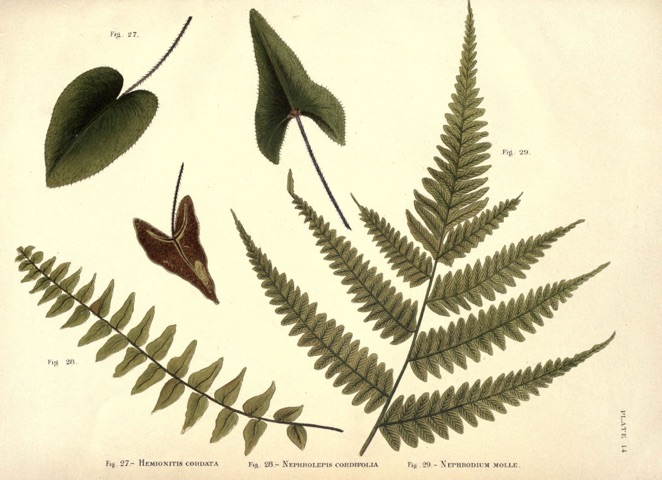
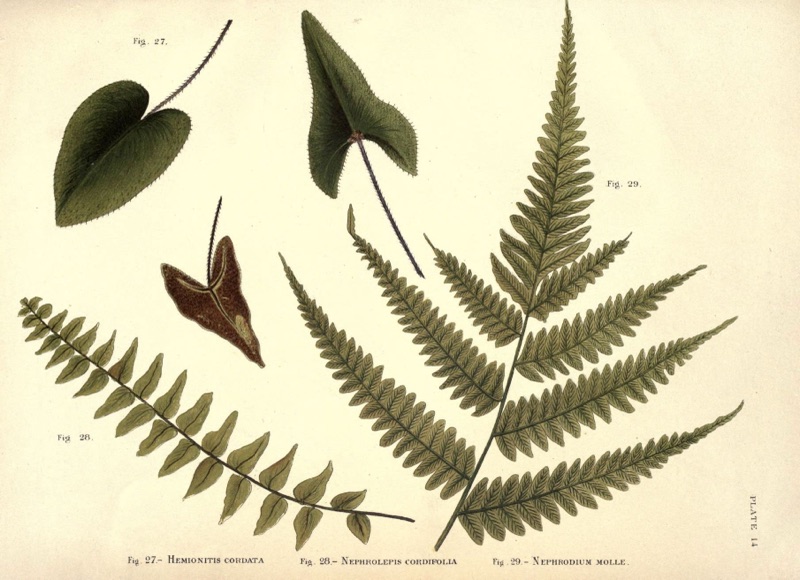
Nephrolepis cordifolia
Album of Indian Ferns · Plate 14 · 1887
· scan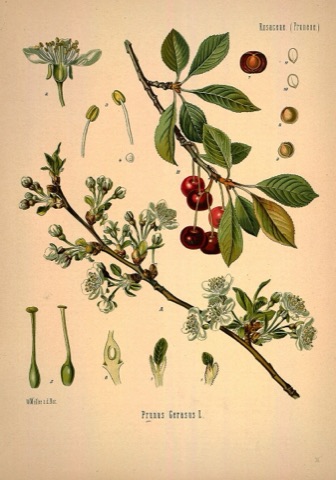
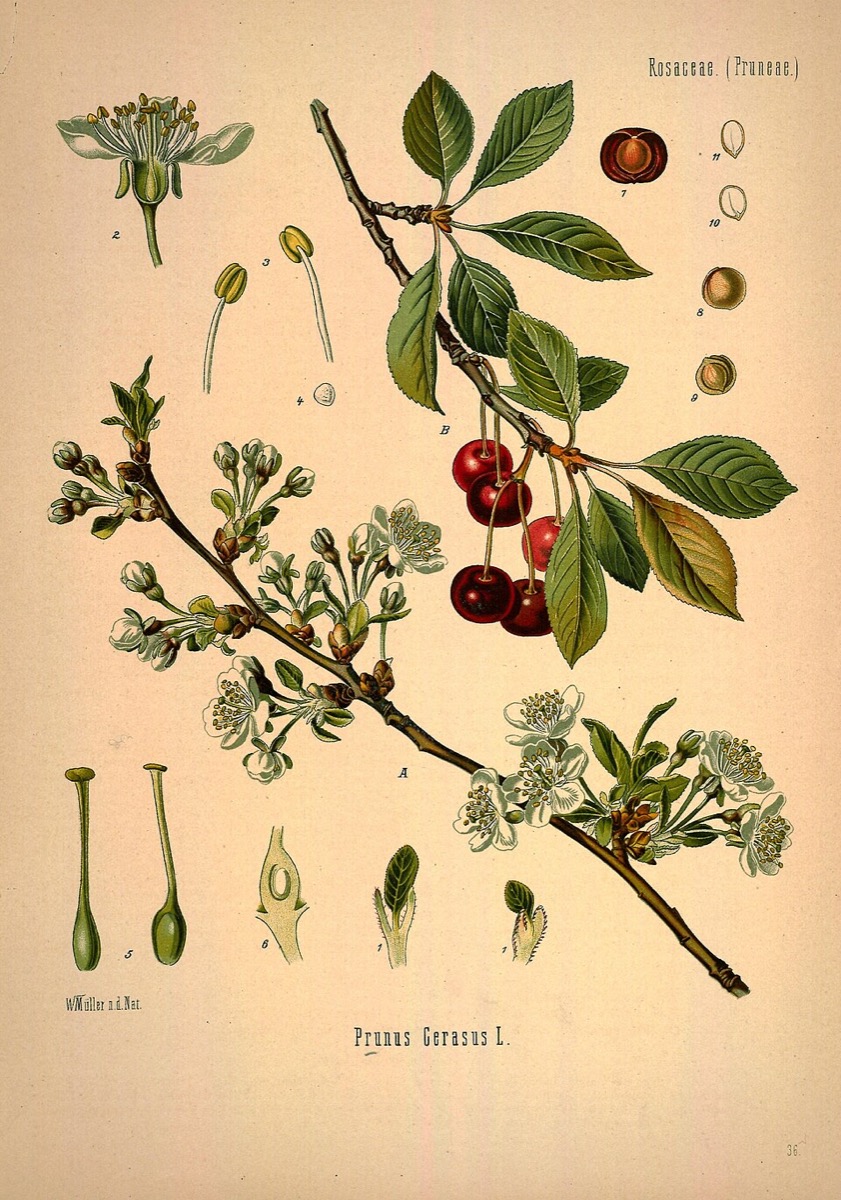
Prunus Cerasus
Köhler's Medizinal-Pflanzen · 36 · 1887
· scan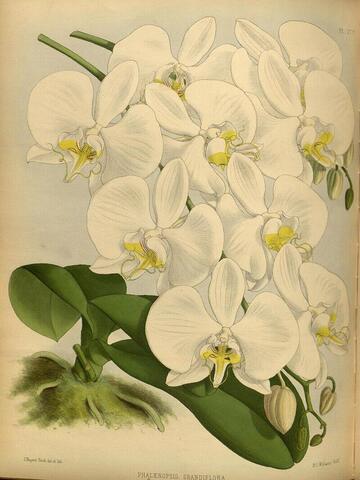
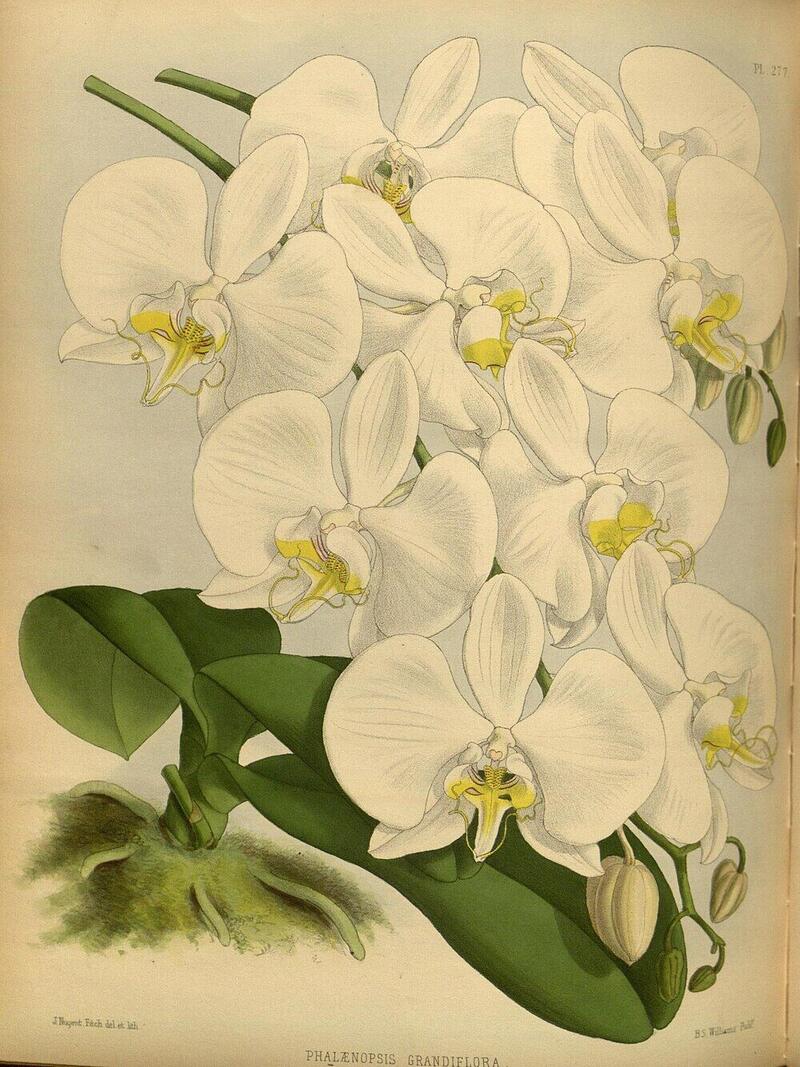
Phalaenopsis grandiflora = Phalaenopsis amabilis subsp. amabilis
The Orchid Album · Pl. 277 · 1887
John Nugent Fitch · scan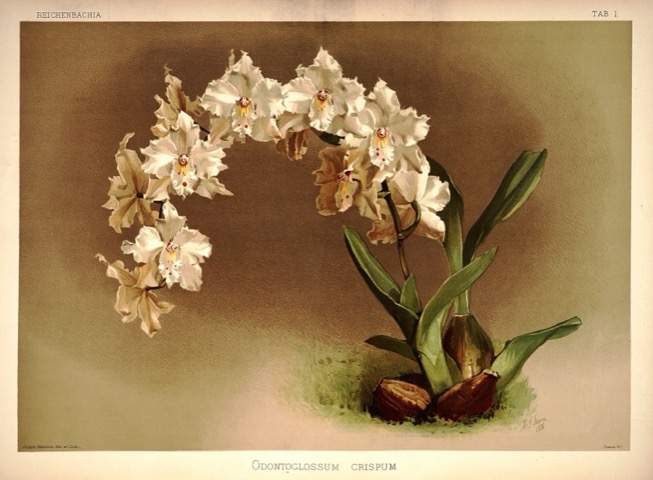
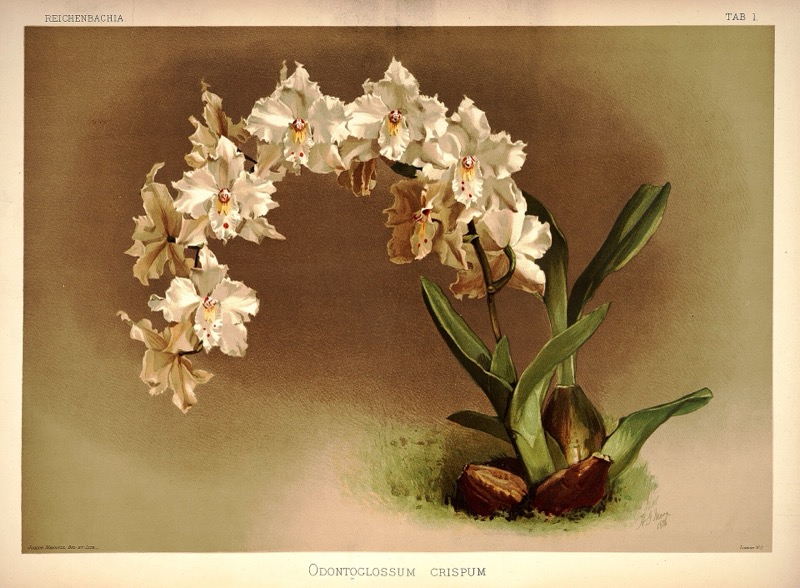
Odontoglossum crispum = Oncidium alexandrae (Bateman) M.W.Chase & N.H.Williams
Reichenbachia: Orchids Illustrated and Described · Tab. 1 · 1888
Henry George Moon, Joseph Mansell · scan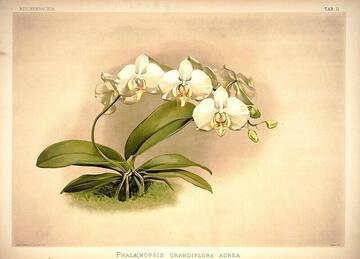
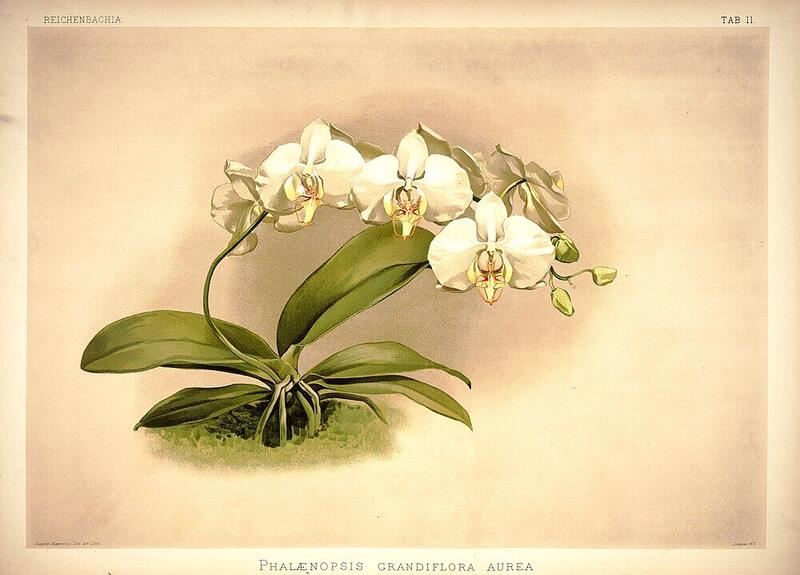
Phalaenopsis grandiflora aurea = Phalaenopsis amabilis subsp. amabilis
Reichenbachia: Orchids Illustrated and Described · Tab. 11 · 1888
Henry George Moon, Joseph Mansell · scan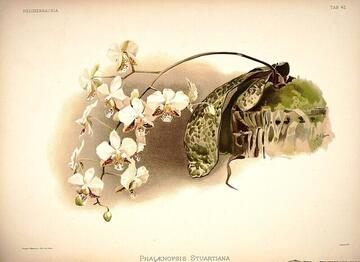
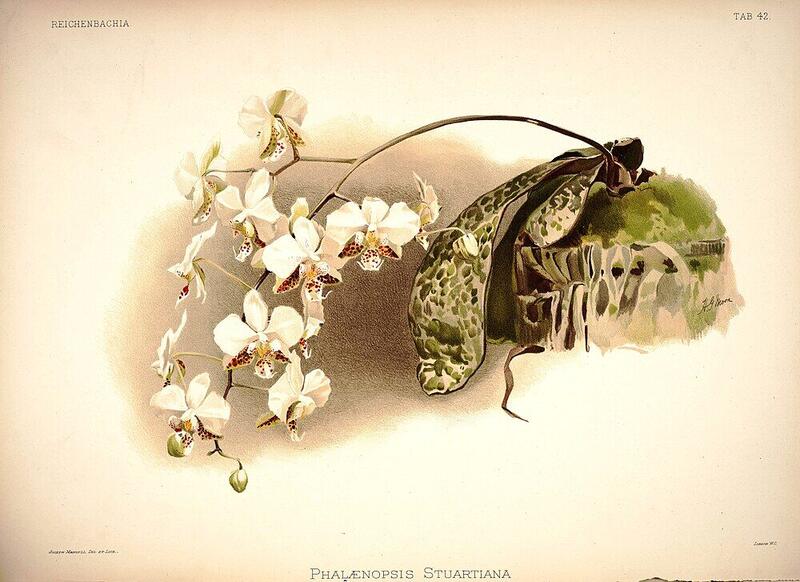
Phalaenopsis Stuartiana
Reichenbachia: Orchids Illustrated and Described · Tab. 42 · 1888
Henry George Moon, Joseph Mansell · scan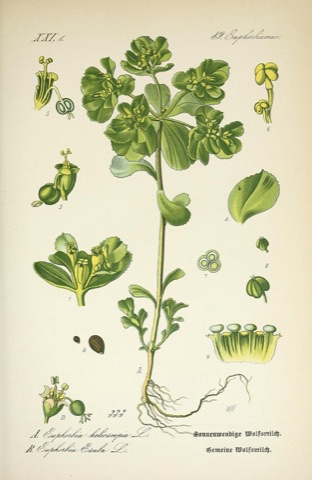
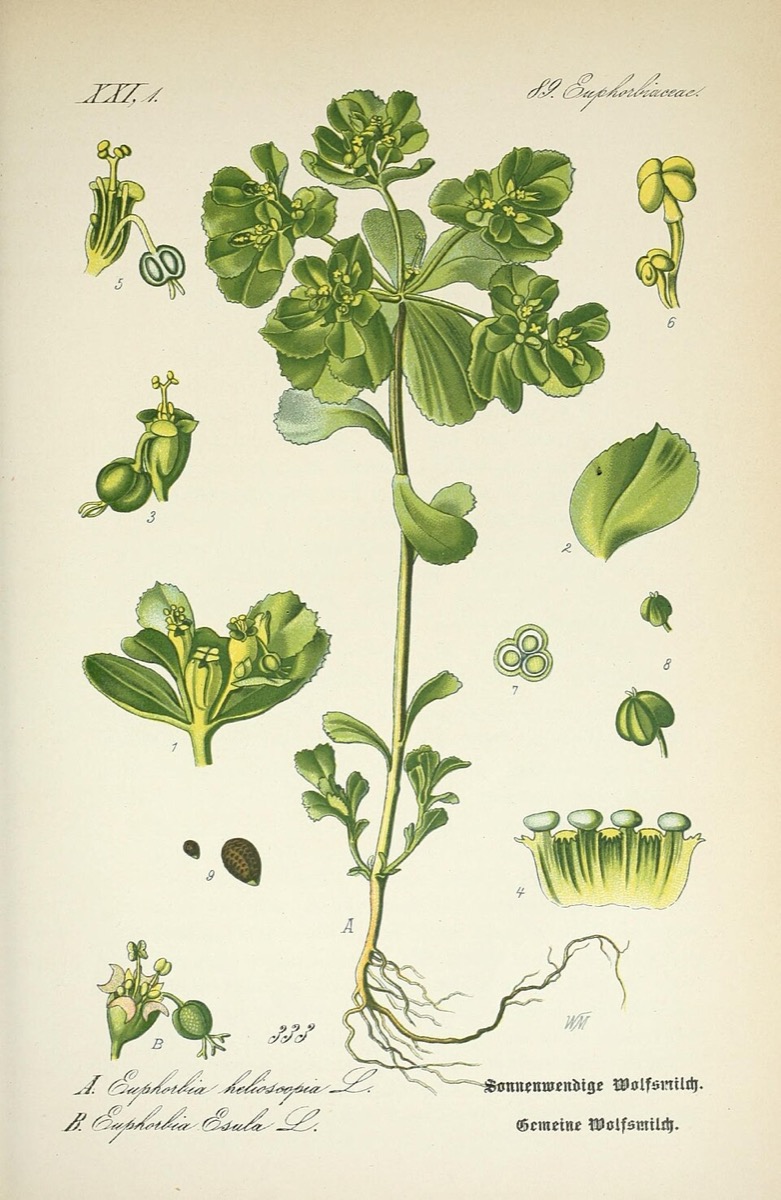
Euphorbia helioscopia
Flora von Deutschland, Österreich und der Schweiz · 333 · 1888
Euphorbia esula
Walther Müller · scan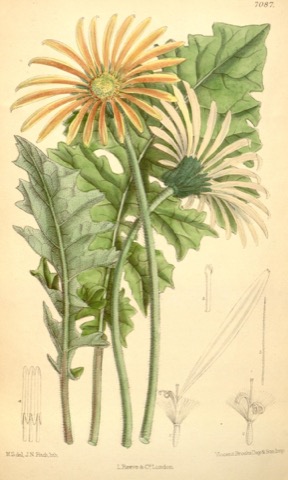
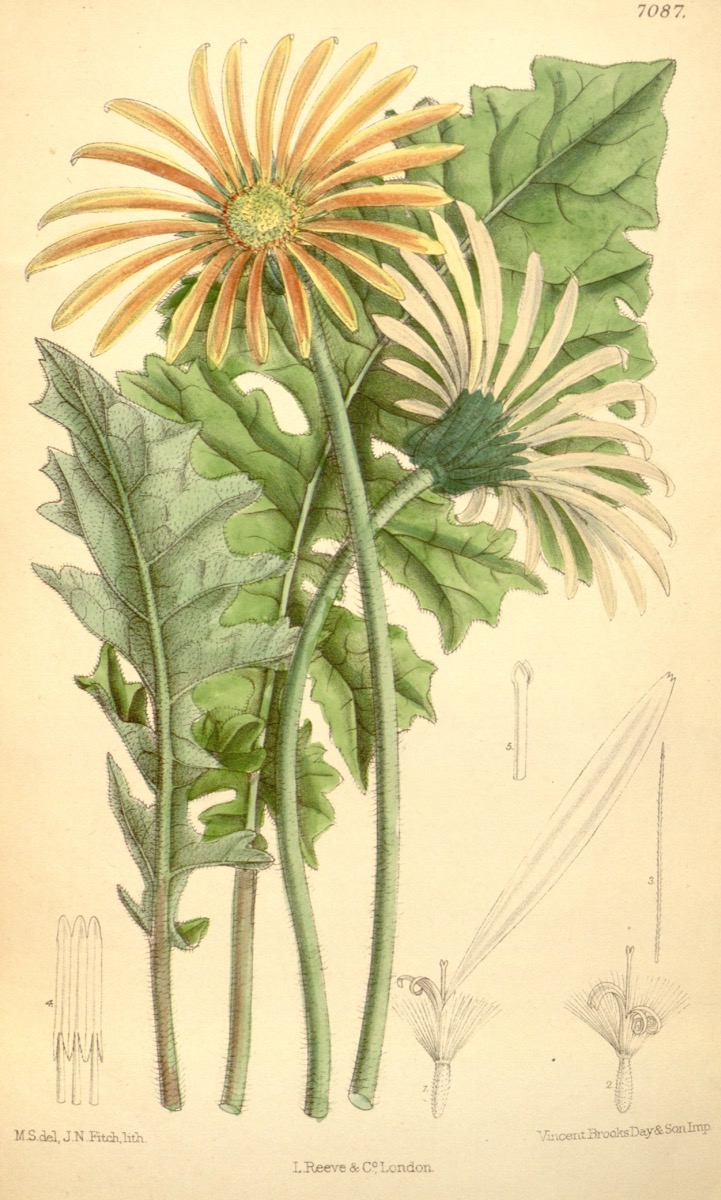
Gerbera Jamesoni = Gerbera jamesonii Adlam
Curtis's Botanical Magazine · 7087 · 1889
Matilda Smith, John Nugent Fitch · scan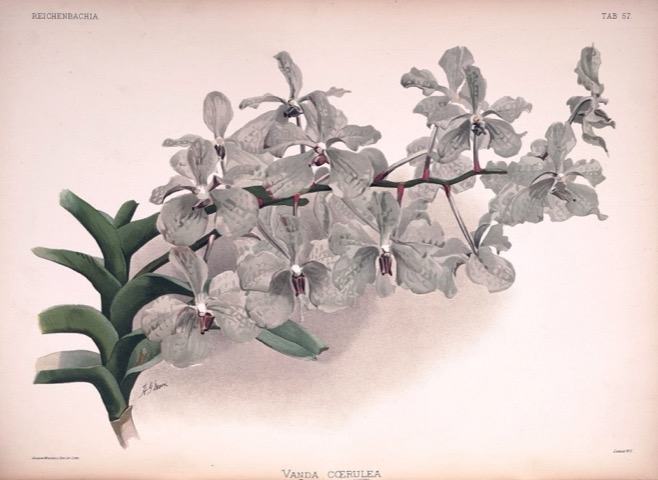
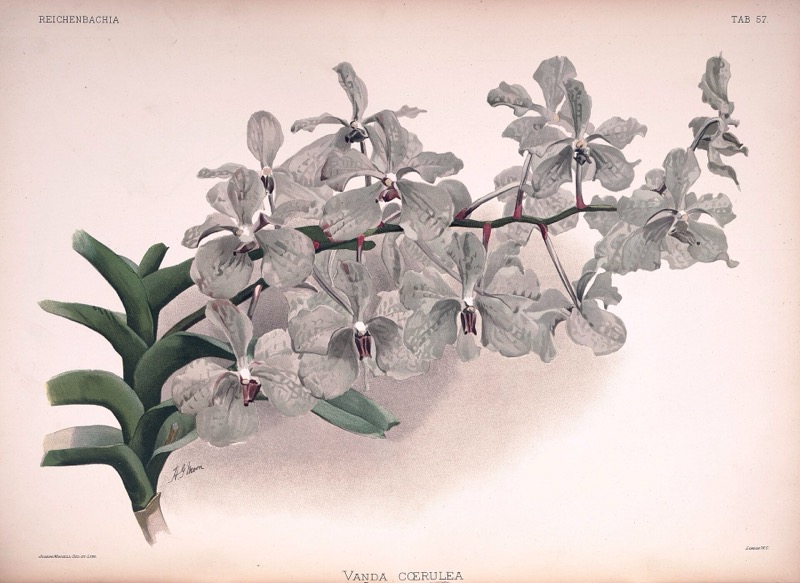
Vanda cœrulea
Reichenbachia: Orchids Illustrated and Described · Tab. 57 · 1890
Henry George Moon, Joseph Mansell · scan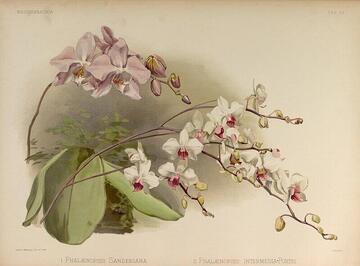
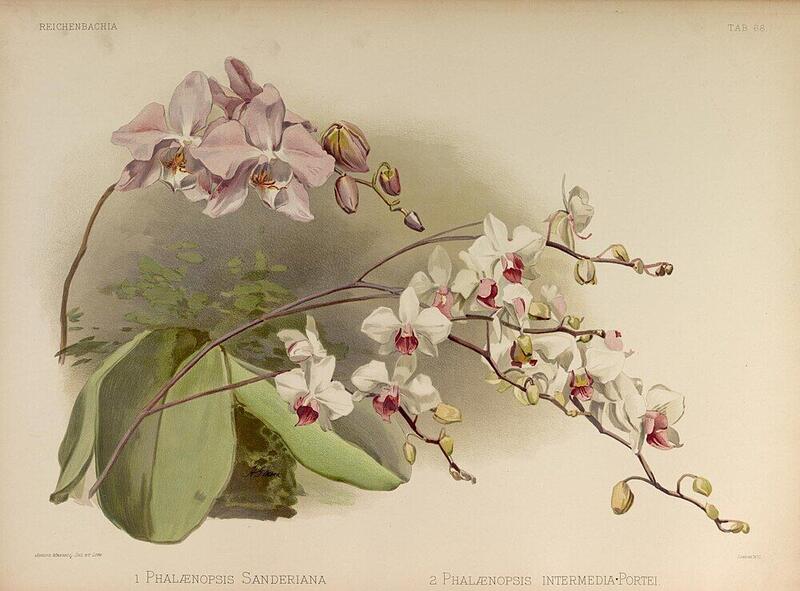
Phalaenopsis Sanderiana
Reichenbachia: Orchids Illustrated and Described · Tab. 68 · 1892–1894
Phalaenopsis intermedia Portei = Phalaenopsis × intermedia Lindl.
Henry George Moon, Joseph Mansell · scan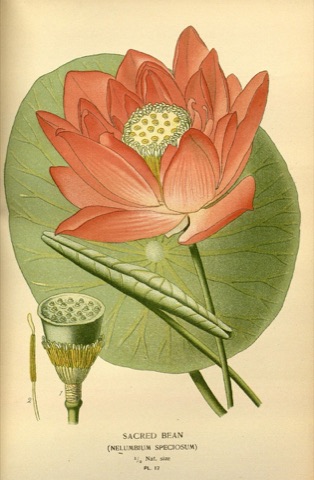
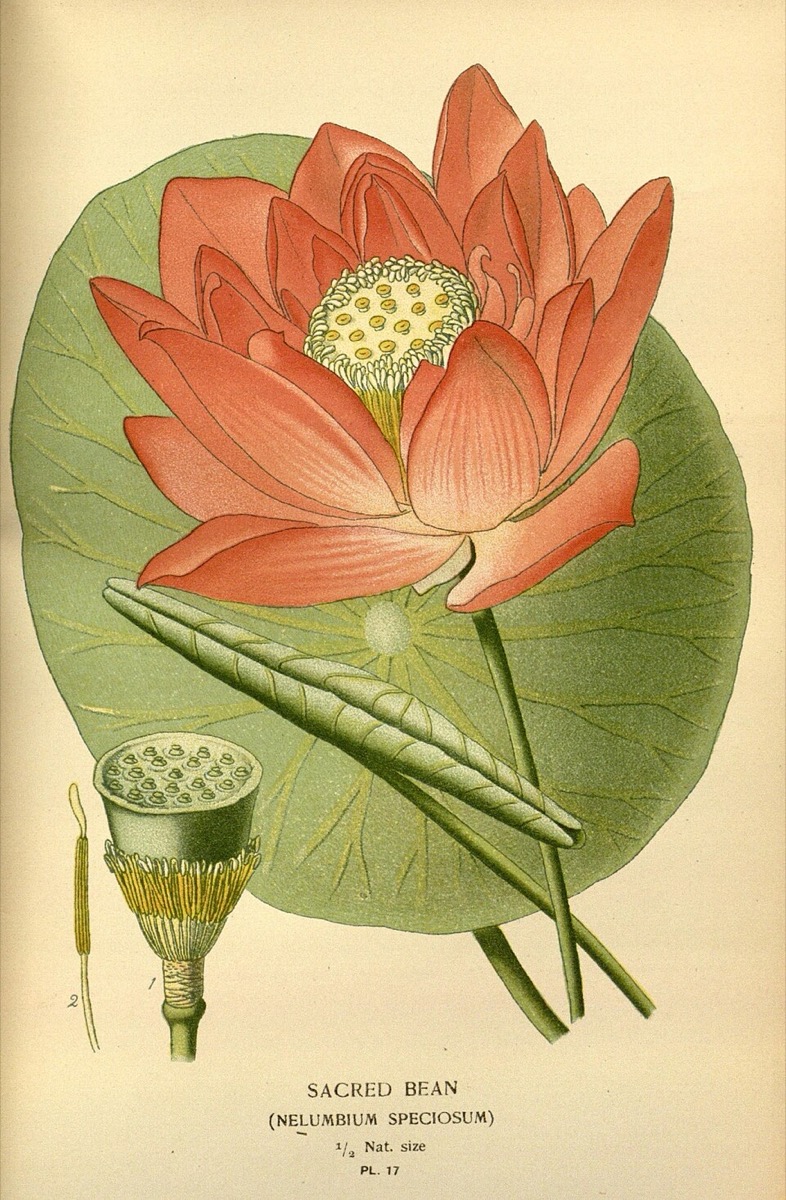
Nelumbium speciosum = Nelumbo nucifera Gaertn.
Favourite Flowers of Garden and Greenhouse · Pl. 17 · 1896
· scan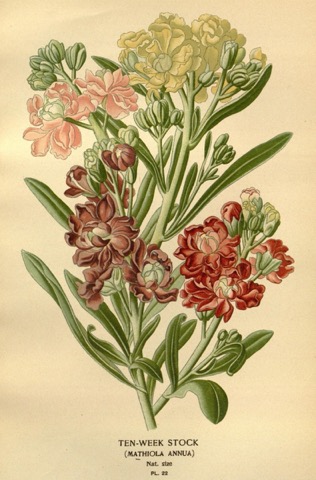
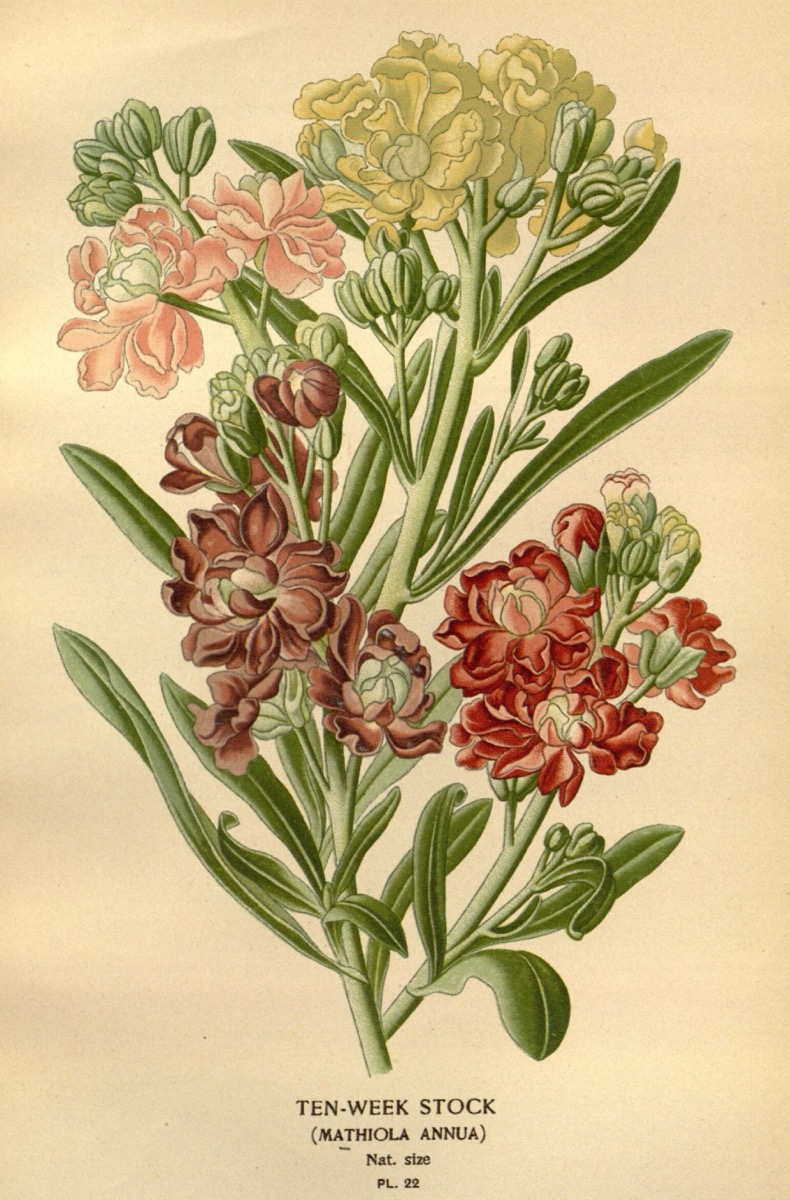
Ten-week Stock (Mathiola annua) = Matthiola incana (L.) W.T.Aiton
Favourite Flowers of Garden and Greenhouse · Pl. 22 · 1896
· scan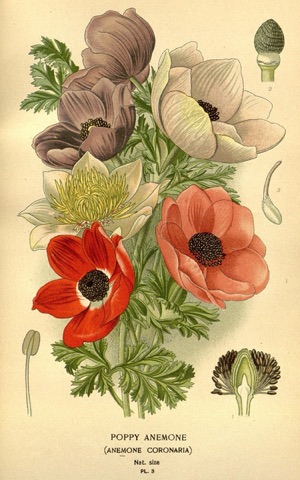
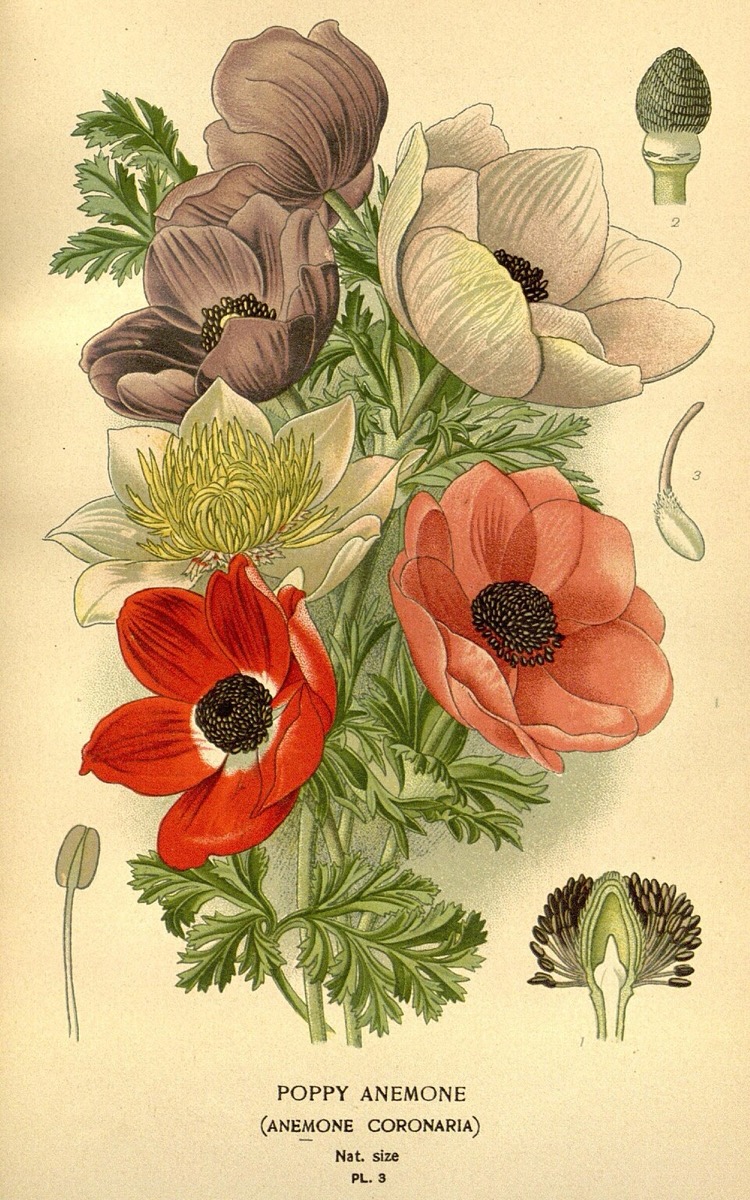
Anemone coronaria
Favourite Flowers of Garden and Greenhouse · Pl. 3 · 1896
· scan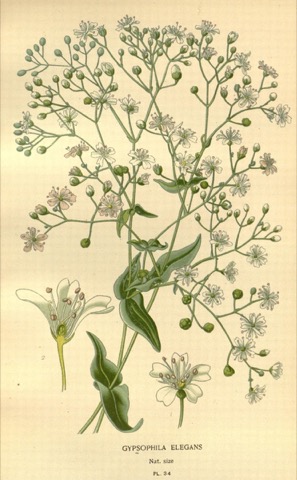
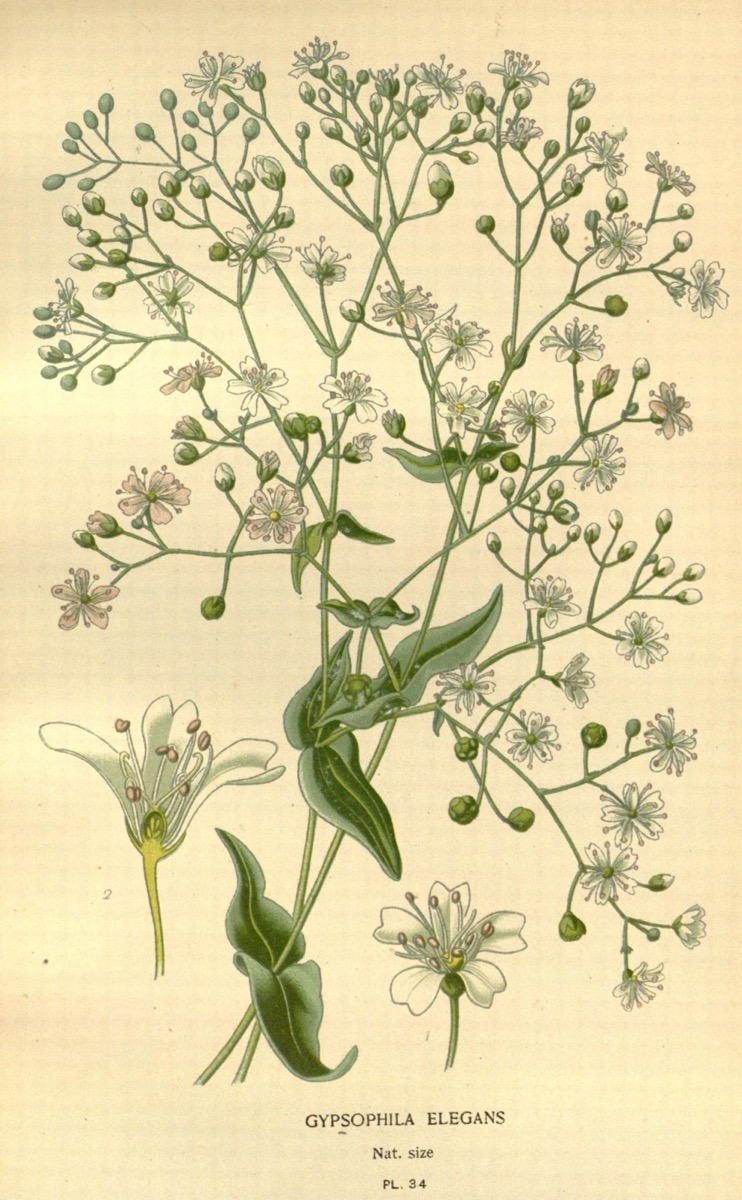
Gypsophila elegans
Favourite Flowers of Garden and Greenhouse · Pl. 34 · 1896
· scan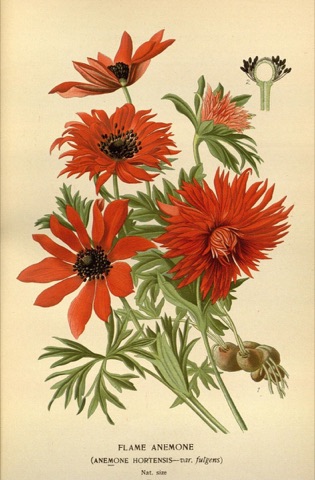
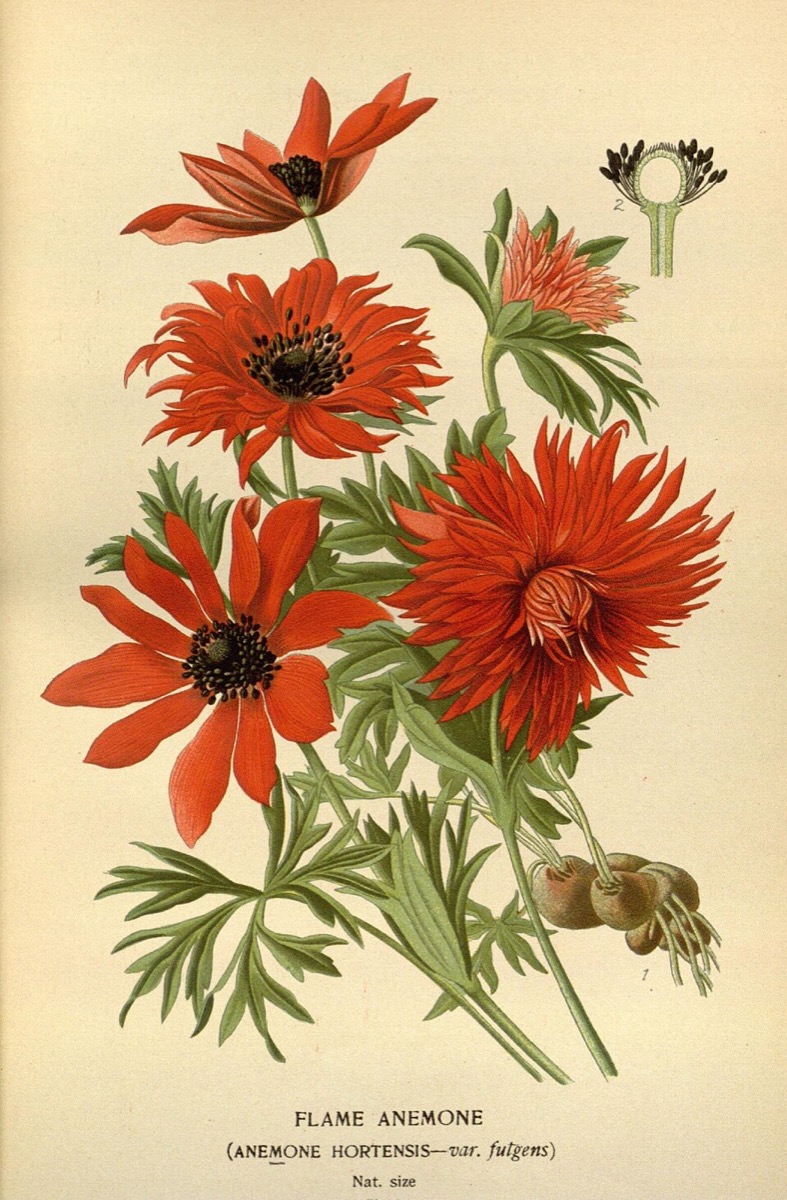
Anemone hortensis
Favourite Flowers of Garden and Greenhouse · 4 · 1896
· scan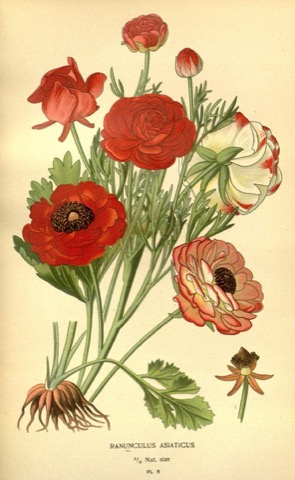
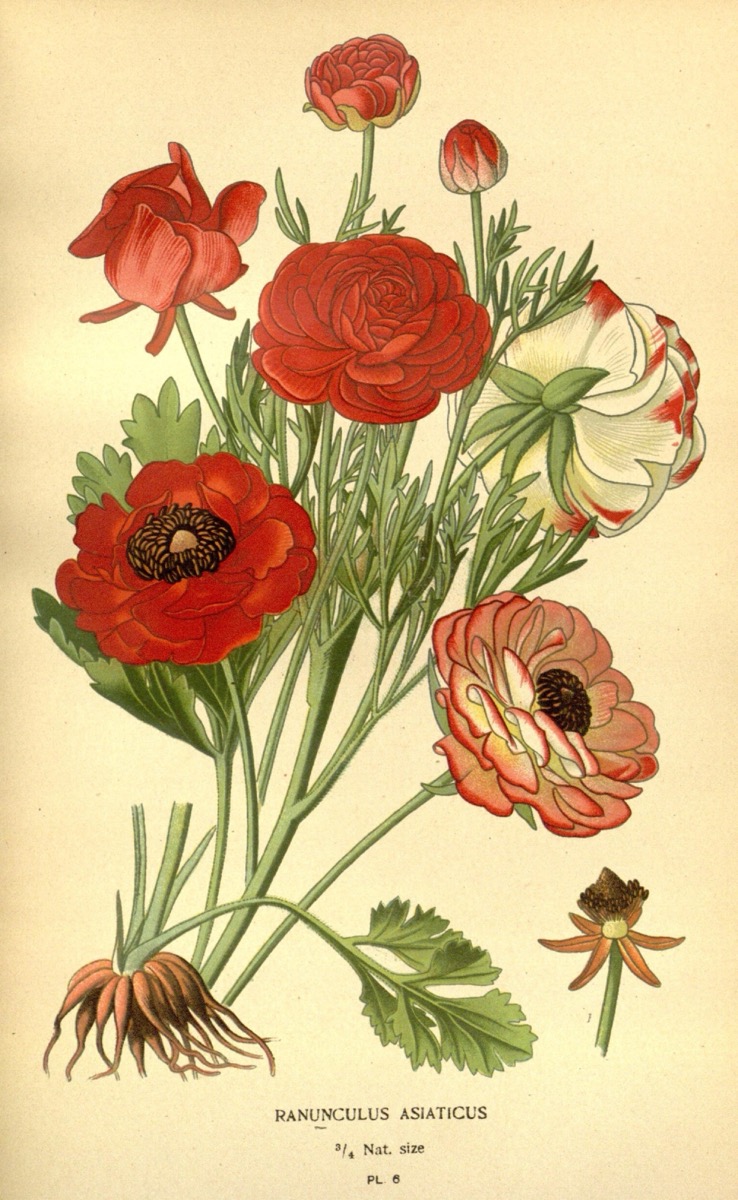
Ranunculus asiaticus
Favourite Flowers of Garden and Greenhouse · Pl. 6 · 1896
· scan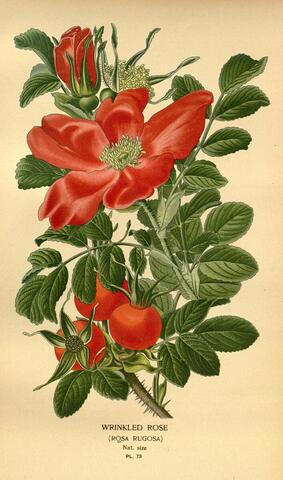
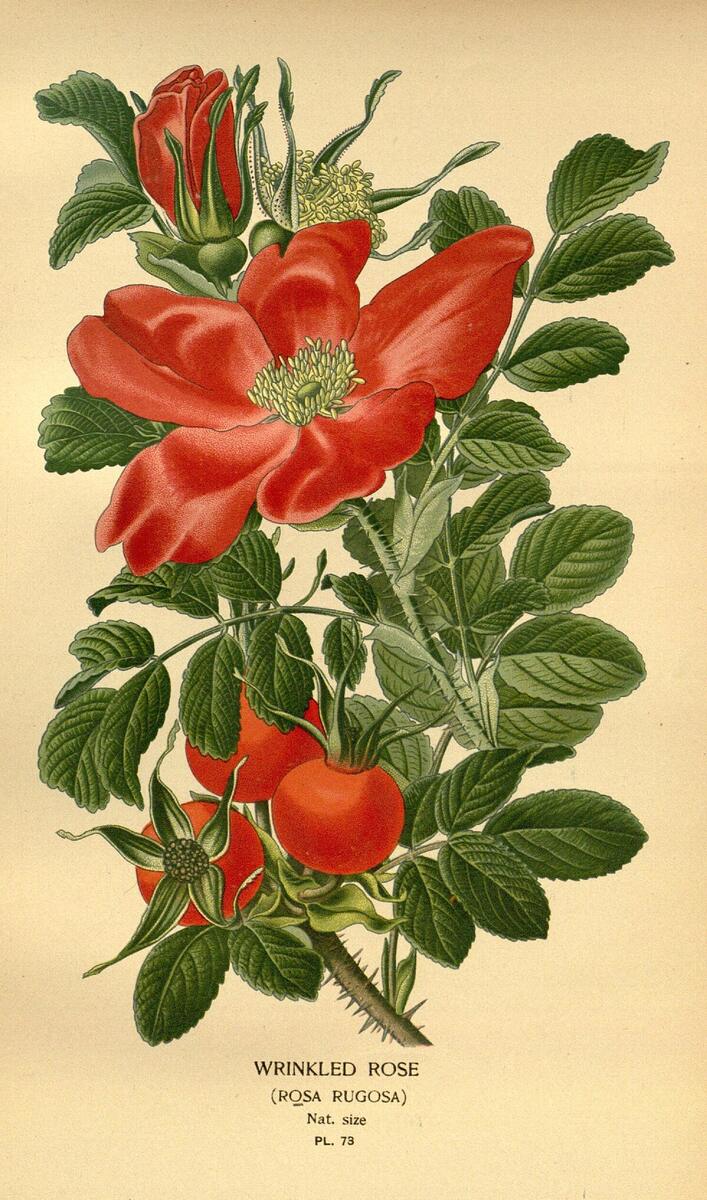
Rosa rugosa(Wrinkled Rose)
Favourite Flowers of Garden and Greenhouse · Pl. 73 · 1896
· scan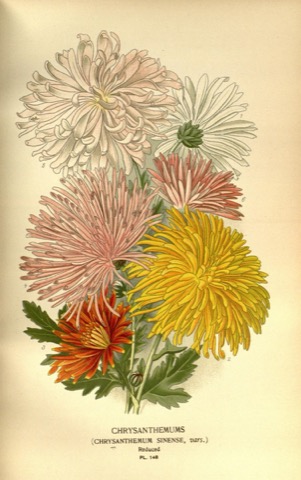
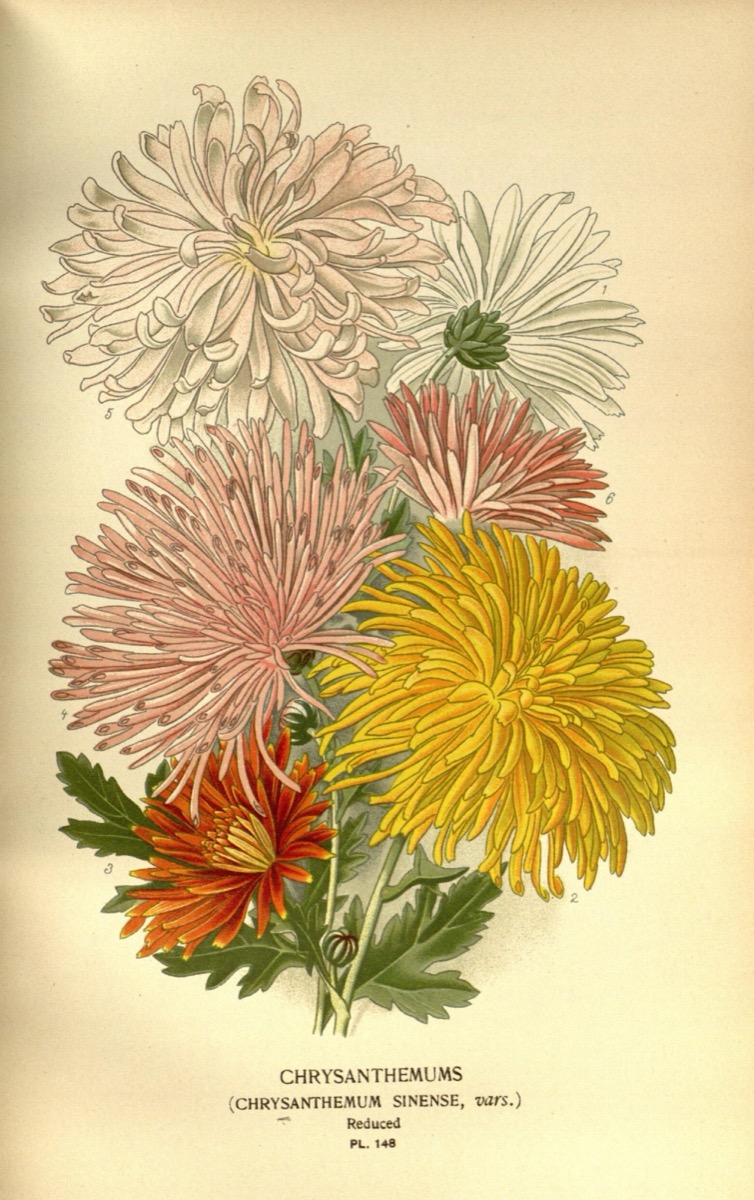
Chrysanthemum sinense, vars.
Favourite Flowers of Garden and Greenhouse · Pl. 148 · 1897
· scan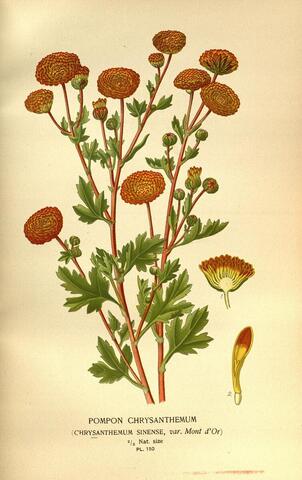
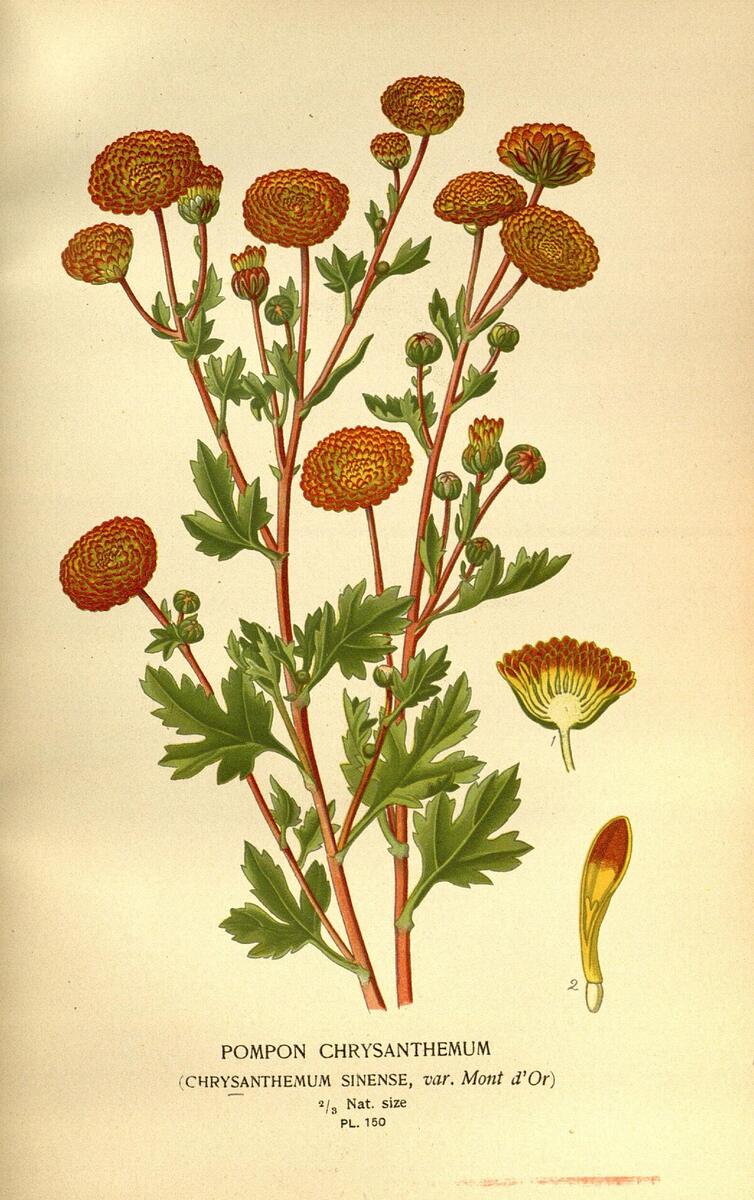
Chrysanthemum sinense, var. Mont d'Or = Chrysanthemum × morifolium (Ramat.) Hemsl.
Favourite Flowers of Garden and Greenhouse · Pl. 150 · 1897
· scan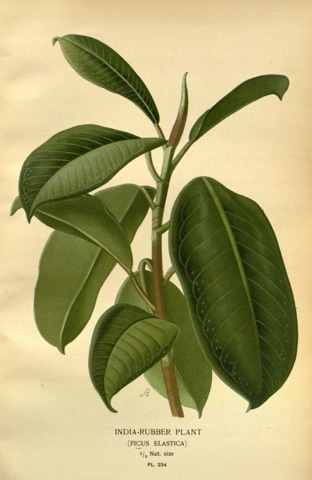
Ficus elastica
Favourite Flowers of Garden and Greenhouse · Pl. 234 · 1897
· scan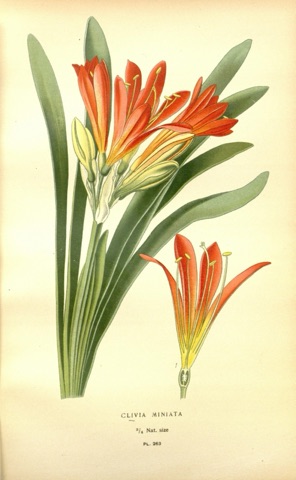
Clivia miniata
Favourite Flowers of Garden and Greenhouse · Pl. 263 · 1897
· scan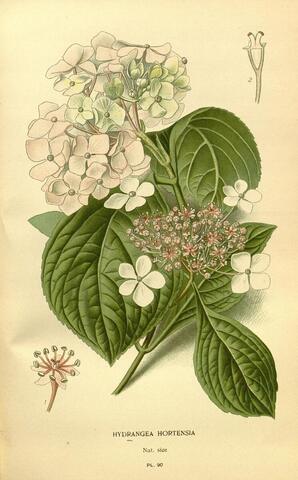
Hydrangea Hortensia = Hydrangea macrophylla (Thunb.) Ser.
Favourite Flowers of Garden and Greenhouse · Pl. 90 · 1897
· scan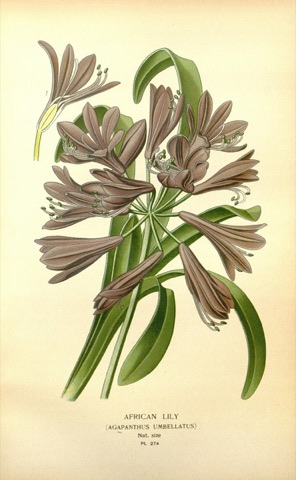
Agapanthus umbellatus = Agapanthus africanus (L.) Hoffmanns.
Favourite Flowers of Garden and Greenhouse · Pl. 274 · 1897
· scan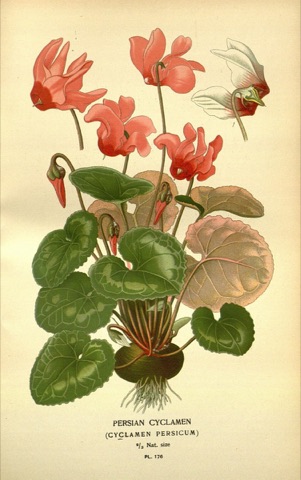
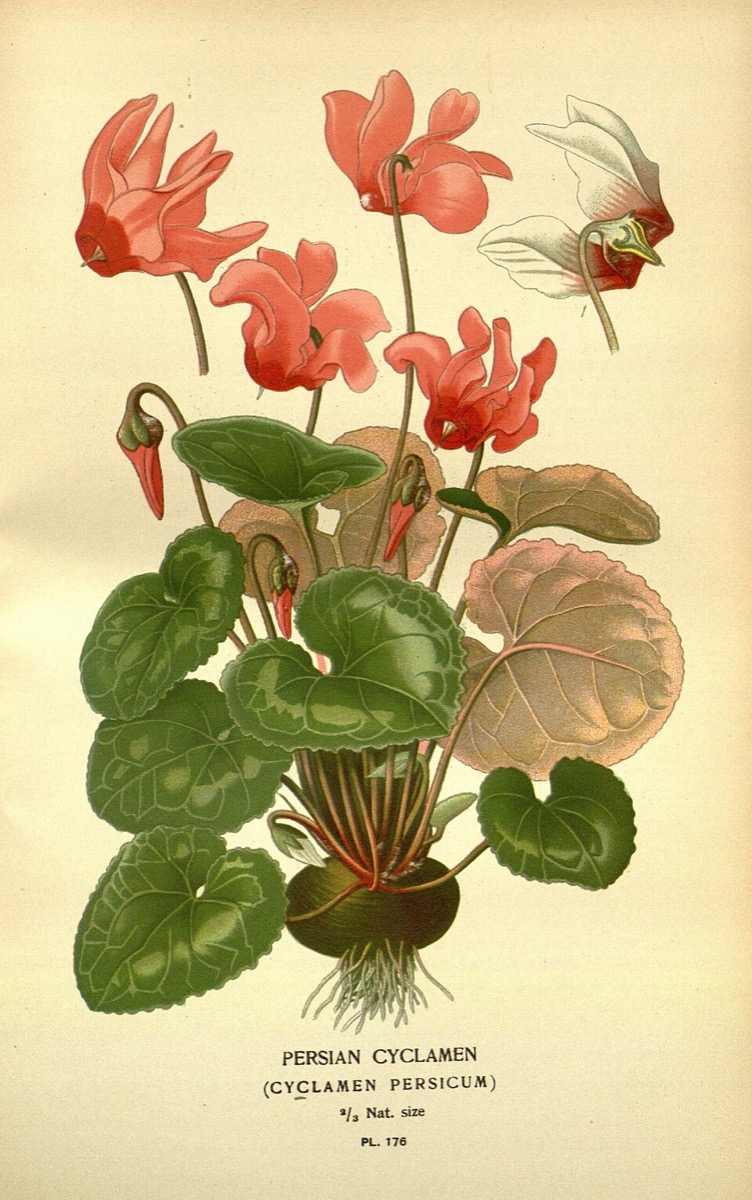
Cyclamen persicum
Favourite Flowers of Garden and Greenhouse · Pl. 176 · 1897
· scan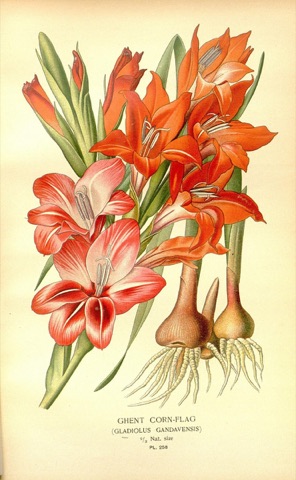
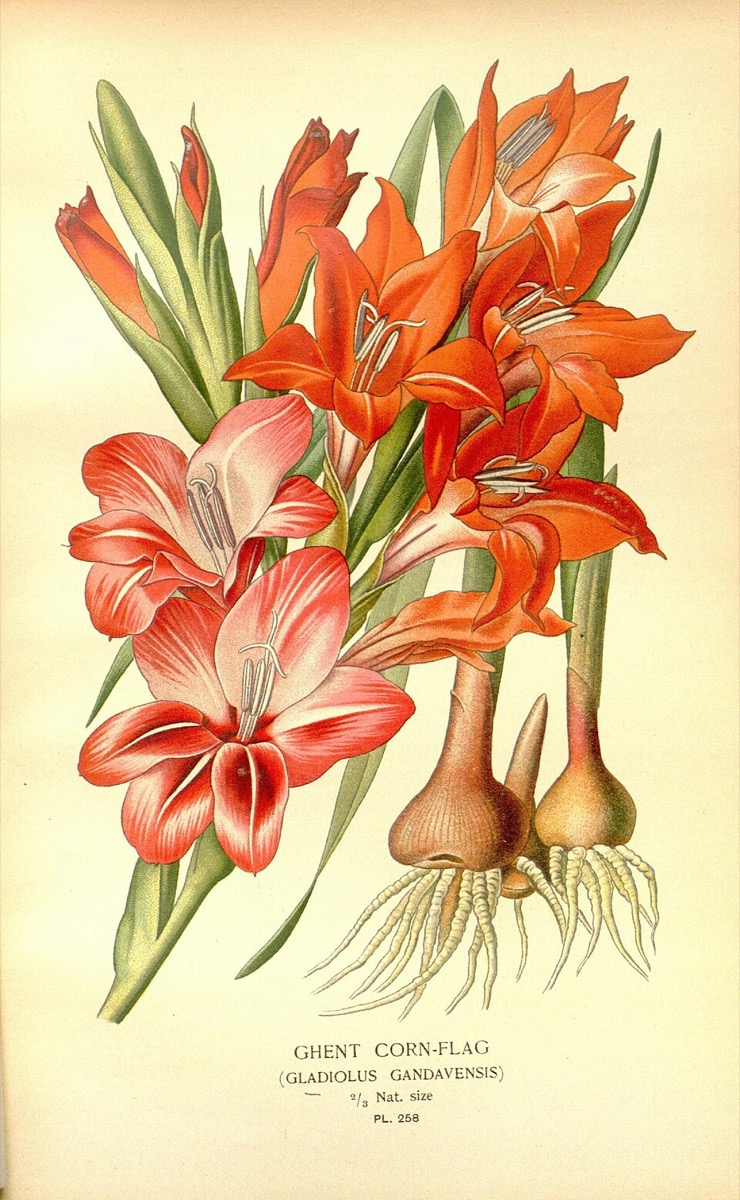
Gladiolus gandavensis
Favourite Flowers of Garden and Greenhouse · Pl. 258 · 1897
· scan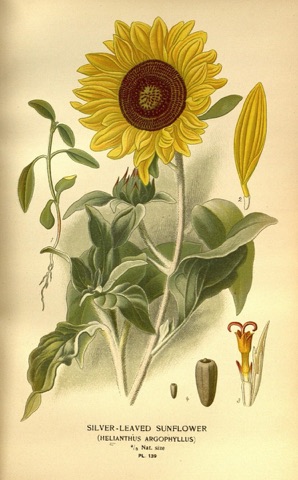
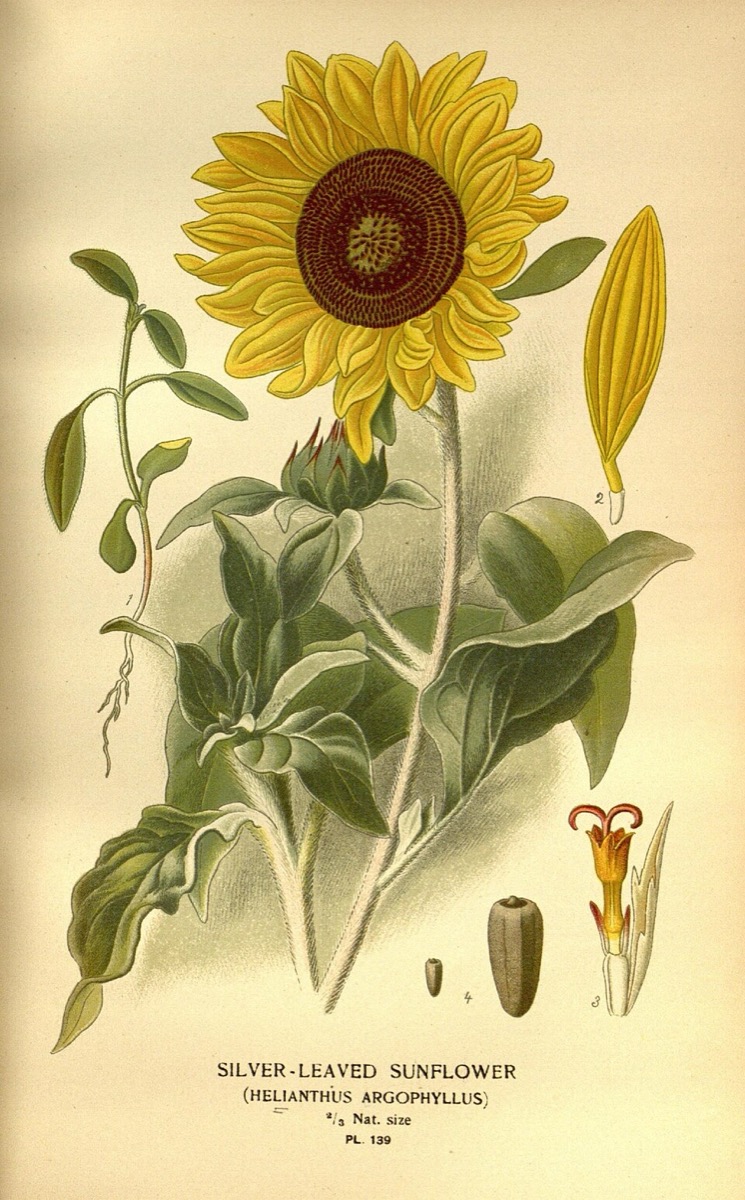
Helianthus argophyllus
Favourite Flowers of Garden and Greenhouse · Pl. 139 · 1897
· scan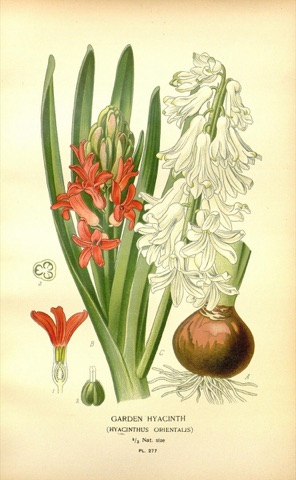
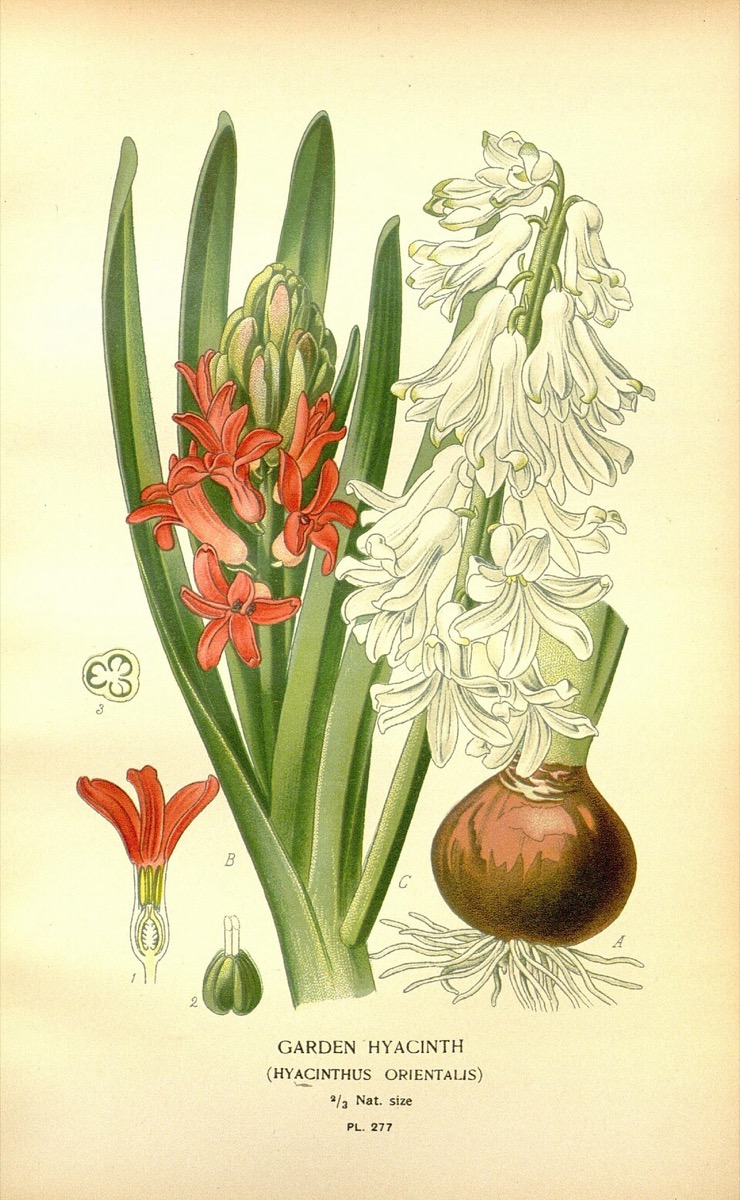
Hyacinthus orientalis
Favourite Flowers of Garden and Greenhouse · Pl. 277 · 1897
· scan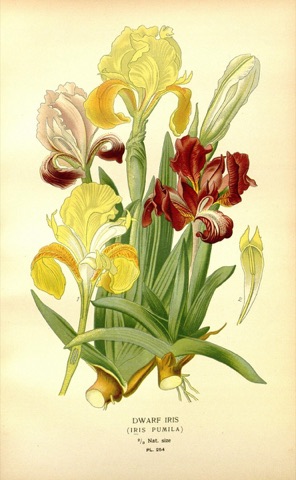
Iris pumila
Favourite Flowers of Garden and Greenhouse · Pl. 254 · 1897
· scan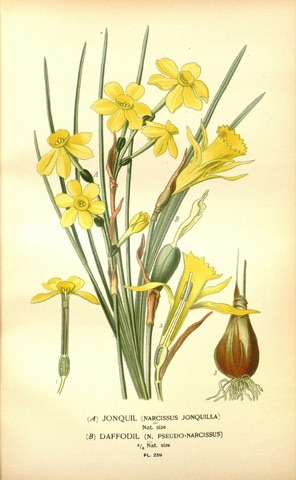
N. pseudo-narcissus = Narcissus pseudonarcissus L.
Favourite Flowers of Garden and Greenhouse · Pl. 259 · 1897
Narcissus jonquilla
· scan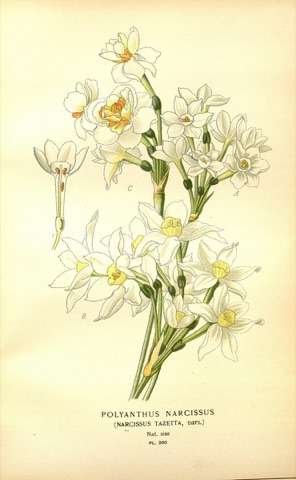
Narcissus tazetta
Favourite Flowers of Garden and Greenhouse · Pl. 260 · 1897
· scan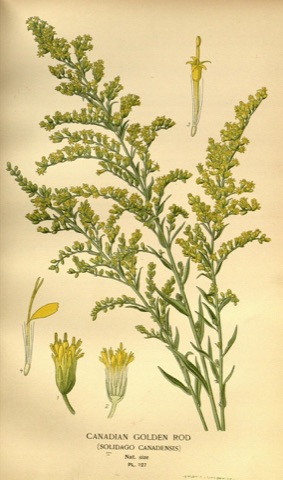
Solidago canadensis
Favourite Flowers of Garden and Greenhouse · Pl. 127 · 1897
· scan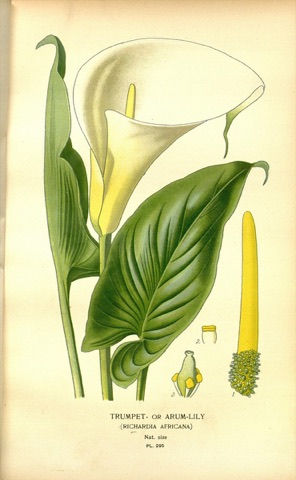
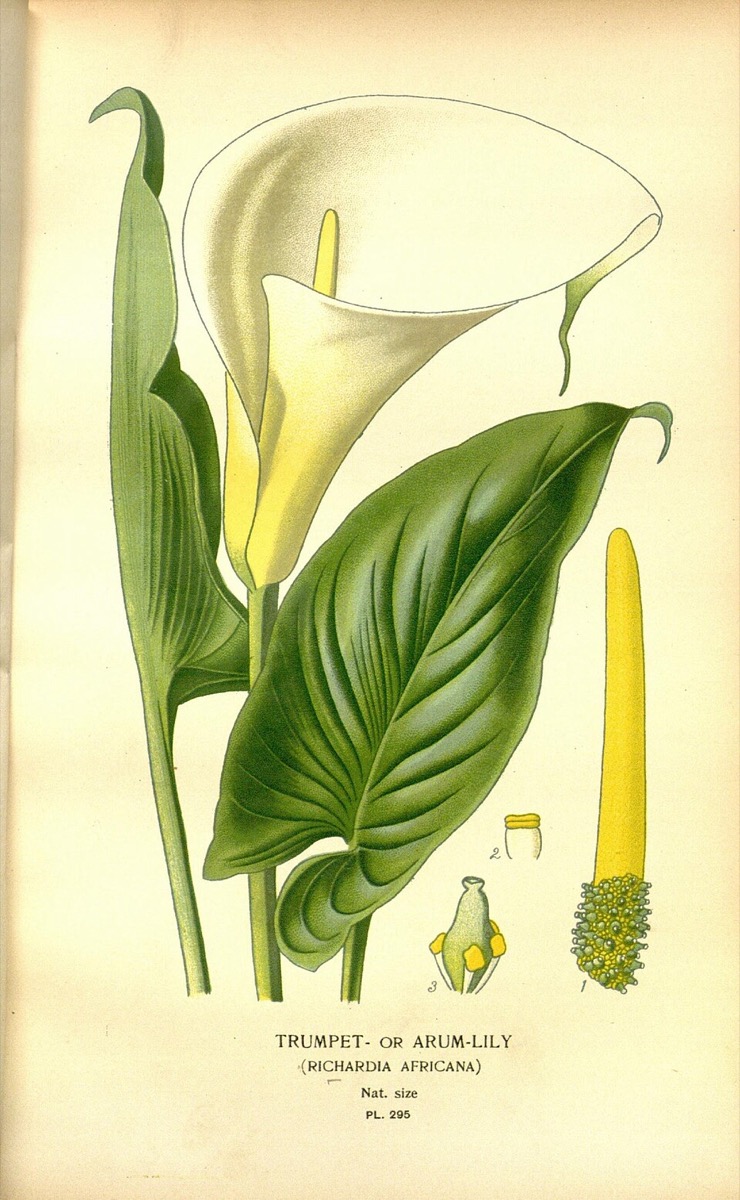
Richardia africana = Zantedeschia aethiopica (L.) Spreng.
Favourite Flowers of Garden and Greenhouse · Pl. 295 · 1897
· scan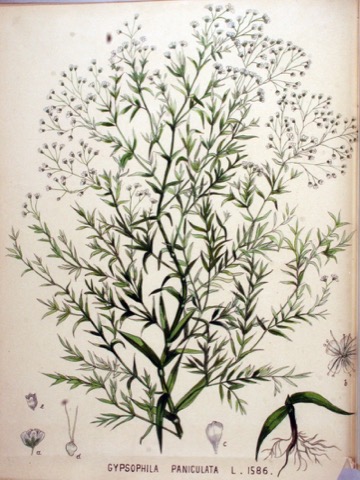
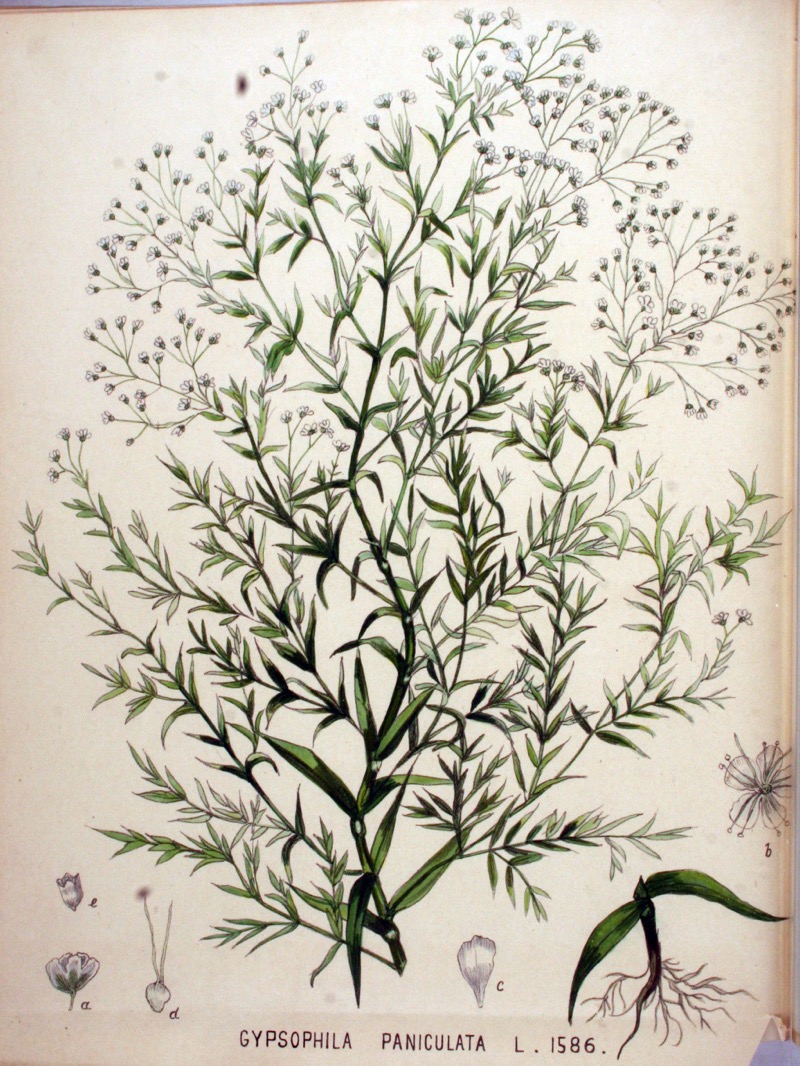
Gypsophila paniculata L.
Flora Batava · 1586 · 1898
· scan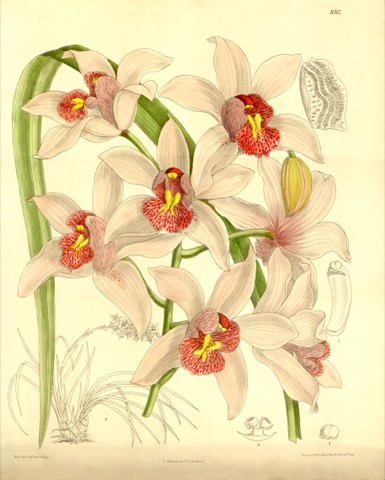
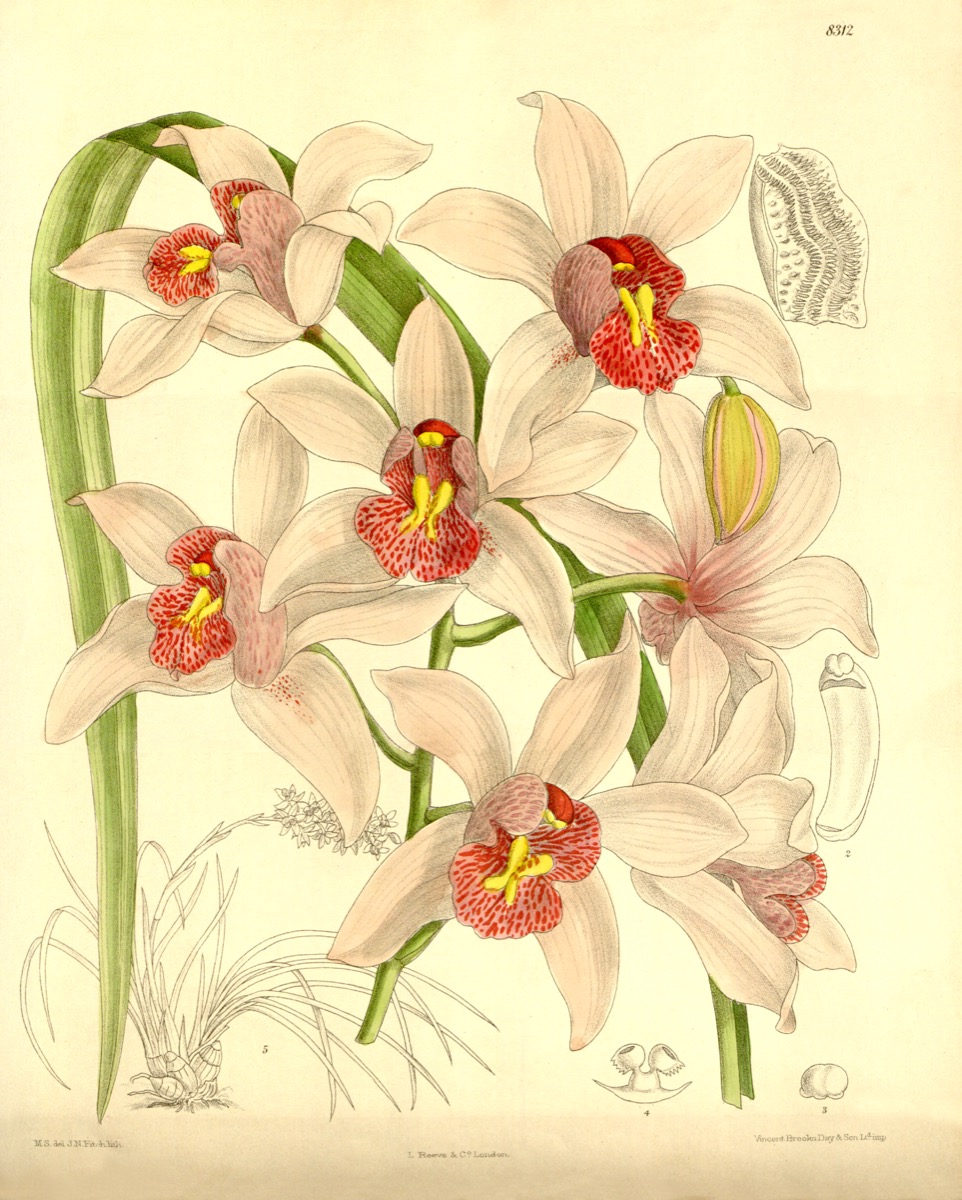
Cymbidium insigne
Curtis's Botanical Magazine · 8312 · 1910
Matilda Smith · scan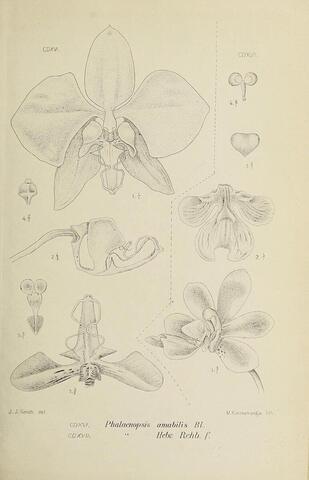
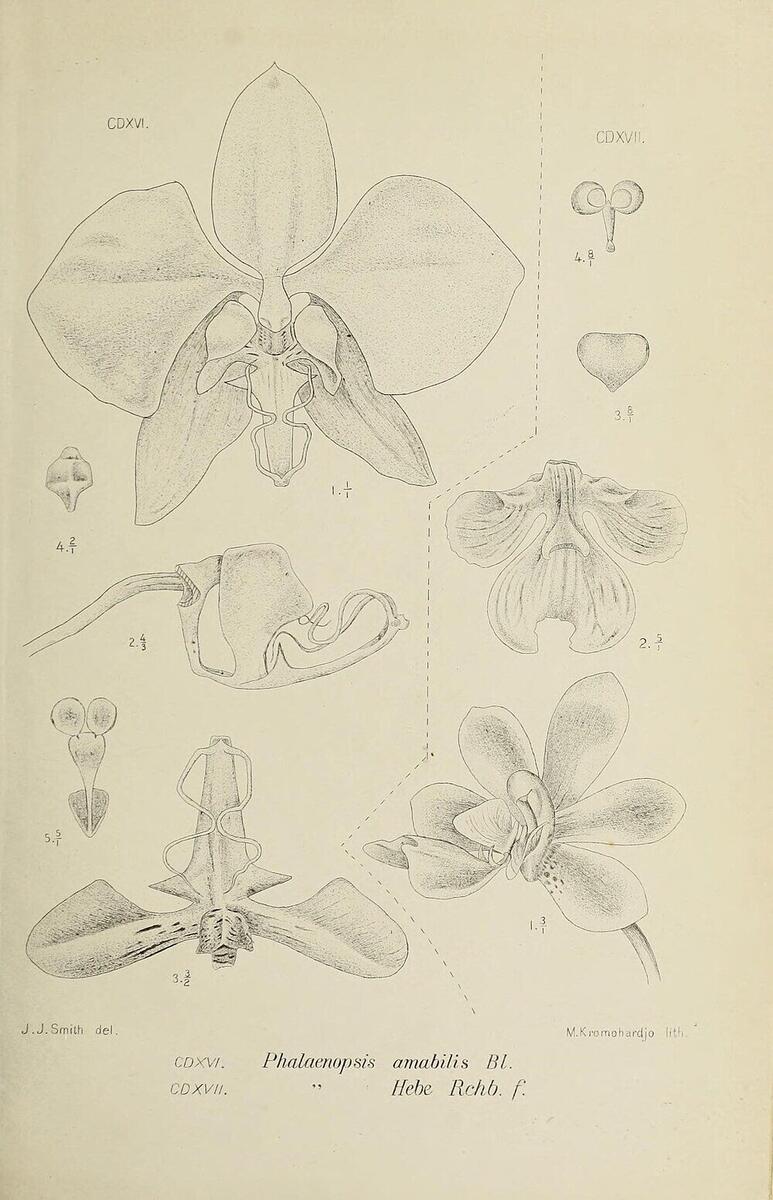
Phalaenopsis amabilis Bl.
Die Orchideen von Java, Figuren-Atlas · fig. CDXVI–CDXVII · 1912
Phalaenopsis Hebe Rchb. f. = Phalaenopsis deliciosa Rchb.f.
Johannes Jacobus Smith, M. Kromohardjo · scan
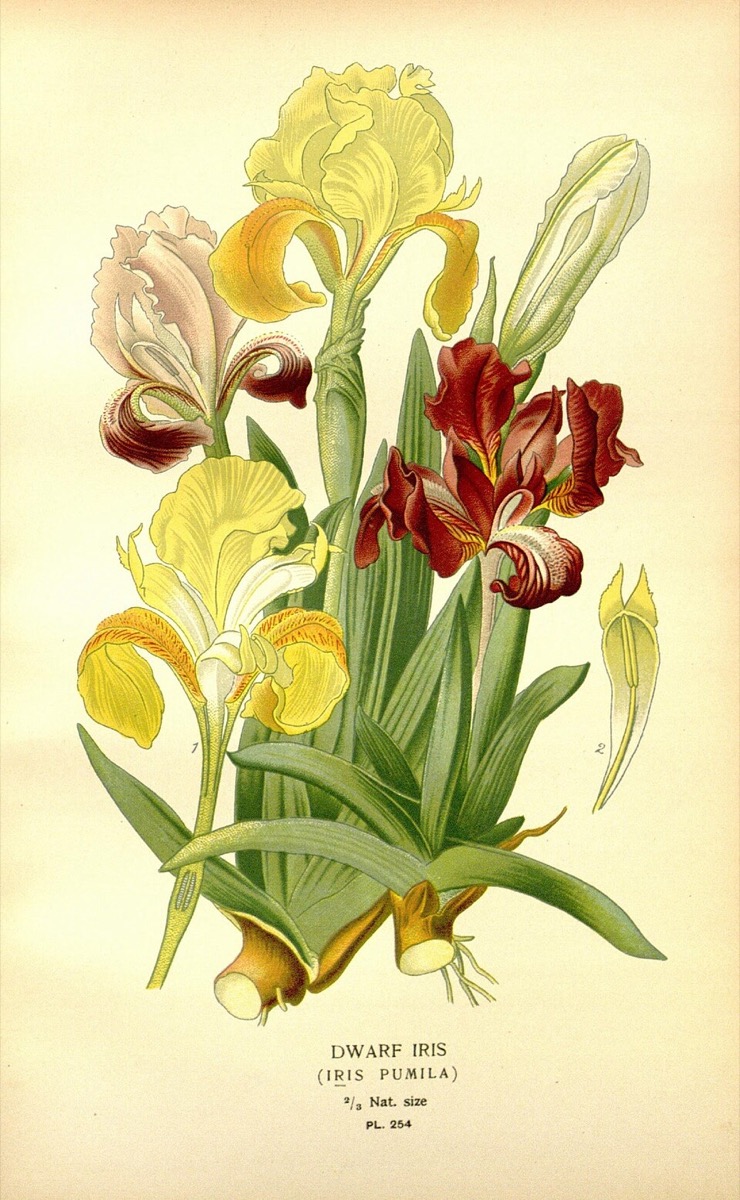
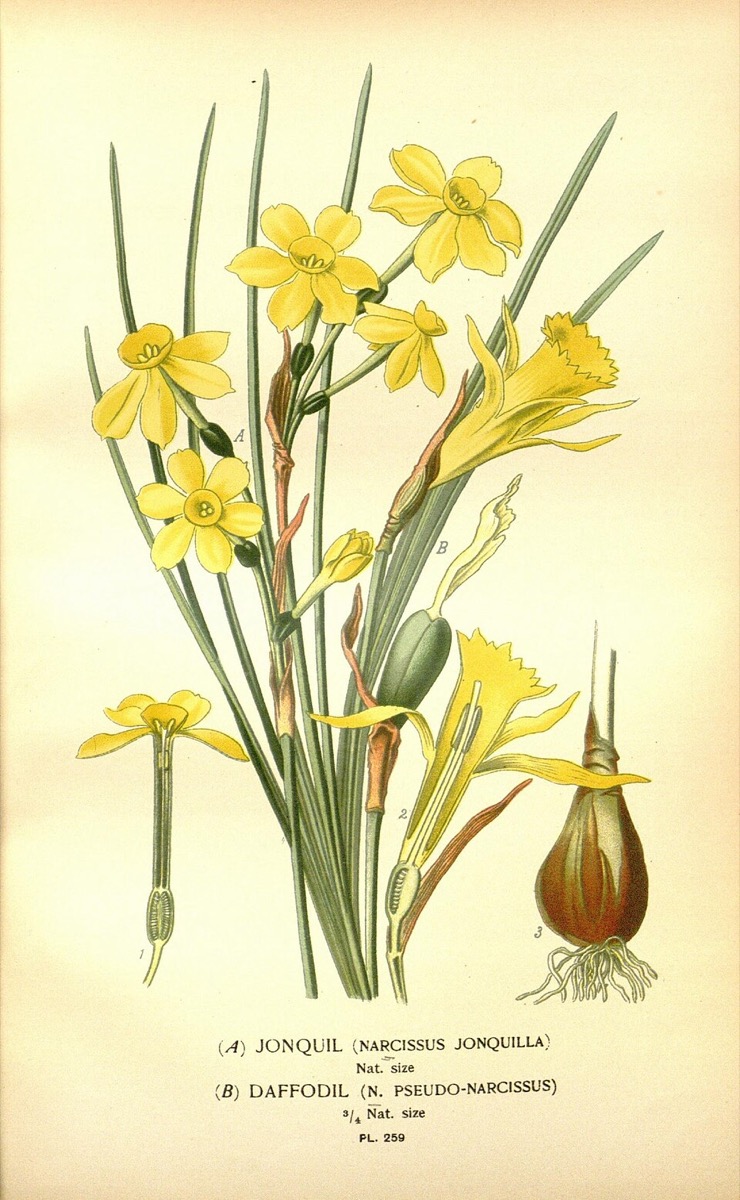
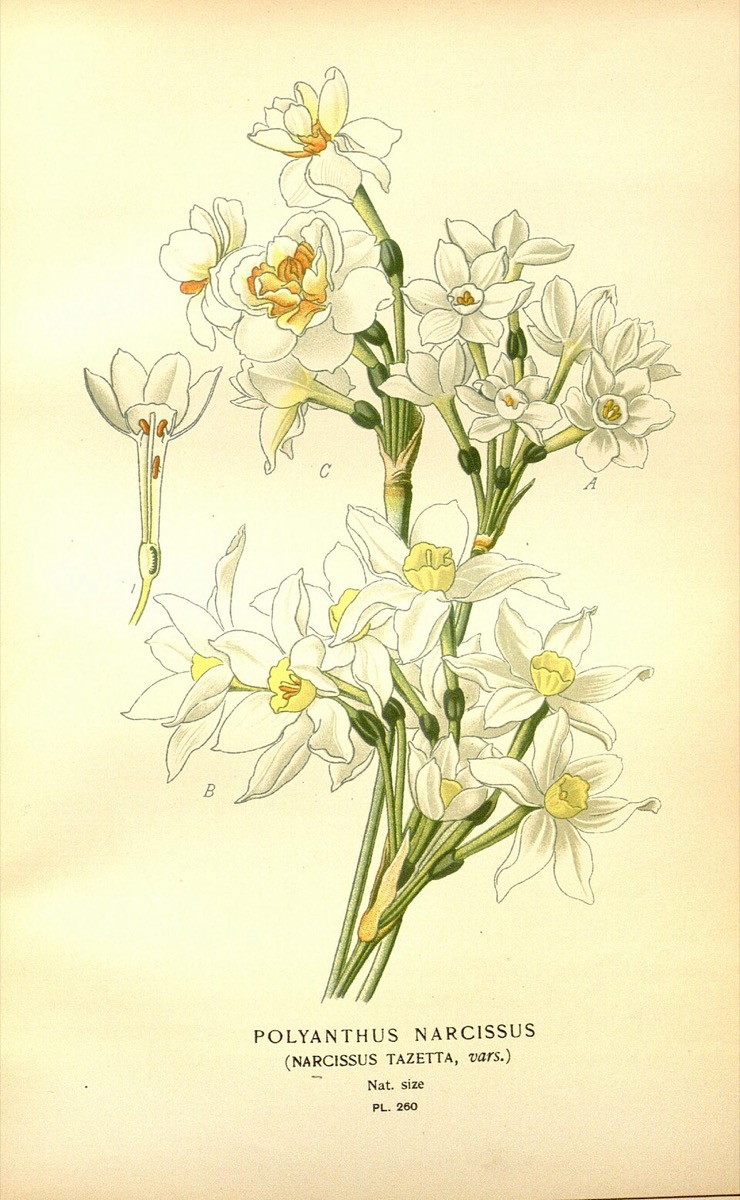
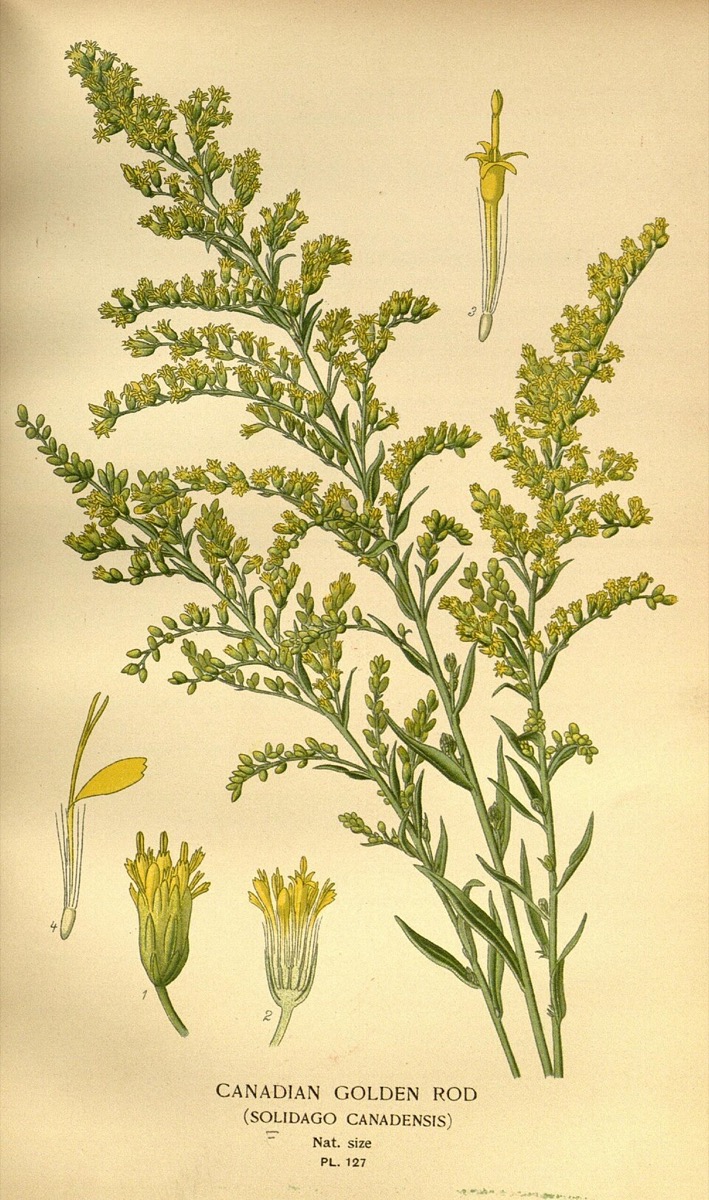


_-_Google_Art_Project.jpg)


)_BHL42945711.jpg)


In-depth topic libraries (in Chinese)
14 systematic references by plant group — botany, cultivation, conditioning, floristry use and standards, each article cited. Currently written in Chinese.
- Orchidea farfalla (Phalaenopsis)In-depth monograph: botany, cultivation, postharvest handling and historic plates (Chinese edition).
- Cymbidium (ibridi)In-depth monograph: botany, cultivation, postharvest handling and historic plates (Chinese edition).
- Cymbidium faberi (orchidea cinese)In-depth monograph: botany, cultivation, postharvest handling and historic plates (Chinese edition).
- Rose (Rosa)In-depth monograph: botany, cultivation, postharvest handling and historic plates (Chinese edition).
- Crisantemi (Chrysanthemum)In-depth monograph: botany, cultivation, postharvest handling and historic plates (Chinese edition).
- Ortensie (Hydrangea)In-depth monograph: botany, cultivation, postharvest handling and historic plates (Chinese edition).
- Gigli (Lilium)In-depth monograph: botany, cultivation, postharvest handling and historic plates (Chinese edition).
- Garofani (Dianthus)In-depth monograph: botany, cultivation, postharvest handling and historic plates (Chinese edition).
- Tulipani (Tulipa)In-depth monograph: botany, cultivation, postharvest handling and historic plates (Chinese edition).
- Gerbere (Gerbera)In-depth monograph: botany, cultivation, postharvest handling and historic plates (Chinese edition).
- Gypsophila / Velo da sposaIn-depth monograph: botany, cultivation, postharvest handling and historic plates (Chinese edition).
- Peonie (Paeonia)In-depth monograph: botany, cultivation, postharvest handling and historic plates (Chinese edition).
- Lisianthus (Eustoma)In-depth monograph: botany, cultivation, postharvest handling and historic plates (Chinese edition).
- Anturio (Anthurium)In-depth monograph: botany, cultivation, postharvest handling and historic plates (Chinese edition).