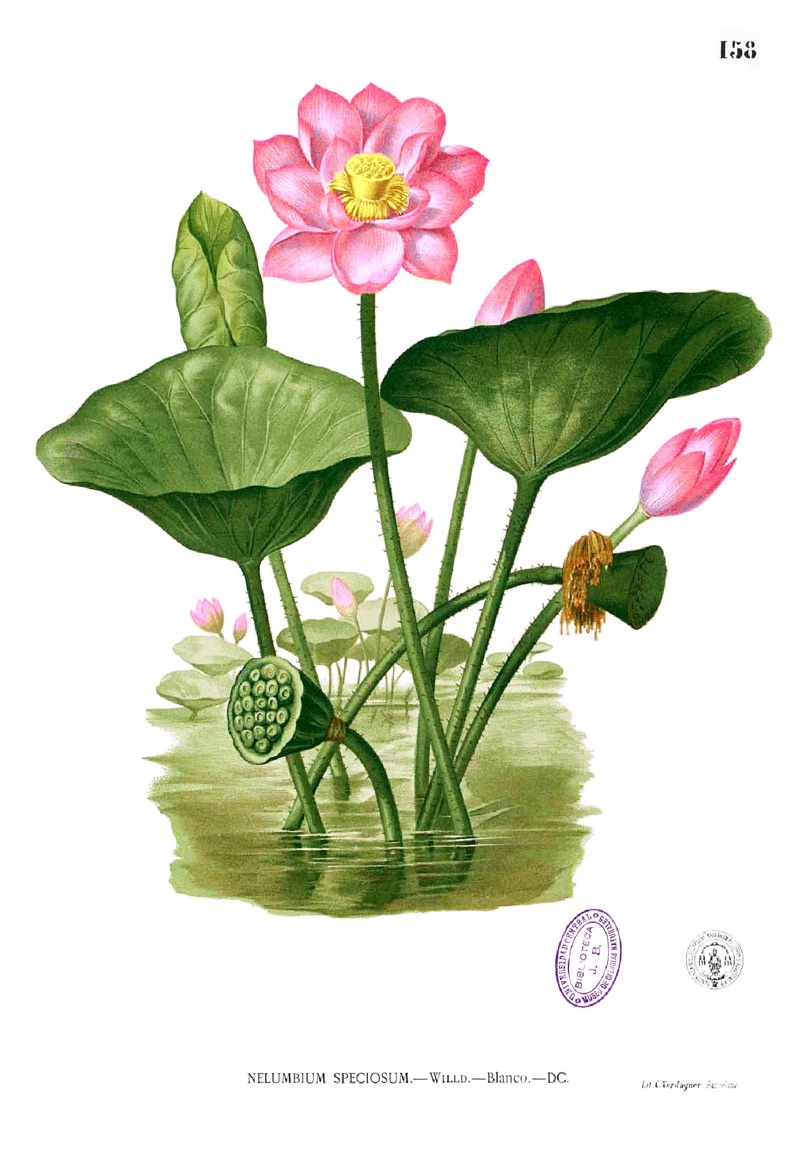
Nelumbo Adans.
lotuses · Nelumbonaceae
- Accepted name
- Nelumbo Adans.
- First published
- Fam. Pl. 2: 76, 582 (1763)
- Family
- Nelumbonaceae
- Accepted species
- 2 (including 0 natural hybrids)
- Native range
- 80 TDWG regions, eastern Europe to Asia and northern Australia; south-eastern Canada to Mexico and the Caribbean
- Common names
- lotuses
- Databases
- POWO · IPNI · WCVP · Catalogue of Life · GBIF
Overview
Nelumbo is the only genus of the family Nelumbonaceae and has just two species: the sacred lotus, N. nucifera, of eastern and southern Asia to northern Australia, and the American lotus, N. lutea, of Central and North America (Flora of China; WCVP’s list is below). Kew gives the genus’s native range as eastern Europe to Asia and northern Australia, and south-eastern Canada to Mexico and the Caribbean.
Lotus was long grouped with the water lilies: the 1979 Flora Reipublicae Popularis Sinicae account cited by Flora of China treats it as a subfamily of Nymphaeaceae, whereas it is now a family of its own.
Classification and characters
WCVP cites Adanson’s Familles des Plantes (1763) as the place of publication; Jussieu’s Nelumbium is an orthographic variant of the same name.
Flora of China describes the family as perennial aquatic herbs. The branched, creeping rhizomes swell at the tips into storage tubers late in the season. Long-stalked leaves rise from the rhizome, emergent or floating, with peltate blades and radiating veins. Solitary bisexual, insect-pollinated flowers stand above the water on long peduncles, with numerous tepals (the outer reduced, the inner large and petal-like), numerous stamens, and many carpels set separately into cavities in the flat top of the receptacle. The fruit is nut-like and indehiscent.
In N. nucifera the petioles are 1–2 m long and the round, glaucous, water-repellent blades 25–90 cm across. The flowers are 10–23 cm across with pink or white, early-falling tepals, and after flowering the receptacle enlarges into the turbinate “pod”, 5–10 cm across. It flowers from June to August in lakes and ponds or in cultivation, throughout China except Nei Mongol, Qinghai and Xizang, and is grown for its edible rhizomes and seeds (Flora of China).
| Genus name | Published in |
|---|---|
| Nelumbium Juss. | Gen. Pl.: 68 (1789) |
| Tamara Roxb. ex Steud. | Nomencl. Bot., ed. 2. 2: 661 (1841) |
Distribution
WCVP records the genus as native to 80 TDWG botanical regions and introduced in 11 more.
Native regions (80)
AlabamaAmurArkansasAssamBangladeshCambodiaChina North-CentralChina South-CentralChina SoutheastColombiaConnecticutCubaDelawareDistrict of ColumbiaDominican RepublicEast HimalayaFloridaGeorgiaHainanHaitiIllinoisIndiaIndianaIowaIranJamaicaJapanJawaKansasKentuckyKhabarovskKoreaLaosLesser Sunda Is.LouisianaMaineMalayaManchuriaMarylandMassachusettsMexico GulfMexico NortheastMexico SoutheastMexico SouthwestMichiganMinnesotaMississippiMissouriMyanmarNebraskaNepalNew GuineaNew JerseyNew YorkNorth CarolinaNorth CaucasusNorthern TerritoryOhioOklahomaOntarioPakistanPennsylvaniaPhilippinesPrimoryeQueenslandRhode I.South CarolinaSouth European RussiaSri LankaTennesseeTexasThailandTranscaucasusUkraineVietnamVirginiaWest HimalayaWest VirginiaWestern AustraliaWisconsin
Introduced
BeninCook Is.GabonItalyLeeward Is.Puerto RicoRomaniaTrinidad-TobagoVanuatuVermontWindward Is.
Accepted species
WCVP accepts 2 species; names with × are natural hybrids. The count changes with revisions; checked 2026-10-28.
| Name | On this site |
|---|---|
| Nelumbo lutea (Willd.) Pers. | 1 plate |
| Nelumbo nucifera Gaertn. | 4 plates |
Historic plates
Plates in date order; the printed names are kept as they appear, current names are on the species pages and the topic page.
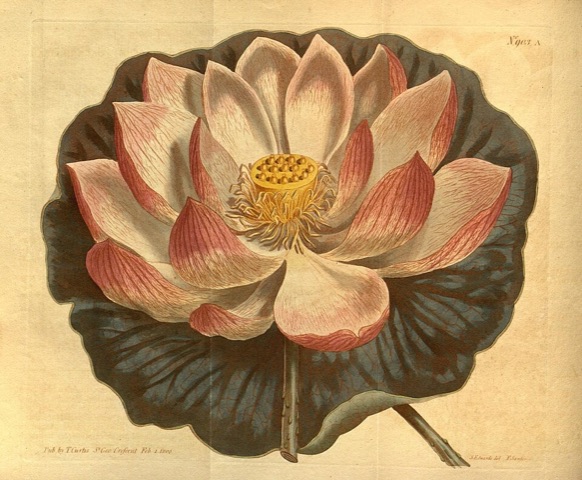
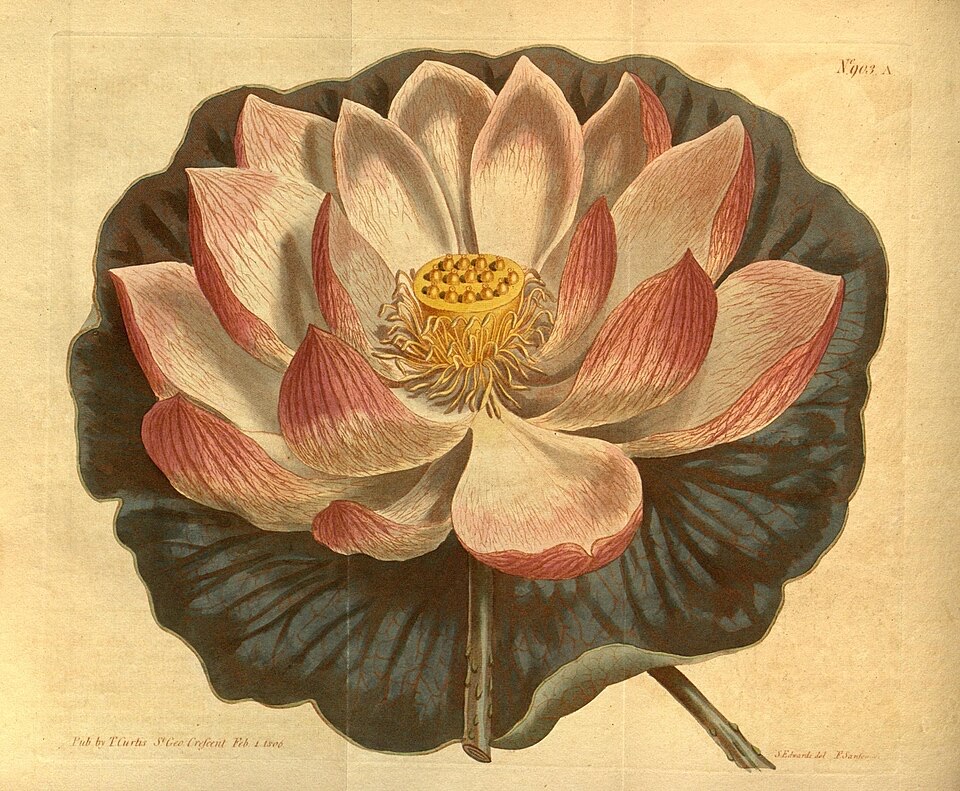
Nelumbium speciosum
Curtis's Botanical Magazine · 903 A · 1806
Sydenham Edwards, F. Sansom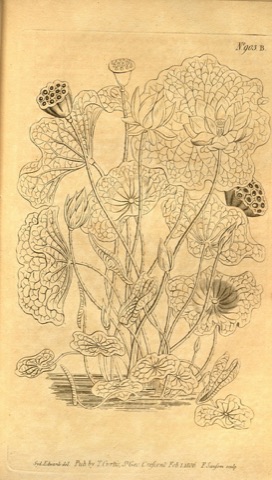
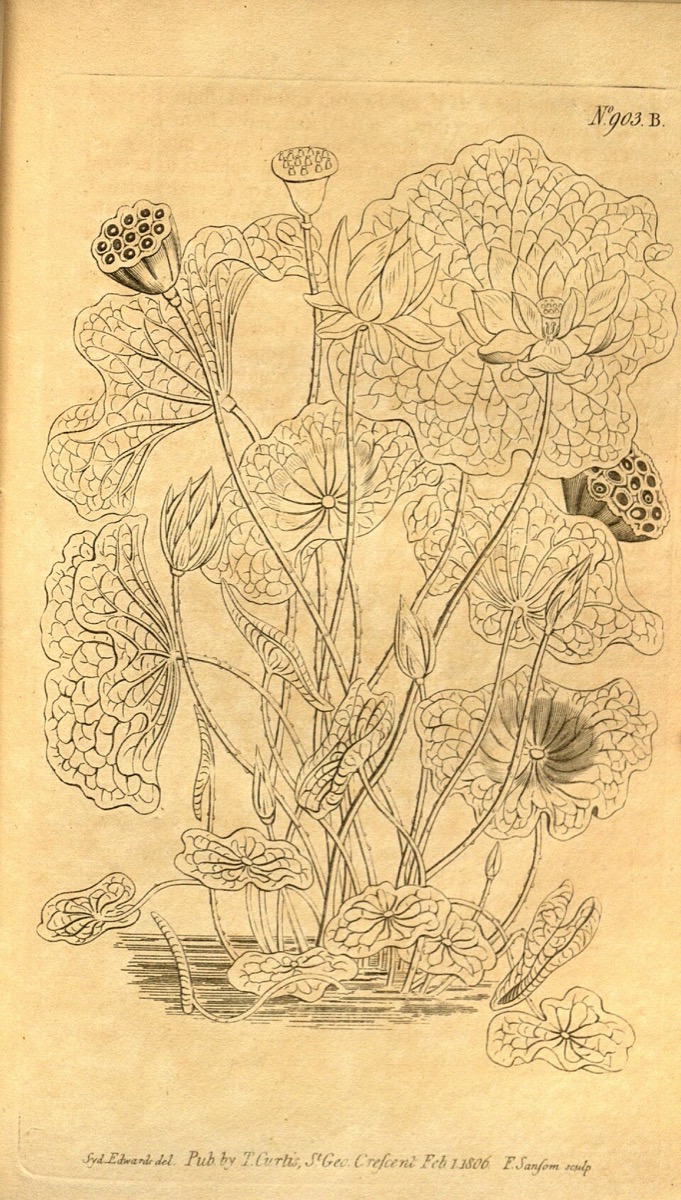
Nelumbium speciosum
Curtis's Botanical Magazine · 903 B · 1806
Sydenham Edwards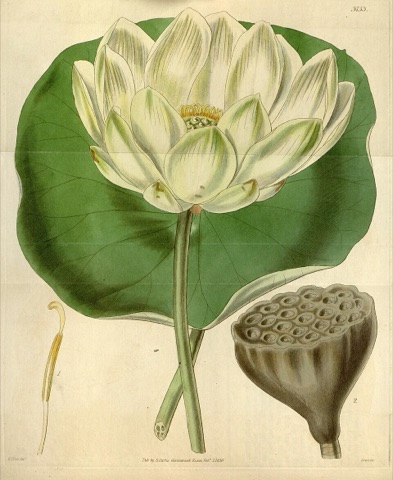
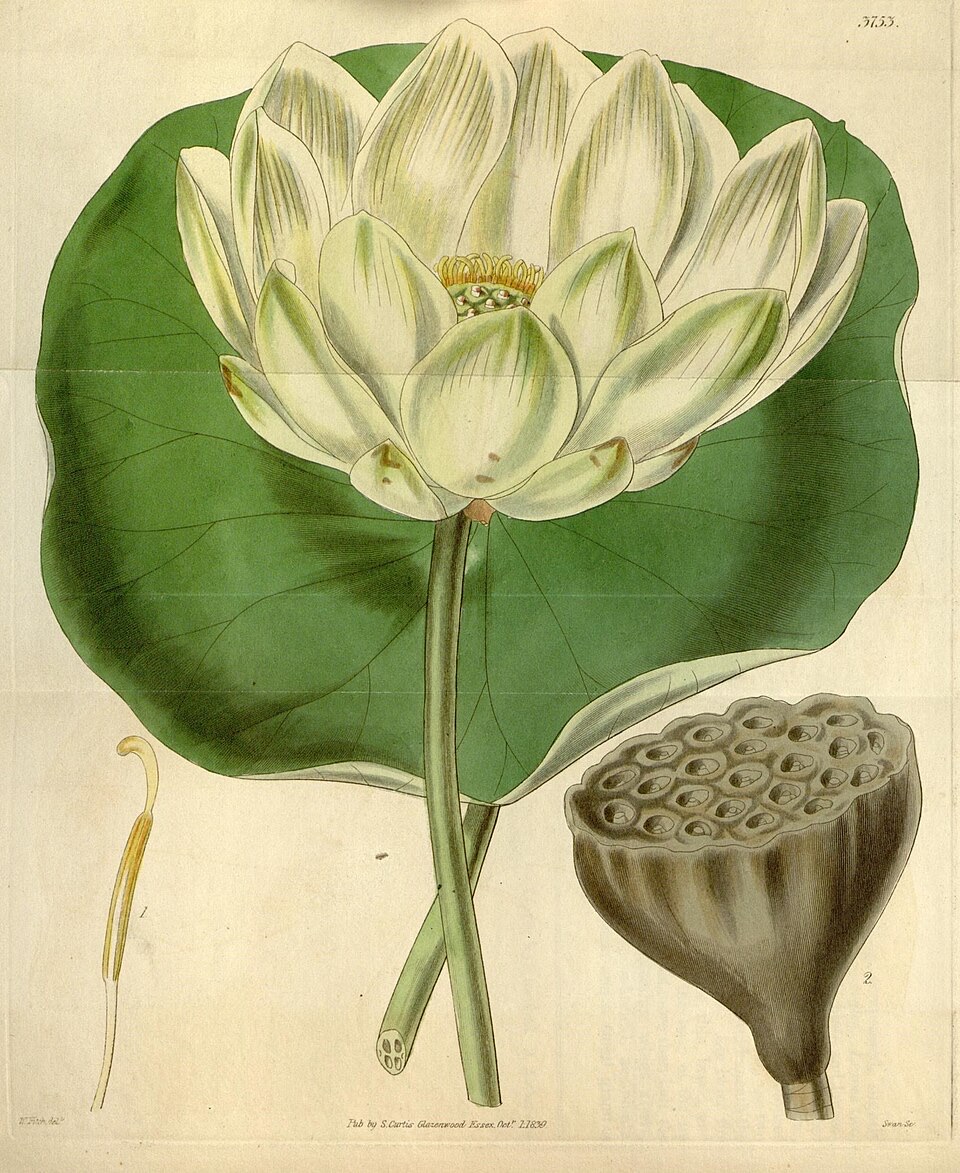
Nelumbium luteum
Curtis's Botanical Magazine · 3753 · 1840
Walter Hood Fitch, Joseph Swan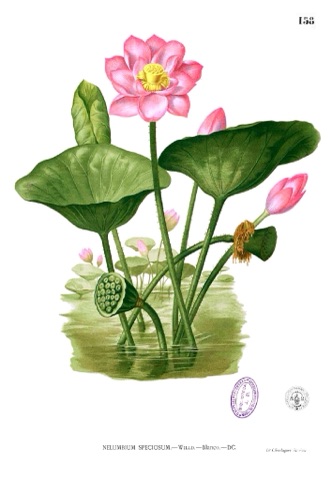
Nelumbium speciosum
Flora de Filipinas, gran edición (Atlas) · 158 · 1880–1883
C. Verdaguer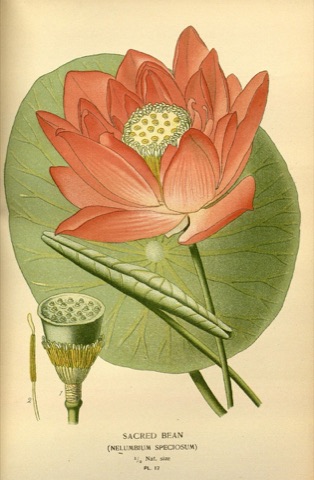
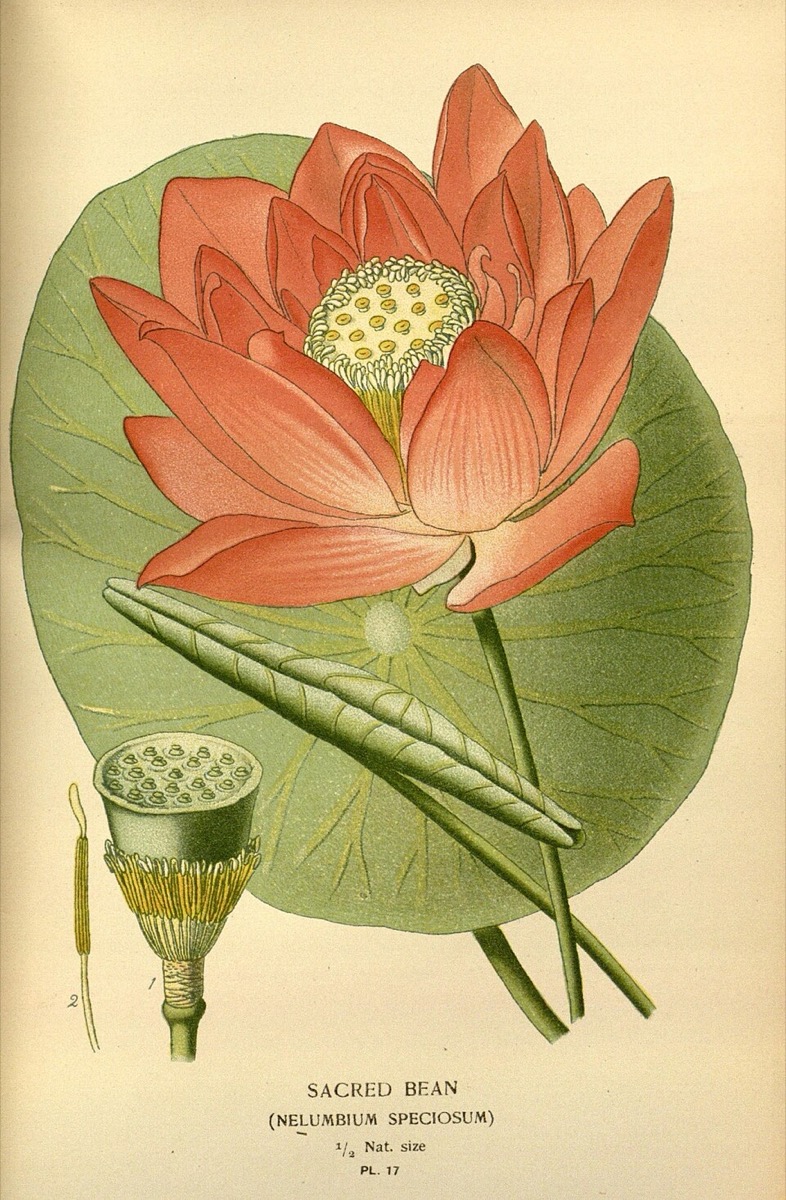
Nelumbium speciosum
Favourite Flowers of Garden and Greenhouse · Pl. 17 · 1896
Lotus pods as florists’ material
The Floral Design Institute notes that dried lotus pods are available all year and fresh pods in late summer and autumn. Choose unblemished fresh pods and sturdy, undamaged dried ones. Cut the stems with a sharp knife and hydrate for two hours in water with commercial flower food before storing or using; store at 2–3 °C (36–38 °F). Vase life is 10–14 days and the pods are not ethylene sensitive. They are used mostly as dried material, turning from green to brown as they mature and dry, and make a good basing material in contemporary designs.