Hyacinthus Tourn. ex L.
hyacinths · Asparagaceae
- Accepted name
- Hyacinthus Tourn. ex L.
- First published
- Sp. Pl.: 316 (1753)
- Family
- Asparagaceae
- Accepted species
- 3 (including 0 natural hybrids)
- Native range
- 6 TDWG regions, Türkiye and the Levant to Iran and Turkmenistan
- Common names
- hyacinths
- Databases
- POWO · IPNI · WCVP · Catalogue of Life · GBIF
Overview
In WCVP, Hyacinthus is placed in the asparagus family, Asparagaceae, and is a very small genus of just three accepted species. The hyacinths of florists and gardens are all cultivars of Hyacinthus orientalis, which WCVP records as native to Türkiye, Lebanon–Syria, Palestine and Iraq; the other two species, H. litwinowii and H. transcaspicus, come from Iran and Turkmenistan. The RHS describes them as highly fragrant spring bulbs for pots indoors and for bedding.
Classification and naming
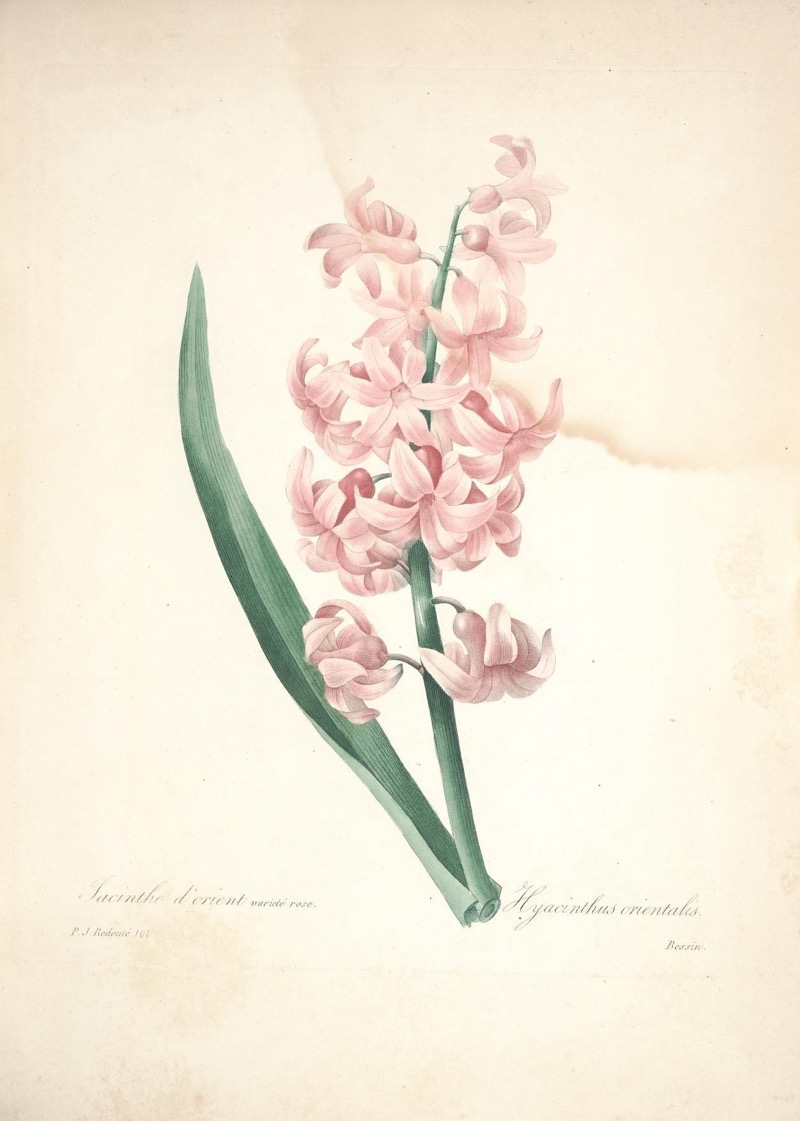
Linnaeus published the genus in Species Plantarum in 1753. WCVP records no generic synonyms; the three accepted species are listed below. The plate above is from Redouté’s Choix des plus belles fleurs, plate 100, inscribed in French “Jacinthe d’orient, variété rose”, a pink hyacinth.
| Genus name | Published in |
|---|
Distribution
WCVP records the genus as native to 6 TDWG botanical regions and introduced in 20 more.
IranIraqLebanon-SyriaPalestineTürkiyeTurkmenistan
Introduced
ArkansasBulgariaCaliforniaCubaCyprusFranceGermanyGreat BritainGreeceHaitiIrelandItalyKoreaMexico CentralNetherlandsNW. Balkan Pen.PennsylvaniaSardegnaSiciliaTexas
Accepted species
WCVP accepts 3 species; names with × are natural hybrids. The count changes with revisions; checked 2026-10-24.
| Name | On this site |
|---|---|
| Hyacinthus litwinowii Czerniak. | |
| Hyacinthus orientalis L. | 4 plates |
| Hyacinthus transcaspicus Litv. |
Historic plates
Plates in date order; the printed names are kept as they appear, current names are on the species pages and the topic page.
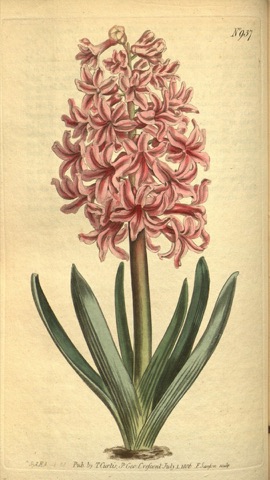
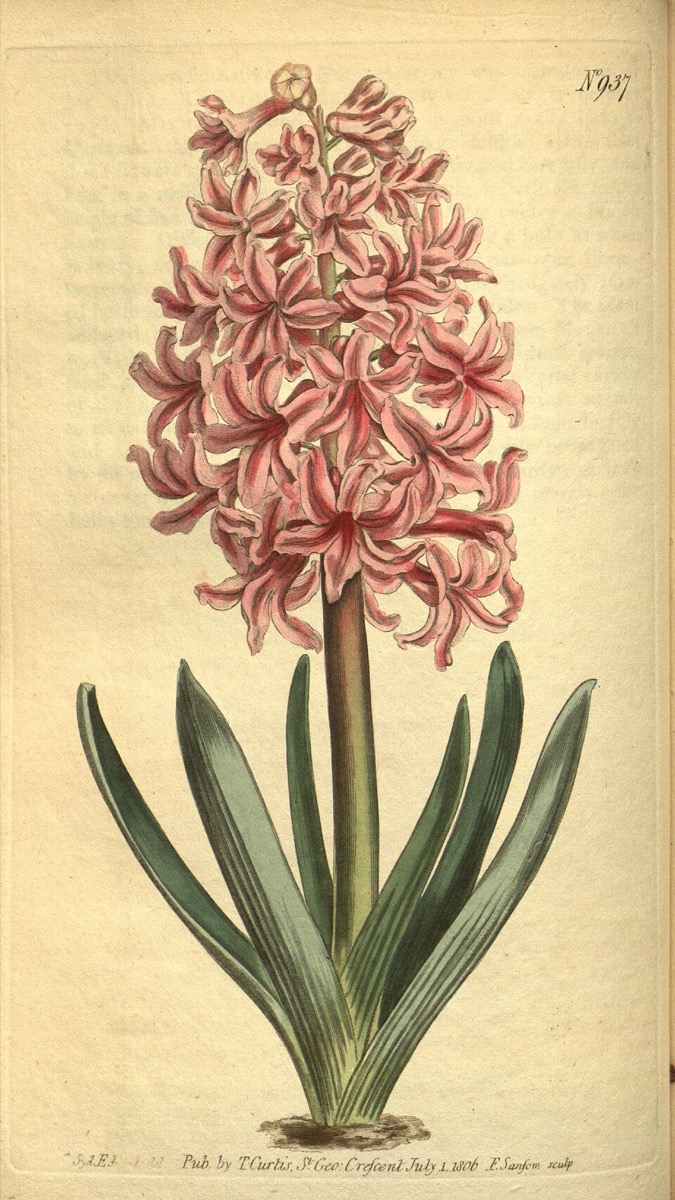
Hyacinthus orientalis
Curtis's Botanical Magazine · 937 · 1806
Sydenham Edwards
Hyacinthus orientalis
Choix des plus belles fleurs · 100 · 1827–1833
Pierre-Joseph Redouté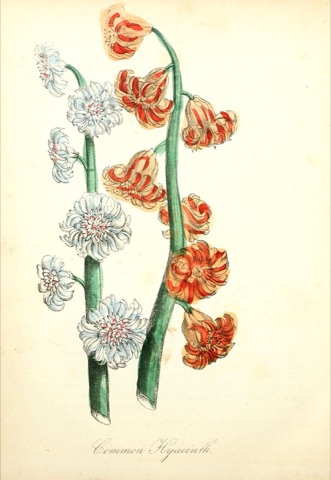
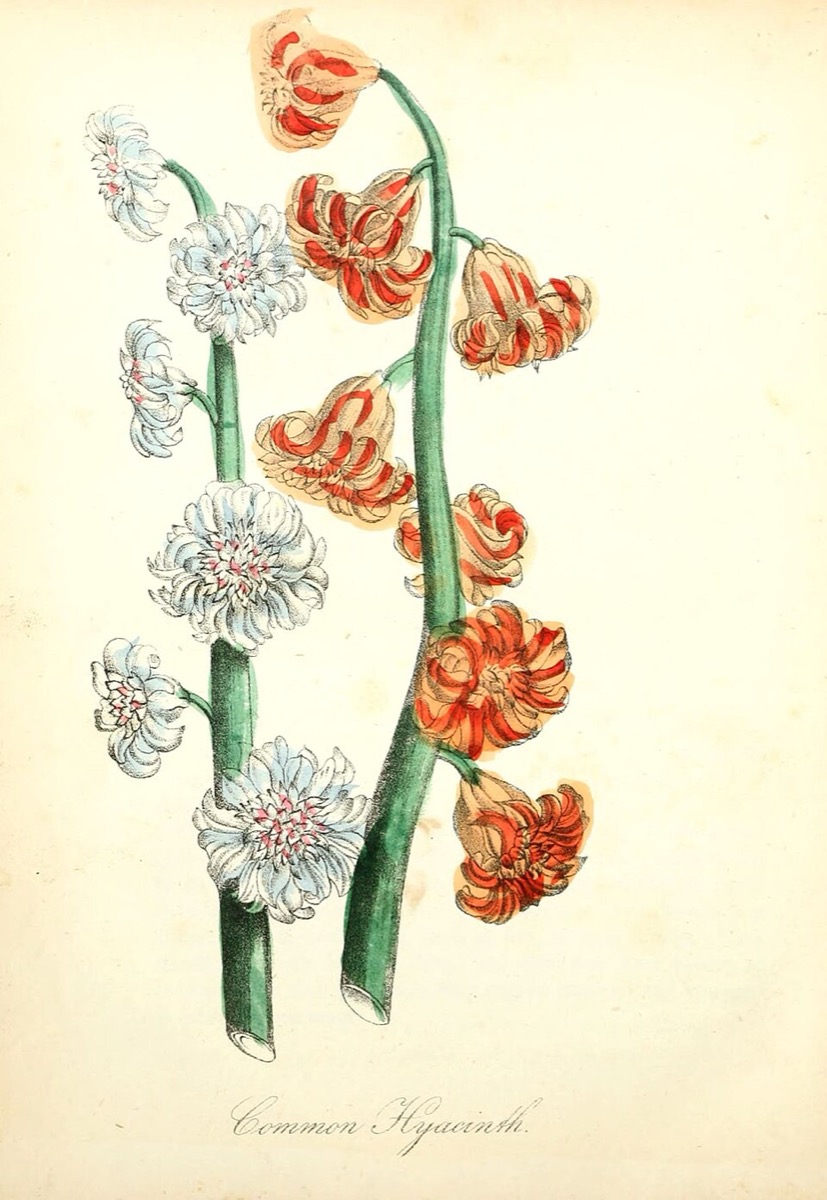
Common Hyacinth
The American Flora · 48 · 1855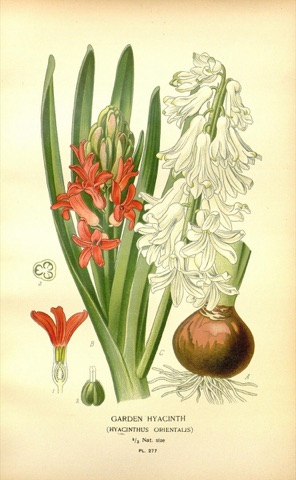
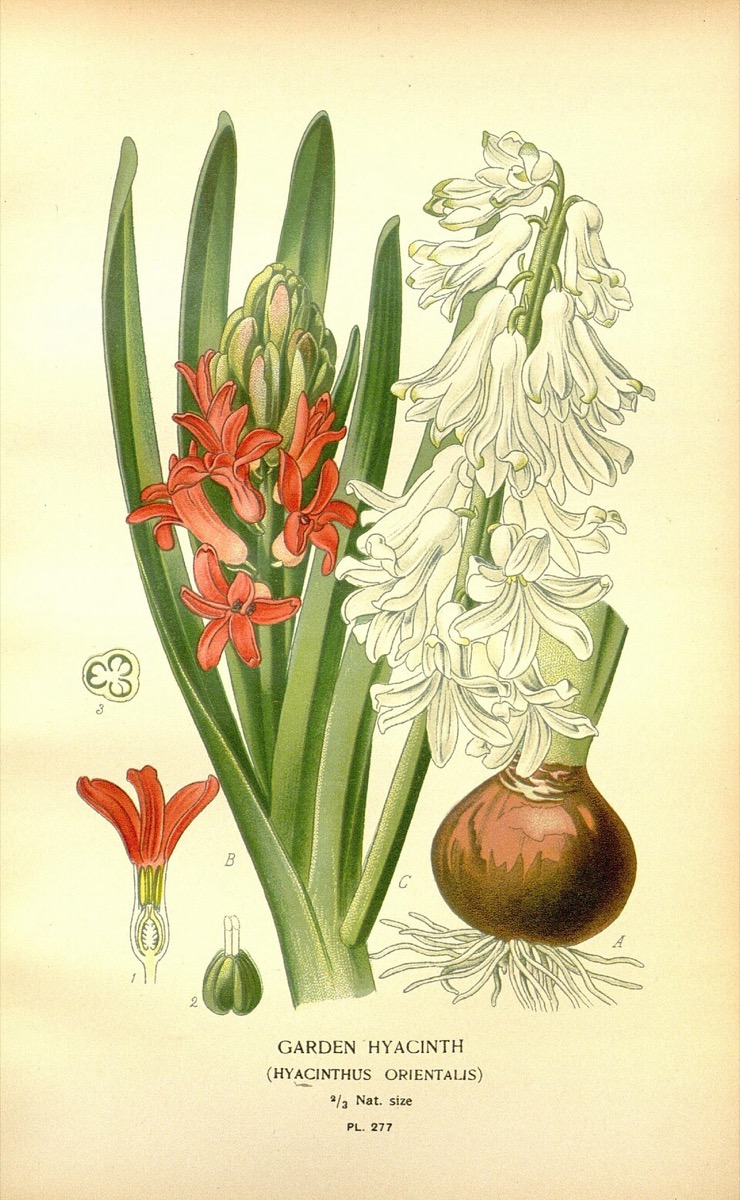
Hyacinthus orientalis
Favourite Flowers of Garden and Greenhouse · Pl. 277 · 1897
Forcing indoors and safety
For early flowers indoors, the RHS advises buying bulbs labelled “prepared”: they have been heat-treated to flower earlier and usually cost more; for Christmas flowers, allow 10–12 weeks for good root and shoot growth. If the flower stalk fails to emerge or stays hidden among the leaves, the room is probably too warm, so move the pot somewhere cooler. Cut off the flower stalk at the base when the flowers fade.
The ASPCA lists hyacinth as toxic to dogs, cats and horses, possibly through narcissus-like alkaloids; signs include intense vomiting, diarrhoea (occasionally with blood), depression and tremors.