Foliage and branches for arrangements
20 foliages and 35 branches used in floristry, with vase life, season, pet safety and a handling note for each — plus how to split, force and deliver flowering branches.
Key facts
- Foliage frames the design and hides the mechanics; branches give line and height.
- Split woody ends before conditioning — an intact woody stem drinks poorly.
- 39 of the 69 last ten days or more.
For florists
Turn this guide into a client design
We fill in the brief from this page. No stock yet? Load the sample flowers and see a recipe, quote and preview image in about a minute. New shops get 30 free credits.
Try it as a design — freeFoliage
| Flower | Vase life | In season | Pets | Handling |
|---|---|---|---|---|
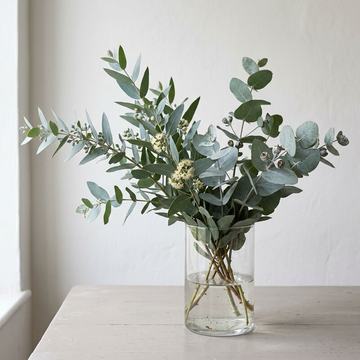
| Eucalyptus | 10–14 days | Year-round | mildly toxic | Strip the lower leaves. The resin is sticky — clean snips with alcohol afterwards. Dries beautifully, keeping its scent and colour. |
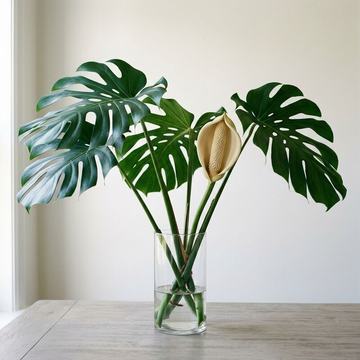
| Monstera leaf | 10–14 days | Year-round | mildly toxic | Wipe the leaves clean; a single leaf lasts weeks in water. The sap can irritate skin. |
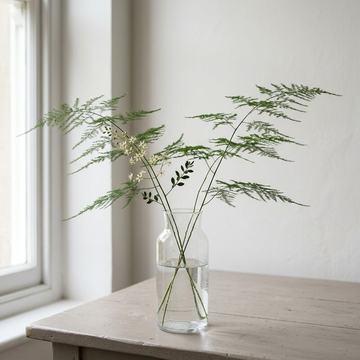
| Asparagus fern | 10–14 days | Year-round | mildly toxic | Sheds its fine needles when old or dry: mist it and keep it away from heat. Mind the small thorns on the stems. |
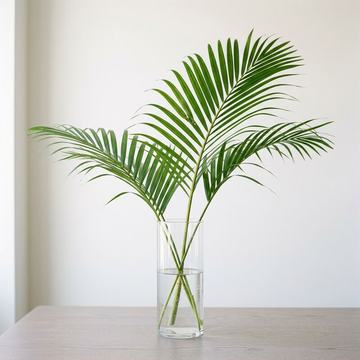
| Palm leaves | 14–21 days | Year-round | — | Fronds can be trimmed into shapes with scissors. Tips brown in dry air; dried and bleached palm is also widely used. |
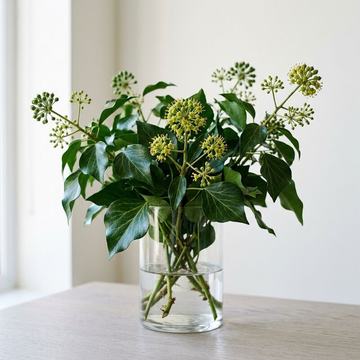
| Ivy | 10–14 days | Year-round | mildly toxic | Condition by submerging whole trails in water for half an hour. Holds up well out of water, which makes it useful for wired and trailing work. |
| Fatsia | 10–14 days | Year-round | — | Large glossy leaves for collars and for covering mechanics. Wipe them clean before use. |
| Dusty miller | 10–14 days | Year-round | — | Wilts easily: dip the cut ends in hot water or sear them, then hydrate overnight before using. Keep the felted leaves dry. |
| Salal | 14–21 days | Year-round | — | Sold as "lemon leaf". Sturdy and long-lasting; wipe the leaves for a clean shine. |
| Leatherleaf fern | 10–14 days | Year-round | — | The classic base foliage for foam work. Mist it — the fronds crisp in hot, dry rooms. |
| Aspidistra | 14–21 days | Year-round | — | The staple leaf for manipulation: it can be folded, looped, rolled or split, and lasts for weeks. |
| Pittosporum | 10–14 days | Year-round | — | Woody stems: strip the lower leaves and recut. Variegated forms brighten dark designs. |
| Myrtle | 10–14 days | Year-round | — | Aromatic, woody and long-lasting: split the stem ends and strip the lower leaves. |
| Loquat leaves | 14–21 days | Year-round | — | Large, stiff, deeply veined leaves with a rusty felted underside — bold texture for Chinese vase work and still-life pieces. Very long-lasting. |
| Hosta leaves | 7–14 days | Summer | mildly toxic | Broad ribbed leaves, plain or cream-edged, used at the base of summer arrangements to cover the mechanics. Submerge new leaves for an hour before use. |
| Cattail | 10–21 days | Summer, Autumn | — | Long strap leaves bend into arcs and loops — a classic for water-side and summer pieces; the brown spikes dry well. Spray spikes with hairspray or they burst into fluff. |
| Sweet flag (acorus) | 7–14 days | Spring, Summer | — | Sword-shaped aromatic leaves for upright lines; the Dragon Boat Festival classic with mugwort. Not the same plant as the Japanese water iris. |
| Mugwort | 5–7 days | Summer | — | Silvery, strongly scented leaves; wilts fast, so condition in deep cool water before arranging. Pairs with sweet flag for the Dragon Boat Festival. |
| Sacred lily (rohdea) | 14–30 days | Year-round | mildly toxic | Thick, arching evergreen leaves (sometimes with a red berry cluster) for formal and New Year pieces; in Ikenobo it is a classic subject. Very long-lasting. |
| Powdery thalia | 7–14 days | Summer | — | Tall stems with broad blue-grey leaves and, in summer, wiry purple flower stalks; gives lean, upright lines in water and lotus pieces. |
| Ti plant (cordyline) | 14–21 days | Year-round | mildly toxic | Long glossy leaves in burgundy, pink or green; fold, loop or use flat as a bold colour block. Very long-lasting; wipe leaves to restore the shine. |
Branches
| Flower | Vase life | In season | Fragrance | Pets | Handling |
|---|---|---|---|---|---|
| Plum blossom | 7–10 days | Winter | Light | — | Cut in tight bud and split or crush the woody ends. Buds open indoors in warmth within days; mist them so they do not dry out. |
| Wintersweet | 7–14 days | Winter | Strong | — | Recut the woody stem and keep it in clean water. Buds open in warmth; keep branches away from heating vents. |
| Silver wattle (mimosa) | 5–10 days | Winter, Spring | Light | — | Remove foliage below the waterline, recut the woody stem and keep cool. The small flower heads dry quickly in warm air. |
| Cherry blossom | 5–7 days | Spring | Light | — | Deliver in bud: once open, the petals fall within days. Split the woody ends and stand in deep water. |
| Peach blossom | 5–10 days | Spring | Light | — | Sold in bud for Lunar New Year. Split the stems, and hold in a cool place to slow opening or a warm one to speed it up. |
| Crabapple blossom | 5–7 days | Spring | Light | — | Cut in bud and split the woody ends; the flowers open in a warm room and last about a week. |
| Bamboo | 14–30 days | Year-round | None | — | The culms last for weeks, but cut leaves curl within a day or two unless the hollow culm is filled with water; mist often. "Lucky bamboo" sold in shops is a Dracaena, not true bamboo. |
| Pine | 14–30 days | Year-round | Light | — | Lasts for weeks with very little water. Resin gums up blades — clean them with alcohol. A New Year staple in both China and Japan. |
| Maple branches | 7–14 days | Autumn | None | — | Split the woody ends, condition in deep water and mist the leaves; they crisp quickly in dry, heated rooms. |
| Magnolia | 3–5 days | Spring | Light | — | Cut in furry bud and split the stems. The petals bruise brown at a touch, so place the branch once and leave it. |
| Wisteria | 2–4 days | Spring | Strong | mildly toxic | Notoriously hard to hydrate. Ikebana practice dips the cut end in alcohol or sears it; even so, use it the same day. |
| Forsythia | 7–10 days | Spring | None | — | The easiest branch to force: cut in bud in late winter, bring into a warm room, and it flowers in one to two weeks. |
| Willow | 10–14 days | Spring | None | — | In water it roots and leafs out. For structure that stays as it is, keep the stems dry; curly willow can be bent while fresh. |
| Pussy willow | 14–30 days | Winter, Spring | None | — | Keep it dry — no water — and the catkins hold for months. In water they flower, shed pollen and the stems root. |
| Red-twig dogwood | 14–30 days | Winter | None | — | Bare red winter stems for colour and structure. They last for weeks with or without water and can be bent into shapes while fresh. |
| Azalea | 5–7 days | Spring | None | ⚠ toxic to cats | Split the woody ends and condition in deep water. The flowers bruise easily, so position the branch before the buds open fully. |
| Spiraea | 5–8 days | Spring | None | — | Supple arching lines, much used in ikebana and Japanese-style bridal work. The tiny petals shower as it ages, so use it for events rather than long-lasting vases. |
| Osmanthus | 3–5 days | Autumn | Strong | — | Valued for scent rather than show — one sprig perfumes a room. The florets drop within days; mist to slow it. |
| Holly | 14–30 days | Winter | None | mildly toxic | Berries drop in warm rooms: keep cool and mist. The berries are toxic if eaten and the leaves are spiny — wear gloves. |
| Lilac | 3–5 days | Spring | Strong | — | Strip nearly all the leaves — they take the water first — split the woody ends and condition in deep warm water overnight. |
| Viburnum (snowball) | 5–7 days | Spring | None | — | Strip the leaves and split the stems. Heads start lime green and turn white; a wilted head revives when submerged in cool water. |
| Curly willow | 14–30 days | Year-round | None | — | Naturally contorted twigs give instant line and movement; strip the leaves for a bare winter look. Recut at an angle — stems kept in water may root. |
| Juniper & arborvitae | 14–30 days | Year-round | Light | — | Scale-leaved evergreen branches last for weeks and give a dense dark base or a firm main line. Strip the needles below the water and recut the woody end. |
| Ginkgo | 5–10 days | Autumn | None | — | Cut autumn branches when the fan-shaped leaves have just turned gold; once fully yellow they drop quickly. Keep away from heat. |
| Pear blossom | 4–7 days | Spring | Light | — | Choose branches with fat buds just showing white; split the woody base and give deep water. Pear is rarely given alone in China, where its name sounds like “parting”. |
| Purple-leaf plum | 5–10 days | Spring, Summer | None | — | Dark wine-purple leaves add depth to light designs; spring branches carry small pale pink flowers. Split the woody end and remove leaves below the water. |
| Photinia | 10–14 days | Year-round | None | — | Valued for the glossy bright red new shoots against dark green older leaves. Long-lasting; split the stem end and strip lower leaves. |
| Amur honeysuckle | 10–14 days | Autumn, Winter | None | — | Used in autumn and winter for its paired translucent red berries on arching twigs, often after the leaves have fallen. Handle gently — ripe berries drop. |
| False spiraea | 4–7 days | Summer | Light | — | Pick plumes with the bead-like buds still mostly closed; open flowers shed quickly. Remove most of the pinnate leaves and split the stem end. |
| Chinese redbud | 5–7 days | Spring | None | — | Bare spring branches thickly covered with small magenta pea-flowers right on the wood. Cut in tight bud; split the stem and give deep water. |
| Winter jasmine | 7–10 days | Winter, Spring | None | — | Arching green stems with small yellow flowers before the leaves — the first spring line. Buds open in a warm room; easy to bend into cascades. |
| Winter daphne | 5–7 days | Winter, Spring | Strong | mildly toxic | Short branches with intensely fragrant pink-white flower clusters among leathery leaves. All parts are poisonous — keep from pets and children, and wash hands. |
| Japanese kerria | 4–7 days | Spring | None | — | Slender green arching stems with golden flowers; a spring line in Chinese and Japanese work. Petals drop easily — cut in bud and handle gently. |
| Crape myrtle | 4–7 days | Summer | None | — | Summer branches with crinkled flower panicles. Remove most leaves, split the stem and hydrate deeply; florets shed, so arrange close to delivery. |
| Bougainvillea | 4–7 days | Spring, Summer, Autumn | None | — | The colour comes from papery bracts around tiny white flowers. Thorny branches: sear or split the ends; bracts last longer than they look. |
Texture and accents
| Flower | Vase life | In season | Handling |
|---|---|---|---|
| Winterberry | 14–30 days | Autumn, Winter | Sold as bare branches covered in berries. Recut and stand in a little water, or use dry: the berries hold for weeks either way. Keep cool, because warmth makes them shrivel and drop. Handle gently, since knocked berries fall off, and remind clients that the berries are not edible. |
| Heavenly bamboo (nandina) | 14–30 days | Autumn, Winter | Clusters of red berries over lacy leaves that redden in winter. Berries drop if the stems dry out — keep in deep water and mist. |
| Persimmon branches | 14–30 days | Autumn | Autumn fruiting branches, often with the leaves stripped so the orange fruit stands out. Fruit is heavy: wire or wedge the branch firmly. |
| Lotus pod | 14–30 days | Summer, Autumn | Fresh green pods brown within days. Most are used dried, and then last for years. |
| Cotton stems | 14–30 days | Autumn | A dried material: keep it out of water, because wet bolls go mouldy. |
| Wheat ears | 14–30 days | Summer | A dried material: keep it dry and away from damp foam. |
| Leucadendron | 14–21 days | Year-round | The colour comes from bracts, not petals. Woody, undemanding, lasts for weeks and dries in place. |
| Banksia | 14–21 days | Year-round | Cut the woody stems with secateurs. It drinks heavily at first, then dries in the vase while keeping its form. |
| Hypericum berries | 10–14 days | Year-round | Used for its berries, not its flowers. The leaves blacken first — strip them — and the berries then last well. |
| Pomegranate | 7–14 days | Summer, Autumn | Summer branches carry scarlet flowers (a Dragon Boat Festival flower); autumn branches carry fruit. Split the woody stem and support heavy fruit. |
| Firethorn (pyracantha) | 14–21 days | Autumn, Winter | Thorny branches packed with red-orange berries for autumn and New Year pieces. Wear gloves, strip the thorns at the base, and split the stem. |
| Buddha’s hand citron | 14–30 days | Autumn, Winter | A fragrant fingered fruit placed beside or below the arrangement in Chinese still-life pieces; lasts weeks and scents the room. |
| Lingzhi mushroom | 180–365 days | Year-round | A dried, lacquer-glossy bracket fungus used in festive and temple offerings and still-life pieces. Keep dry; it never goes in water. |
| Oriental bittersweet | 14–30 days | Autumn | Twining autumn vines whose yellow capsules split to show orange-red seeds; adds colour and curving line. Dries in place and lasts for weeks. |
Working with branches
- Split the base 2–3 cm in a cross, or crush it lightly, so the wood can take up water; then stand in deep water.
- To force blossom, cut in tight bud and bring into a warm room; mist the buds so they do not dry before opening.
- Blossom drops fast once open — deliver in bud for anything that needs to last.
- Lunar New Year branches — Pussy willow, Peach blossom, Bamboo — typically cost 1.5–3× normal beforehand: Chinese New Year
Cut flower care and conditioning guide · Floral design styles compared · Flowers that dry well
FAQ
What foliage do florists use most?
Year-round staples in our guide: eucalyptus, monstera leaf, asparagus fern, palm leaves, ivy, fatsia, dusty miller, salal, leatherleaf fern, aspidistra, pittosporum, myrtle, loquat leaves, sacred lily (rohdea), ti plant (cordyline).
Which branches can be forced into bloom indoors?
plum blossom, cherry blossom, peach blossom, crabapple blossom, magnolia, wisteria: cut in bud, split the woody ends, and bring into warmth.
Does an arrangement need foliage?
Usually. Foliage frames the flowers, hides the mechanics and defines the outline. Floreboard suggests adding some when a design of ten or more stems has none.
Which foliage and branches are toxic to pets?
Flagged in our knowledge base: eucalyptus, monstera leaf, winterberry, wisteria, azalea, heavenly bamboo (nandina), asparagus fern, ivy, holly, hypericum berries, hosta leaves, sacred lily (rohdea), winter daphne, oriental bittersweet, ti plant (cordyline).